The Beautiful Bricklayer of the 70s - Reviews

The Beautiful Bricklayer of the 70s
+Add to Custom List
Sort
Add review
... Read More
I need to talk about Xiang Bei because this guy is EVERYTHING. First impression: towering figure, long-sleeved shirt buttoned to the collar in brutal heat, jagged scar from ear to mouth, small calm eyes with this 'dozing tiger' energy. The description alone made me sit up. But what really got me is how he interacts with Tao Nanfeng. Deputy Captain Mao is calling her a 'decorative vase' and 'hothouse flower' right in front of her, and Xiang Bei just... steps in. 'Let them stay.' Three words. That's it. No grand speech, no dramatic gesture. He just speaks and the decision is made. And later, when she's starving and sitting apart from the crew eating their lunch, he doesn't make a scene. He just places a lunchbox in front of her and says 'Share this with Educated Youth Xiao.' No pity, no fanfare. Just... care, delivered in a way that doesn't make her feel small. The workers are all like 'Captain, you're terrifying when you smile' because of that scar, but Tao Nanfeng sees something else. And Xiao Aiyun? She's this loud, protective, slightly chaotic friend who immediately becomes Tao Nanfeng's anchor in this new world. Their dynamic is already set—Xiao Aiyun is the fire, Tao Nanfeng is the water, and somehow they work.
... Read More
There's a deeper question running through all of this that I think the author really wants us to sit with: what is a house for? Tao Nanfeng puts it most directly—'Houses are meant for people to live in. They must be built with the long term in mind. Providing shelter from the wind and rain, and keeping warm in the winter—these are the most basic requirements! If a structure can't even do that, how can you call it a house?' This isn't just about construction. It's about dignity. The educated youth are being told to be grateful for whatever they're given, to accept hardship as character-building, to lower their expectations. But Tao Nanfeng is refusing that narrative. She's saying: we deserve decent living conditions, and here's exactly how we're going to get them. The thatched huts themselves are symbolic—they represent the temporary, the inadequate, the dismissive attitude of the officials toward these young people. And the brick-and-tile houses they're planning? They represent self-reliance, dignity, and the refusal to accept 'good enough' when 'good enough' isn't good enough. The recurring motif of winter is also significant—it's not just a seasonal detail, it's a ticking clock. The cold is coming, and the officials don't care whether they survive it. That's the real conflict underneath the plot: human beings vs. a system that treats them as expendable.
... Read More
Okay, I need to talk about the absolute zero words exchanged between Tao Nanfeng and Xiang Bei in that scene where he carries the wok. Like. Zero. He just shows up, carries this massive iron wok on his shoulder, drenched in sweat, towering and silent, and she looks at him with these big eyes and he gives a slight nod. That's it. That's the entire romantic beat and I am NOT OKAY. The author doesn't even try to make it obvious. There's no blushing, no heartbeat descriptions, no internal monologue about how his jawline catches the light. It's just... a nod. A nod that says everything. And Tao Nanfeng's thought—"If I have to show off, I'll use the hand the zombie bit"—is honestly the most romantic thing I've ever read. She's literally choosing to fight with the mark of her trauma because she wants to protect her new found family. That's not a love confession, that's something deeper. And then later, when she overhears Xiang Bei confronting Luo Xuan? She's standing in the corridor, listening to his low commanding voice for the first time in a month. The text says she'd heard him speak fewer than ten times in thirty days. TEN. And yet she notices his voice is different, that it startles her. The author is playing the longest game here and I am HERE FOR IT. Also Xiao Aiyun is my spirit animal and I love her so much for throwing her arm around Tao Nanfeng and cheering. The friendship between these two is genuinely warm and it grounds everything.
... Read More
There's a scene in here that I keep coming back to, and it's not the arguments or the confrontations—it's Tao Nanfeng at the drafting board. Let me paint it for you: Engineer Yang offers his desk, which is a professional drafting table with an adjustable-tilt tabletop, a high-legged stool, grid paper taped down, a T-square and set squares laid out neatly. And Tao Nanfeng—she rolls up her sleeves, hooks the T-square against the edge, slides it smoothly, and draws a crisp horizontal line. The text says her entire demeanor transformed. Her shoulders relaxed, her forearm lifted slightly, her breathing steadied. Her eyes moved in perfect sync with her hand, her focus absolute. And everyone held their breath, afraid the mere sound of their breathing would blow the blueprints away or break her concentration. I got CHILLS reading that. It's such a specific, sensory moment. You can SEE it. The contrast between the drab, gray concrete floor of the office and this sudden burst of professional precision is gorgeous. And the worldbuilding detail about the mountain farm—at 1,500 meters elevation, winter is coming, the thatched huts are drafty and leaky, the road down the mountain collapsed. All of this creates a real sense of place and urgency. This isn't just any setting—it's a harsh, isolated environment where survival depends on ingenuity. The scene where the girls are crowded around the blueprint, heads bunched together like chickens pecking at grain, is also incredibly vivid. It's warm and chaotic and alive.
... Read More
Okay so this whole bet setup is actually really clever. Tao Nanfeng just goes and stakes her future on building a brick house in thirty days, and Huang Xingwu—this Weasel character—is so confident they'll fail that he agrees. But then the real plot twist hits when they actually start digging and find out the ground is half rock. I mean, that's when you know the author's gonna make things difficult for the protagonists. And then Tao Nanfeng reveals her secret strength! Three strikes and this boulder just shatters. The pacing here is perfect—first the bet, then the obstacle, then the reveal. It's like the author's saying 'yeah, I know you think this is gonna be hard, but watch this.' The sabotage scene at the end with the bricks getting destroyed is classic tension-building too. You're left thinking 'what happens now?' which is exactly what keeps you reading. The plot structure here follows this nice arc of setup-complication-reveal-escalation. I especially loved how the author didn't just make Tao Nanfeng strong—she had this whole backstory about the zombie bite that gave her powers. That's a nice touch that makes the strength feel earned rather than just handed to her. The brick-making subplot with Little Bean Hu is also well-woven in. It shows the team working together, which makes the sabotage feel even more personal when it happens. Overall, the plot moves at a great pace and keeps you engaged with both the construction challenge and the interpersonal conflicts.
... Read More
Okay, let me just say this out loud: Tao Nanfeng is the most underrated protagonist energy I've seen in ages. Like, she's not just smart—she's the kind of smart that makes you want to stand up and applaud. The moment she saw that wildflower stem stuck in the mud and immediately pivoted to "let's make straw-brick houses"? That's not just quick thinking, that's someone who actually reads and remembers things. And then she drops the Ding Wei story like it's nothing—just casually connecting Song Dynasty engineering to their mud-brick problem. The way the other youth immediately lose their minds over her? "You're always thinking two steps ahead, Nanfeng!" Yeah, they're not wrong. But what really got me is Huang Xingwu. The man is a walking red flag with a title. The scene where he tries to pull the inspection card out of nowhere? Pure villain energy. And Tao Nanfeng? She doesn't even raise her voice. She just dismantles him with facts: "This is an internal farm construction project—a dilapidated housing renovation. There isn't even a formal project approval process." She literally read the rulebook he's trying to weaponize against them. Meanwhile, Huang Xingwu is over there sweating because she reminds him of Fan Yajun, the girl he couldn't win back in school. Of course the author makes the antagonist's weakness rooted in teenage insecurity. Classic. And I need to talk about Qiao Yadong for a second. The guy goes from "let's take turns on night watch" to swallowing his anger and asking "how do we apply?" He's the responsible one, sure, but sometimes I wonder if he's too willing to play by the rules when the rules are rigged against them. Still, I respect him. He's the glue holding this chaotic group together. The dynamic between Ye Qin and the others is also so natural. She's the one hammering nails and planning room layouts, while Xiao Aiyun is the one physically pushing Tao Nanfeng into the hero chair. Everyone has their role, and nobody's fighting for dominance. That's rare in this genre.
... Read More
I need to talk about this moment when Tao Nanfeng breaks that boulder. The text describes it like this: 'Each swing had looked effortless—almost weightless—until the moment of impact, when it struck with the force of thunder. Lightning fast. Heavy as a thousand catties.' And then she just pushes the broken pieces aside like they're nothing. The reaction from the other characters is everything. Wei Min's 'knees grew weak' when she looks at him. The others are calling her a 'powerhouse' and saying 'if she entered weightlifting, she'd be a world champion!' It's this moment where everyone's perception of her completely shatters. She's been this quiet girl who works alongside them, and now they're realizing she's got superhuman strength. But what really got me is the emotional journey here. Tao Nanfeng was scared at first—'she feared people would treat her like a monster'—but then nobody does. Xiang Bei just says 'you're strong. The road crew is the perfect place for you.' The others just feel 'relieved. Thank goodness we have you, Tao Nanfeng.' It's this really touching moment of acceptance. She doesn't have to hide anymore. And then there's the friendship between her and Xiao Aiyun. When Xiao Aiyun sees Tao Nanfeng about to break the rock, she's 'face alight with smug satisfaction' and tells Wei Min to move aside. She's clearly proud of her friend. The emotional beat where the youth are all fired up after seeing her strength—'the more they talked, the more fired-up they became, working with even greater vigor'—that's such a nice moment of collective motivation. It's not just about the construction anymore, it's about believing in their leader. And then the sabotage hits and all that joy gets crushed along with the bricks. Oof. That emotional whiplash is brutal.
... Read More
I need to talk about the dialogue because wow. The way these educated youth sound—frustrated, scared, trying to hold onto their dignity while everything falls apart—it's painfully authentic. The group complaint scene is a masterclass in ensemble dialogue. You've got multiple voices, all distinct, all escalating the tension: "Kitchen? You mean those dirt stoves in the middle of the dirt lot by the thatched huts?" "And where is this rice you're talking about? I've eaten nothing but steamed buns for three days on the way here, and finally, we make it to the farm, only to be denied a single bowl of hot food!" "Those thatched huts are drafty all over. How can we live in them when it rains?" Each line reveals character. The first speaker is sarcastic. The second is hungry and bitter. The third is genuinely worried about survival. You don't need narration to tell you who these people are—their words do it. And then Director Luo Xuan comes in and the voice shifts completely. His dialogue is cold, bureaucratic, threatening: "What is all this noise? These are the farm's conditions. You'll just have to toughen up and adapt. If you don't like it, I can issue your repatriation notices right now!" The way he drops "repatriation" like a guillotine—that's not just dialogue, that's a power move encoded in speech. And the kids go SILENT. You can feel the fear in that silence. But my absolute favorite dialogue moment is Xiao Aiyun whispering to Tao Nanfeng: "What if… what if they won't take us?" The hesitation, the trailing off, the barely-controlled panic—it's the kind of line that makes you want to reach through the page and hug her. The narrative voice itself is also worth praising. It's close third-person, staying firmly in Tao Nanfeng's head, but it has this lyrical quality that elevates it above typical web novel prose. When it describes her beauty—"Her eyes were large and luminous, framed by long, dense lashes that cast soft shadows against her cheeks like delicate fans"—it doesn't feel like filler. It feels like the narrator genuinely admiring her, which makes you care about her more.
... Read More
"Tao Nanfeng, you've worked so hard for us." I literally had to pause and stare at the ceiling after reading that part. Not because it's dramatic or anything—just because it's so quietly devastating. Twenty-something kids who've been through hell, who got their materials sabotaged, who slept in shifts guarding their half-built walls, and the first thing they do when they finally move in is make sure THEIR FRIEND gets served like a queen. Xiao Aiyun pushing Tao Nanfeng into the only chair, Li Huilan bringing teacups, Ye Qin producing tea leaves, Xiao Aiyun retrieving the thermos—it's such a simple sequence of actions but the author writes it with this tenderness that just wrecks me. "Never before had she been thanked so fervently. Tao Nanfeng's face flushed slightly. She waved a hand, flustered. 'Don't mention it.'" She's the brains, the leader, the one who planned everything, and she still gets embarrassed by basic gratitude. That's the kind of character writing that makes you fall in love with someone. And then Li Huilan looking at her orchid on the windowsill, saying "Next spring, it will bloom into the most beautiful flower"—what a moment. She's not just talking about a plant. She's talking about hope. About the future. About the fact that they're going to be okay, even if it takes time. The whole sunset scene in the new house hits different too. "A handful of close friends sharing a room, the sunset painting our new home in gold." That's not even a line the author wrote for maximum emotional impact—it just happens naturally because the situation is so inherently beautiful. Twenty-six days of backbreaking labor, sabotage attempts, sleepless nights, and they end up sitting in a room with no curtains, watching the light pour through glass windows they installed themselves. I'm not crying, you're crying. Also, Xiao Aiyun laughing so hard she stumbles and grabs Tao Nanfeng's arm, shouting "We've gone mad! Mad with joy!"—that's the kind of friendship I want. The kind where you're so overwhelmed with happiness you can't even stand straight.
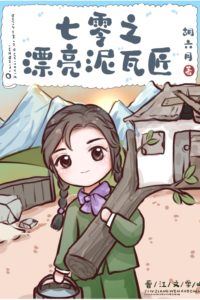
... Read More
I'm not okay. I'm genuinely not okay. So Tao Nanfeng has been traveling for four days, hasn't had a hot meal, and she's sitting there watching these rough construction workers unpack what looks like the most delicious food she's ever seen—stir-fried eggs with pickled shallots, sweet potato rice, chili sauce. She's starving. She's humiliated from being called delicate and useless. And then this pair of large hands just... appears. Xiang Bei's lunchbox, placed in front of her. No words, no explanation. Just food. And the way Tao Nanfeng describes eating it—'Only someone truly starving could appreciate the sheer bliss of a hot meal'—I felt that in my chest. This isn't romance, not yet, but it's something deeper. It's being seen. It's someone noticing that you're suffering and doing something about it without making it a big deal. And then Xiao Aiyun is crying into her rice, chattering about how sweet potato rice could taste this good, and the workers are laughing and sharing wild berries with them. This is found family forming in real time. The warmth in that scene was so genuine it made my eyes sting a little. Don't laugh at me.
... Read More
Let me be honest with you—this opening has some of the tightest pacing I've seen in a while. The author knows exactly when to accelerate and when to let you breathe. Chapter 1 opens with the journey description—four days and three nights, blisters, raw palms—and then IMMEDIATELY drops you into the thatched hut. No filler. No "and so they continued their journey." Just: they arrive, they see the huts, they complain, they go to sleep. Boom. We're in the story. Then comes the night sequence, and this is where the pacing really shines. The author uses onomatopoeia as pacing markers—"Shhh… shhh…" slows you down, makes you lean in. "Wooo—" opens up the scene. "Croak… croak…" builds tension like a drumroll. And then the beast cry? That's the jump scare. The frogs go silent. The pacing SNAPS from slow dread to sharp terror in one beat. The dream sequence is another pacing marvel. It starts almost casually—"Suddenly, she was pulled into a strange, unfamiliar dream"—and then the author goes FULL THROTTLE. Short sentences. Fragments. "Run!" "Help me!" "Ah!" The prose itself becomes breathless, mimicking Tao Nanfeng's panic. And then—"The dream shattered." Period. Full stop. Back to reality so abruptly you feel the whiplash. But here's what I love most: the morning-after shift. After all that terror, the author gives you this gorgeous pastoral description—"Moonlight Fields—terraced patches of land—were planted with corn and rice, their edges blooming with purple wild peas." It's a breather. A moment to exhale before the next wave of conflict hits with Director Luo Xuan. And the chapter ends on this perfect micro-cliffhanger: Tao Nanfeng breaks an enamel basin with her bare hands. Not a dramatic explosion, not a death threat—just this quiet, terrifying realization that something has fundamentally changed inside her. The pacing here is surgical. Every sentence earns its place.
... Read More
Can we talk about Li Huilan for a second because WOW. When Huang Xingwu calls Tao Nanfeng a 'pampered little miss,' Li Huilan doesn't just defend her—she drops the ultimate evidence: 'She carried all four of our bedding bundles over here by herself last night.' That one line completely reframes Tao Nanfeng in everyone's eyes, including mine. It's not just that she's smart (which she is, obviously, with her architecture background), it's that she's HARDWORKING. The contrast between how the officials perceive her and who she actually is is delicious. And Xiao Aiyun—quiet little Xiao Aiyun who just squeezes Tao Nanfeng's hand for comfort, then immediately fires back at Huang Xingwu with 'You're useless at building houses, but you're an expert at slapping labels on people.' That is a LINE. These girls have each other's backs in a way that feels genuinely warm. The alliance forming between the educated youth is also worth noting—they go from individuals who are struggling separately to a collective that stands together. That moment when even the guys who were fine with any roof at all suddenly join Tao Nanfeng's side? That's character growth for the group, not just for Nanfeng. And Tao Nanfeng herself—her relationship with her father is clearly central to who she is. He groomed her, taught her, and now that training is the one thing that can save them all. I love that her strength comes from someone she admires, not from rebellion against him.

Leave a comment

You must be logged in to leave comments. or
