The Beautiful Bricklayer of the 70s - Reviews

The Beautiful Bricklayer of the 70s
+Add to Custom List
Sort
Add review
... Read More
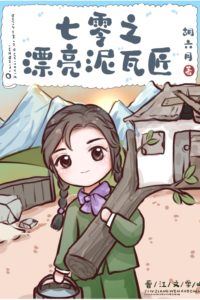
Okay so this chapter is wild. Tao Nanfeng just shows up and within like an hour she's shattering rocks and snapping trees with her bare hands?? And the way the author handles this reveal is actually pretty clever. First it's subtle—she touches the rock and BOOM, it splits. Then the tree. Then she accidentally kicks a thousand-pound boulder off a cliff. Each escalation is bigger than the last, and the workers are losing their minds trying to figure out how this delicate-looking girl did it. But here's the thing that really got me—the plot doesn't stop at the cool power reveal. It immediately pivots to the real conflict: the work points dispute. Luo Xuan is like, 'Women only get seven points, not ten.' And Xiao Aiyun just LOSES IT. That's the actual story here, not the super strength. The power is just... there. It's Tao Nanfeng's ticket into this world, but the real drama is about dignity, fairness, and whether she'll be treated as a person or just another burden. Also, that scene where Xiang Bei gives her his mother's lunch? That's a plot move, not just kindness. He's investing in her. The story is building something.
... Read More
The pacing here is absolutely masterful and I need to unpack why. Chapter starts with Tao Nanfeng overhearing men call her a 'decorative vase' and 'hothouse flower.' Maximum humiliation. Heart pounding, shame, anger. Then—BAM—Xiang Bei speaks, and the power dynamic shifts instantly. She's accepted. But then the author doesn't let up. She touches the rock and it SHATTERS. She leans on a tree and it SNAPS. She bumps a boulder and it goes OVER THE CLIFF. Each moment is a bigger reveal, escalating in real time, and the workers' reactions go from dismissive to stunned to almost reverent. And then—just when you think the chapter is about superpowers—it pivots HARD to the lunch scene. The hunger, the sharing, the wild berries. The tension releases. You go from 'WOW SHE'S STRONG' to 'AWW THEY'RE SHARING FOOD' in one smooth transition. Then the chapter ENDS on a new conflict: the work points dispute. Luo Xuan's voice dripping with affectation, Xiao Aiyun bristling. The pacing never lets you rest. It's like the author knows exactly when to punch you and when to hand you a warm meal. And that ending line—'When you were assigning tasks, you said'—cuts off mid-sentence. Xiao Aiyun is mid-argument. The chapter just... stops. I need the next one immediately.
... Read More
Let's talk stakes because this story is layered with them. On the surface, Tao Nanfeng just needs to survive—get work points, get food, don't starve. But dig deeper and it's about dignity. These men called her useless before she even lifted a shovel. Deputy Captain Mao literally said women are 'nothing but trouble.' And then she proves them wrong by splitting rock and snapping trees, and Mao immediately pivots to 'Ten work points won't be a waste.' He didn't care about her as a person; he cares about her utility. That's the core conflict. Xiang Bei is the only one who saw her as human from the start. But then Luo Xuan shows up with his work point sheet and tries to short-change her because she's a woman. The stakes aren't just about food or points—they're about whether she'll be respected or reduced to a stereotype. And there's this other tension too: what IS that power in her hand? She doesn't understand it. She had apocalyptic dreams, she was bitten, and now she can destroy things with a touch. Is this a gift or a curse? The chapter ends with her accepted by the crew but facing institutional bias from Luo Xuan. She's gained allies but the system is still against her. And that bite mark on her hand keeps burning. The stakes are rising on every level.
... Read More
I've been thinking about this book way too much since I finished it, and the symbolism keeps revealing itself. Let me tell you what's been haunting me. The jade buckle. Tao Nanfeng clutches it in her sleep, whispering "Mom…" and then it GLOWS. It's not just a keepsake—it's a conduit. The green jade connects her to her dead mother, to something ancient and powerful, and it's the catalyst that pulls her into the zombie dream. But here's what I think: the apocalypse dream isn't just a random vision. It's a metaphor for what she's actually facing. Eighty percent of humanity transformed into monsters. The survivors struggling to stay human. Sound familiar? These educated youth are being thrown into a world that feels apocalyptic—harsh, unforgiving, dehumanizing. The thatched hut settlement IS their zombie apocalypse. They're the twenty percent trying to survive. And the bite mark—the black tooth mark on her hand that mirrors the dream—this is the moment her old life is literally marked by the new one. She wraps it in a red silk scarf, hiding it. She's concealing her transformation, just like these kids have to hide their fear and desperation behind stoic faces. Then there's the broken enamel basin. The fact that her first display of supernatural strength destroys something ordinary—something mass-produced, utilitarian, part of daily life—feels deeply symbolic. The old world is breaking under the weight of whatever is awakening in her. The enamel cracks. The handle snaps. Everything fragile is about to shatter. The red silk ribbons in her braids, the jade buckle, the dark red scarf—red keeps appearing as a color of transformation and danger. And the jade itself, that vivid green, pulses with light like a living thing. These aren't random details. The author is building a symbolic language, and I'm only just beginning to decode it. What do you think—is the zombie dream foreshadowing something literal, or is it purely metaphorical? Because honestly, I'm not sure I want to know.
... Read More
I just finished chapters 14-20 and I need a minute because the pacing in this section is absolutely masterful. Let me break down why. The chapter opens at MAXIMUM tension—Xiao Aiyun is already mid-argument with Luo Xuan about work points. No warm-up, no setup, just straight into the fire. This is the author saying "we don't have time for preliminaries, someone is being unfair RIGHT NOW and we're fixing it." I immediately knew I was in the right hands. Then you have the Xiang Bei entrance. The wok scene. The nod. The punch. The desk shattering. All of this happens in what feels like five minutes of reading time but it's packed with so much payoff. The author doesn't rush it though—there are these little beats, like Tao Nanfeng lowering her hand as if she forgot what she was doing, which makes Luo Xuan laugh before she strikes. That false pause is PAINFUL and I loved every second of it. After the climax, the author does something really smart: they let the characters breathe. The scene shifts to the thatched-roof cottage, the group cooking together, eating roasted potatoes and wild egg soup. It's warm and domestic and necessary. If the author had kept the tension at eleven the whole time, I would've burned out. Then—BAM—the storm foreshadowing kicks in. Xiang Bei warning about rain, Luo Xuan dismissing him, the ants migrating. And Tao Nanfeng remembering her dream of the cottage collapsing in the rain. The chapter ends with Qiao Yadong watching her quietly. Three separate threads of tension (the storm, the housing, this new character) all woven together at the end. I immediately opened the next chapter.

Leave a comment

You must be logged in to leave comments. or
