Resonance Lust: Omegaverse - Reviews

Resonance Lust: Omegaverse
+Add to Custom List
Sort
Add review
... Read More
The pacing in these chapters is actually insane when you think about it. We start with Kouki KICKING A WALL in pure frustration — highest emotional energy possible. Then it dips into this slow, heavy emptiness where he's just standing there spiralling. Almost meditative in its sadness. And THEN — WHOOSH — we cut to Amane, calmly, methodically装配着spy equipment like he's preparing for war. The tonal whiplash is deliberate and it works. Chapter 53 "Drinking Party" is such a misdirection title too. There's no drinking party in sight. Instead we get this methodical prep scene — testing the camera, checking the recorder, deleting voicemails. Every action is slow and precise, which makes the coldness hit harder. The chapter doesn't rush to the confrontation; it lingers on the quiet moments before the storm. And that transition from the police station to Amane's apartment? Seamless. One moment Kouki is sending another message at 7:30 PM, the next Amane is plugging in a micro-camera. The timeline is tight, almost real-time, and it makes both characters' isolation feel simultaneous rather than sequential. They're existing in the same world at the same hour, completely alone together.
... Read More
"You must be Shutou Kouki, right?" — the detective's voice must have sounded like salvation to a six-year-old tied up in a dark apartment, shaking in the corner, convinced he might die. And then the detective removed his gag, untied him, and said "it's okay now" and HUGGED him. Feeling his warmth. That's all the text gives us. Four words after a paragraph of escalating horror, and it DESTROYED me. This is the moment that shaped Kouki's entire life trajectory. This is why he became a detective. This stranger's kindness became the template for everything he believes about justice and duty. And now here we are, chapters later, with Kouki sitting across from Amane and TELLING HIM ALL OF THIS. Not just the facts—the feelings. The helplessness. The cold blade. The despair of thinking he'd never see his family again. He's letting Amane witness the most vulnerable version of himself and I swear to god if they don't end up together I will lose my mind. There's also this devastating undercurrent of family love that I can't ignore. Kouki's parents never came to terms with his career choice, sure, but the kidnapping happened BECAUSE of his family name. The Shutou name made him a target. His privileged life made him visible. And yet they paid the ransom. They fought to get him back. The detective who rescued him wouldn't have shown up without the family's resources and connections. There's this complicated love-hate relationship with his family that runs through everything—he resents their rejection but he's also acutely aware that his privilege is what kept him alive. "No one can choose where they are born. But I can resist my origins." This line keeps echoing in my head. He's fighting against a world that wants to reduce him to his Alpha status, his family name, his privilege—and the only reason he has the strength to fight is because someone once told a traumatized six-year-old that it was okay now.
... Read More
I need to talk about this one moment—actually, let me just start with the moment because it wrecked me. Kouki staring at the back of Amane's head and mentally practicing asking him to dinner, only to be immediately flooded with Amane's actual voice saying 'Huh? Why do I have to go eat with you?' and 'Not happening' and 'No thanks.' The text says these words 'stabbed at his heart.' Stabbed. Not 'hurt' or 'upset'—stabbed. And then the narrator adds: 'This wasn't just imagination. These were actual phrases Amane had hurled back at him over the past two months.' I have never related to this so hard. The way Kouki describes his hesitation now—'The thought of hesitating to invite someone to dinner would have been unimaginable for him until now'—that sentence alone contains an entire emotional history. This is a man who used to be confident, who had dreams and ambitions, who walked into rooms and knew he belonged. And somewhere along the way, being partnered with Amane systematically dismantled that confidence. Every rejection chipped away at something. But here's what gets me: despite all that, he hasn't stopped trying. The narration makes it clear that he still wants to ask. He still imagines the invitation. He just can't quite bring himself to say it out loud. And Amane—God help me, Amane—is completely oblivious to the fact that every 'no' is wounding this person who is slowly, quietly, irrevocably falling for him. The rooftop scene from their first meeting haunts me too. Amane calling Kouki 'well-bred' as an insult, laughing at his dreams. But then the narrative flips it—those same dreams turned out to be real, and Amane is the one hiding behind a mask. I keep wondering: what would happen if Amane ever realized how much his words hurt Kouki? Would he apologize? Would he double down? I need to know. The emotional tension between these two is so thick I can practically taste it.
... Read More
"I love you." Kouki. Just... drops that out of nowhere. In a car. To Amane. After everything they've been through, after Amane's sarcastic comment about Mizuki, after talking about pregnancy and murder and souls—it just comes out. And Amane's reaction? Pure deflection. "...Is that really such a big deal?" This dialogue writes *itself*. Amane's voice is always this mix of dry humor and genuine care wrapped in layers of "I don't care." When he says he's "just killing time," you know he's lying. When he teases Kouki about random Stray Omegas, you know he's uncomfortable. His dialogue always circles back to deflection—"Personal freedom, right?" but with that mocking tone. Kouki though—his dialogue shifts so much in this chapter. Starts professional, asking about over-the-counter sleeping pills. Jotting notes. Staying focused. Then BAM, the "I love you" moment. It's raw. It's unexpected. It's so Kouki to finally say something he's clearly been holding in. The author does something interesting with Mizuki's dialogue too. She barely speaks—mostly broken sentences, trembling voices, that one desperate plea: "Please... I ask for your help." But when she bows, when she stands up with Anzu still in her arms, you *feel* her determination. Her silence speaks louder than most characters' monologues. And the narration voice—honestly, it's delightfully snarky. "There's no way this top-tier Alpha would understand his empathy for the unfortunate Omega." "Talk of soulmates, destiny, love, and all that nonsense—leave that to airheaded little girls." This is Amane's internal voice bleeding into the narrative, and it's *perfect*. You get his cynicism, his emotional armor, and his reluctance to admit he cares. The banter between Amane and Kouki in that car? Gold. From the cigarette lighting to the seatbelt fastening to the random shout that makes Amane stick fingers in his ears—it feels lived-in. These two have history, and the dialogue reflects that effortlessly. My only gripe: sometimes Amane's internal thoughts edge toward melodrama. The bit about his late mom (that translator note at the end gives it away)—it works emotionally, but it's a little on the nose. Still, overall the dialogue carries the scene beautifully.
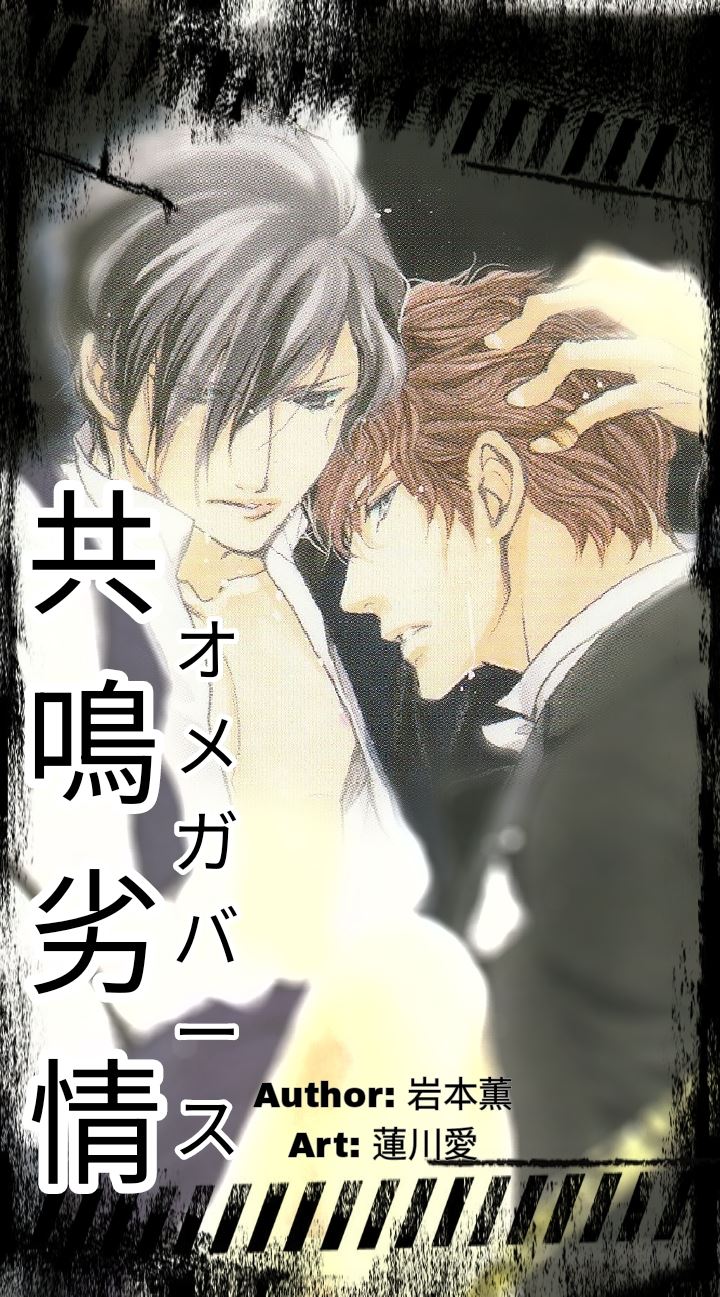
... Read More
This text keeps coming back to the same idea under different guises, and I think that's intentional. Suppression. Control. Bodies that won't obey. Truths that get buried. Aya's body was violated with date rape drugs — chemically suppressed against her will, then left to carry the consequences alone. She couldn't even suppress her grief properly; the pregnancy showed, the mental deterioration showed, the morning sickness showed. Every part of her body became evidence of a crime she couldn't prove. Kouki's body is something he has to manage like a ticking bomb. The suppressant pills interfere with his biology forcibly. The government covers up inconvenient truths about omega lifespans. His own heat cycle could end his career at any moment if it becomes irregular. He's constantly negotiating between what his body demands and what his job requires. Mizuki suppressed her tears during filming, suppressed her feelings during their breakup, and now she's suppressing the knowledge that Aya might have been murdered. Her grief is performative in public, raw in private — until she finally lets it all out on this phone call. The recurring symbol of pills is doing heavy thematic work here. They're both medicine and imprisonment, relief and dependence. Amane pops a pill to survive his heat. Aya took morning-after pills that failed. The government produces policies that function like societal suppressants — controlling populations under the guise of protection. Even Kouki is medicated, conditioned, suppressed into becoming a detective despite his parents' opposition. Nobody in this story has full agency over their own body. That's not a coincidence. That's the whole point.
... Read More
Let's talk about these two, because their dynamic is a loaded gun pointed at the heart of everything they claim to want. Amane is built on control. He's hiding his Omega nature, mastering his heats with suppressants, policing his pheromones like a secret agent. His pride isn't arrogance; it's survival. When Kouki appears as a ‘soulmate,' Amane likely sees someone who could respect that hard-won autonomy. Instead, he finds an Alpha who interprets closeness as entitlement. The relationship fractures along a fault line we see early: Amane rejects Kouki ‘simply because he was an Alpha.' That's not prejudice; it's pattern recognition. He's seen how Alphas operate, and he knows Kouki's promises of support are conditional on him staying within certain boundaries. Then the resonance heat hits. Suddenly, all that meticulous control is irrelevant. The relationship's foundation—built on Amane's managed vulnerability—evaporates. Kouki's actions in that moment reveal everything. He doesn't see Amane's distress; he sees an opportunity to ‘secure' him. His post‑coital fantasy of a trapped pregnancy isn't love; it's ownership dressed up as destiny. Meanwhile, Amane's response is pure, undiluted self‑preservation. He doesn't collapse into tears; he calculates. The morning‑after pill is a statement: ‘I will not be defined by your biology.' The partnership ending is the final, logical step. You can't rebuild a bridge when one side has burned it down. Their relationship arc isn't a romance; it's a case study in why good intentions without deep respect are just another form of violence. I'm left wondering if either of them can ever unsee what the other showed them.
... Read More
This chapter starts with Mizuki composing herself—handkerchief to the eyes, trying not to fall apart—and honestly? The pacing here is *chef's kiss*. The author doesn't rush this emotional beat at all. You feel the weight of every second. She's trembling, she apologizes, she picks up Anzu the dog like it's the only thing keeping her grounded. Then she *finally* drops the bomb about Aya's pregnancy and the whole scene shifts gears. What I love is how the transition from personal grief to investigative work happens. Mizuki goes from a sobbing Omega in a wing chair to bowing completely, practically begging for help. Then cut to the underground parking garage—suddenly we're in a car, Amane lighting a cigarette, Kouki visibly annoyed. That elevator-to-car transition? Seamless. The author uses that physical movement (going down, getting into the car) as a metaphor for shifting into investigator mode. The chapter ends on this wild note—Kouki blurting out "I love you" and calling Amane his soulmate, then Amane making a joke about random Stray Omegas, and suddenly Mizuki screaming from somewhere. It's chaotic. It's messy. And it works because the tension has been building since page one. But here's what bothers me slightly—the police report section at the beginning reads almost too efficiently. "According to the police database... estimated time of death... no signs of struggle..." It's informative but lacks the raw emotion of what comes after. I wish we'd gotten *one* moment of Amane or Kouki reacting before the facts dropped on them. Still, the pacing overall is solid. The author knows when to slow down and when to accelerate. The real question is: does this chapter set up the mystery properly, or does it give away too much with that autopsy detail about foamy water? Hmm.
... Read More
The stakes in these chapters are astronomically high and the author makes it clear that this isn't just a mystery to solve—it's a reckoning. Let's break down what we know: Aya died. The police ruled it suicide. But Mizuki's account reveals she was drugged and raped six months ago, her manager told her to stay quiet, and she was trapped in an industry where victims get blamed. Now she's dead and the system called it suicide. The external conflict here is enormous—who killed Aya, and why did everyone in power treat her like disposable content? But the INTERNAL conflict is what keeps me up at night. Mizuki is carrying guilt because she wasn't there when Aya needed her most—she was filming a drama in the countryside. She says, "If I had just listened properly... it wouldn't have come to this." That's not rational guilt (we, the readers, know she couldn't have prevented this), but it's real and devastating. Then there's Amane. His conflict isn't about Aya or justice—it's about himself. He's watching Mizuki cry in someone else's arms and he can't even name what he's feeling. "It wasn't exactly anxiety... Maybe it was annoyance? Perhaps suffocating?" The story is setting him up as a protagonist who may be emotionally compromised, and that's thrilling because it means he's vulnerable in a way that affects the case. The legal stakes are also worth noting—proving rape drugs after six months is described as a "race against time" that they've already lost. Without physical evidence, without the victim alive, without witnesses... the odds are stacked impossibly high. And yet Amane and Kouki are pursuing it anyway. That's the core conflict: fighting a system designed to protect perpetrators while the evidence literally decomposes. Every character in this story is fighting a losing battle in some way, and that's what makes the tension so thick.
... Read More
"Could it be... that we're soulmates?" This question lands with more weight than the action scenes, and I think that's intentional. The entire Omegaverse setup treats soulmates as fate — this predetermined cosmic bond between one Alpha and one Omega. But the story keeps pushing back against that idea. Amane doesn't believe in it. He calls it an urban legend. He resists the idea that his body's reactions to Kouki mean anything deeper than biology. And Kouki's declaration — "It doesn't matter if you're an Alpha or an Omega. I just like you" — sounds romantic but also kind of privileged. As Amane himself notes: "That's something only a privileged Alpha could say." The system stacks the deck. Alphas and Stray Omegas literally live in different worlds. So when Kouki says categories don't matter, he's speaking from a position of safety — his Alpha status protects him from the consequences that Amane faces daily. The soulmate concept becomes a metaphor for how love narratives often ignore structural inequality. Two people can be "meant to be" and still be separated by everything around them. The recurring motif of physical contact triggering uncontrollable impulses mirrors this tension between biological destiny and personal agency. Their bodies say "you belong together" but their social positions say "you shouldn't." That's the real conflict here — not whether they're soulmates, but whether that label means anything when the world won't let them be together on equal footing. The story isn't over, but it's already asking the right questions.
... Read More
The contrast between police stations in this novel is genuinely impressive worldbuilding disguised as exposition. D-East Station — violent crimes, seedy nightlife, slums. This is where Amane operates, where the danger is immediate and visible. M-South Station — suburban, quiet, dealing with 'petty crimes like purse snatching, shoplifting, neighbourhood disputes, traffic accidents, and non-criminal deaths.' On the surface this sounds boring. But the author uses it to say something devastating: when violent crime disappears, it doesn't mean justice arrives. It means the victims disappear too. Aya's death was classified as suicide because nobody in M-South had the instinct or the will to dig deeper. The comparison to surgeons is brutal and accurate — 'a surgeon who performs a few operations never gets better.' M-South officers are professionally atrophying, and an Omega woman died because of it. That's the world this novel is painting: systemic neglect wearing the mask of routine. And then there's Kouki's car. The silver two-seater with top-quality leather, the smooth ride, the professional-level handling. The underground parking garage where 80% of spaces are patrol cars or unmarked vehicles and Kouki — a ROOKIE — has a reserved spot. These details aren't filler. They're showing us that Kouki exists in a different economic and social stratum than most of the world around him. His Alpha privilege is invisible to him (he 'didn't seem to question this privilege') but visible to everyone else, including Amane, who notes it silently without judgment. The city itself feels alive — downtown streets, suburban apartments, talent agency dormitories, police stations divided by class and crime density. This isn't a backdrop. It's an active force shaping who lives, who dies, and who gets believed.
... Read More
There's this one passage where Kouki drives Amane out of the city and the text just… slows down. The chaotic clutter gives way to orderly streets, controlled building heights, low traffic, luxury cars. "The sky feels so wide." That line hit me harder than I expected. It's not just describing a neighborhood—it's describing a整个世界 that Amane has never belonged to, and the vastness of the sky is almost intimidating. I keep coming back to how the physical environment maps onto the social hierarchy in this story. The Shutou residence isn't just fancy—it's a fortress of Alpha privilege, and getting an invitation there is treated like gaining entry to a different species' territory. Kourogi accepted because he's ambitious and vain, which tells you everything you need to know about what kind of man climbs into rooms he wasn't born to enter. He's not nobility. He's new money. He's an Alpha who had to work his way up, and that makes him either the most dangerous person at that party or the most exposed. The contrast between Amane's world and that world is visual and visceral. Amane's black suit, the one he bought with his first paycheck because his supervisor told him to, sits in his wardrobe like a costume for a life he doesn't live. Meanwhile Kouki's custom three-piece is described as being "in a league of its own." These aren't just clothes—they're armor, and the story keeps reminding us which characters can afford it and which can't.
... Read More
I need to talk about the hand scene because it absolutely wrecked me. Amane is lying on the ground, stuck under a sobbing woman, and Kouki offers his hand. Amane looks at it. Just looks at it. And the narration goes into excruciating detail about the fingers, the nails, the lunulae, the testosterone theory — all while Amane internally screams about how his body reacts to touch from this specific person. The physical descriptions do double duty here. Kouki's hand isn't just attractive; it's a trigger. Every detail about it connects back to the biological phenomenon they've both been dealing with. The longer ring finger, the flawless nails, the smooth skin — these are all markers that make Amane's body react before his brain can intervene. And Kouki's response? "It's okay. I told you before, didn't I? 'That thing' only happens when we make contact during your heat." He says it softly, crouching down, lowering his voice like he's soothing a spooked animal. This is a man who just threw another human being onto concrete and now he's whispering reassurances to his partner. The tenderness underneath the competence is what gets me every time. But what really broke me was Amane turning his head away. He can't look at Kouki. Not because he doesn't want to — but because looking would mean acknowledging that this pull exists, and acknowledging it means he has to deal with the fact that Kouki might actually mean what he's saying about liking him regardless of status. And that terrifies him more than any suspect ever could.

Leave a comment

You must be logged in to leave comments. or
