Resonance Lust: Omegaverse - Reviews

Resonance Lust: Omegaverse
+Add to Custom List
Sort
Add review
... Read More
The opening of the flashback chapter is one of those moments where the author just trusts the reader to feel everything without needing to explain it. Amane running up the stairs two at a time, the sudden surge of heat, the sweat bursting from his pores — this isn't told, it's experienced. I literally felt my own breathing change reading it. The detail about the PTP pack in his back pocket, the trembling fingers struggling with the bottle cap, the mineral water he bought from the vending machine — these tiny mundane objects ground the scene in reality so effectively that the supernatural elements (the omegaverse biology) feel almost documentary-level real. You believe this could happen. You believe Amane could be running up those stairs right now. And then the author pivots into exposition about suppressant pills, irregular cycles, side effects — but it's filtered through Amane's own body and concerns. He's worried about his cycle stability because it affects his ability to work as a detective. He tried taking pills preventatively and was bedridden for a day. The government covers up inconvenient truths. All of this worldbuilding emerges from character action and internal monologue rather than dumping paragraphs. The rooftop setting matters too. He's alone, elevated, struggling with something his body is doing against his will — it's a visually striking image. I can already see how this would translate on screen. The glass doors, the city below, an omega fighting for control of his own nervous system. Pure atmosphere.
... Read More
I need to talk about the plot mechanics here because this sequence is a masterclass in escalating tension that feels both sudden and brutally logical. We start with a verbal exchange—Amane's clear boundary ('Don't act like you're my boyfriend') and Kouki's escalating frustration. The narrative doesn't linger on the buildup; it jumps straight to the snap. That's a bold structural choice. The author treats the resonance heat not as a romantic trope but as a chemical coup d'état. One moment they're arguing, the next Kouki's mind blanks, his hand closes on Amane's arm, and the plot pivots from psychological drama to physical imperative. The pacing in those paragraphs is frantic, mirroring the loss of control. Then comes the aftermath, and this is where the plot truly earns its weight. Instead of a soft edit or a time skip, we're forced to sit in the sticky, shameful clarity. The reveal that Kouki didn't use protection isn't just a plot twist; it's a character detonation. And Amane's reaction—the immediate, clinical scramble for the emergency contraceptive—flips the script. The ‘villain' (from Kouki's brief, deluded fantasy of a trapped pregnancy) is actually the most prepared person in the room. The partnership ending isn't a cliffhanger; it's the only coherent conclusion. The plot asks a devastating question: what happens when the thing you use to bridge two people becomes the tool that shatters them? It's a tight, unflinching arc from confrontation to consequence, and it refuses to offer easy redemption. Every beat feels necessary, even the uncomfortable ones. That's good storytelling, even if it makes you want to close the book and stare at a wall for a while.
... Read More
Let's talk about how distinct these two characters sound when they speak, because honestly Kouki's dialogue alone is worth the price of admission. "It's cleared up. Perfect weather for a drive," — that's Kouki opening every scene with this unshakable bright energy, and it never feels forced because the narration grounds it. We get his chestnut hair fluttering, his grip on the steering wheel, the physicality behind his words. He's not just chirpy—he's a person who genuinely means these things. Then there's Amane. Short. Understated. "...I see." "That's creepy." "Ah, is it the green-roofed house over there?" Each line tells us everything about how he processes the world—observant but reluctant to invest emotionally in conversation. But the dialogue that sold me was: "Mizuki Andou is the hope star for omegas." "Yes, that's true. But for me, Honjou-san is my only star and idol." One line from Amane setting up a professional observation, and Kouki immediately pivoting to personal devotion. It's flirty, it's sincere, it's slightly absurd, and it's completely Kouki. The author never lets Kouki be just the comic relief or just the romantic lead—he's both and neither, and the dialogue keeps him in constant motion between those modes. Also the translator's interjection at the end ('hahahaha' and 'teehee') made me laugh out loud. Meta but fun.
... Read More
The pacing in this section is a masterclass in slow burn into full sprint. It starts SLOW — Amane waking up, blinking, sitting up, checking his body, muttering to himself. Very deliberate, almost lethargic, matching the drug hangover. You can practically feel him moving through syrup. Then comes the realization about the suppressant. And that's when the tempo SHIFTs. Short sentences. Fragments. Physical reactions accelerating faster than his thoughts can process. "This is bad..." becomes internal screaming. The prose itself gets breathless, mimicking his panic attack. By the time he's writhing on the sofa begging for Kouki, the chapter has gone from contemplative to full survival mode. And then — door opens. Pause. Hope. Then the crushing disappointment. The three Alphas enter and the pacing does something even cleverer: it goes almost casual. They're chatting, commenting, sniffing the air like they're at a dinner party. This contrasts so violently with Amane's internal emergency that it makes his situation feel even more hopeless. They have time. He doesn't. The chapter ends mid-sentence almost — with the Alpha starting to say something about heats and the text cuts off. That's not laziness, that's calculated. The reader is left hanging in the same desperate position as Amane, and honestly? Perfect. I immediately opened the next chapter. Also side note — that translator note dropped in the middle? It broke the fourth wall in a way that felt like a friend grabbing your arm and saying YOU NEED TO SEE THIS. Weirdly effective.
... Read More
The contrast between the setting and the emotional content of this scene is absolutely brilliant. Somewhere nearby, there's party noise—laughter, music, the general hum of a social gathering. And right in the middle of it, two men are having what might be the most important conversation of their lives. The ringtone of a cell phone 'suddenly broke the silence,' and it's Kouki's father calling him away to family duties. The world keeps moving while their private universe shatters. But the worldbuilding details that make this feel lived-in are in the subtler moments. The fact that Alphas place great importance on blood ties, and that Kouki's father has extended family gathering—that's a whole cultural system implied in three sentences. Amane, who has no family, 'didn't quite understand the feeling,' and that loneliness echoes through everything he does. His isolation isn't just romantic plot device; it's a structural feature of this world and his place in it. The visual of Amane pinching his left earlobe where his earrings and ear cuffs usually are is such a specific, grounded detail. He's changed his appearance for this occasion, and yet the gesture—absentminded, anxious—remains the same. It's a physical tells that grounds the emotional beats in bodily reality. And the lighter itself—Odagiri's oil lighter, carried for seventeen years, produced at exactly the moment when grief needs a tangible anchor. The author doesn't over-describe it. We don't get a full sensory inventory. But the image of Kouki staring at that small metal object while learning his hero is dead… it's cinematic in its simplicity. One frame, and everything changes.
... Read More
Can we just sit with this line for a second? "I'm the one who should apologise." Said while deliberately spilling champagne on a target, using fake tears, and leaking pheromones like a predator dressed as prey. The dialogue here is so layered it's almost exhausting. Amane's voice is polished, deferential, carefully curated. Every line sounds normal on the surface but hums with double meaning. Kourogi, meanwhile, is all bluster and ego—"Our flagship star is Mizuki Andou," he says, nose twitching proudly. He's easy to read, which makes him dangerous in a different way. He thinks he's in control because he's being charming, but he's already been played. The narrator's voice sticks close to Amane's perspective, so we get his calculated observations without breaking intimacy. The result is a conversation that feels like a dance where one person is counting steps and the other is just enjoying the music. Chillingly good.
... Read More
Okay so let's talk about how this author just DROPPIED two completely different timelines in the same section and somehow makes it work instead of feeling messy. We're jumping from the present-day Kouki getting dragged into Aya's case right into a flashback chapter titled "That Time..." with Amane's heat scene. On paper this should be jarring, but honestly? It mirrors what the characters are experiencing emotionally. Both Kouki and Amane are dealing with things that hit them suddenly, without warning. The Aya subplot is the kind of story thread that starts quiet and then grabs you by the throat. Mizuki shows up, drops this confession about her friend's death, and the investigation angle immediately pulls Kouki in. But here's what got me — the author doesn't resolve this tension quickly. He lets Kouki sit in that silence on the phone, torn between jurisdiction rules and doing what's right. And then BAM, Mizuki drops the breakup confession. That's not just emotional manipulation from the writer; that's a character who's exhausted from carrying grief alone finally lashing out. Then we cut to Amane, and suddenly we're in a completely different emotional register. The heat scene is tense, visceral, and it does something really clever — it makes you understand the stakes of this world before we even get the full explanation. You're feeling the panic with him, and that carries into the worldbuilding paragraphs. The plot doesn't stop for exposition; it weaves it into the character's desperation. That's textbook-level structural control.
... Read More
I went into these chapters expecting slow-burn romance vibes and instead got emotionally wrecked by a dead girl we've never met. Aya's story is told in this horrifyingly matter-of-fact way — and that's what makes it hit so hard. No dramatic music, no weeping, just facts: rape drug, lost consciousness, can't identify who did it, morning-after pill fails, pregnancy, health deteriorates, cancelled work, deep depression, sleeping pills, bathtub, ruled suicide. The clinical detachment is the point. This is how the system treats Omega lives — quickly, dismissively, conveniently. But the emotional core isn't just Aya's death. It's Mizuki reaching out to Kouki. A famous actress, someone who could've stayed silent, who could've accepted the suicide ruling and moved on — but she didn't. She believes Aya's death wasn't what it seemed. That kind of loyalty, that refusal to let someone die forgotten, that's the kind of Omega bond the novel seems to treasure. And then there's the layer between Amane and Kouki. The fact that Kouki carried this alone for SIX MONTHS. Six months of knowing something was wrong, of feeling like he should investigate, of not trusting his partner enough to tell him. That's a different kind of grief — grief for the time lost, for the barrier between them that took a dead girl's story to finally crack open. The scene where Amane says 'I thought we were building some kind of trust between us' and immediately regrets how it sounded — that's real relationship stuff. People fumble. They say the wrong thing. And then they watch desperately to see if it lands. This novel understands that romance isn't just about resonance and pheromones. It's about learning to say the thing that might push someone away before you realize you need them.
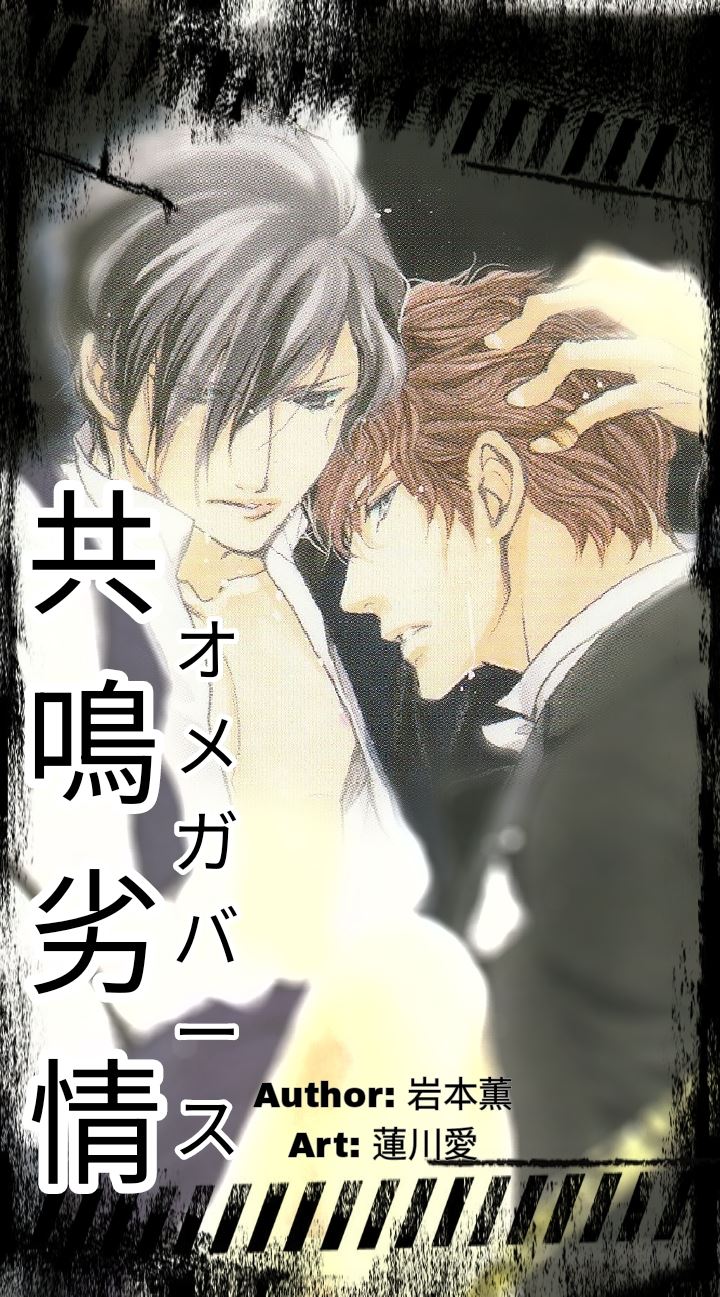
... Read More
The pacing in these chapters is something else entirely. It starts slow—Kouki at the door, picking the lock, the careful tension of almost getting caught. You're leaning forward, right? Holding your breath. And then it cuts to the poker game, and suddenly the pace shifts into something more rhythmic, more controlled. Each bet, each reveal, each reaction from the other players—it builds like a drum loop getting tighter. But here's what I love: the author knows exactly when to let you exhale and when to snatch that breath away. After the poker hand reveal—"A Royal Straight Flush in spades—the unbeatable hand"—you're left there, reeling. No resolution. No comfort. Just the question hanging in the air: what happens now? And the chapter ending... I won't spoil it but it left me immediately opening the next chapter because my brain couldn't handle the uncertainty. This is how you structure a page-turner. Not by adding more drama, but by removing the landing.
... Read More
The pacing in these chapters is doing something I can't quite put my finger on, and I think that's the point. We start with what should be a high-tension scene — going undercover to a party, trying to confront someone called Kourogi — and instead we get... an architectural tour. Cylindrical towers. Emerald green domes. Light pouring from countless windows. It's like the author is deliberately deflating the suspense by making us obsess over DETAILS instead of ACTION. But here's the thing — it's working. The slow, almost hypnotic description of the mansion creates this sense of dread because we KNOW something is coming, and the longer the author takes to get us through the door, the more anxious we become. It's the narrative equivalent of walking toward a stage where you know there's a trapdoor. The Shinozaki introduction scene is where the pacing really shifts. Suddenly we're getting interpersonal tension — the monocle-wearing steward sizing up Amane like a suspect. The test-and-approval beat creates its own mini-climax, and when Amane passes, there's this brief moment of relief before the chapter drops the "bride for Shutou Keiki" bombshell. Then immediately pivots back to atmospheric description. The chapter break right as Kouki is offering champagne is masterful manipulation. Not a cliffhanger, exactly — just a suspended moment. You're not dying to know what happens next, but you're deeply curious about the emotional direction. It's the kind of pacing choice that says "trust me, this will matter later" and honestly, I trust it.
... Read More
Okay, so this whole sequence is basically a masterclass in how past choices bleed into present danger. The plot doesn't just move forward—it loops back. Odagiri's secret kept safe, his death looming, and now Amane is out there risking exposure again. It's like every step he takes is haunted by that one promise. And the way the author structures it? First we get the emotional anchor—Odagiri's mentorship, the irregular cycles, the relief mixed with self-loathing—then suddenly Bam, Kourogi appears. The pivot is brutal but effective. It mirrors how trauma and loyalty aren't linear; they ambush you. Also, the detail about Kouki telling him "don't act alone" and Amane ignoring it? That's plot friction. That's the crack where everything could splinter. The narrative isn't just about catching a target; it's about who you become when you stop listening to the people who care about you. Brilliantly unsettling.
... Read More
The dialogue in this chapter is absolutely fire. Both characters have such distinct voices and the way they throw verbal punches at each other is chef's kiss. Amane's voice is sharp, cynical, and defensive. Every line he speaks has an edge to it. 'You scared off the target I finally managed to get close to. What are you so pissed about?' — that opening salvo sets the tone perfectly. He's not asking questions because he wants answers, he's using words as weapons. And his 'Don't act like you're my boyfriend' line? Brutal. Efficient. Absolutely devastating because we both know he doesn't mean it. Kouki's voice is different. More controlled, more measured, but underneath all that calm there's this current of raw emotion. When he says 'I don't want you to use that weapon,' there's a quiet desperation that cuts through his usually composed exterior. And then his whole monologue about the past being a fixed point and the future being uncertain? That's Kouki at his most idealistic, which is simultaneously endearing and slightly annoying because Amane is absolutely right to call him out on the hypocrisy. The narrator's voice is also worth noting—it's got this wry, almost sarcastic undertone, especially in Amane's internal thoughts. Things like '(What aura-detecting talent? This guy is disgusting...)' and '(Serves you right. Don't spout ideals you can't live up to, rich boy.)' give us this glimpse into Amane's actual feelings that he would NEVER say out loud. The contrast between his spoken dialogue and his internal monologue creates this delicious dramatic irony where the reader knows more than the other character sometimes. And can we appreciate the author's decision to NOT have these two resolve anything? They argue, they hurt each other, and then the chapter just... ends. No makeup scene, no 'I understand now.' Just raw unresolved tension. Which is honestly the most realistic portrayal of a relationship between two people who clearly care about each other but keep finding ways to wound each other because they don't know how to communicate without fighting.

Leave a comment

You must be logged in to leave comments. or
