Qing Gu - Reviews

Qing Gu
+Add to Custom List
Sort
Add review
... Read More
Let me tell you about how this chapter uses weather as a structural device. It starts with rain pattering against withered lotus leaves—that poem sets the entire mood. Slow, melancholic, lingering. Then the girl arrives and the rain suddenly becomes threatening, driving her soaked and desperate through the forest. The scene transitions feel almost cinematic: we move from the stilt house, to the woods, back to the stilt house, and then into evening. The author strips away every sound after the rain stops. No insects. No birds. Not even wind. That silence is the loudest moment in the entire chapter. It's not that the pacing dragged or rushed—it was controlled like a musician playing with dynamics. The tension builds, releases, builds again, and then just... cuts out. Like someone pulling the plug on a room full of noise. That's skilled writing, plain and simple.
... Read More
Okay so I need to talk about this structural twist because it completely reshaped how I read everything that came before it. The chapter opens with what reads like a deeply intimate, almost obsessive confession from the main character — 'My name is Hong Hong.' Wait, WHAT? Turns out the entire section I just read wasn't from a human at all. It's from a GU INSECT. A red venomous snake-like creature. And not only that — this insect has been narrating its own history, its bonding with Shen Jianqing, its fascination with Li Yuze, and its petty jealousy all along. This recontextualizes EVERYTHING. That opening passage where someone whispers 'You see, in both your eyes and mine, this has now become the most perfect ending' and talks about 'true confinement' — I initially read that as the romantic lead's declaration. But now? It reads as something far more unsettling. An entity that believes locking someone's heart is the ultimate victory. And it's not even human. Meanwhile, Wen Lingyu's section drops right after — her regret about never having a proper conversation with 'that person' she met during the Miao research trip. That person being Li Yuze, clearly. The narrative jumps between three POVs in these chapters and each one fills in pieces of a puzzle I didn't even know I was assembling. The Miao village flashback at the end with the old woman and the young man whose 'pupils suddenly dilate' — is that Li Yuze as a younger version? The timeline is doing some serious gymnastics here and I'm here for it.
... Read More
I need to talk about the dialogue here because it is EXCEPTIONAL and I don't say that lightly. Every character has a distinct voice and the author never lets them blur together. Qiu Lu's lines are sharp, quick, slightly aggressive — 'Ah, so handsome people get to have their names remembered, while we're just stuck on the sidelines!' That's NOT something everyone would say. That's Qiu Lu. It's defensive humor, thrown out fast before she can second-guess herself. Ah Li is warmer, slower, more deliberate. 'Li Yuze... since you guys are here for a survey, I'll join you guys!' The way she rolls the name around in her mouth ('Li Yuze...' repeated twice) shows her personality — she's observant, she lingers on things, she's comfortable with silence and space between words. Xu Zirong is the straight man, the one who always ruins the moment by being honest. 'We just sang nonsense! You guys also know how little musical talent I have.' He can't help himself. He's the friend who says 'actually it was kind of bad' at the karaoke party. Believable to perfection. An Pu is the smooth operator — professional, helpful, always offering solutions. 'Today, I guarantee you guys will return with a full harvest!' That confidence, that slight boastfulness — it's exactly how a local guide who takes pride in his work would speak. And the narrative voice! Li Yuze's observations are dry, witty, slightly detached. 'I rarely saw this young lady look so defeated, and I secretly admired Ah Li.' He's watching everything but participating from just outside. It creates this nice distance — we get his perspective but we also know he's holding something back. The dialogue never feels performed. No one is making grand speeches or delivering monologues. People interrupt each other, trail off, say the wrong thing at the wrong time. It's chaotic and beautiful. My favorite line has to be Ah Li's reveal: 'Because last night in the square, you two were screaming each other's names so loudly, it was hard not to hear.' Qiu Lu's '……' response is the perfect punctuation. Sometimes the best dialogue is the silence after.
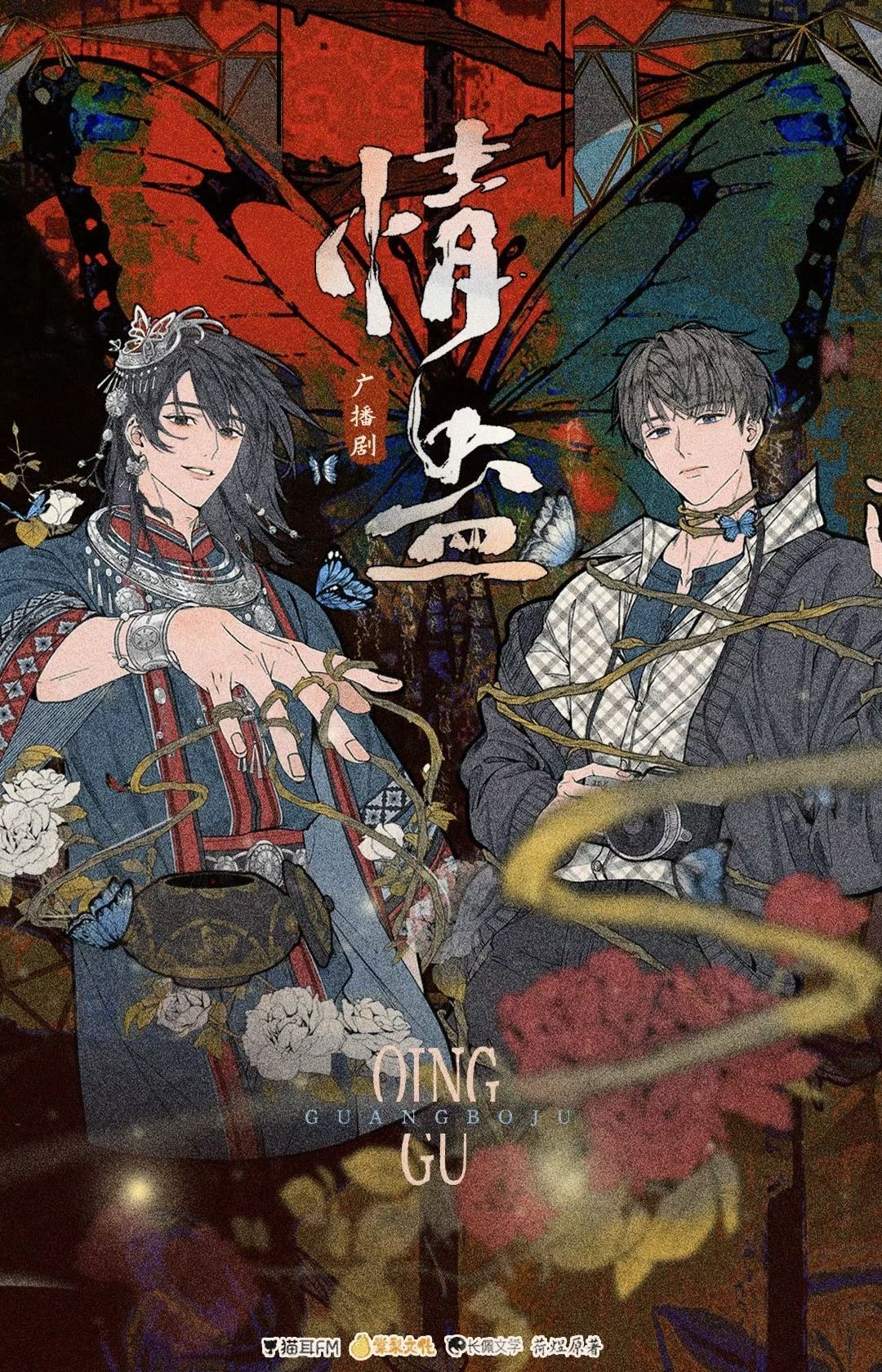
... Read More
Okay can we talk about how Li Shaoheng literally screams at Yuze and the stakes feel REAL? Not the world-ending kind of stakes, but the deeply personal kind that actually hits harder. Yuze standing there and just saying "I'm going to Dongjiang" like it's the most normal thing in the world after his father-figure explodes at him—I was genuinely on the edge of my seat during this scene. The conflict here isn't about life or death, it's about identity and autonomy, and honestly that felt more tense because I've been there. When Li Shaoheng yells "Never rely on me again!" and Yuze just silently thinks "I will"... chills. Actual chills. Because that moment right there is where everything shifts. Yuze isn't running away, he's running TOWARD something. The stakes just redefined themselves from "what if I fail" to "what if I succeed and become someone my father couldn't control." Did the author deliberately make this feel so quiet despite the shouting? Because that contrast is what made me sit up straighter than any dramatic action scene ever has.
... Read More
This chapter opens so tenderly with Shen Jianqing and the rain, and then within two scenes we're thrust into full crisis mode. The author does not hesitate at all. First there's the girl who appears with panicked Miao words, then Shen Jianqing suddenly departing into the storm, and then Wan Ying shows up with this whole revelation about the Gu insect plague and the new head insect. The pacing of information drip-feed is so good here—we learn piece by piece about the insect problem, about Shen Jianqing's role as the strongest Gu refiner, about how the village survives. And then the ending. The silence. Absolutely devastating. Days of rain stop, everything goes quiet, Li Yuze is alone in that room, and the candle goes out and we're just plunged into that pitch-black uncertainty. No crickets, no frogs, no birdsong—the whole ecosystem went silent, which means something is VERY wrong. I literally gasped when I read that last line. The setup here is immaculate. Something is about to happen in that darkness and I cannot sleep until I know what it is.
... Read More
Trees, so green they were almost black, surrounded us on all sides. That line. That single line. I read it twice because my brain couldn't process how accurate it felt. This isn't just descriptive writing—this is horror-level atmosphere building, and the author doesn't even seem to realize they're doing it. Let me walk through the scene architecture because it's genuinely impressive. You start with this bright, almost comical scene: Qiu Lu's overflowing luggage, Xu Zirong bent double under backpack weight, the inn owner generously lending a cart. It's warm, slightly chaotic, grounded in mundane details that make it feel real. The Miao village backdrop gives us cultural texture without over-explaining. Then the car ride. The highway description is almost poetic—"like a tunnel built on the seabed" with a 360-degree view of forest greenness. Beautiful, peaceful. We're lulled into the same false security the characters feel. And then the world changes. The asphalt becomes uneven concrete. The trees grow denser, darker, more oppressive. Birds fly by and leave no trace—which is such a small detail but so deliberately chosen. This forest is consuming sound, memory, orientation. It's actively erasing the world behind them. The darkness isn't just absence of light—it's a character. "We even turned back at one point, but we couldn't find our way out." The road narrows. Weeds thicken. Signage vanishes. The author builds this迷宫感 (maze-like feeling) through cumulative environmental details rather than one big exposition dump. And that ending note about temperature—even early summer, the dense deep forest drops to near-freezing—adds physical danger to the psychological terror. This world isn't just beautiful; it's hostile, indifferent, and closing in. The prose has this incredible ability to make a forest feel alive in the worst possible way. Not haunted, not cursed—just vast, ancient, and completely unconcerned with human survival.
... Read More
The tension in this scene is suffocating and I loved every second of it. Three people who share a history none of them can fully articulate are standing in a shop, and the emotional stakes are enormous. Li Yuze wants to say something. We know this because he starts to, hesitates, gets cut off, starts again. The narrator knows what he was going to say — the wedding invitation, the explanation, the apology. They finish his sentence in their head: "when the time is right, take full responsibility." These are the words of someone who cares but also someone who chose someone else. Shen Jianqing is the antagonist in this scene but not in the way you'd expect. He's not villainous — he's protective. He blocked the narrator's view of Li Yuze. He wouldn't let Li Yuze reach out. He's afraid of losing what he has, and rightfully so. His possessiveness is both charming and heartbreaking because it's the same possessiveness that probably drove the original conflict. But the real conflict is internal. The narrator COULD have stayed. COULD have listened. COULD have let Li Yuze explain everything. Instead they seize the student as an escape route and walk away into the festival crowd. The stakes? Everything. A lifetime of held feelings, potentially resolved in a single conversation. And they choose to let it go.
... Read More
The description of Dongjiang Miao Village is so vivid I could practically smell the mountain air and hear the bus engine. Let me just... where do I even start? "The mountains stretched in continuous undulations, and the dense forest was stark and cold." That's the opening image and it immediately sets the tone—this isn't some tropical paradise, it's ancient, slightly forbidding, and absolutely alive. And then the bus ride with the child asking their mom how much longer, the elderly people explaining Miao customs to tourists... this is worldbuilding that doesn't feel like worldbuilding. It just feels like life happening around you. But the real masterpiece is the stockade gate scene. The wooden gate described as "like a gentle giant" overseeing the comings and goings. The Miao teenagers in traditional dress offering the first cup of wine. The tourists complaining about the queue. Shen Jianqing appearing in Miao outfit with medium-length hair, silver torc around his neck, that gloomy aura completely gone. The way the author strips away all the supernatural clutter from this scene—the Gu container, the fear, the danger—and leaves us with just two people reunited at a village gate on New Year's Day? That's cinematic. That's the kind of scene that should be in a movie and I would watch it a hundred times.
... Read More
The dialogue here is remarkably sparse, and I mean that as the highest praise. Most of the emotional transmission happens through action and description, not words. Ah Song can't even form coherent sentences—he's got these guttural cries, mumbled syllables, gestures. The author refuses to anthropomorphize him into normal speech, which keeps his disability central to the scene rather than making it palatable. When the protagonist speaks, it's mostly questions or gentle reassurances. "Did you lose something?" "Let's look again tomorrow." These are the words of someone trying to connect across an unbridgeable gap. And Shen Jianqing—oh god, Shen Jianqing. His dialogue is three lines total across the entire scene, and every single one is a threat wrapped in concern. "Who allowed you to run out on your own?" "Who gave you permission?" The repetition is aggressive. The escalation is clear. He's not asking for information; he's asserting dominance, and he's using the protagonist's vulnerability against her. But what makes the dialogue voice work so well is the silence around it. The author lets the forest wailing, the crack of a branch, the wet sounds of Ah Song's crying fill the spaces between words. The narrative voice itself is first-person, immediate, slightly breathless—like the protagonist is thinking faster than she can type. There's a raw honesty to it that avoids literary pretension. Even the interrupted final sentence works because it captures how real anxiety feels: you don't get to wrap things up neatly. You just get cut off mid-thought and left hanging. That's not bad writing. That's craft.
... Read More
Xu Zirong is genuinely one of the most realistically written people I've encountered in this genre. While everyone else is processing existential terror, his first instinct is still: WE SHOULD TELL EVERYONE ABOUT THIS PLACE. Not because he's careless—well, partly because he's careless—but because that's just WHO HE IS. He's the friend who would document the apocalypse and post it on social media. And Qiu Lu slapping him for it? Perfect. That slap isn't anger, it's affection dressed as violence, and the text explicitly notes he isn't even annoyed by it. Their whole dynamic throughout this passage reads as two people who have already reached a place of unconditional acceptance with each other. Meanwhile, Wen Lingyu refusing to explain WHY she won't tell is such a loaded character moment. She's sitting across from her friends, about to potentially die in a cave, and she has a secret. A secret she's choosing to keep even now. I keep coming back to this—what did Shen Jianqing do to her? The narrator mentions they saw something in the woods last night, but we don't know what, and Wen Lingyu's silence about it is its own kind of narration. Three people in this group are hiding things from each other, and that's more compelling than any action scene could be.
... Read More
The symbolism in this chapter operates on at least three levels simultaneously and I am emotionally compromised. First, the most obvious: red silk ribbons as memorial markers. Cremation ashes scattered in river, ribbons tied at bridgehead so souls remember home. This transforms infrastructure into sacred geography. The bridge isn't just crossing; it's threshold between living and dead, present and memory, here and wherever souls drift. The varying conditions of the ribbons—bright recent ones alongside faded ancient threads—visualize how grief ages differently for each family. Some losses still bleed color; others become part of the landscape's texture. But the symbol also operates interpersonally. Li Yuze literally positions himself between Shen Jianqing and the ribbons, between preservation and disruption, between anger and curiosity. His body becomes another kind of marker—a living testament to complicated loyalties. And those ribbons fluttering 'as if alive' in the wind? They're not static memorials; they're active participants in the present, moved by breath, by weather, by attention. This connects to the deeper theme of cultural transmission. The Unassimilated Miao maintain their practices precisely through such embodied rituals. When Qiu Lu reaches to touch them, she isn't just violating etiquette; she's approaching a language of mourning she doesn't speak. Shen Jianqing's violent correction isn't mere anger—it's desperate protection of meaning. Meanwhile Li Yuze's observation that 'blindly trusting what's written is worse than not reading at all' hints at the novel's ongoing meditation on representation versus reality. Books say Miao people don't welcome outsiders. Reality shows Shen Jianqing going to neighbors on their behalf, explaining traditions, creating space. The gap between stereotype and individual experience becomes its own theme. Even the food carries symbolic weight—'cured meat slices glistening white, fatty but not greasy, with salty aroma and smoky flavor of being cured over a fire.' Preservation through smoke and salt mirrors preservation through ribbon and river. Both are methods of making the temporary permanent, of refusing let the dead simply vanish. And Li Yuze's inability to answer whether he'd stay? That's the human condition reduced to its simplest form—we never truly know until we're asked, and by then the answer might not matter. Everything connects. The ribbons are everywhere. I'm seeing them in my sleep.
... Read More
This winter snow scene is absolutely gorgeous and I have to dissect it because the atmosphere here is doing SO much heavy lifting. Yancheng is described as a southern city where snow rarely falls, and yet here comes this thin layer of fluttering flakes that somehow causes 'a huge stir at school.' The contrast between the northerners reminiscing about 'thousands of miles sealed in ice' and the southerners experiencing their first real snow together creates this beautiful cultural texture that makes the world feel genuinely lived-in. But the real masterpiece is when Li Yuze walks past the lotus pond. 'The autumn gloom lingers, frost comes late; withered lotuses remain to hear the sound of rain'—she's quoting this classical Chinese poetry line and then immediately regretting that Shen Jianqing wouldn't understand it because he never saw lotus flowers or heard this poetry. What a devastating way to show absence through literary reference! The dried flower stalks standing upright in the lake become this visual metaphor for her own state—still standing but completely drained of summer color. And then Zhao Rugu appears as this bright couple walking toward her on the pontoon bridge, which literally blocks her view of the pond. The worldbuilding doesn't just describe scenery; it mirrors emotional states so perfectly that every location becomes a character itself.

Leave a comment

You must be logged in to leave comments. or
