Qing Gu - Reviews

Qing Gu
+Add to Custom List
Sort
Add review
... Read More
I keep coming back to the lotus imagery. On the surface it's just seasonal description — late autumn, flowers already gone — but it's doing so much more than that. Shen Jianqing has never seen a lotus in bloom, and by the time they arrive at the lake, it's already died. Is that coincidence? I don't think so. There's this entire theme of things arriving too late, of experiencing beauty only in its aftermath. Then there are the hands. Shen Jianqing hiding his hands behind his back when Zhang Xu shows his rash. What's he protecting? What happened to him? The story keeps pointing at physical marks — the rash, the hidden hands, the receding hairline of Bald Teacher (who jokes about being 'brilliantly bald') — and I can't shake the sense that bodies in this novel are maps of something deeper. Every scar, every mark, every gesture tells a story the characters aren't ready to speak aloud. And the recorded images — 'No matter how much time passes, you can always watch them again' — that's basically the thesis of the whole novel, isn't it? The desire to preserve, to hold onto moments that are already slipping away. We're all just trying to watch the playback before it's gone for good.
... Read More
This author's dialogue is so干净 you could drink it. Let me trace through exactly why. Li Shaoheng's lines are all shouted imperatives—"Then what do you want to do?" "Just disgrace me!" "Never rely on me again!" He doesn't even get a full sentence sometimes. Just bursts. And it tells you everything about a man who sees his son as an extension of his own ego. Then Yuze's responses: short, flat, almost clinical. "I'm going to Dongjiang." "After I graduate, I'll go to Dongjiang and won't bother you anymore." No emotional language, no persuasion, no pleading. Just statements. This is a person who has stopped trying to be understood and started trying to be free. And then Shen Jianqing—he barely speaks in this entire excerpt. "Yuze Ah-ge." That's it. Just his name for Yuze, said through a crowd, and it carries more weight than any monologue could. The dialogue here proves that what characters DON'T say matters more than what they do. The Lanmen wine explanation from An Pu earlier? Natural exposition that didn't feel forced. Yuze's joking reply about being a live-in son-in-law? Perfect tonal shift from heavy to light. The author knows exactly when to let silence do the work.
... Read More
I need to talk about the sanatorium scene because it genuinely made me cry. Not the dramatic kind of crying, but that quiet, stuck-in-your-throat kind where you just have to keep reading even though your chest feels like it's caving in. Xu Zirong — the track and field athlete, the one who used to be strong and whole — now can't even walk without gripping a railing, his calves wasted away, his knees protruding. And he's still smiling. Still trying to make everyone else feel better. "Don't cry! I'm not dead yet, or are you pitying me?" The line just destroyed me. Here's this guy who's been through actual hell, who survived something terrible, who's now broken in his body but refuses to let pity be the first thing people feel when they see him. And then Qiu Lu's room. Wire mesh on the entire corridor — you can't even imagine how claustrophobic that image is. She's lying there clutching a cotton doll that resembles Xu Zirong, and on her bedside table are these tiny handmade dolls, including one of the protagonist and one of Wen Linyu. Who made them? Probably her mother sitting there humming some unrecognized lullaby. But those little dolls say everything. Someone is holding onto them through craft and repetition. Someone is stitching together the people they love because the real people are too broken to hold. Wen Linyu can't even watch Xu Zirong try to walk — she turns away and makes these suppressed sounds. The emotional weight of this entire chapter just accumulates until you can barely breathe. And the author doesn't even try to comfort you. No soft landing. Just ends it with the mother's humming and that finger raised saying be quiet.
... Read More
The line that destroyed me: 'Li Yuze, when Shen Jianqing was gravely injured, you clearly had the best opportunity, why didn't you leave?' I had to put the book down. Actually put it down. Because this single question unravels everything about Li Yuze's emotional state. He's spent so long telling himself he hates Shen Jianqing, that his obsession ruined his life, and now this voice in his head is asking the one question he couldn't answer before. WHY didn't you leave when he was injured? The answer, of course, is obvious to anyone reading between the lines — he couldn't. He wouldn't. Because despite everything, there's something there that he refuses to name. And then the counselor scene. Oh god. Dr. Chen Ci is so perceptive. She doesn't even prescribe medication, she just tells him he needs a confidant and asks him the question he's been avoiding: 'What are your feelings for this boy?' And his response — 'I'm not sure yet' — is heartbreaking because he IS sure, he just can't admit it to himself. Zhao Rugu's confession is beautiful in its own way. She studied under him for three years, manipulated her way into being his student assistant just to see him, and she tells him plainly. And Li Yuze's response isn't cruel — it's just honest in its own painful way. He can't return this feeling. Not when his heart is clearly someone else's problem.
... Read More
What makes this passage so tense isn't action or danger — it's the sheer emotional stakes for a character who has nowhere left to hide. Li Yuze's conflict is layered. On the surface, he's dealing with guilt over Shen Jianqing's actions and the people they hurt — Qiu Lu, Xu Zirong. But deeper than that, he's fighting a war with himself. Every time he tells himself he hates Shen Jianqing, his body betrays him. He ran from the classroom but couldn't run from the question. He sought therapy but the therapist just reflected his own avoidance back at him. The stakes here are existential. If Li Yuze admits what he feels, he has to reconcile it with everything Shen Jianqing has done. He has to face the fact that the person who almost destroyed his life is also the person he dreams about constantly. And if he denies it? He's living a lie, which is arguably worse. Then Zhao Rugu enters the picture and raises the stakes even higher. She offers him something real, something healthy, something he could actually build a life with. But he can't accept it — not because he doesn't deserve it, but because accepting it would mean betraying the one person he's been running from and running toward simultaneously. The question 'why didn't you leave?' is the core of everything. It's not just about Shen Jianqing's injury. It's about every moment Li Yuze had the chance to walk away and chose not to. That's the conflict that will define the rest of this story.
... Read More
There's a red mole on Shen Jianqing's eyelid. It blinks. It watches. It stays fixed while everything else moves around him. That mole is a mark. A brand. A symbol of danger disguised as beauty. In myths, marked individuals are often chosen—one way or another. Here, Shen Jianqing is marked, yes, but not by gods. By choices. By power. By the weight of a world that sees him as both god and monster. His foot? Li Yuze's foot. Swollen. Injured. Dependent. Shen Jianqing says, “You'll definitely have to rely on me for the rest of your life.” That's not just medical advice. It's prophecy. The broken limb becomes a metaphor for broken autonomy. To heal, Li Yuze must submit. To walk again, he must crawl. And the snake. Oh, the snake. “Shen Jianqing was probably a beautifully patterned snake, with the most perfect camouflage, but sharp, deadly fangs.” Camouflage. That's the theme. Everything about him is concealment. His youth hides authority. His innocence masks calculation. His love conceals control. Even his body is a mask—the jade-like face, the fluffy hair, the harmless smile. Beneath it all, fangs. Language itself becomes symbolic. “Fair deal.” That phrase echoes. It refers back to past violations, to transactions that weren't transactions at all. A fair deal implies consent. But what was offered before was coercion disguised as choice. Now, Shen Jianqing offers another “fair deal”—this time with a literal injury as leverage. The symbolism is brutal: every agreement between them is built on imbalance. Even the kiss is symbolic. Cool breath like mountain mist. Warmth pressed against lips. It's nature invading control. Something wild entering a calculated space. Yet Li Yuze doesn't resist. Why? Because part of him craves the wildness. Part of him wants to stop being rational. The recurring image of the villagers' gaze—awe and apprehension—reinforces the theme of hidden hierarchies. In a place that should be simple, there's depth. In a boy who should be ordinary, there's power. The story keeps asking: what lies beneath the surface? And the final line about “dispatching someone”—that's not just plot. It's thematic. Language reveals class. Power. Identity. Shen Jianqing doesn't say “send help.” He says “dispatch.” Words are weapons. Words are maps. And in this world, speaking wrongly can cost you more than pride.
... Read More
I need to talk about the ending of this batch because THAT image. The rooster crow. The carved wooden window. The humid mountain breeze. And then—the flower. "A white, unknown flower lying on the dusty window ledge! The flower was pristine, its pistil light yellow, and its petals still held a few drops of dew. Below the flower was a short stem with a clean break, definitely not something that had accidentally snapped off and fallen onto my windowsill." This is THE kind of detail that makes a book stay with me. Think about it: this flower was PLACED there deliberately. Clean break on the stem means it was cut or picked, not blown by wind. Dew still on the petals means it was recent. And it's on HIS windowsill, in a village where apparently people communicate through gestures and signs and footprints and flowers. The atmosphere in this section is SO carefully built. We go from the noisy, chaotic square full of tourists and Miao people and shoe-stepping incidents to this silent, misty mountain morning. The grey stilted houses stacked in layers, peaks shrouded in mist like an ink wash painting—it reads like a film transition. Everything slows down. The prose gets quieter. And then BAM, the flower appears like a message in a bottle. The narrator even quotes that line about seeing the green mountains as charming and the green mountains seeing him the same way. It's almost too on-the-nose but honestly it fits because the whole vibe is this liminal space between the mundane (he's hungry, he ordered noodles, his friend lost a shoe) and this uncanny, cinematic mystery unfolding around him. The world feels ALIVE in a way that makes me want to step inside it.
... Read More
Okay, let me just say—the removal of the iron chain is one of those plotting moves that hit different because it's so brutally simple. No elaborate trap, no villain monologue. Someone just… cut it. And the narrator immediately lays out the logic of why it shouldn't have been possible (too heavy, would make noise, should be at the base of the cliff) and then just… accepts that none of that matters anymore. That's great writing. The story could've doubled down on mystery—maybe the chain fell, maybe it was stolen, maybe supernatural forces took it—but no. The ambiguity IS the point. They're stuck. Period. And then the real pivot: the narrator notices the river they completely overlooked because they were fixated on the bridge and ribbons. That detail feels almost careless on a first read, but it's clearly planted earlier as environmental setup that pays off here. Also loving how the conversation about whether to expose the Miao village threads through the escape sequence—it's not a separate subplot, it's woven into the movement itself. They're walking and talking and the stakes keep compounding. The chapter ends with them in a cave, the river leading somewhere unknown, and the narrator literally seeing black insects as a metaphor for dread. Classic misdirection—the "insects" line makes you think literal bugs, but it's clearly tracking/assassins. Brilliant structural economy.
... Read More
There is something masterful about how this chapter unfolds and I've been trying to figure out exactly what it is. The author starts slow — almost uncomfortably slow, in the best way possible. You walk with these characters through the forest, you see the stilt house appear in their line of sight, you notice the moss on the tiles and the bamboo poles supporting the structure. It feels unhurried, meditative even. But underneath that calm surface, every detail is doing work. The transition from the exterior description into the interior is where the pacing really sharpens. You go from the wide shot of the house in the forest to the narrow corridor, the dark living room, the wobbly bench, and suddenly the space feels smaller, more intimate, more enclosed. That structural narrowing mirrors the emotional narrowing that's happening — these characters are being drawn into Shen Jianqing's world, his private space, and there's no going back. Then the author pulls the pace back out again with the kitchen scene. It's warmer, steam rising, cured meats hanging from the bamboo pole, fire burning under the pot. You can literally smell it. And then just as that warmth is fully established, Shen Jianqing drops the third floor warning and the temperature drops with him. The wind through the forest, the shiver, the restriction — the pacing suddenly tightens again like a drum. The bedroom exploration section is brilliant pacing too. Musty smell, medicinal herbs, the window, the prison cell indentations. Each detail lands separately but builds into a cumulative unease. By the time Li Yuze sits on the bed and the mountain wind chills his neck, the chapter has been slowly winding tension for pages and it all coils into that kitchen confrontation. And then it cuts off mid-sentence. Not a cliffhanger per se, but a sentence that was never finished. That's not sloppy pacing — that's deliberate.
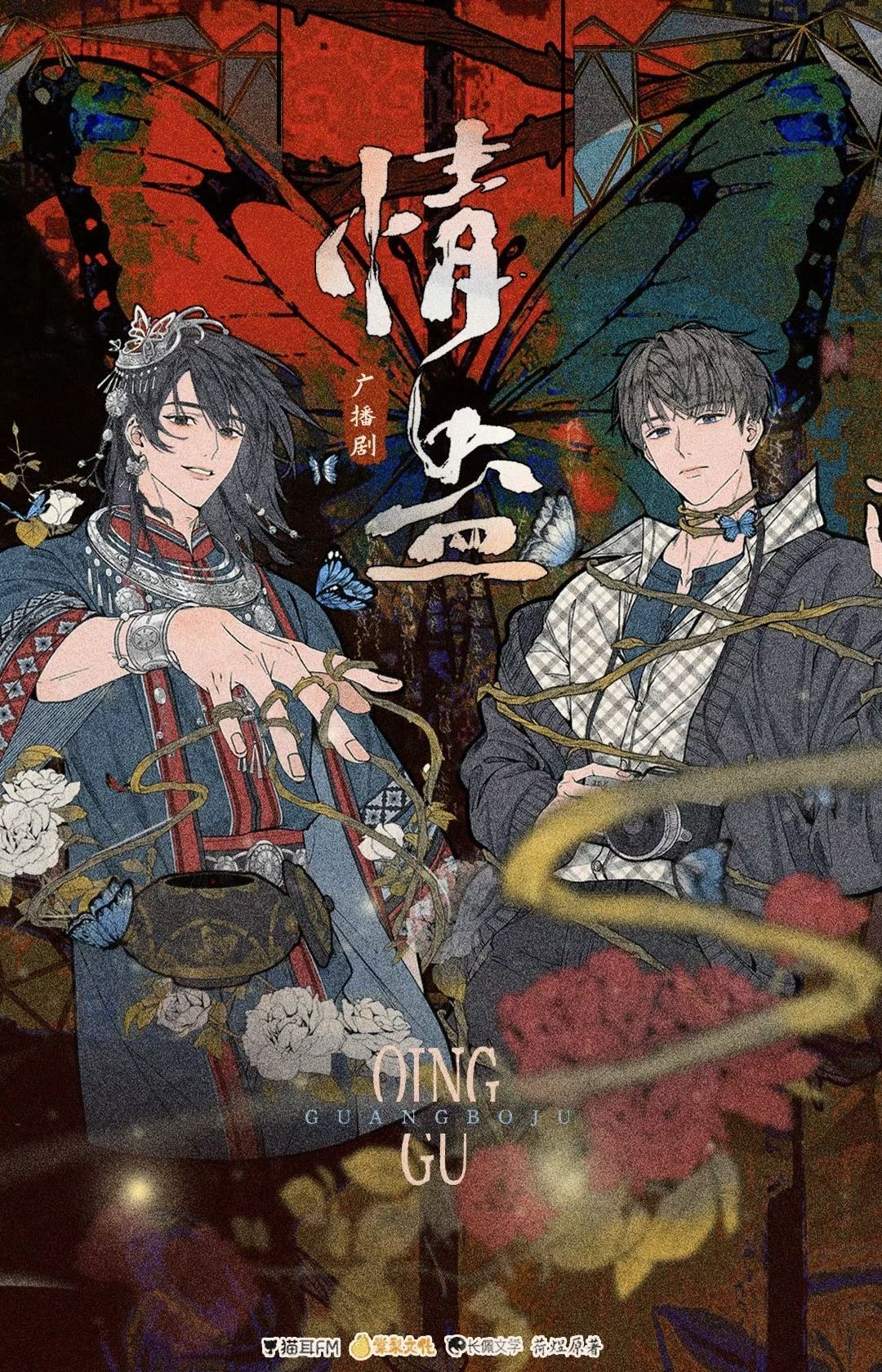
... Read More
The structure here is actually kind of brilliant when you look at it as a whole. You've got this intense, almost confessional scene between the narrator and Wen Lingyu—snow, forest memories, unrequited love, the whole thing—and then the VERY NEXT paragraph drops you into a noisy classroom full of三十-plus graduating students playing party games. The tonal whiplash is intentional, and it works. Think about it: the narrator just heard Wen Lingyu pour her heart out about a boy she might never see again. Then immediately after, they're surrounded by people who will scatter across the country, laughing about sleep-talking secrets. Both scenes are about endings. Both are about gathering one last time before everything changes. The author doesn't need to say 'this is a moment of transition'—the pacing does it for them. Within the reunion scene itself, the rhythm is also well-controlled. Zhang Xu opens with the 'first impression' prompt—light, communal, nostalgic. Then he pivots to the narrator's sleep-talking moment, which raises the stakes from group memory to personal vulnerability. The narrator hesitates, weighs their options, and then just... says it. The release is immediate. No drawn-out speech, no dramatic pause. Just: 'I really like him.' Done. That final line about the father—an almost jarring shift again—creates a cliffhanger without being a traditional cliffhanger. It's the literary equivalent of someone suddenly standing up at the end of a party and saying 'I need to tell you something.' You know more is coming.
... Read More
Shen Jianqing is genuinely terrifying and captivating at the same time. I need to talk about him first because this character is doing something really complex. The opening lines about love—'on one person, then that's the only person for this life. No one can change that'—set up his entire worldview in one paragraph. This isn't romance; it's possession dressed up as devotion. And yet, the narrative keeps showing us genuine moments where he cares about Li Yuze. Carrying him because of the injured leg, wanting him to lean on him, whispering 'Don't look at anyone else; it'll make me sad'—these are the actions of someone who genuinely believes love means never letting go. Whether that's beautiful or disturbing depends entirely on your perspective, which I think is intentional. But here's what really struck me: Ah Song. This minor character gets maybe three scenes and completely dismantles my assumptions about what devotion looks like. He betrayed his own group to protect Wen Lingyu—someone who may not even know his feelings. And his expression? 'Guilt and sorrow, yet no regret.' He knew exactly what he was doing. He accepted it. I couldn't help but draw parallels between Ah Song and Shen Jianqing. Both are willing to destroy themselves for someone who doesn't reciprocate. But Shen Jianqing has power and Li Yuze's cooperation; Ah Song has nothing but his own willing sacrifice. It made me wonder which version of obsessive love the story is ultimately critiquing. The narrator's relationship with Shen Jianqing is also fascinating. He's clearly uncomfortable being supported, wanting independence ('You could help me find a crutch'), but Shen Jianqing keeps pulling him closer. The physical proximity becomes a metaphor for the emotional entanglement. I'm genuinely invested in figuring out where this goes.
... Read More
Okay I need to process this because that lunch scene was emotionally devastating and I didn't see it coming. Let me walk through the emotional arc because it's SO well done: START: Warmth. The group is comfortable. Qiu Lu and Ah Li have bonded. They're sharing food, laughing about Gu insects. The narrator feels like they're part of something genuine. This is the emotional baseline - friendship, discovery, joy. MIDDLE: The rupture. Ah Li accidentally says "Shidi Mountain" and then covers her mouth. The temperature in the room drops. An Pu goes from relaxed to deadly serious. Qiu Lu literally shrinks back in fear. The narrator's curiosity turns into guilt - they just wanted to know, they didn't mean to cause pain. END: Abandonment. Everyone rushes to finish eating. Ah Li and An Pu won't meet anyone's eyes. The narrator is left alone with their phone, searching for a place that shouldn't be found. The emotional core here is about BOUNDARIES. Ah Li and An Pu have boundaries - places they won't share, memories they won't discuss. The narrator crosses that boundary out of genuine curiosity, not malice, and that makes it MORE painful. I felt genuinely bad for the narrator by the end. They're not a villain - they're just someone who can't help themselves. "Once I get curious about something, I have to understand and research it." That line is both endearing and tragic because we know this curiosity will cost them. The friendship between the group members is also tested. Qiu Lu tries to comfort Ah Li but gets shut down. Wen Lingyu makes jokes that fall flat. Even Xu Zirong, the silly one, knows when to stop asking. The most heartbreaking moment: Ah Li covering her mouth. She didn't MEAN to say it. It just slipped out because she trusts them. And now she has to live with the fact that she revealed something she shouldn't have. I'm worried about what happens next. The narrator is going to keep digging, and I think it's going to hurt the relationships they've built. That's the real emotional stake here - not finding the mountain, but losing the people who could help them find it.

Leave a comment

You must be logged in to leave comments. or
