Placid Chang’an - Reviews

Placid Chang’an
+Add to Custom List
Sort
Add review
... Read More
"For every grain of sand, there is a star." This line hit me so hard and I think it's the thematic key to everything happening here. Qi Lin is telling Qu Ling'er about the desert — a place of endless barren sand — but insisting there's beauty there too, that every single grain has a star above it. This is Qi Lin's worldview in miniature. He's survived a life of sand (violence, death, emptiness) but he still believes in stars. The warmth scene itself is symbolic — two cold, damaged people sharing body heat in the dark, literally becoming each other's source of warmth. And then the morning betrayal strips that away again. The cage imagery is everywhere too. Qu Ling'er is locked up, the man in black is hanging by his collarbones like some kind of tortured bird, Su Cen is confined but acting like a king in his cell. Everyone in this story is trapped — physically or psychologically. Qi Lin's trauma about the child who died despite his promise is the origin point for every cage in the narrative. He promised to protect and failed. Now he builds walls instead.
... Read More
There are some genuinely cinematic moments packed into these chapters and I keep coming back to specific visuals. The opening image of Su Cen standing motionless while everything around him dissolves into chaos—firelight splattering everywhere, blood, agonized screams tearing through the night sky—this is pure cinematic language. The author doesn't give us the full battle scene; instead we get this almost dreamlike quality where Su Cen watches it happening but can't quite process it, like he's floating outside his own body. That surreal detachment is such an effective way to convey shock. Then there's the camp scene. No proper tents, just rough shelter after riding hard on swift horses. The hot soup warming Su Cen back to life is such a small, grounding detail that makes the whole world feel lived-in. And the wound-cleaning scene—alcohol stinging open flesh, Su Cen breaking out in cold sweat, the doctor's shaking hands—this is visceral in a way that's almost uncomfortable to read. But what really sets these scenes apart is the contrast. The wild nighttime chase giving way to the intimate quiet of the camp. The brutal physical pain of wound treatment giving way to the overwhelming warmth of Li Shi's embrace. Even the boat scene with Qu Ling'er has its own distinct atmosphere—dark, swaying, the cold silhouette of Han Shu against the light at the bow with those two crescent-shaped blades catching the eye. Each setting feels purposeful, not decorative.
... Read More
This chapter is a masterclass in pacing because it refuses to let you breathe. You open with Su Cen being manhandled on a desk—he's struggling, in pain, trying to think through the haze—and then you get a time skip. 'Exactly after a stick of incense, Qi Lin entered the room.' That's it. No fanfare, no melodrama, just... time passes and now Su Cen is dressed and sitting up. The morning after hits different entirely. Su Cen wakes up, takes the jade ring, and immediately goes on the offensive. Dali Temple, Ministry of Rites, he's moving with purpose now. The author switches from slow, painful intimacy to brisk, efficient investigation and the pace shift is jarring in the best way. It's like we catch our breath and suddenly we're sprinting. But here's what gets me—the Chapter 84-87 arc starts with Su Cen powerless, trapped between Li Shi's fingers, and ends with him demanding exam records from over a decade ago while telling the Vice Minister 'I need it today.' The transformation isn't explained; it's shown through action. He takes the bath, he sleeps, he wakes up, he moves. No monologue about how he processed what happened. Just the next step, and the next, and the next. The cliffhanger ending with He Zhongqing's patience clearly wearing thin? Perfect. Su Cen has established his authority but the real culprit is still out there. And that last line about checking among candidates from various regions—I'm locked in.
... Read More
The dialogue in this chapter is deceptively simple and I want to highlight why it works so well. Take this exchange between Su Cen and Qu Ling'er near the end: "Is there someone you know on this boat?" Qu Ling'er falls silent, and Su Cen immediately understands. That's THREE lines of dialogue doing enormous work. Three lines and we learn that Qu Ling'er has a past connection to this mystery woman, that he's been hiding something, that Su Cen knows him well enough to read his silences. Compare that to the Second Young Master on the dock: "I'll add another hundred taels, and have all these people sent away." One line and you've got the entire portrait—a spoiled, entitled rich kid who thinks money solves everything. The madam's voice is equally distinct: "please understand," "Miss Qingchen has said," tugging at his sleeve with a nervous smile. You can hear her voice, you can see her posture, and she's completely different from both the dandy and Su Cen. And then Miss Qingchen herself speaks one line: "All who come are guests. I, Qingchen, thank you all for honoring me with your presence." Polished, measured, in control. She doesn't raise her voice, she doesn't need to. The author's narrative voice also deserves a mention—it's observational without being dry, wry without being ironic. When Su Cen watches the dandy and thinks "like Xiang Wang, longing for the goddess's affection, while she remained indifferent," that's the narrator injecting a character insight that feels earned, not forced. The overall effect is a chapter where dialogue carries plot, reveals character, and establishes hierarchy—all without a single line feeling decorative or expendable.
... Read More
I'm not okay. I am genuinely not okay after reading this section. Let me process what just happened because my heart is actually racing. So Su Cen has this entire intellectual moment—he's delivering this 'Healing the Nation' theory, he's confident, he's articulate, and then Prince Ning asks him that one follow-up question. And Su Cen looks up. Just looks up. And sees HIM. The man from the teahouse. The one with the noble, intimidating aura that keeps ordinary people at a distance. And now Su Cen is KNEELING while this man sits just below the dragon throne, and their eyes meet across that hall. The text says Su Cen felt like he'd been punched in the chest. Like he couldn't catch his breath. Sharp pain spreading. Eyes stinging. This isn't just nervousness about a political rival—this is something far more complicated and far more personal. The author doesn't spell it out, but I swear on every novel I've ever read that this look between them carries so much weight. They've already met before—in that teahouse, which itself was charged with something unspoken—and now here they are again, in the most formal, dangerous setting imaginable. And then comes the line that absolutely wrecked me: 'Once again, he found himself in such an embarrassing situation. Once again, he had fallen at the hands of the same person.' Fallen. Not defeated. Not beaten. FALLEN. That word choice is doing SO much heavy lifting. It suggests history, it suggests repetition, it suggests that every time Su Cen encounters this man, something beyond logic and strategy goes haywire inside him. The physical reaction is unmistakable—chest pain, difficulty breathing, eyes stinging with unshed tears, the inability to meet that gaze anymore. This is what authors call 'show don't tell' and they are wielding it like a weapon. Prince Ning's eyes are described as 'a thousand-foot deep, cold pool'—and yet Su Cen detects 'a hint of mockery' and 'disdain' in them. But is it really disdain? Or is it something else entirely? The ambiguity here is delicious. That man sits in power, surrounded by courtiers and eunuchs, and his first move in this entire scene is to personally interrogate Su Cen. He could have ignored the young scholar. He didn't. And now Su Cen is unraveling in front of him, and the reader is watching every second of it, wanting desperately to reach through the page and tell him to breathe. I need this relationship to develop. I need to know what happened in that teahouse. I need to understand why this man's gaze can physically wound Su Cen. Someone write the sequel.
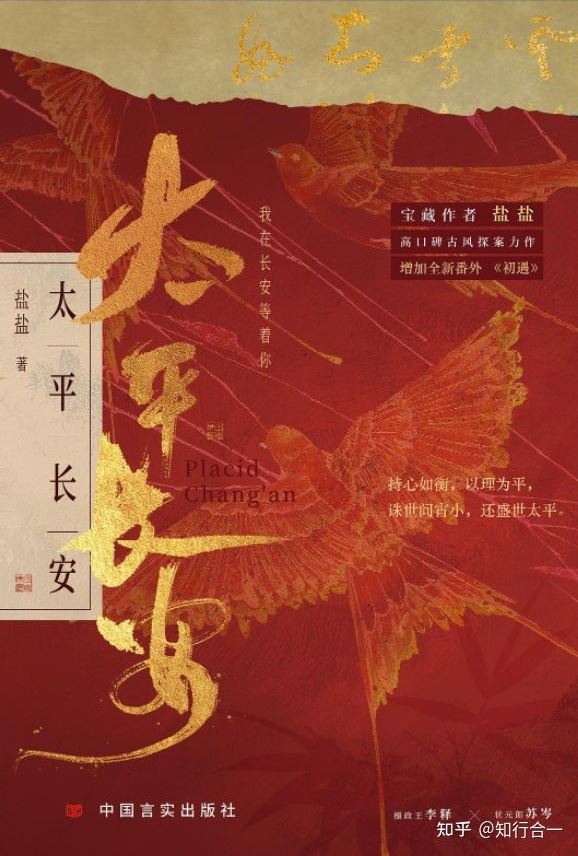
... Read More
Okay so this entire passage is basically one long tense interrogation scene but the plot layers are ridiculous in the best way. Su Cen gets grabbed by the chin, coughs up blood, and immediately drops the bomb that Xiao Yuancheng was murdered—not died, murdered. The Framing Plot within the Murder Plot is what got me. Someone used two fingers to pierce the Baihui acupuncture point, right? Like, this is supposed to be an expert move, which means there's a whole hidden faction of martial artists involved that we haven't fully met yet. And Su Cen's internal monologue about stalling for time while pretending to be submissive? Chef's kiss. He's calculating his way out of execution while delivering exposition, which is peak political thriller writing. The mother-child body reveal hit different too. Two victims with hidden fatal wounds in their hair—this is the kind of forensic detail that tells me the author has been planning this conspiracy from way back. The Dali Temple setup creates this ticking clock because obviously anyone could spring a trap there now. And then the Turk alliance revelation? Su Cen deliberately doesn't mention Xiao Yan's cooperation with them. Smart play. He lets the prince suspect his own allies instead of directly accusing anyone. That manipulation tactic alone shows Su Cen isn't just some talkative hostage; he's playing 4D chess while literally tied up. Then Li Shi walks in like he owns the place—no armor, just a black robe, completely ignoring the armed men—and unties Su Cen like it's nothing. The contrast between the tense, bloody interrogation and Li Shi's calm entrance is pure narrative whiplash. "It's over now." Three words that carry so much weight. This prince has been guarding the border for ten years, and his arrival shifts the entire power dynamic in that tent instantly. Xiao Yan's cold sweat moment? Perfect visual storytelling. I'm sitting here waiting to see if this truce holds or if someone's gonna get stabbed before chapter end.
... Read More
Let me start with something wild—Su Cen can identify thieves by their shoe wear patterns. That's not just clever worldbuilding, that's character establishment in three sentences. This is a man who OBSERVES. He notices things others miss. And honestly, it makes his entire arc with Li Shi so much richer because Li Shi is the same way—he sees through everyone, including Su Cen. The moment that got me though is when Su Cen realizes Li Shi knows exactly what he's afraid of. Not just about the tutor position, but about the Mojie and Mohe parallel. Li Shi doesn't offer empty comfort—he identifies the fear first, then reassures. That's how someone who's spent a lifetime reading people actually offers love. And then there's the thumb ring fiddling. The way Li Shi plays with that dark jade ring while Su Cen is pouring his heart out, completely exposed... and then pulls him into his lap like nothing happened. It's almost dismissive until you realize the dismissal IS the affection. He doesn't need grand speeches because his actions say everything. You don't need to worry. That's it. That's the whole relationship in four words. Su Cen's devotion is quietly terrifying in the best way. He says he once looked down on what he's now willing to do for Li Shi, and there's no shame in admitting it. He's not performing integrity—he's chosen his side consciously. The transformation from proud scholar to willing conspirator is one of the most satisfying character arcs I've read, and it's never dramatic. It happens in glances, in silences, in the way Su Cen's face would melt under Li Shi's gaze.
... Read More
I want to zoom in on the physical spaces in this chapter because they do so much heavy lifting. Zichen Hall is where the Emperor holds court, and the author doesn't give us a detailed architectural description, but you can feel the weight of the space — the vastness that makes Su Cen's bold challenge to Liu Cheng feel almost insane. 'Few dared to challenge Liu Cheng so boldly in court.' That single line tells you everything about the power dynamics encoded in the architecture itself. The imperial presence, the ranking system, the unspoken rules of who can speak and when — all of that is embedded in that room. Then there's the Dragon Tail Path, where the whole tone shifts. It's a transitional space, a corridor between chambers, and that liminality is perfect for the scene that unfolds there. Su Cen catching up to Liu Cheng, the formal court setting dissolving into something closer to a private confrontation but still happening in open imperial space. The Empress Dowager's invitation to lunch is another spatial detail that matters — it establishes that the Emperor has his own household sphere separate from the court, and that Su Cen has already earned access to it. The casual intimacy of 'come visit me in the palace when you're free' carries more political weight than any formal decree. And the brief mention of Guiyi District, where Wu Deshui was forced to drink that fatal wine, adds another layer to the world's geography. This isn't just a capital city; it's a living, breathing map of power, memory, and violence.
... Read More
Zhang Jun's internal monologue about Su Cen is easily the funniest thing in these chapters: 'This little troublemaker—disaster follows wherever he goes.' and 'Wherever he goes, the plague god follows him.' I laughed out loud. But beneath the comedic surface, there's something genuinely touching about Zhang Jun's reaction. He could've just refused Su Cen outright and avoided the entire mess. Instead, he tries to host him politely, offers tea, and then watches his study burn down. And what does he do? He doesn't blame Su Cen. He scrambles to grab a bucket and help put out the fire himself. 'Dashing like a mother hen, personally grabbing a bucket and rushing to the well.' This man is terrified of consequences but he's also fiercely loyal. His relationship with Su Cen is this bizarre mixture of exasperation and deep care—he complains constantly but would probably burn his own house down for him. Then there's Su Cen himself, who is portrayed almost mythologically by the other characters. He's reckless, shamelessly persistent, and utterly committed to the truth regardless of personal cost. The fact that he bathed and burned incense before visiting Zhang Jun—treating a criminal law text like sacred Buddhist scriptures—tells you everything about how seriously he takes his work. He's not just solving a case; he's pursuing something he believes is sacred.
... Read More
The dialogue in this passage is sharp enough to cut, and each character's voice feels distinct—which isn't always easy to pull off with this many players in a single scene. Su Lan's lines carry this raw, almost childlike vulnerability. "He lied to me again"—the word "again" does so much heavy lifting there. It suggests a history of trust broken, and the fact that he's still stumbling over these words means something. Compare that to Su Cen's clipped, almost surgical exchanges: "Motive isn't evidence," "Are you still hiding things at this point?" Su Cen doesn't waste words. Every sentence is a scalpel. Jia Wangchun's voice shifts dramatically across the scene, and that's where the dialogue writing really shines. He starts with defensive pragmatism—"That should be enough, right?"—trying to control the narrative. But as the truth unravels, his dialogue fragments. "You... you!" becomes almost incoherent. The man who once ran a salt empire can barely form complete sentences when faced with his own complicity. The old servant's testimony is delivered through stuttering, hesitant dialogue that feels painfully authentic. "I... I was from the same hometown as He Xiao. Two years ago, he approached me and told me to... to add something to the young master's medicine." The ellipses aren't just punctuation—they're psychological. This man is admitting to poisoning a child, and the halting speech mirrors his inability to face what he's done. Jia Zhen's single, perfectly composed speech stands out precisely because everyone else is falling apart. "It's my own incompetence that's caused you so much worry, Father." The formal register—almost archaic—contrasts with the emotional devastation beneath it. She's not performing for anyone; she's stating facts, and the coldness of her delivery makes it hit harder. Su Cen's dialogue is where the author's voice feels most present. His explanations—the chemistry of the poison, the logic of He Xiao's chain of betrayals—are delivered with this clinical precision that borders on theatrical. There's a rhythm to his speech patterns that suggests someone who enjoys the mechanics of truth as much as the outcome. One thing I loved: the author uses silence as dialogue. Jia Wangchun's long pauses, his inability to respond, the way he "hung his head in defeat"—these aren't described as narration but they function as counterpoint to the spoken words. The gaps between dialogue carry as much meaning as the dialogue itself.
... Read More
The stakes in this sequence are absolutely razor-edged and I want to talk about how the author builds pressure without ever letting you exhale. Start with the bureaucratic stakes: Li Shi tells Su Cen directly that he needs a culprit to pacify the public. Gao Miao is going to die whether Su Cen finds the real murderer or not—the only question is timing. This is the coldest exchange in the entire novel. Li Shi knows Gao Miao is innocent. He knows Song Jiancheng coerced a confession. And he doesn't care. Not because he's evil necessarily, but because in his calculus, one peasant's life against public order is a trivial equation. Then there's the personal stakes: Su Cen has bet his body, his dignity, and his safety on three days. He has no evidence. His belief that Gao Miao is innocent is based entirely on intuition—he admits this himself: "judgement cannot substitute for evidence." He's walking into a lion's den with nothing but conviction and a sharp mind, and the lion is genuinely interested in him. But the most interesting conflict is the intellectual one. While their bodies are pressed together, they're dissecting state policy. Su Cen outmaneuvers Li Shi with an economic theory that could dismantle his entire empire, and Li Shi's response isn't anger—it's delight. "Interesting." The stakes aren't just life and death here. They're about who controls the narrative, who holds power, and what happens when the subordinate is smarter than the superior. And the chapter ends on Su Cen demanding full authority over the case with cooperation from three provinces and six ministries. Bold. Reckless. Exactly what you'd expect from a man who already sold himself for three days.
... Read More
This batch is a masterclass in controlled pacing. You start in that teahouse with gossip—casual, almost leisurely, people sipping sweetwater and speculating about vengeful ghosts. It feels like downtime, right? But the author is quietly stacking information. Every exchange adds a piece: the fat man mentions the progression of victims (third-class jinshi, then second-class), the sweetwater seller drops the decade-old mystery, Su Cen's own fate was decided by strangers without his knowledge. All of this builds dread without raising the tempo even one beat. Then the transition to the Dali Temple and the Eastern Market is sharp and efficient. No wasted movement. Su Cen gets a register, heads to the market, and within the same scene the tone shifts from speculative gossip to official interrogation. The author doesn't linger—Su Cen tries once, gets mocked, drops one icy threat, and suddenly everyone's cooperating. That escalation from casual dismissal to fearful compliance in two paragraphs? Tight. The ending lands on Wu Deshui's absence like a door slamming shut. Everyone avoids mentioning him, the monkey-like man squirms, and we're left with this hanging question mark. The pacing here does exactly what it should—it doesn't resolve, it opens a new wound. I wanted to immediately turn the page to see what Su Cen does next. The chapter flow feels natural, like a conversation that starts casual and gradually reveals something uncomfortably real.

Leave a comment

You must be logged in to leave comments. or
