Number One Ugly Husband - Reviews

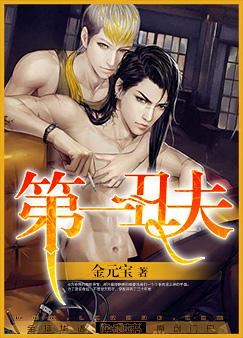
Number One Ugly Husband
+Add to Custom List
Sort
Add review
... Read More
The pacing in these chapters is deliberately glacial and I respect it. Four days pass between the deacon's warning and the guests arriving. Four days of Bao Ye driving around the pit, following workers, gathering information. The author could have rushed this—had the guests arrive immediately—but instead we get this breathing room where Bao Ye can piece things together at his own pace. The scene transitions are clean: notice the sky → investigation at the pit → office gossip → arrival day. Each beat serves a purpose. But then chapter 17 hits different. The arrival scene is structured like a reveal—first the cars, then the mother, then the brother, then Dong Ling Ce emerging from the fourth car. It's almost cinematic in how the reveals stack. And that final paragraph—"Bao Ye parked the garbage truck near the big pit"—it trails off mid-thought, which is a brilliant cliffhanger. The author knows exactly when to stop and let the tension simmer. The garbage truck as both literal vehicle and metaphor for Bao Ye's position in this world is not lost on me.
... Read More
That bracelet dimming when Bao Ye touched it is such a loaded symbol and I keep coming back to it. A device meant to identify or connect suddenly refusing to work in his presence. Is it malfunctioning, or is it rejecting him? The author had Dong Ling Ce claim it's broken, but I think we're meant to suspect something deeper - maybe the bracelet senses something about Bao Ye's true identity that shouldn't be there. The chaotic city itself is this massive metaphor for freedom and its costs. These top slaves have no masters, no teams, no constraints - they're free in every way that matters. But that freedom comes with constant danger, constant fighting, constant survival mode. Both sides of the street represent different philosophies about how to exist without ownership. One side celebrates loudly and recklessly, the other watches silently and weaponizes. Neither is wrong. Both are necessary. Jin Lingrui walking past Bao Ye is the central symbolic moment of this entire batch. It's not just rejection - it's a mirror. Jin Lingrui looked at the brother he couldn't save, and Bao Ye is wearing that brother's face. The reflection is too painful to sustain. And the cultivation weakness theme - the question Lao Liu asked about someone becoming weaker as they cultivate - that's not just worldbuilding, that's the core philosophical question of this entire story. What does it mean to grow stronger by losing yourself? What price do we pay for power?
... Read More
I need to sit with this scene for a moment. Dongling Ce grabs Baoye's hand, says "I want to break your hand," and then five lines later says "I can't bear to do that." That is SO much subtext crammed into two sentences. The man is literally expressing affection through violence-adjacent language and Baoye is just... sitting there processing it like "why does this feel full of affection?" And the bathtub scene—OH MY GOD. Dongling Ce strips, makes Baoye strip, pulls him into a bath, and then plays this infuriating game where he won't open his eyes until Baoye calls him something "nice." Baoye, sweet oblivious Baoye, starts throwing out titles—Master, Lord God, Big Brother, Ancestor—and nothing. Then he THRESHES the guy with insults: psycho, pervert, idiot, brain-dead, cheap, waste, stupid, trash. And Dongling Ce's EYEBROWS MOVE. He's reacting. He's FEELING it. This is the most romantic scene I have ever encountered and I am NOT OKAY. The fact that Dongling Ce wants Baoye to say something tender but will only respond to cruelty—it's deeply, beautifully messed up. And Baoye has NO IDEA. He's like "hmm this guy takes insults as compliments, weird." Meanwhile the reader is SCREAMING. The CP chemistry is off the charts because one of them is desperately trying to be loved and the other is genuinely clueless about the language being spoken.
... Read More
Let me just say upfront: the pacing in chapters 307-310 is a masterclass in emotional whiplash and I am here for it. The chapter opens with what could have been a generic investigation scene—Bao Ye finding someone with a birthmark, Dongling Ce being violent about it—and instead of lingering there, the author pivots HARD. No prolonged mystery, no drawn-out investigation. Dongling Ce kicks the imposter, restores the scene, erases memory, and suddenly we're at the villa. It's efficient storytelling that refuses to waste our time. Then comes the bath scene, and this is where the pacing gets really interesting. The author takes their time here—deliberately slowing down to let us feel every moment of closeness between the two leads. Hair washing, water playing, the accidental brush against sensitive areas. It's almost meditative in its slowness compared to the sharp efficiency of everything else. This contrast in pace is doing heavy lifting emotionally. By giving us this slow, intimate breathing room after the tension of the investigation, the author makes the tenderness feel earned rather than forced. The NSFW portion is handled with the same pacing philosophy—brief but impactful. No unnecessary padding. The aftermath is where things really shine though. Bao Ye pulling the quilt over his head and groaning? That's the perfect tonal shift. From pure intimacy back to something almost comedic, which prevents the scene from becoming too saccharine. And then that final line—'Why do he feel that Dongling Ce is strange recently? He not only became very clingy, but also intimate towards him.' That's a cliffhanger disguised as a mundane observation. It plants a seed of unease while maintaining the cozy domesticity. The chapter ends on this note of 'something is shifting, and I don't know if I should be worried' which is exactly the kind of hook that makes you immediately open the next chapter. The only minor gripe I have is that the transition from the investigation to the villa feels slightly abrupt, but honestly, I'd rather have that than another five pages of detective work.
... Read More
The escalation pattern in this batch is masterful. We start with raw personal anger - Zhou Xiaochuan kicking walls, swearing vengeance against Lu Zhikun. That's street-level conflict, visceral and immediate. But within paragraphs, the author pivots to systemic threats: poisoned soil, potential food poisoning, economic warfare through price manipulation. What makes the stakes feel genuinely high here is that the enemies aren't just trying to kill people - they're trying to make survival impossible. Lu Zhikun didn't just attack the vegetable garden; he poisoned the LAND itself. That's a threat that can't be punched or negotiated away. It requires knowledge, resources, and time to counter. Bao Ye's declaration about growing food faster than Yu Ling changes everything. Suddenly the conflict shifts from defensive (how do we survive?) to offensive (how do we win?). This is the moment where protagonist agency becomes real - he's not just responding to threats anymore, he's proposing solutions. The Yu Ling betrayal adds fascinating complexity. She was positioned as independent ('always thought she didn't need to rely on other people') but chose alliance with oppression over solidarity. That's a richer antagonist motivation than simple greed - it's wounded pride meeting strategic calculation. And that cloud-net formation at the end? New unknown variables in an already unstable equation. The author knows exactly how to keep readers' anxiety levels elevated without resorting to cheap cliffhangers.
... Read More
I need to talk about this opening description because it genuinely stopped me in my tracks. The lower world is described as 'like a hundred years behind the middle world' and the imagery is brutal in its simplicity. Iron sheet sheds. Old clothes and shoes thrown away by demigods. Some slaves literally weaving straw sandals because their shoes have disintegrated. This isn't worldbuilding that wraps you in fantasy glitter — this is a world where the economic hierarchy is VISIBLE on people's feet. Then the contrast hits: Tian Wang and the others eating barbecue and drinking wine, while the narrator cuts back to Bao Ye and Dong Ling Ce sleeping at the rear of the car. The physical positioning matters. They're literally behind everyone else, separated, but also... above them in capability. The barrier enchantment creates an invisible wall that's both protective and isolating. The food scene itself is incredibly cinematic. You can literally see the camera panning from the barbecue smoke to Dong Ling Ce's sullen face to Bao Ye's innocent expression to Lao Hu and Da Han marching over triumphantly. And then the barrier drops — the smell of mutton bone broth wafting through the carriage, the visual of radish and lamb, the steam rising — and suddenly everyone's mockery turns to envy. The sensory detail here is so sharp I could practically taste that soup. And then the Fallen Forest reveal. Ninety kilometers away. A place so dangerous and distant that even transporting its fruit seems impossible. The fact that Bao Ye treats it as a casual detour on the way back from hunting a leopard? That expands the world exponentially. There are places beyond this forest, beyond this world as these characters know it, and Bao Ye moves through them effortlessly. The lighting shift from night barbecue to morning chicken porridge — both scenes described through the sense of SMELL first, then sight — creates this dreamlike quality. You wake up in this world the way the characters wake up: to aroma, to warmth, to the realization that not everyone shares the same reality.
... Read More
I keep thinking about that tree trunk moment and what it represents in the larger pattern of this story. Dong Ling Ce is staring at Tang Kaiji—fixed on him—and then the trunk breaks and falls. Whether he did it intentionally or it was coincidence, the narrative treats it like fate. Because really, what else explains the timing? Bao Ye's attention is divided: he wants to give Tang Kaiji the pork leg first (acknowledging their adoptive bond), but he's also hyper-focused on Dong Ling Ce's mood. And then the tree falls, and Bao Ye drops everything to check on Tang Kaiji. He calls him "Dad" for a split second before correcting himself to "Tang Kaiji"—that微小 shift is devastating. The word almost slipped out. The father-son bond is real, it's there, it's just... complicated by everything that's happened between them. Meanwhile Dong Ling Ce watches all of this and something in him breaks. His threat—"if you care about other people, I will kill that person"—isn't just jealousy. It's the fear of being secondary. Of being replaced. The whole narrative keeps circling back to this question of loyalty: whose side are you on, and what happens when your loyalties are split? Bao Ye's attempt to soothe Dong Ling Ce by saying he's number one feels almost desperate, like he knows the promise can't hold. The raw fruit versus the cooked meat is also worth noting—Dong Ling Ce doesn't even eat the wild fruit Bao Ye gave him. He's too upset. The food, which was supposed to be this moment of bonding and generosity, becomes another reminder that some things can't be fixed with kindness. The story keeps asking: what do we owe the people we love, and what do we owe the people who love us back?
... Read More
Let's talk about the central moral conflict in these chapters because it's genuinely excellent and I think a lot of readers might glide right past it. On the surface, it's a logistics problem: the plague is killing people, they need blood, not enough people are donating. The easy solution would be to force it. Boss Lu in Xicheng District basically does exactly that — threatens people into donating — and gets more blood but at what cost? Bao Ye's refusal to do the same is where the real conflict lives. And it's not just moral posturing. He actually explains his reasoning, and it's brilliant: "The current slaves are in their environment have become more and more cold-blooded under the persecution of others. They have the ability to save others, but they turn a blind eye and watch the lives die in front of their eyes. What I want to do now is to bring back the warmth deep in their hearts." Think about that. Bao Ye isn't trying to solve the immediate problem as fast as possible. He's trying to solve the ROOT problem — the emotional numbness that the system of slavery and persecution has created. Forced donation would make them more resentful, more numb. Voluntary donation, even if slower, plants a seed. But here's the thing that makes this conflict so much richer: Bao Ye is risking everything. He's running himself into the ground, sleeping zero hours, managing blood distribution across multiple districts. And he's doing it while hiding the fact that his own face is still messed up ("Your face is back to normal" — okay, so it's improved but clearly not gone). He could collapse at any moment. Nian Tong's guilt about not seeing this sooner is the external reflection of the internal conflict. He's been alive fifty years and still didn't think of the voluntary approach. That's a devastating admission for a character who's clearly competent and experienced. And then the twist — the immunity cascade. Bao Ye reveals that once people drink the blood, they become donors too. This changes everything. It's no longer a zero-sum game where a few sacrifice themselves. It becomes exponential. The plan was always bigger than anyone realized. The stakes keep rising because Bao Ye is playing chess while everyone else is playing checkers. And he's willing to burn himself out to make it work. That's what makes me care. Not just whether the blood gets collected — whether Bao Ye survives the process.
... Read More
Okay so first of all—Bao Ye twisting Lao Gai's arm and then KICKING him across the warehouse?? I literally screamed. This guy has been getting shoved around since chapter one and suddenly he just snaps. Not dramatically, not heroically—just casually. "So he could press me to lick the porridge again?" he says, like it's nothing. Like he didn't just flip the entire power dynamic in that room. And the way the narrative describes it—he kicked Lao Gai's chest and the guy "flew to the center of the warehouse in an instant"—it's not even shown as a superpower reveal or anything, it's just treated as consequence. He deserved it. He got it. But here's what really got me: the mid-level slaves watching Lao Gai with a broken arm couldn't help but glance at each other. That look says everything. They've probably all been pushed around by people like Lao Gai for years, and seeing a "low-level ugly slave" take one down? It's not fear they're feeling—it's respect. Or maybe something hungrier. Then Fan Cao shows up and completely rewires the social map of that warehouse. He's this huge deal, "no one under Boss Lu dared to offend him," and his first move isn't to praise Bao Ye for fighting back or to punish him for disobedience—he just tells everyone to shut up because they're making noise. The masters don't like noise. Human lives are secondary to entertainment value. And then, the kicker: he personally arranges for Bao Ye to get real food. White rice and sauerkraut, while everyone else gets slop from a bowl. That's not kindness, that's strategy. Boss Jin's brother needs to be in peak condition for the ring. Bao Ye goes from being a target to being an asset overnight, and everybody in that warehouse just recalibrated their entire attitude toward him in about thirty seconds.
... Read More
I am not okay with how good Dong Ling Ce's dialogue writing is in this passage. Like, genuinely. From the very first line — "what do you think is going on?" — he's already in investigation mode, and the way he pivots from philosophical observation to personal prodding is chef's kiss. Watch how this exchange goes: "You are talking about your own business, right?" "No." Bao Ye refused to admit it even if he was beaten to death. That line. That is such a specific character voice. Bao Ye refusing to admit something with the intensity of someone who would rather die than be self-aware — it's hilarious and also deeply telling about their dynamic. And then Dong Ling Ce just... accepts it. "Okay, it's not." He doesn't press further. He just smiles. That shift from interrogator to amused observer in two lines tells you everything about how these two operate together. Later when Bao Ye actually loses his composure and curses — "Fuck." — and then his face starts splitting open, the prose does this incredible thing where it just stays clinical and matter-of-fact. No drama, no fanfare, just: his face hurts, then it doesn't hurt anymore because now it's worse. That's Bao Ye's voice throughout — deadpan delivery of horrifying circumstances. And Nian Tong? His dialogue is so grounded and anxious, constantly hedging and second-guessing himself, which makes him the perfect emotional anchor in a chapter full of unhinged characters. The contrast between Dong Ling Ce's razor-sharp theoretical musings and Bao Ye's exasperated practicality is honestly one of my favorite dynamics in the whole book.
... Read More
Okay so here's the thing about this flood scene that I can't stop thinking about: the water doesn't just recede. It doesn't drain away or evaporate. It literally *flies upward*, peeling off the ground like something alive, rising faster and faster until it exposes the entire Gongcheng and then—launches straight into the upper world. "Everyone's eyes widened. It was the first time they saw such a spectacle since they were born. All the flood water were rising to the sky at an increasing speed." I need this imagery printed on a poster. The slaves watching from below as the disaster they were drowning in literally turns into a waterfall going UP. And then it hits the upper world and the gods are just standing there getting flooded—"watching the flood seep through their eyes, ears, mouth and nose"—which is both horrifying and darkly hilarious. The atmosphere in the construction site during all of this is suffocating in the best way. Everyone's desperate, huddled together, waiting for the barrier to break. Someone blurts out: "If it's really a god's game, what kind of disaster will be waiting for us this time? earthquake?" And then the water just... defies them all. No warning. No drama. Dong Ling Ce's version of heroism is purely chaotic energy—he solves one problem by creating an entirely different crisis elsewhere. I also need to mention the seven-color clouds that Bao Ye spots. That visual detail? Gods descending to investigate. The world actually has its own weather-forecasting system for divine intervention. The craftsmanship here is insane.
... Read More
There's a recurring theme of things that look fragile but cut back. Zisang Yanruo is described as a white rose—beautiful, pure, naive—but Bao Ye sees past that. "Some people are weak on the outside, but very strong on the inside, that's what she is." And Dong Ling Ce basically agrees, saying she's precious and people want to protect her innocence. But the protection itself is kind of suffocating, isn't it? Everyone wants to keep her in a bubble, and that bubble might be what traps her. Then there's Bao Ye himself. He acts like a jokester, doing crazy stuff with his stinky feet and mosquito stories, but he's a slave in a world where slaves are literally playthings. "I only care about losing a toy"—Dong Ling Ce says this so casually, and it's chilling because it reveals how he truly sees Bao Ye. Not as a person, not even as a threat, but as an object he's chosen to keep. The fact that Bao Ye seems to accept this role while simultaneously undermining it every chance he gets is the whole theme right there: who has real power when the power structure itself is a lie? The white rose, the toy, the dead first person—all of these point to the same question: what does it mean to be valuable in a world that decides value arbitrarily?

Leave a comment

You must be logged in to leave comments. or
