Number One Ugly Husband - Reviews

Number One Ugly Husband
+Add to Custom List
Sort
Add review
... Read More
There's a symbol in these chapters that I can't stop thinking about, and it's the BROKEN TABLE. Not just broken — split in two. A gap opened in the ground. This is Dong Ling Ce's emotional state made physical. Every time he feels threatened, reality itself cracks around him. And then there's the book. The orientation test disguised as world history, disguised as a restaurant prop, disguised as entertainment. It's a book about knowing yourself that becomes a weapon for controlling someone else. The irony is so thick you could cut it with... well, with the table that got cut in half. Bao Ye's realization that he might be bisexual — "It's too strange for me to be sexually interested in men" — this is the moment the story starts interrogating its own premises. Is his orientation something fixed and knowable? Or is it something that shifts when the right person appears? Dong Ling Ce is about to find out that love doesn't follow test instructions. The line "If you have to choose one of them?" "Women." — this simple exchange carries so much weight. Bao Ye thinks he's choosing between fictional people in a restaurant, but really he's performing his identity for an audience of one. Dong Ling Ce is taking notes like a man watching his world rebuild itself around an answer. And the ending — Bao Ye turning the test back on Dong Ling Ce without even knowing he's done it. The hunter becomes the hunted. The questioner becomes the questioned. Some things don't need tests to be known.
... Read More
Let's talk about the food situation because this is where the stakes get REAL. Tian Wang flat out says they won't give Bao Ye food. Not because he's useless—because he's dangerous. "I'm afraid he will use some means to harm us." Jin Lingrui backs it up. They're keeping him on a leash and they're not even hiding it. But then Zisang Yanruo goes against EVERYONE. She exceeds her hunting quota, brings him two whole pheasants like they're treasure, and Tian Wang has to physically stop her from feeding him. She says it herself: "When everyone rejects me, there is one person who is sincerely treating me well, can I not be happy?" And that line hit me like a truck. She's not helping him out of obligation—she's helping him because he was the first person who treated her like a human being instead of a tool. The reciprocity here is devastating. Bao Ye says he can't let her work for him, he'll hunt for Dong Ling Ce himself. He walks into the forest alone. The tension in this group is suffocating. Tian Wang sneering, Old Hu mocking, the whole team treating Bao Ye like a loaded weapon they're stuck transporting. And yet Dong Ling Ce's face darkens the second anyone else tries to feed him. "I only eat the food you hunt." Not hers. NOT any of theirs. HIS. What is he willing to赌 for this guy?
... Read More
The pacing in this batch is absolutely manic and I am HERE for it. You go from a scene where slaves are torture-murdered for attempted rebellion — actual DEATH TENSION — and within the span of a few paragraphs you're watching Bao Ye struggle to pedal a divine-powered tricycle while carrying an immortal being on his back. That's not a mistake, that's skillful whiplash. The author uses the color-coded forest system (white, green, blue-green, blue, purple, red, yellow, gray, black) as a structural marker to shift the scene, and each transition feels like the story is moving forward even when the content gets weird. Let me break down the movement: opens with preparation/dressing up — relatively calm. Then the potion backstory hits you with genuine grief and anger from the slave uprising. Tian Wang and Lao Hu challenge Bao Ye's loyalty. Dong Ling Ce explodes. Scene change into the forest. The demon language instruction creates a fresh rule. Then Boss Ji wants to learn demon language. And then — the spell scene. The truth serum comedy. The rickshaw demand. The pedaling struggle. It's a lot. But what I notice is that every time the tension risks becoming too heavy, the author immediately undercuts it with something absurd. The 'demons will definitely snatch you back to become your bridegroom' line from Bao Ye right before Dong Ling Ce blasts everyone with divine power? That tonal pivot is intentional. The author knows exactly what they're doing. They're keeping you off-balance so you never get bored, never get too comfortable, and never quite know whether to laugh or hold your breath. The chapter ends with Bao Ye swearing at the bicycle — perfect comedic button on a chapter that started with death. What's the total emotional range covered? I'm not even sure myself and that's why I can't put it down.
... Read More
Okay so I have to talk about how these chapters basically crash multiple storylines together and honestly I was NOT ready. You've got Bao Ye doing this polite little favor for Lao Liu, getting dressed in new clothes for the first time since arriving in this crazy world — you know that detail about never wearing a jacket, tattered shoes pricking his feet? That hit me right in the chest. And then WHAT does the narrative do? It slams him straight into Zisang Yanruo's storyline. The girl with the branded mark, the '令' character on her face, dressed like some ordinary top slave but with this outstanding personality shining through. This wasn't random. The author made us see them separately before and now BAM — they're in the SAME SCENE, at the SAME MARKET, and she's caught in the middle of this poisonous herb situation. The Tianrihong versus Guixinhong thing is actually a BRILLIANT plot device. Not only does it show that Zisang Yanruo knows her herbs (established earlier), but it also creates a public moment where Bao Ye has to step in and confirm she's right. Think about what just happened here — he publicly aligns himself with a slave girl in front of everyone in the chaotic city. And the stall owner's reaction, rolling up his sleeves, threatening her, then seeing Bao Ye's 'ghost face' and backing off... this is a mini drama compressed into maybe five minutes of story time but it sets SO much up. And then there's Yu Ling watching all of this unfold from her window, calmly sipping tea like a proper chess player, running calculations about whether the two brothers have really cut ties so she can potentially recruit the Ugly Slave. She even mentions wanting to test if they really severed their relationship. The parallel between what's happening outside and what's being discussed inside is giving me actual whiplash. Multiple threads converging, characters moving toward each other across the chaotic city, and we're just sitting there like — when does it all come together? I literally could not stop reading once the market scene started.
... Read More
There's a symbolism in this entire chapter that I keep coming back to, and it's wrapped up in Bao Ye's medicine. Let me explain why this hit me harder than any battle scene ever could. The slaves are starving. They're desperate. And when Yu Ling and Xiao Yu Ci emerge—people who sold spoiled food during the plague, sure, but also people who are now begging and apologizing—the crowd doesn't just walk away. They pick up STONES. "Most of the people present didn't need to buy Yuling's food, and they were not afraid of offending them." This is the key detail. These people weren't even victims of the sisters' crimes, and they joined the mob anyway. Bao Ye's medicine, then, becomes this perfect metaphor: it's literally calibrated to detect moral character. Selfish people get pain. Considerate people get healing. And Yu Ling, in her desperation, uses it selfishly and suffers. Is this justice? Or is it just another layer of cruelty in a world already dripping with it? The flood itself is also deeply symbolic—water that should have been contained simply vanishes upward, returning to the gods who created this mess. The upper world causes disasters, the lower world suffers them, and the middle world? The middle world just watches and throws stones. "In his eyes, the slaves were not united, friendly, they were selfish. In short, all kinds of despicable human nature were reflected in them." Bao Ye sees the whole broken system and is too exhausted to fix it. He can move floods and curse his way through upper world divine politics, but he can't make these people kinder to each other. And honestly? That's the part that keeps me up at night.
... Read More
The description of Gongcheng after the Games ended is one of those passages that stays with you because it doesn't try very hard. No flowery prose, no dramatic narration — just a cold inventory of collapse: "There were more than two million slaves, and now there are less than one million left." That's it. Two sentences. No exclamation marks, no mourning, just a statistic that should be impossible to read without feeling something. And then the worldbuilding details keep accumulating in that same flat tone: deserted construction sites, starving workers forced to do more with less, deacons drafted into manual labor, high-level slaves dragged from their quarters to fill gaps. The city isn't just damaged — it's being hollowed out from the inside. What strikes me most is how the physical environment mirrors the psychological state of the survivors. The Fallen Forest, once a place of hope and herbal remedy, is now deserted. Gu Bu's village is empty. The herbs are gone — washed away by floods that feel almost symbolic, like the world itself is erasing the evidence of what was there. And when Bao Ye goes back looking for answers, he finds only absence. The landscape has been consumed by the same forces destroying the people. The scar tissue on Bao Ye's face during the conversation with Nian Tong is another incredible visual detail. One moment he's just talking, the next his face is splitting open and he has to excuse himself to wash it clean. It's grotesque and mundane at the same time — bodily horror treated as routine inconvenience. That juxtaposition is the visual language of this entire story: catastrophe as backdrop, survival as daily grind.
... Read More
Can we just talk about how distinct these voices are? Because I swear, if you covered the character names, you could still tell who's speaking. Tang Bu's dialogue is pure entitlement — short, sneering, defensive. "People who drank your medicine died, so is it medicine for healing the body? Aren't you ashamed?" He's immediately adversarial, immediately looking for a win, and immediately failing to see that he's already lost. His voice is all sharp edges and nowhere to hide. Ren Qing is worse in a different way. Notice how she doesn't speak up until Tang Kaiji asks the question about spirit stones? She's been waiting, biding her time, and when she finally opens her mouth it's with the excuse that sounds most plausible: "Your dad said spirit stones are yours, even your mother couldn't use them." That's not a defense — that's a manipulation dressed as information. And then later when she's begging: "Brother-in-law, I was wrong, I was really wrong, please let me go, ah!" — the shift from schemer to sobbing mess is so jarring it feels real. Tang Lin's voice is the masterclass here. Before the revelation, he's gentle, measured, almost patient. After? His dialogue becomes shorter, harder, more direct. "Let it go." "I heard everything." "From today it won't be the same." Each sentence is a decision being made in real time. The wry smile when he talks about his naivety — that's a man who's been hollowed out and is choosing to rebuild himself differently. Zisang Yanruo's lines are functional but sharp — she's the voice of reason in a room full of emotional landmines, and her clinical explanation of the potion contrasts perfectly with everyone else's chaos.
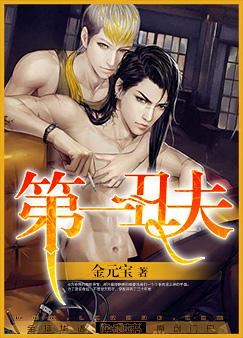
... Read More
I came for the drama and stayed because Bao Ye is secretly the softest person in this entire story and it DESTROYED me a little. Look—everyone assumes Bao Ye is cold, calculating, only looking out for himself. But what does he actually do? He immediately uses the opportunity Dong Ling Ce gave him to SAVE DA CHAO. He didn't have to do that. He could've just taken his new master and vanished. Instead he's pressing divine power into a friend's abdomen in a creepy crematorium while the guy is half-dead. And when Dong Ling Ce asks how he wants to thank him, Bao Ye's first instinct is genuine gratitude, not manipulation. The fact that Dong Ling Ce immediately corrupts the moment with the foot thing is almost cruel. But here's what gets me—Bao Ye still felt it was 'fortunate' that Dong Ling Ce came along. He recognized the good even while being tormented by it. That's emotional complexity I can get behind. And Jin Lingrui, watching from the shadows, laughing because Bao Ye finally showed a different side of himself? That's... complicated friendship energy right there.
... Read More
I need to talk about the porridge scene because it has been living rent-free in my head since I read it. This is the kind of moment that doesn't need big dramatic music or a villain monologue—it's just quietly devastating. Lao Gai pouring the porridge into the cage and saying "kneel down and lick it" is such a specific, intimate cruelty. It's not about feeding the person. It's about making them perform their own degradation as the price of survival. And Bao Ye doesn't speak. Doesn't beg. Just sits there. I kept imagining what that silence felt like for him—not courage, exactly, but something more complicated. Like his body had already decided before his mind caught up. When Lao Gai physically forces his head down, the restraint snapping into place and flipping everything around... it wasn't heroic. It was almost mechanical. Cold. His face becoming "more and more cold"—that word choice hits different. This isn't rage. Rage would mean he still has something to lose. Cold means he's already made peace with what happens next. The other slaves huddled in the corner, silent, not daring to make a sound—that detail wrecked me too. These people have been broken to the point where witnessing injustice doesn't spark solidarity, it sparks survival instinct. Don't make noise. Don't draw attention. Bao Ye just did the exact opposite and now everyone's terrified he'll bring retaliation down on them all. There's this ache in reading that and knowing these people have learned, through brutal experience, that compassion is a liability. Then Fan Cao arrives and actually GIVES him food. Not porridge. White rice. Sauerkraut. Something real. The low-level slaves being "very envious"—they know what that meal represents, not just nutrition but dignity. Someone in charge saw this boy get disrespected and chose, in their own calculated way, to treat him differently. It's not warmth. It's transactional humanity. And somehow that makes it feel even more real than any grand gesture would.
... Read More
Let me just say this out loud - the stakes in this story are INSANE and the author doesn't even try to hide it. We're talking literal divine punishment via thunderbolts, slaves being treated as garbage, charred corpses being run over by trucks like roadkill, and a 'game of the gods' that no one is guaranteed to survive. And through ALL of this, Bao Ye is just...making tea. Offering health benefits. Performing obedience while secretly investigating missing persons. The construction site scenes are nightmares. Driving past unrecognized corpses, crushing them under wheels, treating death like a pothole. This is worldbuilding through atmosphere and I am HERE FOR IT. The lower world is described as already dark, and the upper gods have turned it into actual hell, yet the demigods still respect this system. Bao Ye wonders if they're stupid or just timid - and honestly, the answer is probably both, which makes it infinitely worse. What keeps me on the edge of my seat is the ticking clock element. Zhou Xiaochuan gives Bao Ye a notebook with 377 potential matches for Jin Lingrui, and there are only THIRTEEN who even vaguely fit the description. The game has begun, survival isn't guaranteed, and Bao Ye needs to find this person before Dong Ling Ce arrives. Meanwhile, Dong Ling Ce is setting up barriers, reading lips, and apparently protecting people while simultaneously threatening to maim them. The suspense is maintained through this constant sense that something catastrophic could happen at any moment, and nobody involved seems particularly surprised about it. The question isn't whether Bao Ye will survive - it's what will be left of him when he does.
... Read More
The pacing in this batch is wild. We go from an intensely personal, almost comedic jealousy scene (Dong Ling Ce wanting to physically mutilate Bao Ye over his future wife)—which reads like a standalone drama beat—then suddenly we're yanked into this supernatural observation of Jiu Huang's affair, then BACK to the hotel room, then to strategic planning about the mine. It's chaotic but in a good way, like the narrative itself can't sit still. The transition from emotional drama to investigation mode is handled by Bao Ye just leaving the room with Dong Ling Ce and cutting to the next scene. No soft landing, just momentum. And then Rao Yi basically abducts Bao Ye for lunch, which is a funny breathing room before things presumably get serious again.
... Read More
The opening image of this whole sequence is already set perfectly—we have thunder roaring, clouds swallowing a teacup, and two men in a room where one is deliberately pretending not to hear the other. It's almost comedic. But then the author shifts us to the construction site at noon and everything changes texture. The cicada cries coming through speakers, the heat, the slaves gathering around a stage that wasn't there yesterday. It's such a vivid sensory layering. And the performance itself—Bao Ye with a hoe over one shoulder, a dummy child on his back, wiping imaginary sweat, licking dry lips, the empty bowl. The author makes you FEEL the thirst just by describing Bao Ye's actions. Then the music shifts. Sad. Tense. The whip cracks. Nian Gao's performance is described as so realistic that the deacons in the audience feel their own guilt and anger war inside them. That's worldbuilding at its finest—not info-dumping the caste system, but showing us how it lives in people's bodies. The slave audience is caught between recognition and terror, between wanting to rush the stage and knowing they'll be killed if they try. And Dong Ling Ce sitting under it all, just eating, completely unruffled while human emotions boil over around him. The contrast between his stillness and the chaos erupting above him is the most powerful visual in this entire batch. It feels like a film director holding the camera steady while everything else goes wild around it.

Leave a comment

You must be logged in to leave comments. or
