Number One Ugly Husband - Reviews

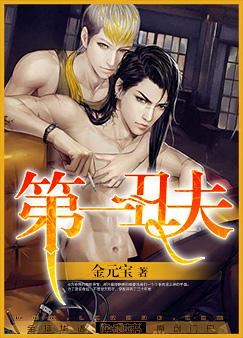
Number One Ugly Husband
+Add to Custom List
Sort
Add review
... Read More
The pacing in these chapters is absolutely ruthless and I mean that in the best way. Let me walk through the structure because the author is playing a very deliberate game here. We open with what feels like a quiet moment—Bao Ye and Dong Ling Ce bantering, Jin Lingrui helping people. It's almost domestic. Then BAM: 'That night, why did you intend to kill him?' Okay, what the hell happened that night, and why is this being dropped on us mid-conversation with zero setup? No flashback, no context, just a line that completely reframes everything we thought we knew about these characters. Then the atmosphere shifts hard. Nian Gao and Lao Liu come back from somewhere with faces like they've seen ghosts. Lao Liu drops the bomb that his entire family died in previous games of the gods. The silence after that line is so heavy you can feel it. And then Bao Ye just— casually—predicts 'thunderstorms, gusts, floods and plague' like he's reading a weather forecast instead of forecasting mass death. The night scene with the lightning is where the tension really peaks. The author describes it almost viscerally: 'lightning bolts as thick as long as skyscrapers,' the ground shaking, people hiding under covers. And then the next morning, we see the consequences—'huge pits bombarded by lightning,' bodies 'scorched or split in half.' People trying to rescue others and getting electrocuted themselves. This isn't just atmosphere, this is the author making it CLEAR that the game has already begun and people are dying right now. And then the worst part: after we think maybe there's a reprieve, Nian Gao realizes 'this is on purpose'—the thunder is timed to hit during rest and dinner. The author doesn't let us breathe. The barrier protecting the construction site is the only relief, but even that raises questions: who built it, how powerful is it really, and what happens when it fails?
... Read More
This whole sequence is a masterclass in pacing, and I need to talk about it before I lose my mind. The author starts with Bao Ye scouting the cave during the day—methodical, patient, almost boring in its steadiness. He's sensing underground, finding what he needs, playing the part of a lowly slave. No one suspects anything. Then—cut to night. The energy shifts immediately. You can feel the tension building as he creeps toward Lao Luo's bed. And then the guard wakes up. And suddenly it's chaos. Crowbars, shouting, the word 'kill' echoing through the tent. It goes from silence to violence in THREE SENTENCES. I actually gasped out loud. My roommate looked at me like I was crazy. But the real pacing genius is what happens AFTER the chaos peaks. Lao Luo sits up. The crowd freezes. The crowbar wavers. And then—Bao Ye breaks the leg. That's the button. That's the moment that leaves you staring at the ceiling at 2 AM wondering what just happened. The author could've ended on the healing, on the emotional beat. But instead they chose the broken bone, the scream, the cliffhanger. I went from one chapter to the next without meaning to. Don't judge me.
... Read More
Okay so let me just... sit with this for a second. The whole setup around the Fallen Forest is so interesting because on the surface it looks like a straightforward supply run, but there are all these little threads dangling everywhere. Boss Ji drops this line about losing food to "the game of the gods" and suddenly everything feels heavier. What exactly is this game? Who's running it? And why are entire districts scrambling for supplies because of it? That's the kind of worldbuilding detail that makes you want to flip back and reread. Then there's the convoy assembly — Jin Lingrui's team, Boss Ji's people, and now Bao Ye and A Ce tagging along. It's like watching pieces on a chessboard slowly move into position. Every group has their own agenda. Boss Ji is clearly playing a longer game when he offers that 30% cut to Boss Chu. And Jin Lingrui? She's calm, calculating, letting everyone think they're in charge while she controls the direction. The fact that two separate factions are converging on the same destination screams that something big is about to go down in that forest. And then there's the whole fake-beaten scene inside the carriage. Bao Ye screaming "ah it hurts so much" while actually dismantling Tian Wang's crew? That's not just comic relief — it's a tactical maneuver. He's asserting dominance, establishing who's really in charge of that space, and doing it with a smile. The plot is layering conflicts like an onion and I am HERE for it.
... Read More
What I appreciate most about these chapters is how the author handles conversational pacing. Every dialogue has three layers: what's being said, what's being meant, and what's being hidden. The reunion scene moves at a breezy, almost comedic pace — jokes about Yanruo wanting to marry Ou Yexi, the gift banter, the casual teasing. But then it subtly shifts. Yanruo descends the stairs. The red box appears. Bao Ye's expression darkens. And within the span of a few paragraphs, the entire tone pivots from lighthearted reunion to something far more serious. The transition isn't jarring — it's seamless, like the camera slowly tilting upward from a smiling face to reveal the storm behind the eyes. Then Dong Ling Ce and Bao Ye retreat to the yard, the enchantment drops, and suddenly we're in a completely different genre of scene. Cultivation levels, divine power absorption, parentage mysteries, time travel implications. The pacing here is masterful because it trusts the reader to catch the shift. You don't need chapter breaks or dramatic cues — the mood change happens through small details: a frown deepening, a question hanging unanswered, the way Dong Ling Ce changes the subject to 'give me a massage' after delivering something genuinely profound about love and loss. The chapter ends on a deliberately ambiguous note with 'Have you ta...' — a cut-off sentence that's both a cliffhanger and a joke. Did he really ask if Bao Ye took a shower after sleeping in a trash can? Or was there something more he wanted to say? Either way, I need the next chapter immediately.
... Read More
The stakes in this batch went from 'family drama' to 'literal survival' so fast I got whiplash. Let's track the escalation: Tang Bu accuses Zisang Yanruo of poisoning → Tang Kaiji discovers his wounds are healed → Tang Lin wakes up and reveals he heard EVERYTHING → Mother Tang's betrayal is exposed → Tang Lin beats Tang Bu and Ren Qing within an inch of their lives → the exiled trio is thrown out and immediately attacked by other slaves → food distribution is cut off → Mother Tang has divine power but can only defend against low-level slaves → high-ranking slaves encourage the mob → the chapter ends with three exiled people helpless against a stone-throwing crowd. What I love is how the author keeps raising the temperature without ever letting the reader catch their breath. Just when you think the biggest conflict is over (the family betrayal is resolved, Tang Lin has made his choice), the story pivots to show that exile in this world is basically a death sentence. These people were tolerated because they had Tang Lin's protection. Without it? They're prey. The stakes for Tang Kaiji and Tang Lin are clearer now — they've drawn a line and they're standing on one side of it. But the stakes for Mother Tang, Tang Bu, and Ren Qing just became desperately, viscerally real. They're not just outcasts. They're being starved and stoned in a world where a slave's life is worthless. And here's the terrifying question hanging over everything: Mother Tang has divine power. She survived this long in a brutal world. How far is she willing to go to survive now? Because if she's capable of poisoning her own husband for spirit stones, she's absolutely capable of something worse when cornered. I am SO ready for the next batch.
... Read More
Let me just say this upfront: I have never been so satisfied watching someone get kicked across a room in fiction. But beyond the visceral satisfaction, this scene works because the stakes were already established before Bao Ye even threw that punch. We'd spent chapters watching him take abuse, watching him navigate a world where his only protection is the name of someone else (Boss Jin), watching him understand that his value to this system is entirely contingent on being useful alive. The life-and-death arena revelation hits at the perfect moment—right when you think things can't get worse, the slave next to him explains that this isn't a normal fight, it's an arena where you survive by killing your opponent. The low-level slaves aren't even being sent to compete; they're being sent to die. And Bao Ye, despite having Boss Jin's backing, is still in that truck. Still in that cage. Still at the mercy of men like Lao Gai who can torment him with zero consequences. So when he finally fights back, it's not just physical rebellion—it's the moment a chess piece realizes it can take the king. The stakes escalate from "will I survive today" to "what am I willing to become to survive." The middle-level slaves glancing at each other after seeing Lao Gai thrown—they're recalculating too. Maybe the hierarchy isn't as fixed as they thought. Maybe survival here doesn't just mean being quiet and compliant. And then Fan Cao appears and reminds everyone that none of this matters to the real powers. Bao Ye can humiliate a senior slave and it changes nothing about the arena waiting for him. The conflict just shifted layers, not resolved. Which is exactly the right note to end on—because now I need to know what happens when a slave who just proved he's not just prey gets into that ring.
... Read More
This world-building is extraordinary, and I want to talk about how the author constructs each location like a set designer building a nightmare. The text doesn't just tell us this society is oppressive; it SHOWS us the infrastructure of oppression with such precise, architectural detail that you could walk through it. Let's start with the slave farm. The iron nets are mentioned casually but they're everywhere in this description - they define boundaries, they control movement, they create the visual framework for everything that happens. And the trucks! Three large trucks parked at Fengyue Pavilion, another set at Yunshi Pavilion. These aren't decorative; they're the transportation network of human commerce. The author gives us the logistics before they give us the morality, and that ordering is deliberate. The dual pavilions - Fengyue (wind moon, pleasure for men) and Yunshi (romance, pleasure for women) - are positioned opposite each other like mirror images of the same evil. This isn't accidental worldbuilding; it's symmetry as commentary. The system serves everyone, and it serves equally. Now, the Breeding Farm description is where the author's attention to structural detail becomes almost scientific. The age ranges - eighteen to thirty for conception, children until six, the separation of mothers and offspring - these aren't random details. They're the operating parameters of a human factory. The author gives us the numbers because numbers are how institutions think. Emotion is what individuals feel. The visual contrast between the young slaves emerging satisfied from Fengyue Hall and the rosy-cheeked female slaves leaving Yunshi Pavilion is gorgeous in its horror. Spring on their faces, smiles full of satisfaction - these people are genuinely HAPPY in this system. That's not brainwashing; that's evidence that the system works exactly as designed. And the construction site that Dong Ling Ce mentions! We barely see it described, but it hangs over everything like a promise of more layers to this world. Treasure being unearthed, things to snatch - this suggests that beneath the current social order, there's something older, something that changes the equations entirely. The car ride itself is a scene transition masterclass. From the city, through the districts, slowing down as they approach the farm - the physical movement mirrors the emotional descent. You feel Bao Ye's worldview shrinking with every meter.
... Read More
Okay so this chapter is wild because you can literally feel the bomb ticking. Bao Ye drops a warning to Tang Kaiji about his mother harming his father — but nobody believes him, especially Tang Kaiji who's furious at the suggestion. And then right after that, the uncles wake up their divine power and immediately ask to join the team so they can work alongside the parents. That is some next-level dramatic irony. Bao Ye already knows what's coming — he's seen it before in a previous life or memory — and he's trying to prevent it, but the people who need to hear him most are completely deaf to it. And then the bigger reveal about Bao Ye's real identity — his mother was Zisang Yanruo, a fairy from the Zisang family, and his father was a demigod who committed a major crime that got the whole family killed. Nobody even says the father's name out loud, just “that person.” That kind of silence is louder than any dialogue could be. It tells you everything about how terrified the gods are of this family's history. I also love how Lao Liu mistakes “Bao Ye” for “Lord Bao” — it's a small detail but it perfectly captures the social hierarchy of this world. Nobody knows who Bao Ye really is except Ugly Slave, and now Bao Ye is stranded without that protection. The scene where everyone starts betting on how long he'll survive before someone dies is just... brutal. It shows how quickly the social order shifts when power disappears. The plot is building this tension like a coiled spring. Every conversation feels like it has two layers — what's being said and what's about to explode. I'm genuinely invested in whether Bao Ye can pull off what he's planning or whether the universe will crush him like it crushed his biological family.
... Read More
There's this one image I keep coming back to—the cave, thirty meters deep, pillars holding up the earth, slaves hauling dirt while transport elevators rattle above. It's described almost casually, but when I sat with it, it got so heavy. This is a world where people are buried alive by choice or by force, and the ground itself is a threat. The tent scene at night was even better, if you ask me. Earth-shattering snoring. Wooden boards overhead. One black figure moving between beds like a ghost. The author doesn't need fancy descriptions—the simplicity makes it creepier. Bao Ye unscrewing a bottle, applying medicine in total darkness, the sound of Lao Luo swallowing, and then—a guard waking up, shouting into the dark. "Ugly slave." That's what they call him. The name itself tells you everything about this world. These people are reduced to labels—ugly, weak, expendable. Even their insults are dehumanizing. And Bao Ye carries it. Every. Single. Time. The contrast between the vast underground cavity and the cramped, suffocating tent is something the author just drops on us without warning. One moment you're looking at an enormous pit, the next you're squeezed between strangers who hate you. It makes me feel exactly what Bao Ye feels—trapped in every direction.
... Read More
Okay so this whole arc about sneaking into the patriarch's room to find the god identity token has been building and building, and then BAM—Dong Ling Ce walks in on... something. And then they get pulled INTO the memory or vision or whatever this power is, and we see the WHOLE scene with Jie Wu and Jiu Huang and this other woman. The way the author layers the investigation plot on top of the jealousy drama is chef's kiss. I thought they were going to the patriarch's room but NO—they end up witnessing something completely unexpected. And then immediately teleporting back. The sublet about the mine and spirit stones is also simmering in the background with Jin Lingrui and Boss Ji planning, and Ou Yexi apparently also trying to steal from the mine. Three different factions, one mine, lots of tension. Who's actually pulling the strings here?
... Read More
Let me just say this first: the sensory details in this chapter are INSANE. You know that moment when the hole opens and "black dirty water rushed out of the big hole, hitting Xiao Yu Ci"? I could FEEL that. The viscosity, the smell, the impact—it was so vivid I actually flinched. The author doesn't waste words on pretty descriptions but when they DO describe something, it hits like a hammer. The setting of this world is clear even without exposition dumps. We've got: - A barrier that protects people but can be taken away (death sentence basically) - Black spot disease that requires special potion to treat - A slave hierarchy where high-ranking slaves boss around lower ones - Masters who live in villas and never interact directly with slaves unless something happens - Food that mysteriously disappears (who's controlling the supply?) And the best part? NONE of this is explained. We just absorb it through how characters react. When the slaves outside panic about their food vanishing, we understand immediately—this is a world where scarcity is weaponized. When Yu Ling kneels and kowtows, we get the entire power structure in one gesture. The scene where the deacon announces the potion details to the slaves while Boss Ji helps distribute it—there's something almost ritualistic about it. A medical relief effort that doubles as propaganda. "You should thank him when you see him." They're being told to worship a slave who just happened to appear. And Dong Ling Ce's voice from the sky—"a low, lazy and sexy voice"—that detail alone tells me so much about this character's relationship with power. He doesn't need to appear. His voice is enough. The spatial dynamics here (people looking up, voices carrying, barriers and buildings creating zones of control) are used so deliberately. The world feels alive because everyone in it is surviving, scheming, or both. No one is just standing around.
... Read More
I need to talk about Dong Ling Ce because this character has completely rewired how I think about power in fiction. The lazy voice, the offhand cruelty, the way he treats human suffering like entertainment - he's not a mustache-twirling villain, he's something worse. He's bored. And boredom is what makes him dangerous. Let me break down their dynamic because it's deliciously twisted. Bao Ye is clearly not some naive victim - we know he attacked Boss Ji with spells, he moves fast, he disappears. But Dong Ling Ce doesn't treat him as a threat or an equal. He treats him as a toy. The car ride, the teasing about 'luck,' the whole scenario is choreographed like a puppet show where only one person knows the strings. But here's what got me - when Bao Ye says 'how bored are you to play with a slave,' he's not wrong, but he also doesn't understand the full scope. Dong Ling Ce isn't playing with a slave. He's playing with someone who HAS abilities, who COULD fight back, and THAT'S why it's fun. If Bao Ye were just some random low-level slave, it would be cruel but boring. The fact that Bao Ye is dangerous and Dong Ling Ce is CORRECTING him by putting him in this situation? That's the relationship. And the deacon - what a perfectly sketched minor character. That sneer when Bao Ye asks about being drugged. 'With his face, there is no need for others to drug him.' This line is everything. It tells us so much about the power structure without a single exposition dump. The deacon isn't just serving Dong Ling Ce; he's participating, internalizing, finding genuine satisfaction in the degradation. That's a society built on this thing, and everyone in it is complicit. The old slaves though - god, the old slaves. They're not just set dressing. They're characters too, even in this brief moment. When they hear about the month of rich meals, their eyes light up and they rush toward Bao Ye. These people have been discarded, rendered worthless by age, and the ONLY thing that makes them valuable again is their ability to service someone powerful. That's not just cruelty; that's the economic reality of this world laid bare. I also love how Bao Ye's internal monologue shifts from fear to sarcastic deflection. 'Your construction site is so big, can't you find something to do?' He's terrified, probably, but he masks it with humor. That's survival instinct. That's what makes him relatable even as he's being led into something terrible.

Leave a comment

You must be logged in to leave comments. or