Number One Ugly Husband - Reviews

Number One Ugly Husband
+Add to Custom List
Sort
Add review
... Read More
There's something deeply unsettling about a man who looks exactly like you living in a slave dormitory while you're out here causing chaos with your master. It's not just a plot device — it's a thematic grenade. The doppelgänger motif runs deep in this novel, and this chapter weaponizes it beautifully. Think about what the duplicate represents. He has Bao Ye's face, his features, even his markings — but he's trapped in the lowest social class, dressed in talisman-marked clothes, called over by someone named Gongshan Xiang. He's everything Bao Ye could have been in a different life, or perhaps a warning of what happens when identity is stripped away and overwritten. The talismans on his clothing aren't just magical constraints — they're symbols of a person whose identity has been painted over, controlled, manipulated by forces beyond his awareness. The golden net formation surrounding the city operates on the same symbolic logic. It's a boundary — a definition of who belongs inside and who stays outside, who can move freely and who cannot. Dong Ling Ce moves through it effortlessly while Bao Ye needs permission. The formation itself becomes a metaphor for the social hierarchies that structure this entire world. And then there's the father question. Bao Ye isn't just looking for a random lookalike — he's searching for someone who resembles his father. The intersection of these two desires (finding his father / finding himself) creates a thematic knot that the author is clearly building toward. What does it mean to share a face with someone who isn't you? What does it mean to search for family in a world where identity itself is fluid and manufactured? These questions are simmering beneath every scene.
... Read More
The stakes just keep multiplying and I'm breathless. On one level there's the personal stake—Dong Ling Ce's mental state is deteriorating and Bao Ye is navigating walking on eggshells around him. But then there's the larger conflict: the spirit stone mine is a battleground. Ou Yexi is trying to steal from it, someone already got caught and faces execution in three days, and our protagonists are planning to grab stones AFTER they're dug rather than risk the mine itself. That's not a great plan—that's a desperate plan. Boss Ji clearly thinks it's risky too. Rao Yi's romantic advance on Bao Ye adds yet another layer of interpersonal danger. Everyone is playing multiple games simultaneously and someone is going to get burned. I just hope it's not Rao Yi getting burned by Dong Ling Ce if she keeps going after Bao Ye.
... Read More
Let's talk about the power dynamic in this chapter because it is doing SO MUCH work and the author clearly knows exactly what they're doing. Dong Ling Ce is literally the master. Bao Ye is his servant. This is established from page one and reinforced constantly—the dressing, the makeup, the 'you have to do more good deeds' line that comes out like a petulant joke but also like genuine expectation. But then watch what happens when Dong Ling Ce floats toward Bao Ye in bed. He initiates. He pulls Bao Ye into his arms. He seeks physical contact the way a starving person seeks food. And Bao Ye? Bao Ye plays along but also reads him perfectly—'as long as he ignores it, Dong Ling Ce will lose interest.' That is not the thinking of a naive servant. That is someone who has studied their master's patterns and is using that knowledge as a survival mechanism. The scene where Dong Ling Ce tries to stroke Bao Ye's face but instead squeezes his chin and says 'you have to do more good deeds' is one of the most devastating moments I've read in a long time. He wanted intimacy. He got permission to issue an order instead. His illness has stolen something from him and replaced it with this desperate need to maintain the script they've already agreed on. And Leng Zhuo—bless his pragmatic heart—sits there watching all of this unfold and says the quiet part out loud: 'The man who doesn't know what he is feeling is so pitiful.' That's the narrator winking at us. We see it. We see it so clearly. Dong Ling Ce is drowning and he thinks he's just thirsty.
... Read More
"If there is no woman to marry you, then we can get married, don't worry." I am dead. I am genuinely deceased. Boss Ji needs his own spin-off series immediately. This man walks into a scene that's already got romantic tension simmering and decides to add COMPLICITY. The way he casually drops marriage proposals as if he's ordering food — "You should worry about your own affairs first. You don't wanna find a woman to marry, and still have time to care about others." Then the follow-up where he basically says if Jin Lingrui doesn't find someone, HE will. And Jin Lingrui's response of "Get lost!" while clearly not meaning it? Iconic. But what I love most is how each character has such a distinct voice. Dong Ling Ce speaks in short, clipped sentences when he's upset — "don't eat these meals," "I want you to feed me." Minimal words, maximum emotional weight. He's not performing for anyone, he's just genuinely moody and Bao Ye knows how to handle it. Zisang Yanruo on the other hand is all warmth and enthusiasm. "Hurry up eat, or the food will be cold." She has no filter, no awareness of the tension she's accidentally creating, and that makes her the perfect foil to both Dong Ling Ce's brooding and Bao Ye's careful navigation. And Bao Ye's voice — the way he shifts from serious advice-giver with Zisang Yanruo to someone desperately trying not to anger a god by eating potentially worm-based food. His internal monologue is so distinct from his spoken dialogue. Out loud he's enthusiastic and compliant, but inside he's doing rapid threat assessment like a seasoned survivor. The narrative voice itself is also doing interesting work, especially in those moments where it zooms out to show what the slaves are thinking versus what the main characters are experiencing. It creates this delicious dramatic irony where we know more than any single character.
... Read More
Okay so let me just process what went down in these chapters because honestly I'm still reeling. Dong Ling Ce shows up and just... buys Bao Ye like it's nothing? No one can even argue because the contract system is airtight. But the real plot twist isn't the purchase, it's what Bao Ye does immediately after—he uses the proximity to save Da Chao from being literally cremated as a dead person. Who does that? Who makes a deal with a creepy powerful slave owner just to rescue their friend from becoming charcoal? The stakes are so weirdly high and low at the same time—he faked his death in the ring, got sent to the crematorium, and Bao Ye literally had to insert divine power into his abdomen to restart him. That detail stuck with me. Also Jin Lingrui was SPYING from a bathroom the whole time and then LAUGHED when Bao Ye helped Da Chao. The dude is genuinely unhinged. And Boss Lu? He lost a valuable slave AND got publicly humiliated by Deacon Tao producing a contract like a legal ninja. The plot moves so fast but every beat actually matters—no filler. Just pure ruthless maneuvering.
... Read More
There's something deeply symbolic about those wooden ladders that I can't stop thinking about. Bao Ye cuts down trees and builds them by hand — primitive, imperfect tools — and they become the difference between life and death for hundreds of people trapped in floodwater. The ladders are described as simple but considerate: spacious, railings on both sides, wide enough for two people side by side. This is a man who has been everywhere and seen everything, and yet his instinct when faced with catastrophe is to build something that protects the most vulnerable first. Children, women, old people go down before the young and strong. It's almost a reversal of the usual survival logic where the strong take priority. And then the fish monsters — creatures of the deep, hidden beneath the water that has become both death and baptism — represent everything chaotic and indifferent in this world. The water doesn't discriminate. It drowns everyone equally. What saves them isn't power or status or divine ability (which the high-ranking slaves demonstrate by hilariously failing to hit anything), it's one person's stubborn refusal to look away from suffering. Bao Ye could have stayed safe. He didn't. The novel keeps asking this question without ever stating it directly: when the world floods, what do you do?
... Read More
I need to just... I need a second. The scene where Tang Kaiji puts his arms around Tang Lin's shoulders and says "Dad, don't worry, you have me" — I actually felt something crack open in my chest. Not because it was dramatic or over-the-top, but because it was so quiet. So simple. Two people who've been betrayed in different ways, finding that they're the only ones who understand each other now. Tang Lin's confession about his wife's past with Tang Bu was supposed to be the devastating part, right? And it was — the revelation that she was close to another man before marrying him, that he found out years ago and kept it secret to "not embarrass everyone" — that's the kind of quiet devastation that lives in your ribs for days. But what wrecked me was what came AFTER. He didn't crumble. He didn't fall apart. He just... held it. And then he chose his son over his own pride, over revenge, over everything. The image of Tang Kaiji helping his father to the bathroom after the purification potion did its work — that's not just comic relief, though it definitely has that too. It's intimate in a way that Roman empire父慈子孝 tropes never capture. He's taking care of the man who raised him, and Tang Lin is letting himself be vulnerable in front of him for the first time since all this started. And then Tang Lin's wry smile when he says "everyone says brothers and sisters from slave farms have no familial relationship, but I didn't believe it... I was too naive." He's not just talking about Tang Bu. He's talking about the fundamental trust he placed in everyone around him — his wife, his brother-in-law, his extended family — and how every single one of them proved him wrong. But he's not bitter about it. That's the thing that gets me. He's disappointed, yes, but he's not destroyed. There's a gentleness to his pain that makes it so much heavier.
... Read More
This entire sequence is a masterclass in controlled tension. The author starts you in media res with Bao Ye already caged, already being processed through a system that treats him as expendable, and then PULLS THE LEVER slowly. Every beat adds pressure. The casual cruelty of the senior slaves playing cards while prisoners suffer nearby—that's boredom as violence. The whisper conversation between cages revealing the true destination (not pleasure, death) that lands like a gut punch. Then Lao Gai escalating from verbal harassment to physical force, the warehouse full of people watching in paralyzed silence, and then—BAM. Bao Ye flips the table. What's brilliant about the pacing here is that the author doesn't rush the release. The confrontation builds through tiny moments: the spoon hovering, the refusal, the hand grabbing hair, the demand repeated, and then the twist. It all happens in what feels like five minutes of real time but reads like a scene that could sustain an entire episode of a tense drama. And then immediately after the chaos of Lao Gai flying across the room, Fan Cao walks in and everything just... stops. No explanation, no aftermath, no dramatic confrontation. Just a man of authority diffusing the situation with two sentences and a glance. The mid-level slaves get corralled, the food gets delivered, and we're left with this uneasy calm that's somehow more unsettling than the violence was. The chapter ends on white rice and sauerkraut sitting in front of Bao Ye, and he "couldn't." The sentence trails off. I needed to know what he couldn't do. Eat? Trust? Cry? The ambiguity is either brilliant editing or the author being cruel—and honestly, maybe both. Either way, I opened the next chapter immediately.
... Read More
The dialogue in these chapters is genuinely one of its greatest strengths, and I want to break down why. First, every character has a distinct voice, and that's harder than it sounds. Dong Ling Ce speaks in short, sharp commands—'Yes,' 'No,' 'Come here, help me dress.' When he does elaborate, it's usually undercut with something brutal or dismissive: 'What an ugly smile.' His sentences are weapons. Bao Ye, on the other hand, has this playful, almost reckless energy in how he talks. He teases without fear, deflates tension with humor, and when he gets serious, it hits differently because we know he's usually the jokester. 'I will strip you naked and throw you outside to blow it' is such a perfectly Dong Ling Ce line—violent, specific, and completely deadpan. The conversation with Zisang Yanruo is also doing a lot of heavy lifting. Her 'I really envy you' line is deceptively simple. It's not just jealousy—it's loneliness. She's observing something she can't have, and she says it out loud without过滤. And Lao Liu and Nian Gao? Their banter at the construction site feels like real coworkers who have worked together long enough to roast each other without malice. The dialogue never stops serving character, and that's what makes re-reading these scenes so rewarding. Every line is doing at least two jobs at once.
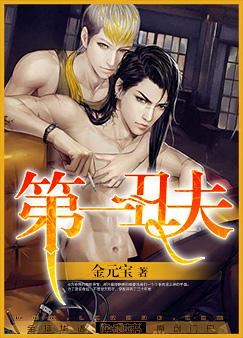
... Read More
The conflict in this chapter operates on at least four simultaneous levels and the author never lets you forget any of them. Level one: the staged conflict between Bao Ye's character and Nian Gao's character—a slave begging for water, a deacon refusing and killing a child. Level two: the real conflict between Nian Gao and Bao Ye, where the表演 becomes actual violence and Bao Ye's years of suppressed rage finally have permission to exist. Level three: the conflict between the slaves and their oppressors, which the performance inadvertently ignites. And level four—the quietest but probably most important one—is the internal conflict inside Dong Ling Ce, who watches all of this unfold and seems to be calculating something we can't yet see. What makes the stakes so high is that everyone is playing a role and the roles keep collapsing into reality. Nian Gao thought he was performing cruelty as entertainment, but he accidentally touched something real. Bao Ye thought he was acting, but the moment that child went still, he wasn't acting anymore. The slaves thought they were watching a show, but they were watching their own lives reflected back at them. And Dong Ling Ce—his stake is the entire system. When he asks about the water shortage, he's not being naive. He's measuring how close they are to the edge. The real tension isn't whether the slaves will rebel. It's whether Dong Ling Ce will let them, or whether he'll crush it before it starts. That ambiguity is what keeps me up at night.
... Read More
Okay so this batch starts with such a tiny moment - Dong Ling Ce shoving Bao Ye's hand onto that bracelet and it just... dimming? Not breaking, not sparking, just giving up. And then he immediately kicks Bao Ye out. I literally paused my reading and went back to reread that part twice. Something about that dismissal felt so loaded. Like the bracelet knows something Dong Ling Ce doesn't want Bao Ye to know. But then the stakes explode so fast after that. Lao Liu drags Bao Ye into this whole new world - the chaotic city, top slaves, political tension. Every scene ramps up the danger. You've got Tang Kaiji absolutely seething at Bao Ye like five seconds after meeting him, Yu Ling playing some game we don't understand yet, and then BAM - Jin Lingrui himself shows up and walks past Bao Ye like he's furniture. The tension in that stairwell scene was suffocating. I was genuinely worried Bao Ye was going to get hurt. What keeps me hooked is the layered stakes. Bao Ye is fighting for survival in this body that has a massive target on its back, AND he's navigating a political landscape where half the people want him dead and the other half want something from him. The cultivation system itself creates this constant anxiety - every time someone mentions becoming weaker through cultivation, my heart rate goes up because we know exactly what that means for people trapped in this world. And Jin Lingrui's backstory hit me like a truck. This man spent five years raising his younger brother, lost him to an institution that broke him, gained power, went to get him, indulged him until he betrayed EVERYTHING. The parallel to Bao Ye occupying Jin Jiabao's body is so painfully obvious and I'm convinced Jin Lingrui already suspects something.
... Read More
I keep coming back to one image from these chapters and I can't shake it. Ou Yexi's villa: 'the garden was full of red roses, everywhere was filled with the fragrance of flowers.' A fairyland on earth. This man who has power enough to send people across different worlds, to commission heirloom bracelets, to host elaborate dinner parties—he surrounds himself with something as classic and almost theatrical as red roses. And then there's the magic system casually dropped into the narrative. 'We can arrive at your door with just a spell.' No explanation, no fanfare. This is just how the world works. The three-tiered social structure (upper world, middle world, lower world) is mentioned in passing like it's normal. People travel between them. Someone could have been born in any of them and no one would know. The most striking visual though is Bao Ye hanging outside Yanruo's window. Not walking up the door, not knocking—CLIMBING IN THROUGH THE BALCONY. The image of him smiling up at her from the fence, pretending he's hiding from Dong Ling Ce, when really he's just being Bao Ye. It's so visually specific and weird and alive that I can just SEE it. This author paints scenes the way a filmmaker would—wide shots of rose gardens, close-ups of stunned faces across dinner tables, shaky cam following someone's panicked internal monologue. The world feels like it has history underneath every surface. Every object—the bracelet, the roses, the spell-based travel—implies a whole civilization behind it.

Leave a comment

You must be logged in to leave comments. or
