Number One Ugly Husband - Reviews

Number One Ugly Husband
+Add to Custom List
Sort
Add review
... Read More
The Zisang Yanruo moment absolutely wrecked me and I wasn't expecting it at all. Three days. She hasn't been able to reach her elder brother for three whole days and she's standing there with red eyes when she opens the door. Not dramatic sobbing, just... quiet worry. And Bao Ye—sweet, slightly chaotic Bao Ye—tries to comfort her like 'your elder brother is strong, he'll be fine' and I almost laughed out loud because that is SO Bao Ye to give the most basic reassurance possible and somehow it actually works. She feels better. He didn't offer solutions or promises, just presence. Then Dong Ling Ce comes out with practical plans and Zisang Yanruo wants to stay and search. Bao Ye can't bear to leave her alone and that's when Dong Ling Ce just... takes them both back to the Fallen Forest. Nobody argued. Nobody made a scene. It just happened. The way these three orbit each other—Bao Ye's warmth, Dong Ling Ce's competence, Zisang Yanruo's vulnerability—creates this quiet family energy that the book rarely announces but always delivers. I kept waiting for drama and got tenderness instead. Cheated, honestly.
... Read More
The City of Pleasure hits so different when you realize it's built on actual human suffering. The contrast between the bustling, beautiful exterior and the chained slaves crawling behind their masters creates this deep unease. I love how the worldbuilding doesn't info-dump—it just SHOWS you a slave catching spit and you immediately understand the entire power hierarchy. Then you get the sensory details: the pink dress swirling, the transparent bathroom, the golden light of transformation, luxury cars pulling up. Every scene has this cinematic quality. The "Fallen Forest" reference drops so casually too—like this entire world has this deep history that the characters just treat as common knowledge. I want to visit this world and also never visit this world simultaneously.
... Read More
I've been thinking about this text for days, and the theme that keeps coming back to me is the commodification of human beings - not just as a social commentary but as the fundamental operating system of this world. Everything is transactional, everything has a price, and the currency is human bodies and time. Let me start with the most obvious symbol: the iron nets. These aren't just fences; they're the visual manifestation of ownership. The text mentions them twice in close proximity, and each time they mark a boundary between human and property. The slave farm, the pavilion, the construction site - all enclosed, all contained, all categorized. But the deepest symbolism here is the BREEDING CYCLE itself. Eighteen to thirty years of a woman's life reduced to conception and birth. Children separated from mothers at six years old. The mathematical precision of it - thirty years, six years, the arithmetic of human value - this is capitalism stripped of its illusions. There's no pretense that this system is anything but economic. The reward system in the pavilion is symbolic gold. 'Whoever has the ability to fuck or be fucked by Young master Jin will be rewarded. You can eat rich meals for a full month.' This single sentence contains the entire theme. The old slaves' worth is measured in sexual utility, and their motivation is measured in food. Hunger and lust are the two levers this system pulls, and they pull them equally. Dong Ling Ce himself is a symbol - not of evil but of BOREDOM. 'Who made my life so boring' is his explanation for tormenting Bao Ye. This suggests that the ultimate corruption isn't cruelty; it's the absence of anything to care about. When you have infinite power and infinite time, another human being becomes background noise. The treasure that Dong Ling Ce mentions - 'something that everyone wants to snatch, but I don't need' - this is the central symbol of the narrative. What is it? We don't know yet, but the text is clear: value is subjective, desire is manufactured, and power is the ability to not want what everyone else wants. And Bao Ye's position - dangerous slave, privileged prisoner, future player in a game he doesn't understand - he's the symbol of the individual caught between systems. He has abilities but no freedom. He has access but no agency. He's the hinge upon which this world turns.
... Read More
This batch is structured like a series of hammer blows. You open with Bao Ye trying to warn Tang Kaiji and getting immediately shut down — that's a perfect cold opening because it creates immediate frustration. We KNOW the danger is coming, we KNOW Bao Ye is right, and we KNOW nobody is going to listen. That gap between reader knowledge and character ignorance is where tension lives. Then you cut to Bao Ye discovering his real name and his mother's identity — this is exposition, but it's wrapped in emotion. His adoptive father never spoke of his parents like it was a wound that hadn't healed. The pacing here is deliberate: slow, reverent, heavy. It gives the reader time to breathe before the next explosion. The construction site scene is where the pacing gets interesting. Lao Liu shows Bao Ye around, and suddenly you're seeing the world through fresh eyes — the slaves with charcoal-dark skin, the women carrying crying children, the deacon whipping them. This isn't just world-building; it's moral witness. The author doesn't pause to reflect, doesn't let Bao Ye process it. He just shows it and moves on. Then dinner, the truck ride back, and the stomach rumbling scene — and this is where I laughed out loud. After all that darkness, Bao Ye bursts into laughter at this absurd symphony of hungry bellies. It's a pacing valve release. You needed that. The chapter then immediately slams back into tension with the bath scene. The chapter ends on a cliffhanger that's almost comedic in its intensity — hundreds of slaves daring one man to come into the river, betting his survival like it's a game. The pacing from comedy to menace in three paragraphs is masterful.
... Read More
I need to talk about how this chapter manipulates my attention like nobody's business. The opening drops us mid-conversation with Boss Ji and Jin Lingrui, no transition, no warm-up. We're already absorbing information about fallen forests and spiritual mines and mid-level demons, and somehow the author makes this feel natural rather than overwhelming. That's serious craft right there. Then there's the hotel check-in sequence, which on paper should be mundane. You know how some authors can make checking into a hotel read like watching paint dry? Not this one. The queue card, the waiting, the casual conversation about sharing beds, Dong Ling Ce materializing a bag full of demon gold coins like it's nothing — all of it builds this steady, comfortable rhythm before the whole scene pivots when those five devils spot Jin Lingrui. And that pivot! One moment we're dealing with budget concerns and room preferences, the next there's tension in the air because someone might recognize them. The pacing here is absolutely surgical. Fifteen minutes in the text, but it felt like fifteen seconds. The waiter calling Jin Lingrui's name at exactly the right moment, the devils standing up and approaching, the quiet exchange of room numbers — it's all staged like a scene from a thriller, not a fantasy comedy. The bathroom scene at the end is where the chapter really shows its teeth. After all that plot momentum, the author just… slows down. Everything becomes quiet, domestic, weirdly intimate. Bao Ye humming in the shower, Dong Ling Ce's confusion about why he's suddenly dressing up afterward. It's a strange tonal shift, but it works. The chapter ends not on action or revelation, but on this quiet, almost vulnerable note that leaves me wanting the next chapter more than I expected.
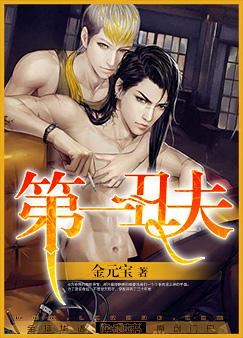
... Read More
"Just kidding." Three words and my entire emotional system short-circuited. There's something so achingly tender about Bao Ye's panic when he realizes Dong Ling Ce is actually upset. This guy who's used to being underestimated, used to being treated like he's dumb or simple — he catches onto Dong Ling Ce's mood shift IMMEDIATELY. He notices everything. And then he scrambles to fix it, stuffing food into his mouth while it's burning his tongue, playing along with the joke because he can see how much Dong Ling Ce wanted this moment to go right. And Dong Ling Ce! Oh my god. The way his face falls when Bao Ye accuses him of turning worms into fancy food? I literally felt that in my chest. He went out of his way — specifically found a chef, waited patiently for the whole meal, brought it all back — and Bao Ye's first instinct was suspicion. That hurts. That actually hurts to read. But then the feeding scene?? Bao Ye coaxing him, "Come on, try it, it won't taste good when it's cold," and Dong Ling Ce eventually saying "I want you to feed me" — I'm not okay. That's not just romantic tension, that's two people who know each other so deeply that this kind of intimacy feels natural. The fact that Dong Ling Ce's mood literally improves while eating food fed to him by the person he was jealous about? That's the most vulnerable power move in literature. Also the side character commentary — the slaves watching in shock as Bao Ye casually feeds Dong Ling Ce piece by piece, completely unaware of how intimate it looks from the outside? Perfect.
... Read More
This entire section is obsessed with inherited marks — literal and figurative. The sarcoma is the most obvious symbol: a tumor that connects father to son across lifetimes, a physical manifestation of ancestral crime. Bao Ye says it plainly: "What does his crime have to do with me in his previous life? I have it too." But he also owns it with characteristic defiance — "I am such a kind-hearted and innocent person; how could such an ugly tumor grow on such a handsome man like me." Even his joke is about inheritance. Then there's the blood itself. Golden-lustered god blood being collected in small bottles, dripped carefully, used as medicine. Blood as transaction, blood as healing, blood as the literal substance connecting them to the gods and their game. The 300 milliliters Zisang draws isn't just a plot detail — it's a symbol of her contribution, her hidden loyalty, the invisible labor that holds the team together. The mirror motif runs throughout too. Bao Ye keeps comparing faces: Ugly slave to his father, himself to Jin Lingrui, Zisang Yanruo to her alter ego. Everyone is looking at reflections, trying to understand lineage, trying to place themselves in a family tree they didn't choose. Jin Lingrui's line "You looked at me very strangely, just like seeing a relative you hadn't seen for many years" is the thematic climax of the whole section — it's about recognition, about finding yourself in someone else's face. And beneath all of this is the theme of performance versus authenticity. Zisang performs as a low-ranking slave while secretly being someone important. Bao Ye performs as a reckless idiot while slowly uncovering family truth. Jin Lingrui performs as the cold boss while quietly protecting people who don't know they're being protected. The novel keeps asking: who are you when no one is watching, and what marks do you carry that you never asked for?
... Read More
Okay can we just talk about how Bao Ye just straight-up outclassed everyone here? First, he lets them burn almost to death, then when over a thousand people come rushing to save him? He doesn't make a scene, doesn't gloat — he just wins his bet, brings back medicine, and then hand-feeds Lao Liu a bottle of anti-plague potion like absolutely nothing happened. Meanwhile Yu Ling was hiding around a corner spyin' and getting rejected HARD. The way Bao Ye casually drops 'The debt is already settled' while staring directly at Yu Ling? Iconic. That's not petty, that's boundary-setting with style. And Lao Liu's arc in these chapters is actually painful to watch. He goes from shocked sister-energy ('how could you do this') to the guy quietly accepting poison medicine like he owes his life and then some. His realization that maybe he's been naive about his sister and her friend Xiao Yu Ci hits different — 'Maybe it's him who hasn't seen their true colors.' That line alone deserves an Oscar. Xiao Yu Ci tho — the audacity. 'If you have the ability, don't beg us for food after the flood.' Bro was just robbed of her rescue and still thinks she's got leverage? The fact that Bao Ye's master is providing for him and he literally doesn't need their grain at all just makes her bluster even more pathetic. Also Dong Ling Ce claiming she 'got all the food' while Xiao Yu Ci calls her out on it? The drama is layered.
... Read More
Okay can we just talk about Bao Ye for a second because this guy is genuinely one of the most entertaining characters to read. His dynamic with literally everyone in these chapters is so rich and funny. First, the scene with Dong Ling Ce where they're bantering about copying the Diamond Sutra with their— well, let's not go there. The fact that Dong Ling Ce is this serious, almost menacing figure (we're told he INTENDED TO KILL someone the other night, which is wild), but then he just CHUCKLES at Bao Ye's ridiculous response about not being able to see words with his ass hole? That's character development right there. Dong Ling Ce doesn't even try to investigate further, he just lets it go and jokes back. And Jin Lingrui—bro just stares at Bao Ye THOUGHTFULLY while laughing. You can tell these people have developed some weird fondness for him despite himself. But the real moment for me is Bao Ye and Jiang Yu. This old slave is spiraling, saying he's going to die, he's tired of living, he's lost all his vitality. And Bao Ye's response is: 'hit your head against a wall, I guarantee you will die.' And Jiang Yu immediately fires back: 'can't you say something nice to comfort me?' It's so perfectly human. Bao Ye forces him to eat because, frankly, if you need comfort that means you don't actually want to die yet. That's not cruelty, that's just Bao Ye being Bao Ye—blunt but caring in the most roundabout way possible. And Jiang Yu literally looks at the pillar, realizes he doesn't have the courage to kill himself, and just eats. This relationship between them has so much unspoken warmth underneath all the roughness.
... Read More
Okay so this is where the plot actually starts hitting different. Bao Ye has this whole revenge arc brewing because he connects Jin Lingrui to the Shenli Bureau—the organization that killed all his brothers. And honestly? That moment when he's about to kill Jin Lingrui while he's showering is wild. Like, he's standing there seeing Jin Lingrui in just a towel and his eyes go all bloodshot with hatred. But then Dong Ling Ce stops him, and you're left thinking—what is this guy's deal? Is Jin Lingrui actually the founder or just some namesake? The story's playing with that uncertainty on purpose, which is smart writing. Then there's the whole subplot with Tang Kaiji's body. Bao Ye wants to preserve it and open up his divine veins so he can go to the middle world. That's a whole separate thread running parallel to the revenge plot, and I love how the author is weaving these together. The Fallen Forest quest feels like it's setting up something bigger too—Bao Ye finds White Spot Grass which can hide scars and tattoos, and that has to be important for what's coming. The Wang Qiao's child subplot though—that's the kind of detail that makes the world feel real. Three days without eating or sleeping, looking like a withered plant. It shows the human cost of this system in a way that numbers and stats never could. And Nian Gao's warning at the end, "You will die without you know it if you surround yourself with this type of people"—that line is chilling because it hints at danger without explaining what it is.
... Read More
This chapter is a masterclass in how to control the heartbeat of a story. Let me walk through why it works so well. It opens with what could have been filler—just two guys in a bedroom, one teasing the other, the mundane rhythm of morning routines. Most authors would either skip this entirely or make it ten pages of dialogue. Instead, it's tight, efficient, and actually reveals character without saying a word. We learn everything about their dynamic in about three paragraphs. Then you have the breakfast scene, which is basically comic relief, and then it cuts to the construction site. And that's where the tempo shifts. The rain starts. Not gradually, not foreshadowed with five pages of cloud descriptions—just drops on their faces and suddenly Nian Gao is questioning reality. That jump from domestic normalcy to supernatural emergency is exactly how you keep readers hooked. The Fallen Forest sequence serves as the emotional and narrative centerpiece. Bao Ye gets his mission, he gets his answer (two days, no arguments), and he heads out. But the chapter doesn't end on a high note—it ends on a bizarre, slightly comedic beat with a running bag of herbs. That contrast between the apocalyptic stakes and the absurdity of a runaway grocery bag is brilliant pacing. It prevents the chapter from becoming too heavy while still maintaining forward momentum. And that final image—Bao Ye chasing a bag that won't be caught—leaves you wanting the next chapter immediately.
... Read More
On the surface, the stakes in these chapters are physical survival — Bao Ye dangling from a rope, slaves with broken bones, a city in ruins. But the real conflict is happening underneath, and that's what makes it so terrifying. Bao Ye has healing power. He can mend broken legs and close half-meter wounds. In a world where he is classified as expendable slave property, this makes him the most dangerous person in the room, even if he doesn't fully realize it yet. The conflict between Dong Ling Ce and Bao Ye isn't just abuser and victim — it's controller and controlled force trying to find its limits. Every time Bao Ye escapes even a moment of surveillance (like when he teleports back to his dorm to investigate the notebook), he's engaging in quiet rebellion. The introduction of Tang Kaiji and Pu He as witnesses adds a third layer of conflict: now there are outside observers who will interpret Bao Ye's actions, and interpretation leads to action. Dong Ling Ce's question 'I'll see how long you can endure' reframes the entire power dynamic — endurance itself becomes a form of resistance. Bao Ye enduring torture, enduring false humility about his cooking skills, enduring the constant surveillance, and still finding moments to heal strangers and investigate mysteries. The stakes escalate from 'will he survive today' to 'what will he become when he stops enduring and starts acting.'

Leave a comment

You must be logged in to leave comments. or
