Neither a Protagonist nor an Antagonist, I’ve Become a Background Character? - Reviews

Neither a Protagonist nor an Antagonist, I’ve Become a Background Character?
+Add to Custom List
Sort
Add review
... Read More
I need to talk about Meng Qianxue because the author just DROPPED her into this chapter with two sentences and I am SHOOK. Think about it: she was arranged as his fiancee when they were children, they had a close relationship, but then she entered the army and things slowly drifted apart. Now she's sitting across from him in the council hall, a fully-fledged Transformation God Late Stage general commanding 50,000 troops, and she's winking at him like 'hey remember me lol.' That single detail — 'constantly winking at him, her heroic yet playful appearance was truly exciting' — this is NOT casual worldbuilding. This is the author planting an emotional landmine and I am HERE for it. And then there's the Jun Tianxiao / Li Qinghan situation which, honestly, made me want to both laugh and cry. Li Qinghan showed up ALONE to break off the engagement. ALONE. She just wanted to have a civil conversation, save face for both families, and this transmigrator Jun Tianxiao immediately starts screaming about returning gifts like some toxic ex who can't handle rejection. The tragedy of it is that the REAL Jun Tianxiao (before whatever possessed him) apparently loved her — he was her 'simp, still the kind that can't be driven away no matter what.' Now this copycat version is humilitating her in public and she has to walk out with dignity while dying inside. What gets me most is Mo Yunxuan's relationship with Wang Yuan. It's so understated but it lands. Wang Yuan clearly knows his master better than anyone — he anticipates Mo Yunxuan's desire to peek at the drama ('Old Wang, you really know my heart!'), and when Mo Yunxuan worries about his guards' safety, Wang Yuan's reaction is just... calm acceptance. There's a warmth there that the author never spells out but you FEEL it. That's the kind of emotional writing that sticks with me.
... Read More
There is a specific moment in this chapter that I keep coming back to, and it's not the execution itself—it's what happens AFTER. Fang Liang's head is off. Blood is spattered everywhere—in the conference room, no less, where these generals have probably sat and plotted and strategized for years. And Mo Yunxuan walks down from his seat, pulls out his blade, and starts stabbing the corpse. Again. And again. And again. Fresh blood spurts from the wound, and the generals—who are apparently used to this level of violence—don't even flinch at the splatter. They just watch. Stone-faced. But then Mo Yunxuan does something that transforms this from a brutal murder into something far more unsettling. He explains himself. Not apologetically, not arrogantly, but with the calm authority of a man giving a safety briefing: "In the future, when encountering enemies, if conditions permit, you must remember to finish them off. If you can burn them to ashes with a fire, it is best to eliminate future troubles forever." This is the kind of worldbuilding that doesn't come from paragraphs of exposition about the magic system or the political structure. This comes from a man treating corpse desecration as a professional recommendation. It tells me, in one beat, that: 1. Death in this world isn't final. People can come back, or leave evidence, or have their techniques preserved. Burning bodies is standard anti-resurrection protocol. 2. Violence is normalized to the point where it's almost bureaucratic. The generals accept this without question—not because they're cruel, but because this is just how things work. 3. Mo Yunxuan is not a warrior by temperament. He's a calculator who has decided that violence is a tool, and he's teaching his team how to use it properly. And then there's the atmospheric detail of Meng Qianxue watching him. She's not wearing armor—just an apricot jacket and silver-gray dress. She's beautiful, vulnerable-looking, and yet she's the only person in that room who shows any emotional response at all. Mo Yunxuan looks at her, notices how she's dressed, and for a moment the entire cold machinery of his mind seems to pause. And she wonders, completely earnestly, why he hasn't made a move on her yet. The contrast between the blood-soaked floor and that quiet, almost domestic tension is devastating. This world is brutal, yes—but it's also full of people who are trying to navigate it with whatever humanity they can preserve.
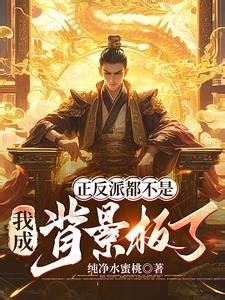
... Read More
Let's talk about what just went down with Fang Liang, because holy hell. This is the kind of scene that tells you everything you need to know about Mo Yunxuan, and honestly it's terrifying how much he reveals without saying a word. So Fang Liang shows up to this meeting with like 62 loyalty points on his panel, acting like he owns the place. He slams the table, threatens another general, gets called out for being an ungrateful prick. And then—BAM. One minute he's roaring about how he served the Duke for years, the next he's a headless corpse splattered across the conference room floor. Mo Yunxuan doesn't even flinch. He literally walks down from his seat, pulls out his own blade, and STABS the dead guy again and again. Multiple times. Like he needed to make sure the point was landed. And here's the thing that got me: he did all of this knowing full well the Empress is watching. Knowing that Fang Liang's disloyalty was a ticking bomb, and instead of managing it, he just detonated it publicly. He said himself—"In the future, when encountering enemies, if conditions permit, you must remember to finish them off." This isn't a guy who's figuring things out as he goes. This is a guy who has run through every possible scenario in his head a hundred times and decided, coldly and without hesitation, that Fang Liang's existence was a problem to be solved. But what really gets me is what happens NEXT. Fang Liang is dead, but Mo Yunxuan immediately distances himself: "Fang Liang's behavior was a personal matter and has nothing to do with the other generals of the Left Guard." He's already thinking three moves ahead, securing his position, keeping everyone else stable while he reshuffles the board. The fact that he already has a candidate in mind for the Left Guardian General slot—and refuses to tell anyone who—screams that this guy operates on information he guards like a dragon guards gold. The whole sequence reads like a masterclass in controlled escalation. Fang Liang digs his own grave with his own mouth, Mo Yunxuan hands him the shovel, and then buries him so deep that even his dying words can't escape. "This kind of ungrateful beast is just wasting food by staying in the world." Chilling. Absolutely chilling. And I love it.
... Read More
I've been thinking about how each character has such a distinctive voice and it deserves recognition. Jun Tianxiao speaks with arrogance and entitlement — his dialogue is full of declarations and demands, never questions. He says things like I've come to take over under the Emperor's decree with this pompous certainty that he IS the authority. Mo Yunxuan is fascinating because his dialogue is layered. He never says what he really means directly. When he tells Jun Tianxiao congratulations on being able to control the Left Guard, the surface meaning is praise but the subtext is a warning shot. His conversation with Meng Zhirou is softer but still controlled — he guides the interaction while pretending to be gentle. The generals Old Wang and Old Qi sound like actual soldiers — rough, impatient, with that camaraderie that comes from working together. And Li Xian in court uses formal honorifics and measured language appropriate to his position. What really stands out is how the dialogue reveals power dynamics without ever stating them explicitly. Every conversation is a negotiation of status and intent.
... Read More
This chapter marks a significant turning point in the narrative structure. On one hand, we have the cultivation progression subplot - Li Tieniu's advancement from Golden Core Peak to Nascent Soul Early Stage through systematic resource consumption. The pacing here is methodical, almost clinical, with Mo Yunxuan tallying the exact amount of Blood-Flesh Essences needed (one, two, three, then ten servings). This creates a sense of calculable growth that readers of the genre appreciate. But the real plot punch comes when we shift to the Imperial Court scene. The tension builds masterfully - Mo Yunxuan sitting alone in his carriage while officials form factions around him, the isolation emphasized repeatedly. When he enters the hall and begins openly observing rather than performing loyalty, the narrative tension spikes. Then Jun Tianxiao's accusation becomes the catalyst for confrontation. What stands out is how the author layers multiple plot threads: the resource management storyline (Blood-Flesh Essence scarcity, hunting strategies), the cultivation progression (Nascent Soul breakthroughs), and the political intrigue (Empress vs Duke conflict). These converge when Mo Yunxuan displays his Nascent Soul aura,压制ing Jun Tianxiao. The cliffhanger ending - with the Empress's ambiguous reaction and Jun Tianxiao helpless on the ground - leaves readers desperate for the next chapter.
... Read More
There's this recurring theme about performing cruelty to establish authority — Jun Tianxiao explicitly thinking about killing the chicken to scare the monkeys, believing that executing one soldier will make the rest obedient. But the story keeps undermining this idea. Old Qi doesn't fall for it. The generals aren't jumping chickens waiting to be scared. They're organized, aware, and resistant. This connects to a deeper theme about genuine leadership versus performative control. Ji Ruxue exercises power differently — she makes decisions and moves on, not needing to publicly humiliate anyone. Mo Yunxuan's approach with Meng Zhirou is also thematically relevant. Instead of the predecessor's rejection and punishment, he offers acceptance and warmth. The story seems to be asking whether authority based on fear actually works, or whether it's an illusion maintained by those who haven't been properly tested. The Left Guard itself symbolizes this question — these soldiers swore allegiance to the Wei State Duke's Mansion, not to whoever the emperor appoints. Their loyalty has conditions and boundaries that no amount of theatrical cruelty can override.
... Read More
Okay so let me just say — the opening situation with Mo Yunxuan is *chef's kiss* for tension setup. His predecessor's father just DIED and Wang Yuan didn't even give him time to process the body before shoving him into the oath ceremony. Like bro, you just transmigrated and you're already being handed a loaded gun pointed at your own head? The stakes here are enormous because if Mo Yunxuan botches this transition, he literally has zero safety net. He's the only one left in the main line of the Wei State Duke's Mansion — who else would the Imperial Guards rally behind? The author really understood that the best political tension comes from a protagonist who is simultaneously overqualified in knowledge and catastrophically underpowered in experience. Then you throw in the Jun Tianxiao situation and it gets even juicier. A rival noble who's ALSO a transmigrator — that's not just a twist, that's a whole paradigm shift. The fact that Mo Yunxuan recognizes the pattern ('Completely different from before! Definitely a transmigrator, no doubt!') shows the author is playing with meta-awareness in a really smart way. It raises the question: who else might know what's going on? And then there's Lin Fan, the 'Child of Destiny,' just lurking in the corner like a NPC nobody notices until it's too late. Classic foreshadowing done right. The power handover scene at the Imperial City Guard is equally satisfying structurally. Four generals, each with their own loyalty scores, different factions, different allegiances. Fang Liang at 62 loyalty is basically a ticking time bomb the author planted early. You KNOW something's gonna go wrong with him. Mo Yunxuan's immediate move to personally monitor Jun Tianxiao with 500 Nascent Soul guards shows he's thinking three steps ahead — but also that he's vulnerable. Every move he makes is defensive, reactive, and that's what makes it tense. The plot doesn't let up.
... Read More
Okay, so this chapter drops a bombshell that completely changes the board. Zhao Yun reveals he has a military talisman in his sea of consciousness that lets him strip the cultivation of any soldier who betrays him. And guess what? Mo Yunxuan's system literally says 【Detected an addable module. After adding the module, a new function can be enabled.】 I literally shouted at my screen because of course the system dangles it like that. No details, no specifics, just "you can get this cool thing if you want it." Classic moronic system behavior. But here's what really made me sit up: this talisman isn't just a loyalty mechanism, it's a strategic game-changer. Jun Tianxiao was literally sweating over how to keep his 3,000 White Horse Riders from being poached, and Zhao Yun drops this solution like it's nothing. Then Mo Yunxuan intercepts it? The chessboard just got a whole lot more interesting. The way the author layers these revelations is masterful—first we see Jun Tianxiao's dilemma, then Zhao Yun's cruel solution, then Mo Yunxuan's system picking it up, all in the same breathing space. It's like watching three predators circle the same prey from different angles. The pacing here is also worth noting: the emotional hug between Jun Tianxiao and Zhao Yun, followed immediately by the cold, calculating Mo Yunxuan reading intelligence in a pavilion. One moment is warm and human, the next is razor-sharp and political. That tonal whiplash is intentional, and it works brilliantly.
... Read More
I have to point out how vividly the author renders certain spaces. That garden pavilion scene with Meng Zhirou — the jasmine scent mixing with the faint smell of ink from her books, the stone bench large enough to squeeze onto, the way Mo Yunxuan has to consciously control his breathing. These sensory details make the world feel tangible and alive. Then you cut to the Left Authority Guard camp and the atmosphere shifts completely. Dust, steel, gruff voices, the practical no-nonsense energy of soldiers who know they've been abandoned by their lord. Old Wang's lazy attitude versus Old Qi's agitation creates this lived-in quality. The imperial court itself is rendered with that formal, weighty atmosphere where one wrong word could ruin you. What strikes me most is how each location has its own personality and emotional temperature. The duke's mansion feels warm and intimate, the military camp feels tense and uncertain, and the court hall feels cold and calculating. This kind of environmental storytelling is what separates decent worldbuilding from great worldbuilding.
... Read More
The loyalty system in this book is absolutely genius for maintaining tension and I need everyone to understand why. When Mo Yunxuan looks at his generals and sees floating numbers — Li Jin at 93, Zhang Tong at 91, Meng Qianxue at 98, Fang Liang at 62 — this isn't just convenient exposition. This is the author literally quantifying betrayal risk in real time. Fang Liang at 62 is walking around like he's fine, but we KNOW. Every scene he's in now carries the weight of 'when does this person flip?' and that changes how you read every interaction. The stakes cascade at every level. At the personal level: Mo Yunxuan just inherited a mansion with his father dead, no time to grieve, and potential enemies everywhere. At the political level: the Imperial City Guard handover could go south if even ONE general defects. At the supernatural level: Jun Tianxiao has summoned what appears to be a peak Nascent Soul expert (Zhao Yun?) who can fight beyond his realm, and Mo Yunxuan only has 200 body cultivators per year coming up. The math doesn't look great for our protagonist if this escalates. But what really kept me on the edge was the suspense around Lin Fan. He's introduced as 'unremarkable but unyielding' — the exact description of someone who is about to become dangerously significant. He jumps in at the worst possible moment, says the most dramatic line imaginable, gets thrown aside like trash, and the chapter ends with him essentially having failed spectacularingly. But he's the 'Child of Destiny.' That title alone means he's not done. The author is playing 4D chess with us — making us worry about immediate threats (Jun Tianxiao) while quietly setting up the real endgame threat (Lin Fan's rise). And Mo Yunxuan's final instruction to Li Jin — 'if you can't beat them, go back for more people. If that doesn't work, go to the Imperial City Guard. No matter what, keep your lives' — this is the emotional core of the conflict. He's not just a political player; he genuinely cares about his people. That makes every threat to them hurt more.
... Read More
Mo Yunxuan emerges as a fascinating study in calculated isolation. His internal monologue reveals someone who expected flattery and political support, only to discover he's become an 'isolated minister' - a casualty of his predecessor's upright stance. The passage where he realizes no one approaches him in the court courtyard is quietly devastating: 'With this doubt, he looked at Wang Yuan again... "Why isn't anyone coming over to talk?"' The relationship dynamics are layered. With Wang Yuan, there's comfortable familiarity - Mo Yunxuan vents his morning grumpiness, and Wang Yuan responds with patient obedience mixed with gentle teasing ('You are already the Duke of Wei, your words are the rules'). This master-servant bond feels genuine compared to the political relationships. The antagonism toward Mo Yunxuan operates on multiple levels. The court officials openly criticize him ('The Duke of Wei acts so frivolously!'), yet he hears everything while maintaining perfect composure. His internal responses reveal sharp wit - identifying Ji Yongfeng as the 'first shot' shooter, noting Li Qinghan's father among his critics. The transformation when he confronts Jun Tianxiao shows someone who has accepted his pariah status and weaponized it: 'This position seems to be the Vice Minister... I wonder if he's truly upright, or just pretending to be.' Jun Tianxiao serves as perfect foil - loud, presumptuous, ultimately powerless against genuine strength. The moment he's压制ed to the ground represents more than physical domination; it's the shattering of his political armor.
... Read More
Can we just take a moment to appreciate how well-written Jun Tianxiao's dialogue is because this transmigrator-villain has the MOST distinct voice in the entire chapter? Let's look at this gem: "Can't be? Can't be? The dignified Miss Li, one of the Four Great Beauties of the Imperial City, would actually be a freeloader for that little bit of cultivation resources?" The repetition of 'Can't be?' — that's not just bravado, that's someone performing confidence they don't fully feel. The author gave this character a voice that's loud, repetitive, and slightly unhinged, and it's PERFECT for someone who's reading from a villain template rather than understanding the actual social dynamics. Compare that to Mo Yunxuan's internal monologue, which is where the real comedic gold lives: "666, hasn't this Jun Tianxiao reacted yet? Li Qinghan's performance is obviously different from other green tea girls!" The casual internet-speak bleeding into his thoughts creates this hilarious contrast between his modern transmigrator brain and the ancient cultivation world setting. It's like watching someone try to navigate a historical drama while simultaneously live-tweeting it. And the Lin Fan entrance — "What kind of skill is it to bully a woman!" — this line is SO bad and SO good at the same time. It's the kind of cringey hero dialogue that makes you want to throw the book across the room, except the author clearly knows it's ridiculous because even Jun Tianxiao is confused: 'Who am I? Where am I? When did I bully Li Qinghan?' That beat where the villain is more confused than the victim is comedy writing at its finest. Li Qinghan's response though — 'sometimes you shouldn't be too arrogant, be careful that disaster comes from your mouth!' — that's a woman who's done. Her voice is cold, measured, and final. She doesn't beg, she doesn't cry, she just delivers the threat like a contract clause and walks out. That's a character who knows her own worth.

Leave a comment

You must be logged in to leave comments. or
