Neither a Protagonist nor an Antagonist, I’ve Become a Background Character? - Reviews

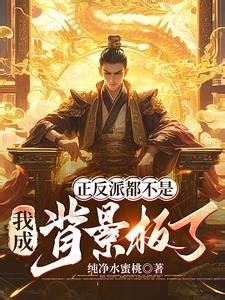
Neither a Protagonist nor an Antagonist, I’ve Become a Background Character?
+Add to Custom List
Sort
Add review
... Read More
Okay I need to talk about this one part because it genuinely made my heart melt. Mo Yunxuan picking up Meng Zhirou and just holding her like that — you can feel the difference between him and the previous owner of this body. The predecessor treated her like she was some annoying pest, deliberately avoiding her, making her walk on eggshells around him. And here she is, this tiny girl who only knows how to express affection by physically clinging to him, terrified that one wrong move will make him angry again. When she whispers husband bad after he accidentally catches a physical reaction while touching her stomach, I literally gasped out loud. The way she tests the boundaries — so cautious but also so naturally flirtatous when she feels safe — it shows how much she actually trusts him now. That transition from fear to comfort between them is beautifully written. And don't even get me started on the contrast with Li Xian pleading for his daughter's reputation. Two completely different kinds of parental love expressed in one chapter. One is tender and protective, the other is dignified and desperate. Both made me feel something real.
... Read More
The narrative voice throughout this chapter feels distinctly modern despite the xianxia setting. Mo Yunxuan's internal monologues read like contemporary satire: 'Heh, to think that my Wei State Duke's Mansion possesses 200,000 Imperial City Guards, with overwhelming power, but in reality, we are already enemies of the world!' This self-aware, almost cynical voice creates immediate reader connection. The dialogue shifts are particularly effective. Consider the morning routine exchange: 'Uncle Wang, change the collection of fierce beasts. Focus on collecting Tier 3 and above fierce beast corpses.' The directness here establishes Mo Yunxuan's authority without pomp. But the masterstroke comes during the court scene when Mo Yunxuan refers to himself as 'This Duke' when addressing the Empress. The narrative captures everyone's shock: 'What does Duke Wei mean by this? Is Duke Wei going to give up his identity as a member of the Imperial Party?' The Emperor worship subplot delivers humor: Mo Yunxuan's disappointment that no one shouts 'May our Emperor live ten thousand years,' followed by his reasoning that if he became emperor, 'he won't let anyone shout that sentence either!' The casual rebellion here feels fresh. Wang Yuan's patient explanations contrast nicely with court officials' performative outrage. When he describes the Old Duke's isolation: 'The officials who came to curry favor had no profit to gain, and ultimately returned empty-handed,' the dialogue carries ironic weight - the upright father became politically sterile.
... Read More
"This world is not generally large; even the Great Qian Dynasty has hundreds of thousands of cities." This line hit me differently on reread. It's not just worldbuilding filler—it's the core of Mo Yunxuan's existential anxiety. He's a transmigrator who knows how these stories go. He understands that Children of Destiny are walking plot devices, forces of narrative gravity that bend reality around them. The fact that he can't just hunt them all down is a statement about the limits of institutional power against narrative-level phenomena. His strategy—strengthen himself, win over what he can, let others handle the rest—is essentially an admission that he can't control fate, only survive it. The military talisman becomes symbolic here too. It's a tool of absolute control over subordinates, a way to impose order on chaos. But Mo Yunxuan can't apply the same logic to protagonists because they operate on a different narrative plane. There's also the recurring motif of eyes and seeing: Zhao Yun lowers his head and doesn't see Jun Tianxiao's smile, Mo Yunxuan doesn't see Meng Zhirou's fox-like expression, Qing Li doesn't see how easily she's being disarmed by kindness. The theme of perception versus reality runs through every interaction. What characters think they know about each other is almost always wrong, and that gap between perception and truth is where the drama lives.
... Read More
I need to talk about the pacing in these chapters because it is MASTERFUL. Let me trace it for you: We open at the gate of the Left Guard camp — moderate tension. Qi Dekai blocks entry, Zhao Yun asserts authority, a brief standoff. You think this is the climax of the scene, right? Wrong. It's just the overture. Then they enter the council hall and the tension DROPS for a moment. Zhao Yun is asking about missing seats, Qi Dekai is being politely deflective, everyone seems to be doing formal military procedure. It's almost boring. This is where most authors would escalate immediately, but instead the author gives you room to breathe. And then — BAM. Jun Tianxiao walks two steps toward the main seat and suddenly forty swords are drawn. The release of tension after that false calm is devastating. It hits so much harder because you had that brief lull. But here's where it gets even smarter: after the swords come out, the tension doesn't resolve. Qi Dekai starts explaining the rules, then pivots to reminding Zhao Yun that his authority is conditional. The scene keeps shifting, keeps reloading, like a gun that never runs out of bullets. Each character response raises the stakes one more notch. Then — cut to the Imperial Palace. Complete tonal shift. Ji Ruxue and Hong Yu bantering almost playfully. The tension evaporates entirely. But it's not lazy pacing; it's giving you a breather while simultaneously building a DIFFERENT kind of tension (political, romantic, whatever you want to call it). The chapter ends with Jun Tianxiao's delusional decision about the White Horse Riders, which is both funny and deeply unsettling. The author knows exactly when to make you laugh, when to make you wince, and when to let you sit with the uncomfortable silence after everything explodes.
... Read More
Okay can we just appreciate how perfectly Fang Liang's dialogue seals his own fate here? He starts off all hot and mighty: "Lord Duke, are you distrusting us?" — classic power move from someone who's been riding the Old Duke's coattails. Then Zhang Tong basically tells him to sit the fuck down, and Fang Liang loses his entire mind. "Gnyd? Dare to try and hit me?" Bro, you're in a room full of Transformation God cultivators and you're throwing hands with the Right Vanguard Main General?? The audacity is almost impressive. But the real peak comes at the end when he's surrounded by four enemies and his entire psychological structure collapses: "Aren't you just relying on your status as Mo Yunxuan's childhood sweetheart to get to where you are! Pretending to be a jade maiden in front of me, you..." AND THEN HE DIES MID-SENTENCE. I cannot stress enough how perfect this is. This is a man who couldn't keep his mouth shut for thirty seconds when his life depended on it. He was given an out—Meng Qianxue literally says "we don't want to make things too ugly, being colleagues"—and he chose to throw in her face that she's only there because of her relationship with Mo Yunxuan. Like... buddy, you're literally tied to the person who just ordered your execution. That's not a strategy, that's suicide by vocabulary. Mo Yunxuan's dialogue, on the other hand, is ice. Every line he speaks is measured, controlled, almost surgically precise. "Fang Liang refuses to follow the Duke Wei's Residence command, which is tantamount to rebellion." He doesn't raise his voice. He doesn't get emotional. He states facts and delivers consequences like a weather report. Even when he's giving the speech about finishing enemies off and burning their bodies to ashes, it's delivered in that same flat, matter-of-fact tone. It's not angry. It's not sadistic. It's just... efficient. And then there's the contrast with Meng Qianxue, who's the only one showing actual human emotion. Her lines are sparse but loaded. "Lord Duke, should the selection of the Left Guardian General be made from the Left and Right Valiant Guards?" She's the bridge between the cold calculation and the human element, the one who still cares about procedure and fairness even as everything around her turns violent. The dialogue here is doing SO much heavy lifting. It's not just advancing the plot—it's characterizing everyone in the room with a few well-placed lines.
... Read More
Let me break down why this chapter works so well structurally. You start with high-stakes political drama in the imperial court — Ji Ruxue silencing Jun Tianxiao, Li Xian making his dramatic appeal, all of it moving fast and furious. Then you pivot to Mo Yunxuan's quiet confrontation with Jun Tianxiao, where the tension becomes more subtle and layered. A threat disguised as friendly shoulder-patting, words carrying double meanings. From there the pacing takes an unexpected soft turn with Meng Zhirou — comedic, romantic, almost fluffy. But don't be fooled, this isn't filler. It's character development that makes everything that follows land harder. Then WHAM — back to the military camp where Old Qi is literally blocking the gate, creating a new conflict. The chapter ends with Jun Tianxiao realizing that killing the chicken to scare the monkey might not work the way he planned. That cliffhanger moment where he realizes the generals are organized and resistant — perfect timing. The author knows exactly when to speed up and when to slow down, when to punch you in the gut and when to let you breathe.
... Read More
The pacing in this passage is absolutely filthy, and I mean that as the highest compliment. It starts with internal monologue—Mo Yunxuan assessing loyalty scores, calculating threats, planning Fang Liang's elimination. This is slow, deliberate, almost meditative. We're inside his head, watching him methodically evaluate everyone in the room. The prose gives us this sense of controlled breathing, like the calm before something inevitable. Then Fang Liang speaks. The tempo SHIFTS instantly. From internal reflection to external confrontation. Zhang Tong fires back. Fang Liang slams the table. The whispers start—general-to-general, low voices carrying just enough to wound. And here's the genius move: Mo Yunxuan, who has been silently observing the entire exchange, lets it build. He doesn't intervene. He doesn't warn Fang Liang. He watches the trap spring itself. The moment of execution is almost understated. No dramatic music, no lengthy speech. Just: "Kill him." Four people move. Fang Liang collapses. Blood. The corpse-stabbing. The instruction about burning bodies. And then—immediate pivot. "Alright, meeting adjourned." This is where most authors would linger. Let the drama breathe. Let the characters process. But Mo Yunxuan doesn't process. He adjourns. He treats a public execution the way a manager treats a slightly inconvenient agenda item. And that's what makes it so tense—you're never quite sure if this is supposed to be the climax or just a transition. The story keeps you off-balance because it refuses to confirm whether this violence matters or is merely procedural. Then the tail end—Mo Yunxuan alone with Meng Qianxue, the awkward silence, her pink ears, his spacing out. The violence drops away and you're suddenly in this weird liminal space where the political thriller temporarily becomes something almost tender. It's a pivot so sudden it almost feels jarring, and that's exactly what makes it work. The author trusts the reader to sit with discomfort. There's no comfort break after the death. Just... more story. And honestly, that's why I can't put this down.
... Read More
The Blood-Flesh Essence system functions as a potent symbol for quantified power. Mo Yunxuan's precise calculations - 'It takes one Tier 3 Blood-Flesh Essence to increase from the Golden Core Early Stage to the Golden Core Middle Stage' - reveal a worldview where growth is mathematical, predictable, accumulative. This stands in stark contrast to the court's emotional, theatrical politics. The 'isolated minister' theme emerges repeatedly. The Old Duke's upright loyalty paradoxically produced political sterility: 'Although this earned him the praise of the Late Emperor and the Empress, it was not accepted by the other officials.' His son inherits both the title and the loneliness - a commentary on how moral purity can become social poison. The carriage scene operates as microcosm. While officials cluster in factions based on 'respective factions and the quality of their relationships,' Mo Yunxuan sits 'alone in the carriage, as if forgotten by everyone.' The visual symbol of separation speaks volumes about political exile. When Mo Yunxuan finally erupts his Nascent Soul aura,压制ing Jun Tianxiao, it symbolizes the collapse of political theater before raw capability. The officials' instant pivot to 'You should be magnanimous and let him go like a fart!' reveals how quickly sycophancy adjusts to power realities. The most potent symbol: the phrase 'This Duke' - self-reference that transforms from subservient courtesy to calculated provocation, embodying the chapter's central tension between performed loyalty and authentic power.
... Read More
Okay, I've been thinking about this scene for days now and I keep coming back to that empty seat. The main seat in the council hall. It's not just a piece of furniture — it's the entire thesis of this political struggle made physical. The seat exists. It's waiting. And everyone in that room knows exactly what it means. Qi Dekai doesn't need to say 'you can't sit there' three separate times — he just reminds Zhao Yun that the seat belongs to the Main General or the Duke of Wei, and Jun Tianxiao is NEITHER. The institutional rules do the humiliating for him. That's the real power structure at work: it's not about who's strongest in a fight, it's about who the system recognizes. But the deeper layer — and this is what really got me — is Jun Tianxiao's complete inability to understand this. His inner monologue throughout the scene is pure entitlement. He interprets every slight as personal betrayal, every rule as a challenge to his authority. The fact that Zhao Yun — genuinely loyal, genuinely respectful Zhao Yun — has to physically pull his arm and whisper 'please just sit down' tells you everything about the tragedy of this character. He's surrounded by people who love him or serve him, but he's so locked in his own narrative that he can't read the room at all. And Qi Dekai! The man is playing 4D chess while everyone else is playing checkers. When he reminds Zhao Yun that his Main General title is basically rented until the Empress's resources arrive — that's not just a threat, that's a commentary on the entire power structure. Authority in this world is performative. It exists because everyone agrees to pretend it exists. Take away the resources, take away the recognition, and what's left? The White Horse Riders decision at the end is Jun Tianxiao trying to build his own seat at the table. Whether he'll ever actually reach it is the question hanging over everything.
... Read More
What I love about this passage is the sheer LAYERING of conflict. On the surface, it's a disciplinary hearing gone wrong. But underneath? It's a geopolitical earthquake waiting to happen, and Fang Liang is the fool who lit the match. Let me break this down because the stakes here are MASSIVE. First layer: Mo Yunxuan vs. Fang Liang. Personal, immediate, violent. Fang Liang's loyalty is 62—below the threshold of trust. He's already identified as a liability. But this isn't just about loyalty points; it's about Mo Yunxuan's survival in a court where the Empress is actively looking for weaknesses to exploit. If Fang Liang can be bought or turned, he's a vector for enemy infiltration into the Imperial City Guard's highest ranks. That's not hypothetical—that's exactly what Mo Yunxuan outlines: the Empress could use Fang Liang to split the Left Guard and turn it into her personal army. Second layer: the Empress vs. the Wei State Duke's Mansion. This is the bigger game. The Duke's loyalty has always been to the Dynasty, not to any particular ruler. The Empress wants control of those 200,000 Imperial City Guards. Mo Yunxuan is the new Duke, and he's standing between her ambitions and her prize. Every move he makes here is also a move in that larger war. Third layer: the generals' own ambitions and resentments. Zhang Tong is hot-blooded and immediate. Chen Wei is cautious but pragmatic. Meng Qianxue occupies this weird middle ground—close to Mo Yunxuan but still bound by military hierarchy. And the Left Guard generals? They're watching their comrade get dismantled and realizing how quickly loyalty can evaporate when it's not backed by the right alliances. The tension in this scene is exquisite because everyone knows more than they're saying. Fang Liang thinks he's asserting dominance, but he's actually exposing himself. Mo Yunxuan appears to be losing patience, but he's actually executing a plan he's clearly had ready for some time. The generals pretend this is about military protocol, but it's really about who gets to survive the reshuffling. And the personal stakes for Mo Yunxuan? He just killed a man in front of his entire command structure. He has to walk the razor's edge between appearing decisive and appearing tyrannical. He chooses decisive—but then immediately softens his position with the "personal matter" line to keep the remaining generals from panicking. That's not instinct. That's a man who has rehearsed this moment in his head a thousand times.
... Read More
I need to talk about Meng Zhirou for a second because this girl is EVERYTHING. On the surface, she's the soft, cute, well-behaved wife who burrows into Mo Yunxuan's arms and cries when she thinks something happened to him. Sweet, right? WRONG. Because the author gives us this tiny, devastating detail: "what he didn't see was that the corners of her mouth were slightly raised, her eyes narrowed slightly, like a little fox stealing food." A LITTLE FOX STEALING FOOD. She's manipulating him and she KNOWS it, and she's enjoying every second of it. Meanwhile, Mo Yunxuan is just completely smitten, feeling moved and sorry for her, stroking her back like a good husband. The dramatic irony here is delicious. And then later, Qing Li shows up and Mo Yunxuan feeds her sweet and sour spareribs, and she's having an internal meltdown: "Didn't you say you were going to take revenge on him? How did you become stupid as soon as he opened his mouth?" This woman came in all prepared and fierce, and one act of basic kindness completely dismantles her. The character dynamics in this book are so rich. You've got Meng Zhirou playing the sweet wife while secretly scheming, Qing Li trying to be a tough enforcer while getting softening by a plate of ribs, and Mo Yunxuan in the middle of it all—calculating, possessive, but also genuinely affectionate. He's not a one-note villain here. He's complex.
... Read More
Let me just say — that council hall scene? I literally put the book down and stared at the wall for a full minute. All that setup, all that careful politicking between Zhao Yun and Qi Dekai at the gate, and then Jun Tianxiao just… walks in and tries to sit in the MAIN SEAT. Like, bro. Did you not hear a single thing at the entrance? The generals draw their swords in unison — 'Death to those who usurp military power!' — and he literally collapses to the ground. I couldn't stop laughing out loud. This is a man who genuinely has no idea how the world works, and yet the plot keeps putting him in positions of power. But here's what actually impressed me — Qi Dekai's response. He doesn't gloat. He doesn't even seem particularly triumphant. He just calmly explains, almost apologetically, why the Marquis can't sit there, while simultaneously reminding Zhao Yun that his position as Main General is basically held together by borrowed resources. That's three arrows in one shot: he humbles Jun Tianxiao, he asserts institutional authority, and he puts Zhao Yun in his place — all without raising his voice or losing his composure. Meanwhile Zhao Yun, who clearly respects Qi Dekai as a commander, is stuck playing damage control for a lord who's making enemy numbers grow by the second. And then the cherry on top — Jun Tianxiao sitting through all of this with this furious, twitching expression, mentally writing everyone's names down in his little revenge notebook. The man is operating on pure delusion at this point. He thinks once he controls the Left Guard, all this will be worth it. Spoiler alert: it won't be. The plot is setting him up for the biggest face-plant in literary history and I am HERE for it.

Leave a comment

You must be logged in to leave comments. or
