Neither a Protagonist nor an Antagonist, I’ve Become a Background Character? - Reviews

Neither a Protagonist nor an Antagonist, I’ve Become a Background Character?
+Add to Custom List
Sort
Add review
... Read More
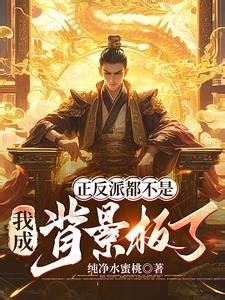
Okay, can we talk about how the author paints this military setting? From the very first description of the Left Guard soldiers — Golden Core Stage cultivators, Profound-grade magical treasure armor, rows of them lowering their heads in unison as Zhao Yun approaches — you immediately feel the weight and precision of this institution. It's not just 'a bunch of soldiers standing around.' The author makes you feel like you're walking into something enormous, something that has its own rules, its own gravity, its own language. And then the council hall itself — only one seat at the head, the rest arranged by rank, every general present and accounted for. The moment Jun Tianxiao approaches that main seat and ALL of them slam their tables and stand up in perfect unison, swords drawn... god, the cinematic quality of that scene. It's like the entire room holds its breath. Even Qi Dekai, who you'd think would be the one causing trouble, is suddenly the one everyone looks to for guidance. The spatial dynamics of that room tell you everything you need to know about power in this world. The contrast with the Imperial Palace scene is equally effective. Ji Ruxue lounging on her bed, Hong Yu reporting intelligence with that dry, almost amused tone — it's a completely different atmosphere. Cold, calculated, but with this undercurrent of intimacy between the Empress and her maid that makes the palace feel lived-in rather than just a backdrop. The author really understands that worldbuilding isn't just about describing buildings and armies — it's about making every location feel like it has its own temperature, its own mood, its own rules of engagement.
... Read More
Let me just say this about the power dynamics here: Mo Yunxuan is dangerously close to overextending himself and the author makes that VERY clear. He wants to march into Taihua Academy right now and crush Lin Fan. He CAN'T. Why? Because the Empress is a Body Integration Realm expert and the Wei State Duke's Mansion isn't ready to face her wrath. If he brings too many troops, she sees it as provocation. If he brings too few, Lin Fan's backing from the Refining Void experts at the academy could turn the tables. So he waits. A month. Maybe less. He's investing in Trap Camp training to create Refining Void experts himself. This is a man who understands that raw power without the political cover to wield it is just suicide. And Jun Tianxiao's situation mirrors this perfectly—he's building 3,000 Nascent Soul soldiers with a cruel loyalty mechanism because he KNOWS the alternative is having those soldiers defect to someone stronger. Both protagonists are playing defense while building offense, both are acutely aware that one wrong move means annihilation. The stakes have never felt higher because the author keeps reminding us: there are hidden enemies everywhere, hidden protagonists lurking, and the Empress watching like a hawk. Every alliance is temporary, every power grab is calculated, and every moment of peace is just the calm before the next storm. I am absolutely living for this tension.
... Read More
There's this recurring image that keeps coming back to me: the father who died and was never given time to be seen. Wang Yuan brought the news and immediately started arranging ceremonies — the dead are already being used as instruments of power consolidation before their bodies are even cold. This isn't just plot convenience; it's the author asking a quiet but devastating question: what does it mean to inherit something when the person you inherited it from is already being rewritten into a symbol? Mo Yunxuan is literally a ghost in his own life. He's occupying someone else's body, someone else's title, someone else's relationships. The Old Duke arranged his fiancee, built his military apparatus, forged his political alliances — and now Mo Yunxuan has to navigate all of it while being an imposter in every sense. When he looks at Meng Qianxue and feels that pull of history he doesn't fully possess, that's not just romantic tension — that's existential dread wearing a cute mask. Then there's Jun Tianxiao, who is himself a kind of ghost. The real Jun Tianxiao loved Li Qinghan. This new version is a hollow thing wearing his face, performing villainy from a script it doesn't understand. It's almost tragic — a man whose personality has been overwritten, who's repeating lines from a story that doesn't fit his reality. His cruelty toward Li Qinghan isn't malice; it's malfunction. And that's somehow sadder than if he were just a straightforward antagonist. The Child of Destiny concept itself is deeply symbolic. Lin Fan — unremarkable, overlooked, standing in corners unnoticed — represents the idea that greatness doesn't announce itself. While the transmigrators are busy performing and scheming and summoning legendary warriors, the real protagonist is the guy nobody noticed. It's a quiet critique of the entire power fantasy genre, wrapped in a story that fully participates in it. That tension between celebrating and subtly mocking the tropes is where the book's real intelligence lives.

Leave a comment

You must be logged in to leave comments. or
