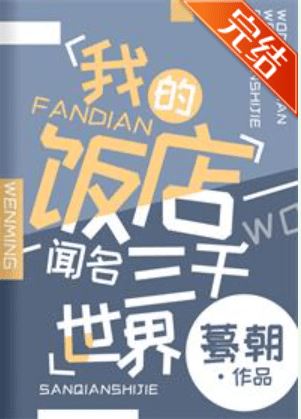
My Restaurant is Famous All Over the World - Reviews

My Restaurant is Famous All Over the World
+Add to Custom List
Sort
Add review
... Read More
I need to talk about Bai Xianzhi's internal conflict because it's hilarious AND genuinely stressful. This guy opens his restaurant after a day off and finds it flooded with elderly people and children who apparently believe his pork intestine noodles can make their kids top scorers. His reaction? Pure, unfiltered exhaustion. "Bai Xianzhi: '...'" That's literally what the text says. Three dots. That's all the brain power he has left. The stakes here are low on a dramatic scale but HIGH on a relatability scale. No one is going to die. The restaurant won't burn down. But Bai Xianzhi's sanity IS on the line, and the author makes you feel it. He prints notices. He goes door to door persuading people. He appeals to science and reason. And NONE OF IT WORKS on the elderly outsiders. The more he clarifies, the more they think there's something to clarify ABOUT. "The more he clarifies, the more he emphasizes that there's something special about his food!" This line made me laugh out loud because it's so true. You know how when you deny something too hard people just believe it MORE? That's exactly what's happening and Bai Xianzhi is trapped in it. But then — and this is the best part — the conflict resolves not through his efforts but through the Wutong Lane community stepping in. The locals who've known him for years finally do what he couldn't: they shut down the superstition by appealing to shared experience. "Have you seen any improvement in Little Pang's performance after eating here?" Simple, direct, devastating to the myth. The external conflict (superstitious crowd) is resolved, but the real victory is internal for Bai Xianzhi — he learns he doesn't have to carry everything alone.
... Read More
OK so Zhou Ling is honestly such a realistic character and I need to talk about her because she's doing things for me. She's not gorgeous, she's not dramatic, she's just a normal girl from a humble background who got lucky with a nice guy. The author clearly put thought into her insecurity—her roommates showing off their rich boyfriends while she's stuck waving her phone saying 'my boyfriend is on his way' and pretending everything is fine. That scene where she's standing there watching two luxury cars pull up while her own boyfriend hasn't arrived yet? That is painful to read. And Liu Qingshan actually showing up in a BMW instead of a beat-up car? I bet her whole world shifted in that moment. But the thing I love most is how understated their relationship is. No love at first sight, no dramatic confessions. Just two average people who grew fond of each other over time. In a genre full of over-the-top romance arcs, this feels refreshingly human.
... Read More
I need to talk about Zhuo Long because this boy is doing something incredible by simply existing. Here's this kid who was completely isolated in the orphanage — and I mean isolated, like nobody talked to him, nobody chose him — and suddenly the Master of the Feng Family himself shows up personally to recruit him. Personal visit. Not sending a subordinate. Not leaving a message. Showing up in person. And his reaction? He doesn't question it. He doesn't demand explanations. His body just instinctively follows. That tells me everything about who this character is — he's used to things happening to him without consent, used to being moved around by other people's decisions. He doesn't even have the expectation that he deserves better treatment. Meanwhile An ke is this whole different energy. She practiced her entrance in front of a mirror, planned every move, and was completely blindsided. But I don't hate her for it — I actually find her confusion kind of funny and human. She made reasonable assumptions based on the information available to her. Then there's Feng Ye, who barely says five lines and yet dominates every scene he's in. "Zhuo Long, come with me." That's it. No elaboration, no softening. But the fact that he's here at all says volumes about what Zhuo Long means to him. And Bai Xianzhi's welcome — warm, casual, treating Zhuo Long like a normal person walking through the door — that feels like the first time someone's been genuinely kind to him without an agenda. Tu linlin raising her glass with a smile is a small moment but it hits differently after everything.
... Read More
Let me break down the stakes because this story has more layers than it first appears. On the surface: a young man inherits a restaurant from his deceased uncle and must decide whether to run it or close it. Low stakes, right? Wrong. Because there are multiple conflict threads running in parallel. Thread one—the business itself. The restaurant is in terrible shape. Hygiene violations waiting to happen, equipment probably needs replacing, and his uncle apparently couldn't cook a decent meal to save his life. Can Bai Xianzhi actually run a food business when his entire culinary foundation was built learning from someone else's master who explicitly said HE was the better cook? Thread two—the mystery. Those fresh deliveries to a dead man's shop don't make sense. What's the deal with the back room? Why does nobody question whether the restaurant is open or closed? Someone or something is maintaining this place, and Bai Xianzhi is just now stumbling into it. Thread three—the personal identity crisis. He's been unemployed, living off livestreaming, calling himself a 'small-scale food influencer' like he's apologizing for his existence. Now he's supposed to be a restaurant owner? That's a massive identity shift and the story seems aware of it. The tension comes from all three threads pulling at once. You're not sure which one the story cares about most, and that uncertainty is genuinely gripping.
... Read More
Okay can we just talk about Yang Ming for a second? Every time he speaks, the text specifically notes that he glances at Bai Xianzhi. Not at Sun Lanyou, not at the table — at BAI XIANZHI. "Yang Ming nodded slightly" while talking about his salary. He answers Ma Wenqiang's questions as if performing for Bai Xianzhi. This isn't just a wealthy boyfriend showing off, this is a man who knows exactly who he's competing with and refuses to back down. And Sun Lanyou? She's sitting right there, surrounded by all this tension, and the narrator tells us her eyes and her boyfriend's eyes keep shifting toward Bai Xianzhi. The lingering feelings are so thick you could spread them on bread. Yet nobody says anything. Nobody addresses the elephant in the room except through subtext and side-glances. What killed me was the contrast. Here's Bai Xianzhi, who clearly still has some connection to Sun Lanyou, who went quiet after graduation and disappeared from everyone's radar, now running a small restaurant. He's not bitter about it — he actually seems at peace. But Yang Ming? He's performing success like it's a stage play, and every performance is aimed at an audience of one: Bai Xianzhi. I keep wondering what happened between Bai Xianzhi and Sun Lanyou. The text doesn't tell us, and honestly that mystery is what makes this scene so electric.
... Read More
Okay so let me just say—the transition from 'epic cultivation faction political drama' to 'guy makes dumplings and it goes viral' is one of the funniest tonal whiplashes I've experienced in this book and I am HERE for it. The description of the dumplings themselves was actually surprisingly vivid: 'thin dough wraps around savory meat filling, bouncing up up in boiling water. The snowy-white skin gradually turns transparent, revealing the dark-colored meat inside.' I could literally see this. And then right after the Dragon family is having what I assume is a very tense existential crisis about divine retribution, we cut to... customers posting food photos online and complaining they didn't get any? 'These dumplings were originally prepared for him to consider whether they could be served for dinner'—the fact that Bai Xianzhi was JUST testing his own recipe and accidentally started a food trend is such a perfect comedic beat. The worldbuilding here is also subtly rich: we get the name 'Huaguo' dropped in naturally, dumplings being described as a traditional delicacy, and this whole modern-social-media-meets-cultivation-world vibe that keeps getting more interesting the more I think about it.
... Read More
Okay let's talk about how the author uses different VOICES here because it's actually insane how many registers they're playing with in this single chapter. First you've got the INSTITUTIONAL VOICE—those formal evaluation blurbs. 'Has a strong ability to learn and execute, extremely disciplined.' Pure corporate robot. But then with Zhuo Long it shifts微妙ly: 'Independent and has his own personality, rather impulsive.' That's code for 'we don't know what to do with this kid so let's make him unhireable.' The author is using the same bureaucratic language to either elevate or destroy lives and it's terrifying. Then the ONLINE VOICE—those bracketed comment sections. The netizens are writing in this chaotic, caps-lock-energy internet dialect: 'Absolutely do not!! If you do, you'll regret it!!!' So much punctuation. So much confidence in knowing nothing. It's accurately horrifying how fast crowd mentality forms. And then there's the NARRATIVE VOICE, which is where things get genuinely literary. 'In the darkness, his eyes glinted like a leopard in the mountains.' 'The word luck had ceased to exist in his life.' This narrator isn't just describing—they're COMMENTING, and their commentary is sharper than any character's dialogue. The only actual DIALOGUE from Zhuo Long himself is: 'Move aside, don't make me say it again.' Three sentences total in this entire excerpt. And yet he has the most presence of anyone in the room. That's the power of letting silence do the work. The author trusts us to read what isn't said.
... Read More
I need to talk about the emotional whiplash in these chapters. It starts with this furious, rallying energy — Bai Xianzhi challenging Time Moon Hotel, loyal customers showing up with food in hand, the whole 'we stand together' vibe. It feels like a movie montage where the hero gains allies and the music swells. And then? Silence. Just him on his bed, figuring out he can't even leave his own house. The emotional pivot from 'I got this' to 'wait, how do I actually do this' is so painfully real. What got me most was the Feng kids' scene. There's genuine warmth there — these children who were helped before are now trying to help back. It's not romantic, it's not familial by blood, but it feels like love in its purest form. The kind that doesn't ask for anything except a chance to return kindness. And then Feng Ye's negotiation feels almost comically casual, but beneath it there's genuine care — he's helping not because he has to, but because someone he cares about needs it. Meanwhile Bai Xianzhi is alone with his problem, and the reader can't help but feel that tiny crack of helplessness. He built something beautiful and now he might lose it not because his food is bad, but because he can't show up. That's the kind of emotional trap that keeps you up at night.
... Read More
I’m hooked! So well written and interesting!! I really like the plot and I love Alexandra! And omg, so steamy!! Love it!
... Read More
i like this book..♥
... Read More
Thank you all for reading my book❤ I have a new story. it's titled \"TEMPTRESS\" please check it out

Leave a comment

You must be logged in to leave comments. or
