My Restaurant is Famous All Over the World - Reviews

My Restaurant is Famous All Over the World
+Add to Custom List
Sort
Add review
... Read More
I need to talk about the couple's dialogue because honestly it's the funniest thing in this entire chapter and I'm not even being ironic. The girlfriend is like 'Why did you choose braised pork? It's so high in calories; we'll gain weight if we eat it.' And then immediately picks a huge piece. The boyfriend's response—'This one is the biggest. It has the most calories.' And she hits back with 'I want to taste the flavor. How can I tell if it's good with a small piece?' The boyfriend: ...You make a valid point; I'm speechless. This is such natural, lived-in dialogue. Real couples absolutely talk like this. The humor comes from the contradiction between what they say and what they do, and the author lets the characters reveal themselves entirely through conversation without any narration telling us how to feel about it. Brilliant. But then there's the four men's dialogue, and it's completely different energy. They barely speak during the day—just awkward requests for more rice and muffled complaints about the boss not cooperating. But at night, their chanting of 'Ju Jie! Ju Jie! Come back!' carries this raw desperation that transforms them from comic relief into genuinely haunting figures. The contrast between how they speak in daylight versus midnight tells you everything about who they are. And Bai Xianzhi's internal monologue when the police call—'What crime did I commit? Will I go to jail? What will happen to my two little companions?' This is where the narrative voice really shines. It's chaotic, panicked, slightly absurd, and completely human. The author's voice throughout is this perfect blend of warm humor and creeping unease, and it never feels forced. Every line feels like it belongs to the character saying it.
... Read More
Okay so can we talk about how the Principal says 'Zero, there are zero companies willing to hire Zhuo Long' like it's some kind of punchline? The way that landed was brutal. The whole book has been building this image of an orphanage that pretends to be nurturing while basically running a human auction, and this scene is the knife twist. Twenty-one other kids get swept up in genuine celebration, the cameras are rolling, the netizens are posting heartfelt comments about 'pure friendship' — and then Zhuo Long gets zero. Not one. Absolutely nothing. I actually gasped out loud. But then — and this is where the writing actually earns its drama — the screen flickers. 'Three Thousand Food House.' Four words. A small restaurant in a spatial rift among all the elite corporations (TimeSpace Group! Wave Group! Azure Corporation!) showing up at the very last second. It's such a deliberate underdog moment, like the story itself is whispering 'you thought he was done? watch this.' The fake harmony cracking open to reveal something real underneath. That contrast between the orchestrated public ceremony and the lone little restaurant betting on the one kid nobody wanted? Chef's kiss.
... Read More
Honestly, the way Zhuo Long just vanishes after his birthday party is such a classic web novel move—drop a cliffhanger, let everyone panic for a bit, then slowly drip out information. But here's the thing, I actually kind of appreciate how the author handles it. Instead of making everyone lose their minds, Zhuo Long stays reachable through the Tongtong Machine and gives straightforward answers. It creates this weird tension where we know he's fine enough to communicate, but we have no idea what he's doing. Meanwhile, Bai Xianzhi's subplot about trying to crack the Three Thousand Worlds is doing double duty—he's looking for answers while we're all waiting for Zhuo Long to return. The Liu Qingshan girlfriend thread is clearly a side plot that's building toward something, probably some kind of introduction scene where the two little ones get more exposure. The structure here is interesting because the author is letting us settle into domestic calm while quietly stacking mysteries on top of each other. Like, Zhuo Long missing, Bai Xianzhi can't enter the Three Thousand Worlds, there are kids with weird traits hiding in plain sight. All of this could spiral out of control at any moment.
... Read More
Okay so the plot twist here is genuinely satisfying. Three Thousand Food House had this reputation—everyone knew its pork and cabbage was somehow terrifyingly bad, right? Like, people were actively warning others not to fall for livestreams pretending it was good. And then suddenly this new owner, Bai Xianzhi, decides to do a FULL COOKING LIVESTREAM. That alone is either supreme confidence or supreme delusion. The narrative structure is doing something clever: it lets all the skeptical netizens pile on first, building up this expectation of failure, and then... he actually just makes really good food. The steam, the sauce thickening, the way the cabbage turns pale green and slightly yellowish—it's almost anticlimactic in the best way. The real plot movement isn't some huge revelation, it's the quiet subversion of an entire community's shared trauma about this restaurant's food. And then Tu Linlin—the silent rabbit—takes a bite and the description just... stops mid-sentence. Cliffhanger energy. Made me immediately flip to the next chapter.
... Read More
Okay so this opening hit different. Dude's uncle dies and leaves him a restaurant he literally never knew existed. Like what kind of relative hides a business for twenty-four years??? But honestly the plot structure is solid—grief, discovery, confusion, all packaged neatly in these first few chapters. The biggest hook for me is the mystery around the restaurant itself. How does cabbage stay fresh without refrigeration? Who keeps delivering ingredients to a place that's been closed for days? The pork guy and cabbage lady both show up like nothing's wrong, like they've been doing this routine forever. That's either some committed customer service or something way weirder going on. I also love the ironic setup—he spent years streaming cooking videos dreaming of opening a restaurant, only to inherit one run by a guy whose cooking is apparently catastrophic. The last dish his uncle made was so bad Bai Xianzhi spat it out, yet here he is supposed to keep it going? That's either going to be a redemption arc or a comedy of errors, and I'm here for both possibilities. The plot's moving at a good pace too. Death → funeral → discovery → investigation → incoming visitors. Each beat raises new questions instead of just answering old ones. That's how you keep someone turning pages.
... Read More
I'm not ready for how much this passage wrecked me. Let's start with the breakfast scene. These two kids—Xiao Lu and Xiao Long—make PURE CABBAGE SOUP. No oil, no seasoning, just boiled leaves. And Bai Xianzhi eats it anyway. He sits down, tastes it, gives them a thumbs-up and says 'Delicious! Impressive!' Two kids who've probably never had anyone praise their cooking, and he's over here pretending plain boiled cabbage is a five-star meal. The fact that he then breaks out in a cold sweat thinking about whether they forgot to turn off the gas? That's love. That's immediate, unguarded, panicked love. But the scene that actually made me sit there staring at my phone was the upstairs nap moment. These kids run upstairs full of adrenaline after hearing Bai call them his children, and they fall asleep in under five minutes. Of COURSE they do—they're running on fumes and hope. And then the dream sequence: Xiao Long dreams he's swimming back to his mother, and Xiao Lu dreams she can't find a restroom anywhere. One is a wish-fulfillment fantasy, the other is pure anxiety dreaming. Both of them are kids who have never felt safe enough to just... stop. And Bai watching them sleep while thinking 'He was blessed with two adorable children, fulfilling his wish to have both a son and a daughter'—this is the kind of quiet emotional peak that doesn't need dramatic music or a swelling soundtrack. It just needs two kids in matching black and pink outfits who finally have somewhere to belong.
... Read More
I know I said I wasn't going to go full academic on this, but I can't help myself after rereading the opening paragraph about fat-to-lean ratio. 'For braised pork belly, if the pork belly is too lean, it will be dry, while if it's too fatty, it will be too greasy, which may not be friendly for those trying to lose weight.' This is not just cooking advice. This is the philosophical framework for the entire novel sitting right there in the first few sentences. Balance. The search for the sweet spot between excess and deficiency. The recognition that every choice has a cost and every compromise has a price. And the name of the restaurant—Three Thousand Food House. Sanqian Shifang. Three thousand meals. It's a number that suggests infinity, that suggests this place was built to serve an enormous quantity of people across an enormous span of time. But it's run by one guy cooking in a single kitchen, trying to get the ratio right. The uncle's legacy is also doing heavy lifting here. The restaurant was 'left' to him, which means it carries the weight of someone who came before. Is Bai continuing his uncle's work or rewriting it? The text doesn't say explicitly, but the fact that he's cooking the same dishes his uncle probably cooked—same neighborhood, same recipes, same way of welcoming strangers—suggests that inheritance isn't about copying, it's about continuing a pattern of care. Then there's the food itself as symbol. Braised pork belly is a dish that requires time, attention, and patience. You can't rush it. The sugar needs to caramelize. The wine needs to reduce. The meat needs to surrender its toughness through slow heat. In a world where everyone is live streaming and rushing and scrolling, this is an act of resistance. Choosing to do something slowly and well, in a physical space, with real people, is almost political. And the neighbors coming together around it—that's the vision the book is selling. Not wealth. Not power. Just a street full of people who trust each other enough to follow a smell and knock on a door.
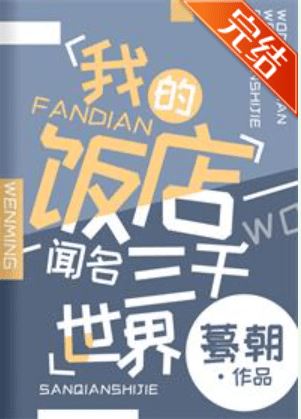
... Read More
The stakes here are quietly massive and I think that's what makes it work so well. On the surface, these kids are just hungry and tired — low stakes, right? Wrong. They're traveling through a pitch-black space rift that is explicitly described as dangerous. They've been walking for a long time. They've only covered ONE THIRD of the distance. Their father has apparently warned them about something serious enough that Baoer brings it up as leverage. And yet the external conflict is played almost entirely through comedy — crying, whining, being thrown out by ear. The real tension lives underneath all of that. What happens when they DO reach the Dragon Realm? What's waiting for them there that's more important than grilled meat? And what about the space rift itself — is it just a dangerous highway, or is something lurking in that 'eternal silence and darkness'? The author is playing a long game here, and I'm here for it. The QIng Shu livestream scenes are lower stakes individually but they create a different kind of tension — will she push through the spice? Will the livestream blow up? Will someone figure out who she really is? And then Bai Xianzhi's conflict — trying to run a restaurant in a multiversal crossroads, dealing with customers who have tails and ears, struggling to find staff who won't just freeload — that's a whole different flavor of struggle. Every thread has something to lose, even if it's wrapped in humor. The question isn't whether these characters will succeed, it's what price they'll pay and what they'll become along the way.
... Read More
I need to talk about Liu Qingshan because on paper he's just the rent-collecting landlord archetype and I was ready to roll my eyes at him but then he ate those noodles and started almost crying over pork and suddenly I'm questioning everything. "Delicious! So delicious!! Absolutely delicious!!!" — this man went from stern landlord to emotional wreck in approximately four bites. And Bai Xianzhi's reaction? He just smiled faintly and went back to cooking another bowl. That's not just good food description, that's two characters connecting without either of them saying anything real. The noodles became this weird bridge between them — the landlord who holds all the power, reduced to a starving guy in boxers and flip-flops, and the nephew who just inherited a restaurant and his uncle's problems, offering the only thing he has. But then — and this is what got me — after he finishes eating, AFTER the emotional meal, Liu Qingshan "finally remembered his purpose." The rent reminder. Like the food broke through whatever emotional wall was between them for two minutes and then suddenly it was business again. And Bai Xianzhi's internal monologue about his income versus rent? That's where the chapter actually hurts. This kind stranger just validated his cooking, maybe validated his ability to run this place, and the very next thought is pure financial terror. Also: where IS Bai Song? Uncle who abandons his nephew and a restaurant and never explains ANYTHING. That silence is louder than every word in this chapter. What was so urgent he couldn't make one phone call? And why did he leave the restaurant to Bai Xianzhi at all if he wasn't going to stick around to see it run?
... Read More
There's this one moment after Yang Ming and Sun Lanyou leave and the remaining classmates crowd around Bai Xianzhi offering to split the bill, and the text describes their warm breaths dissolving in the evening air. Just that one detail — the visible breath in cold night air — makes the whole scene feel tangible. You're not reading about a generic hotel entrance; you're standing there with them. And earlier, the front desk scene had this brilliant contrast between the clinical, almost legalistic way the attendant presents the bill ("Here's the signature of the gentleman who ordered the wine") and the emotional chaos unfolding around it. The hotel itself feels real — S City, a place with established reputation, the kind of place that would actually have this exact petty drama. What struck me most though is how the author uses silence as atmosphere. Ji Dong sitting grimly through the whole thing, not saying a word, the weight of having his reunion ruined pressing down on him — that silence speaks louder than any description of the room could. And then the final exchange between Bai and Ji Dong outside, the casual laughing about the 3000-meter race, the easy familiarity — it grounds everything in warmth after the confrontation. The setting shifts from the claustrophobic hotel dining room to the open night, and the mood literally breathes easier.
... Read More
Can we talk about how cool Bai Xianzhi is in this scene? While everyone else is panicking—manager stuttering, staff frozen, judges smirking—he stays completely composed. 'The taste of the dishes your hotel makes can't compare to mine. Isn't that the truth?' That line had me literally grinning. He's not yelling or throwing a tantrum; he's just stating facts with a quiet confidence that's seriously addictive. Then there's Lin, the white-haired 400-year-old elder who just shows up, silences the room with a glance, and protects Bai Xianzhi from having the livestream cut. Their dynamic feels like a masterclass in understated loyalty. No dramatic speeches, just presence. Meanwhile, the blue-haired man opening with 'you're blind even at such a young age' is such a vivid character sketch in one line. The power shifts in this scene are everything.
... Read More
Okay so this chapter is wild because on the surface it's just a cafeteria scene but underneath it's doing so much worldbuilding without even trying. Let me break it down. We've got this whole Space-Time Battlefield setup with the Eagle Tribe, Stone Clan, Divine Clan — all mentioned in passing like it's normal. But then you have these three siblings getting stopped at the storage room, missing out on BBQ, and then YE TONG'S BOX OF BRAISED MEAT BECOMES THE MOST CONTROVERSIAL OBJECT IN THE CAFETERIA. The plot twist here isn't some big revelation — it's that in a life-and-death warzone, the thing that causes actual drama is someone's little brother's cooking. And then those other soldiers? They literally offer to protect Ye Man on the battlefield just so they can keep eating his food. That's the kind of detail that tells you more about this world than pages of exposition ever could.

Leave a comment

You must be logged in to leave comments. or
