My Restaurant is Famous All Over the World - Reviews

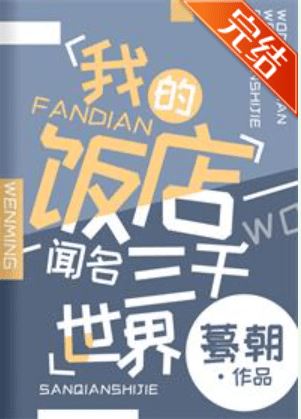
My Restaurant is Famous All Over the World
+Add to Custom List
Sort
Add review
... Read More
This chapter starts SO gently. Brothers video calling, cooking, the little kids doodling, business being fine at the restaurant. It's cozy. It's warm. And then BAM — urgent knocking, whistles, enemy attack drill. The pivot from 'yum food' to 'mayday' in three sentences ischef's kiss. But here's what really gets me: the author spends an entire section on Bai Xianzhi feeling disappointed about money he can't spend in the world he lives in, basically establishing him as a trapped rich person, and then immediately pivots to Xiao Lu running up with her crayon drawing of their family. The emotional whiplash is intentional I'm sure of it. You go from existential financial dread to 'DADDY LOOK AT MY DRAWING' and back again. And then the Feng Ye avoidance subplot sneaks in during what should be a peaceful moment upstairs. The chapter ends on a FIGHT between two parents — one of them a Rhino Clan guy with a horn, ready to attack — which is such a violent escalation from the drawing scene. The author is building tension on multiple fronts simultaneously and I am here for it.
... Read More
There's this incredibly potent symbol running through the entire chapter: the egg. Xiao Long was born from an egg that his mother never recognized as hers. An egg is something that contains life but looks like nothing special—it could be food, it could be random debris, it could belong to literally anything. The fact that Ji Lan saw his egg and had no idea it was her child speaks to something terrifying about the nature of parenthood and recognition. But then there are also the claws. The text mentions Xiao Long was nearly eaten by wild creatures. Claws are everywhere in this imagery—predatory, threatening, the natural world that almost claimed him. Ji Lan, as a member of a dragon clan, likely has claws too, but hers aren't positioned as threats—they're part of her identity, part of the world she inhabits. Xiao Long's claws (metaphorical or literal) are what helped him survive when nobody was watching. The deeper theme here is about belonging as something that has to be earned rather than inherited. Ji Lan biologically gave birth to Xiao Long, but she doesn't belong to him in any meaningful way. Bai Xianzhi, who may not be his blood relative at all, becomes the person he clings to. The author seems to be asking: what actually makes a family? Blood? Biology? Or is it who stayed with you when everything was falling apart? I've been thinking about this for days. The cafeteria scene that opened the chapter—people sharing food, eating together—was almost a parody of family ritual. Meanwhile, the real family drama happened upstairs, alone, in the dark. Food and family turn out to be two completely different things in this story.
... Read More
Can we talk about Yu Xin for a second because THIS woman found her person and she is NOT letting go. She literally spot-light-brothers him during a TV debunking session, goes on an internet treasure hunt, discovers he's a food anchor too, and then immediately books herself to his restaurant. The dedication! And her internal monologue when she sees the massive queue? That was me. I've been there. The "why did I come on a weekend" regret is so real. But what's really interesting is how Bai Xianzhi himself is portrayed through these other characters' eyes. To the netizens, he's this perfect boyfriend fantasy—handsome, brave, can cook. To Yu Xin, he's an idol she's discovered. Meanwhile he's just a guy trying to run his restaurant and not get sued for assault. The contrast between how people perceive him and who he actually is is kind of beautiful. He has no idea most of this is happening. He just hangs the police flag on his wall and gets back to work. That's the kind of character consistency that makes him feel real.
... Read More
Let me start by saying I've been turning over the 'Three Thousand Worlds' reference all morning and I think it's the key to everything happening in this chapter. The knifeman is described as swaying back and forth like he's on a dance floor before he even pulls the knife. There's something almost choreographed about his madness — the author keeps using performance language ('dance floor', 'nightclub') to describe him. Is he performing insanity? Or is the world itself performative, where danger and absurdity coexist on the same street? But the real symbol here is the immobilization rule. Bai Xianzhi acted with confidence because he assumed the store had the same safety mechanics as Three Thousand Worlds — where fighting is impossible. He believed in the fiction. And when he pins the man and realizes 'the man wasn't immobilized at all,' that's the moment his entire worldview cracks. The rules he took for granted don't apply here. This connects to something deeper about the book's theme: the tension between living in a story versus living in reality. Bai Xianzhi has spent so much time in worlds where the narrative protects characters that he forgot what actual danger feels like. The punch he takes is metaphorical — it's the pain of growing up, of realizing the genres you thought you understood are lying to you. Meanwhile, Li Yi and his boyfriend are just being their cute, ridiculous selves right next to all of this. Their romance doesn't have any special rules protecting it either — it's just two people navigating affection and boundaries in a world that doesn't guarantee safety. Maybe that's the point: love exists alongside chaos, and neither one cancels the other out. The red striped shirt is interesting too. Red = danger, yes, but also love. The color of the boyfriend's intensity and the color of the knifeman's threat occupy the same visual space. I'm not saying they're the same thing, but the chapter seems to be asking whether intensity and danger wear the same costume.
... Read More
Okay so I need to talk about this moment because it genuinely made me laugh out loud. Zhuo Long is standing there at this job fair, all those netizens are Roasting him for accepting a position at a small restaurant called Three Thousand Food House, and then BOOM—the salary gets announced and it completely flips the entire scene on its head. Ten thousand temporal coins a month as a dishwasher. Let me repeat that. A DISHWASHER making ten thousand a month. "Position: Dishwasher at Three Thousand Food House... Salary: Monthly salary of ten thousand temporal coins." And what does Zhuo Long do? Does he celebrate? Does he question why a restaurant would pay dishwashing wages that dwarf what people at actual hotels make? No. His immediate reaction is suspicion. "Upon seeing this overly generous salary, had a sense that something was wrong." Of course he did! This is the literary equivalent of walking into a room and the host is WAY too nice to you—that's when you know something is up. But here's where it gets good. He knows it's shady. He knows a ten-thousand-coin dishwasher salary screams trap. And he still says yes. Why? Because as the narration reveals, this kid has become "a thorn in the side for the owner and director" back at the orphanage. Someone named An ke is literally going crazy targeting him. If he passes up this opportunity, his chances of leaving the orphanage drop to zero. So he walks into whatever weird restaurant scheme exists with full knowledge that it's probably dangerous. That is such a compelling character moment—this kid is making a rational calculation in an irrational-seeming situation. The structural beat here is brilliant too. The author lets the netizens do all the setup work—mocking the job, complaining about the salary, setting up our expectations of a downgraded career path—and then pivots HARD with the salary reveal. It's a classic comedic misdirection that also happens to be emotionally devastating because we understand why Zhuo Long can't just walk away.
... Read More
Okay so I need to talk about this because it genuinely surprised me. We're deep into the story—chapter 204-207—and the plot takes this unexpectedly tender turn. After everything that's happened, after all the tension and danger this book usually thrives on, we get a quiet morning scene where Bai Xianzhi wakes up and finds two kids making him cabbage soup. No explosions, no dramatic revelations, just... domestic normalcy. And somehow that hits harder than any action scene could. The subplot that stood out most for me is the kids at the restaurant defending the queue. Like, think about that. These are children who were probably abandoned or traumatized before, and now they're confidently telling adult customers 'this is a secret, and we can't tell you why we are here for now.' They're performing competence. They're playing roles. And the moment where Bai Xianzhi casually tells a customer 'they are my children'—that line does SO much narrative heavy lifting. It's casual on his end but earth-shattering for the kids upstairs who hear it and immediately reframe their entire world: 'Then he must be our dad, right?' I also appreciated how the author doesn't resolve the kids' trauma in one scene. Zhuo Long's observation that 'they don't feel secure yet, they might think that if they don't work hard, we will abandon them' is a tiny sentence that carries enormous plot weight. It tells us everything about where these kids have been without needing a single flashback.
... Read More
The dialogue in this passage is doing two things at once, and both are excellent. First, there's Bai Xianzhi's actual speech—measured, instructional, almost clinical. 'When chopping the meat, you need to remove these tough tendons to ensure the best texture.' He sounds like a chef who's done this ten thousand times. Then there's the netizen comments, which are completely different voices colliding: sarcastic, skeptical, easily amused, occasionally sincere. My favorite exchange has to be the one about the host. Viewers keep asking 'Where is the host?' and Bai just casually explains that the host is a netizen named 'Silent Rabbit' who's filming him. The deadpan delivery against the chaos of the comment section is comedy gold. And then Tu Linlin's stammer—'I, I'm going to start eating'—is such a perfect character voice. One sentence and you know everything about him. The author never needs to tell us he's anxious; his dialogue does the work.
... Read More
There's something deeply symbolic about the braised pork in this story, and I've been thinking about it nonstop. This isn't just food—it's validation. It's connection. It's the thing that bridges the gap between online fantasy and real-world experience. Li Qiuqiu goes in worried about her appearance, worried about being judged, but the moment she tastes that pork, none of that matters. 'Eat! Eat! Eat!!' her mind commands. She forgets the handsome chef entirely. That's the magic of it—the food makes you forget everything except itself. And then later, when she's home raving about it to fans, it becomes this ritual of sharing joy, of community. The online comments section, the livestreams, the way people gather around the kitchen in Wutong Lane—all of this points to a theme about how food creates tribes. Even Tu Linlin's storyline ties into this symbolically. He owes money for a meal he apparently ran away from. His return to the restaurant, trembling and stuttering, is an act of redemption. He's reclaiming his place at the table. The rabbit clan's anxiety about reputation mirrors human anxiety about social standing. And Bai Xianzhi—he's this quiet center around which all these orbits spin. He doesn't judge. He just cooks and serves and occasionally demands payment in actual currency. There's a philosophy here about showing up, about belonging, about how a good meal can forgive a lot of sins. I think that's why this book resonates so deeply. It's not really about cooking. It's about hunger in every sense of the word.
... Read More
The sensory detail in this passage is absolutely lethal. Like, I actually had to pause reading because 'the rich broth melted in his mouth as the cabbage, pork, mushrooms, and wood ear fungus perfectly blended together in this small roll' and now I'm hungry at 2 AM and this is your fault. The author understands something crucial about food writing - it's not about listing ingredients, it's about the moment where flavor becomes an experience. When Tu Linlin forgets he's live streaming and just becomes an animal devouring food, that's not comedy, that's the most honest depiction of eating I've ever read in fiction. But the worldbuilding around this place is what really gets me. Three Thousand Food House has clearly been somewhere nobody visits - probably dismissed, maybe even mocked - and then suddenly the bell keeps ringing with 'various furry ears and tails.' This is a beastman world, right? And the protagonist is a human running a restaurant that's become the hottest ticket in town. The imagery of him hearing that bell like it's the God of Wealth appearing is such a perfect character beat - he's not some zen master of cuisine, he's a guy who just realized his rent is paid for the month and he's celebrating internally. Then you have the TimeMoon Hotel, which exists in this world as the polished establishment that Qing Shu presides over. The contrast between the two venues feels intentional - one is mysterious and rising, the other is established and threatened. I also love that technology exists here (Tonton devices, livestreaming culture, exchange machines for Time Coins). It's not a pure fantasy world, it's got this interesting blend of modern infrastructure and beastman society that creates a really distinctive atmosphere.
... Read More
I need to process the emotional violence of that dorm scene because it hit me so hard I had to put the book down for a minute. Think about it: Zhuo Long has just survived a public spectacle where thousands of netizens judged his life choices, he's made a desperate decision that could save him or kill him, and then he walks back into his dorm to find that the people he's been living with this entire time are now looking at him differently. The text says they "dropped their facade." Facade. That word does so much work. It implies that everything before this moment—the casual conversations, the shared meals, the pretend normalcy—was performance. And now that he's got something they don't (a job, an exit, ten thousand coins), the masks are off. The guy who sarcastically congratulates him? That's not just envy. That's the sound of someone who's been trapped in the same system, watching another person find a way out, and feeling something ugly and honest for the first time. And then the most chilling detail: this person steps forward to confront Zhuo Long, and then STEPS BACK. Because everyone knows he can't win. Zhuo Long is physically dangerous to them, and they've all been living in fear of him while pretending otherwise. I keep thinking about how isolated Zhuo Long must feel. He's surrounded by people his own age, but he's fundamentally alone. The netizens don't understand his situation. The director doesn't understand him. An ke wants him dead. And even the kids in his dorm—who he presumably shares meals, rooms, and trauma with—can only offer sarcasm and suppressed violence. The loneliest thing about this chapter isn't that Zhuo Long is leaving the orphanage. It's that he was never really part of it to begin with.
... Read More
"Ever since the passing of his parents, the word 'luck' had ceased to exist in his life." I'm not okay. I just sat here staring at that sentence for like five minutes. Let me explain why this hit me so hard. The author could have given us a whole tragic backstory dump here. Ten pages of flashbacks, dead parents, orphanage trauma, the works. Instead? One line. ONE LINE that tells us everything. Zhuo Long didn't just lose his parents—he lost the concept of luck entirely. Like the universe stopped dealing him cards the moment they died. And now he's sitting at the bottom of a ranking of 220 kids, the only one with a scar and a boxing certificate and an institution that's actively sabotaging his future, and he's just... sleeping. Not crying. Not raging. Sleeping. The contrast with all those other kids is almost painful. They've got accordion championships and cooking competition runner-up titles and institutional praise that reads like love letters. Zhuo Long got a scar and a warning label. And yet—the narration puts US directly inside his head right after that devastating line. We see his cynicism about the orphanage ('biggest joke in the world'), we feel his predatory patience, we understand why he doesn't bother defending himself to bullies who've already written his story. This is grief as absence. Not dramatic mourning but the slow erosion of every positive expectation. And somehow the author makes you care about a character who hasn't said an interesting word yet. That's craft. Pure craft.
... Read More
Think about what Xiao Long was up against in this scene. On the surface, it's a mother seeking her son after years of separation—that should be heartwarming, right? But the stakes go so much deeper than a simple reunion. Every time I re-read Ji Lan's explanation, I felt more and more claustrophobic. She slept through his birth. Woke up, saw an egg, thought it was someone else's animal offspring, and left. Xiao Long was alone with wild creatures from the moment he hatched. The author mentions he "almost died in the jaws of a beast at a young age" and yet he survived until five. The physical stakes of his entire existence were lethal. And then when he finally finds his biological mother, the emotional stake is that she never even knew he was alive. What kills me is that Ji Lan doesn't react at all when Xiao Long shouts "I hate you!" She just sits there, emotionless, saying she'll wait downstairs. Is she a bad mother for not chasing him? Or is she respecting his space? Or is she so used to being feared that she doesn't even know how to process a child's rejection? And Bai Xianzhi—what's his stake here? He has no obligation to care about Xiao Long beyond being some kind of guardian figure. Yet he's the one holding both kids on that dark second floor. The tension between duty and love keeps escalating. I was literally holding my breath when Xiao Long let go of Bai Xianzhi's clothes to run upstairs. That release of physical contact felt like the biggest betrayal of all.

Leave a comment

You must be logged in to leave comments. or
