My Husband is Napoleon in a Romance Novel - Reviews

My Husband is Napoleon in a Romance Novel
+Add to Custom List
Sort
Add review
... Read More
Okay so this whole sequence is wild. Killian drops roses and a ring like he's some romantic lead in a fantasy, and I'm just sitting here swooning—and then he casually mentions he volunteered for a war deployment to Mirat. Like bro, one minute you're proposing, the next you're sending yourself across the ocean to North Africa? And the cleverest part? He chose Mirat specifically because Iette loves its history. That's not just plot convenience, that's character-driven plotting at its finest. The author wove her personality into his military decision, which means the romance and the adventure are locked together instead of competing for screen time. Then out of nowhere—bam—the family subplot crashes in. Jeanne with her playboy fiancé, Monsignol who is apparently Killian's best friend from before all this? And the mother's disapproval over Iette having a child. It's a lot to unpack in one chapter. The Napoleon parallel is also delicious—there's this meta-layer where Iette is a history student who knows what's supposed to happen, and now she's watching Killian take the place of a legendary figure. That creates this delicious tension because we're waiting to see if history repeats itself or if these characters break the pattern. What I love most is how the personal and political intertwine. The deployment isn't just a plot device to separate lovers; it's Killian sacrificing his comfort zone for her happiness. And Iette's frustration about being left behind while she can't do anything adds real stakes. This isn't a generic "war keeps us apart" trope—it's layered with her desire to participate, to matter, to not be the powerless wife waiting at home. The author really understands that the best conflicts are internal as well as external.
... Read More
'Fortunately the size fits well too. I'm an artillery officer, so I'm good at measuring distances and intervals.' I laughed out loud at this line. This is Killian at his absolute best—trying to be sweet but inevitably slipping into soldier logic. The man calculated his way into her heart and he doesn't even realize it. But the real character revelation here is how much he's changed just by being near Iette. Remember how cautious he was about money? The text explicitly says he's thorough about financial calculations even with his family, yet he spent most of his savings on a custom ring without blinking. That's not impulsiveness—that's prioritization. He made a choice, and it wasn't about the math anymore. And then there's the sibling dynamic. Killian and Jeanne are clearly the same fiery breed—both stubborn, both blunt, both incapable of subtlety. When he slams the table to shut her down about calling Iette just 'some kid's mom,' that's not just protective brother energy. That's a man who has drawn a line and he's not moving. He told his mother he won't visit home until she approves. That's enormous for someone who values family harmony. Monsignol is the perfect foil though. Smooth-talking, charming, used to defusing Killian's family chaos. He's the friend who's been there before all the romantic entanglements, and his casual curiosity about how Killian 'bewitched' someone like Iette tells us everything—we're supposed to be surprised too. The moment where Iette grips Killian's hand and pleads internally 'please don't shake off this courage'—that's the whole relationship distilled into one gesture. She's always been the one reaching first, and he's finally meeting her halfway.
... Read More
The riverside scene. Let me just — the riverside scene. It's nighttime, the sun has set, and the river is "showing off its night view just like that time." Killian brought her here before. This location is loaded with meaning because it's WHERE their connection was first established, and now it's WHERE she nearly ends everything. I love how the author uses the same setting to bookend two opposite emotional states. First, it was peaceful and atmospheric. Now, it's where Iette stands at the edge, considering jumping in to escape this world entirely. The line "She missed home. She didn't want to stay in this world even a moment longer" hits so hard because it reframes everything. This isn't just heartbreak over betrayal — it's existential despair from a woman who doesn't belong here. The mansion itself is worth mentioning too. "This ownerless mansion" where Valide gathered people he helped, except Iette and her mother were "out of place." There's something deeply symbolic about a place built on kindness that still couldn't shelter the one person who mattered. And Valide's internal confession about cutting his wrist to "shed all his noble blood" — that image of scarred flesh and attempted self-erasure is viscerally powerful. The revolutionary setting adds constant background tension. Even the gossip at parties carries the weight of execution and political danger. When Iette learns people discussed her as a potential mistress casually, it underscores how precarious her position always was in this world.
... Read More
The pacing here is interesting because almost nothing happens externally — they're in a prison cell for most of these chapters. But the author knows how to build tension through dialogue and revelation rather than action sequences. The structure basically moves in waves: First wave: survival dread. Iette panics about the guillotine. Valide deflects with humor. Killian intervenes. QuickEstablishment of the stakes. Second wave: worldbuilding through Valide's history lessons. This could've been boring info-dumping but it's delivered conversationally and gives Iette room to shine with her anachronistic knowledge. Third wave: the Napoleon reveal. Peak comedy, but also a genuine emotional beat — her excitement crushed by the reality that this world operates differently. Fourth wave: the lullaby scene. Absurd on the surface but quietly establishes Valide's complexity and his hidden hostility. What works is that the author never lets the scene stagnate. Even when they're just talking, each character reveals something new about themselves. The transition from panic to dark humor to genuine intellectual exchange feels natural, like three people who've been locked together long enough to drop their guards gradually. If I had one critique, the middle section with Valide explaining history drags slightly — but it serves a purpose by giving Iette a platform to demonstrate her value. Without those history lectures, her modern knowledge would feel unearned.
... Read More
"I never once thought of a noble as a friend." This sentence. THIS sentence. I read it three times. Three times. It's the kind of line that recontextualizes an entire relationship. Let's talk about Valide first, because ugh. He's so complex and infuriating. On one hand, his backstory DESTROYS him — bastard son of a duke, used as a sacrifice for a political marriage, his biological father literally abandons him with his wealth during the revolution. No wonder he hates nobles. And yet. And YET. He lets his hatred override everything he felt for Iette. The narrative keeps showing us cracks in his armor — he felt something when he saw Killian and Iette together, his heart sank, he had an ominous feeling. But by the time he tries to explain himself, she's already gone. Then there's Killian. Oh my god. The man who "seems completely uninterested in women" but somehow KNEW about the mistress rumors. Who intervened when Iette first met Commander Agincourt. The text heavily implies he may have sabotaged Valide's plans from the beginning. His concern for Iette feels GENUINE — he unconsciously raises his hand to wipe her tears, he grips her firmly to stop her from jumping. The most painful part of this whole dynamic is Iette's position. She thought Valide was her only friend in this world. Now she's realizing that everyone — Valide, Killian, the society around her — has been using her in different ways. Her line "What did he think of me?" said to Killian at the river, while trembling and crying, absolutely wrecked me.
... Read More
Can we talk about how Valide speaks? The man has this eerie ability to say horrifying things while laughing like it's a joke. "Oh my, Iette. You look angrier than when you heard your husband got caught running away after causing trouble and was executed." HE JUST SAID THAT. Deadpan. With a smile. But here's what gets me—he also cracks real jokes that make you laugh before you realize how dark they are. "Please execute me directly at the guillotine without t*rture." The author really loves having Valide defuse tension with humor while simultaneously creating more tension. And Iette's voice? She goes from furious to crumbling in three sentences. Watch this exchange: "This distorted the meaning so much that it would've been better if I hadn't written anything at all!" → "I thought you understood my heart completely, Valide." → *cries*. The escalation is so natural. It feels like watching someone break in real time. Also Valide's internal narration about journalists: "He seemed to have no interest in others' daily lives or emotions, not curious at all, viewing them only as story material." This is literally the author winking at us about Valide's character through Iette's observations. The narrative voice shifts between close third-person on Iette and almost omniscient moments that feel like the author is sitting right next to us whispering commentary. It works really well.
... Read More
The pacing in these first chapters is genuinely masterful and also deeply manipulative in the best way. Chapter 1 is essentially one long crescendo—starting with Iette receiving bad news, building through each revelation (Empress Dowager absent, foreign princesses inserted, daughter demoted), peaking at the coronation itself where Killian crownshimself, and ending on the Napoleon reveal. It's tight, it's driving forward, it doesn't waste a single beat. Then Chapter 2 SLAMS the brakes. Complete tonal shift. We're in a dark prison cell. Quiet. Confused protagonist. The kind of jarring transition that makes you immediately question everything you thought you knew. Was the coronation a dream? A memory? A different timeline? The text deliberately withholds any explanation for the chapter break, which is both frustrating and compelling. The pacing inside Chapter 2 is slower but never drags because Iette's internal monologue is so active—she's constantly processing, hypothesizing, trying to make sense of the genre conventions she recognizes from webnovels. Valide's humor keeps things light while Killian's silence keeps the tension coiled tight. And that last line about the French Revolution and the Reign of Terror—cut off mid-sentence— is basically a cliffhanger disguised as exposition. I had to immediately start reading the next chapter.
... Read More
Iette. Sweet, hardworking, thoroughly mistreated Iette. The woman spent MONTHS planning a coronation—the most important day of her husband's life—and not only was the Empress Dowager deliberately snubbing it, but foreign princesses were invited BEHIND HER BACK and her own daughter got demoted in the seating chart. And Killian? He walks in, says two words ('You've worked hard'), and turns his head away. TWO WORDS. After days of not seeing each other because of 'busy schedules.' I felt physically painful for her. The narration drops this line that killed me: 'She had long felt she was an unwelcome guest and a blemish in this Basileca Imperial Family.' A blemish. Not a wife. Not a partner. A stain. And the reason? She didn't take his surname, she came from another family (Fleur), and she hasn't produced an heir yet. The daughter from her previous marriage apparently doesn't count in their eyes. But then—we cut to the prison, and Killian is THERE. Locked up next to Valide, watching Iette with this unreadable expression. He eats silently, observes, barely reacts when she panics. And yet—when she says she wants to go back to Korea, he says 'your memory might return tomorrow' in this low, resonant voice that somehow makes her feel safe. WHY is he in a prison cell? Did he get arrested too? Is this all connected to the coronation somehow? I have SO many questions and the author is cruelly not answering any of them.
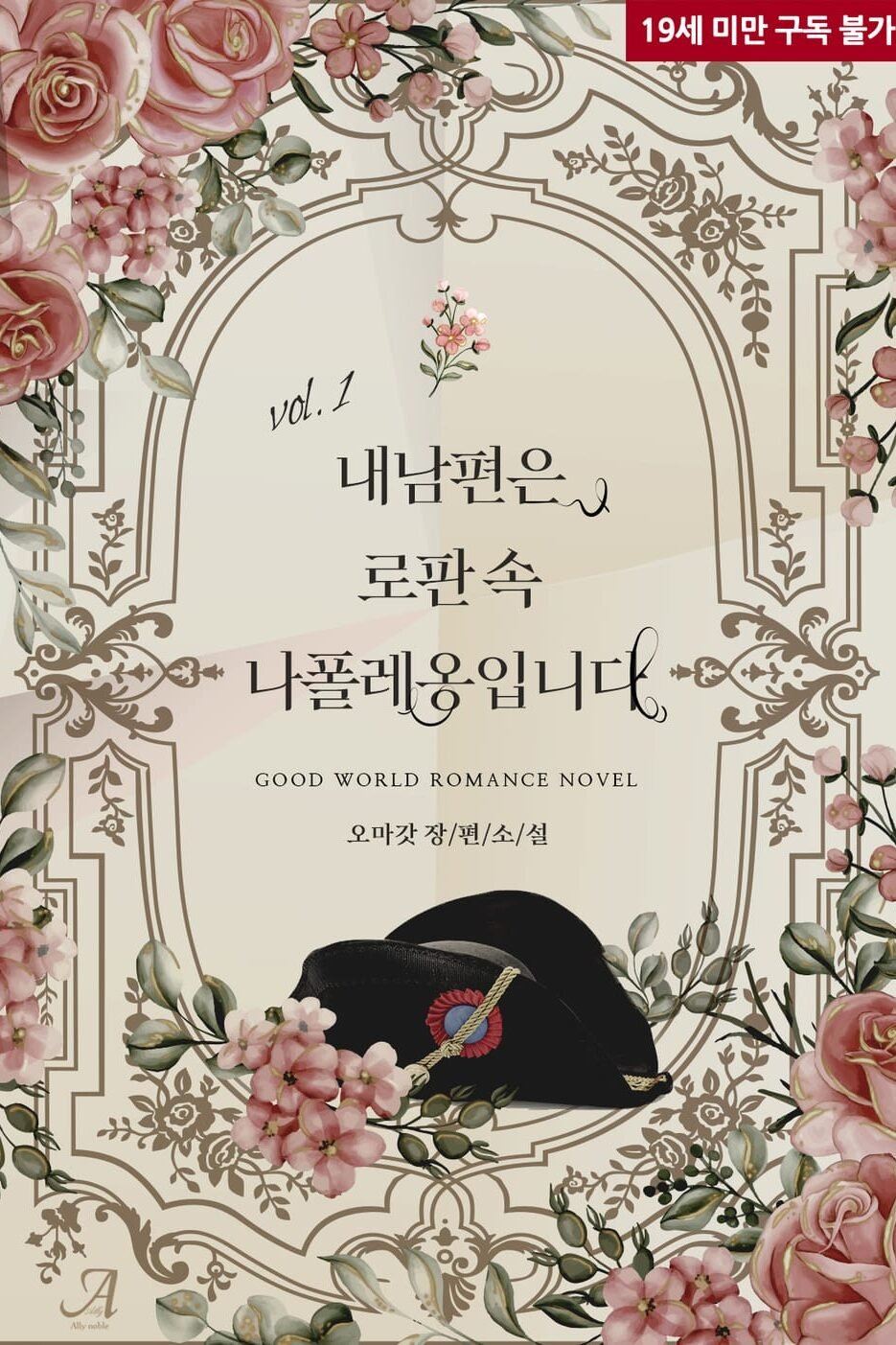
... Read More
"...It's a bakery name." I am not okay. I spent the entire chapter waiting for Napoleon to drop and instead got a BAKERY. A f*cking bakery named Napoleon. Iette's face when she sinks onto the dirty prison floor and mutters 'In this world, Napoleon is just a bakery…' — I felt that on a spiritual level. She came to another world hoping to witness history's greatest military genius and the universe handed her a patisserie instead. The betrayal. But honestly, what hit me hardest wasn't the comedy — it was how alone she feels underneath all that noise. She's a history student who died studying and woke up in Revolutionary France with no memory, locked in a cell, crying because she'll never see Versailles. Her entire emotional arc in these chapters is this desperate grasping for something familiar in a world where nothing makes sense. Even her obsession with Napoleon reads like someone desperately holding onto the one anchor she has. The moment with Killian looking at her after she yells about him being a great hero — there's something so tender about his silence. He doesn't laugh at her. He doesn't mock her for losing her memory. He just watches her with those cold blue eyes and files away every piece of information she accidentally drops. Meanwhile Valide is off singing lullabies as a courtesy bell while clearly harboring deep resentment. This trio is emotionally complicated in ways I didn't expect from what I thought would be a lighthearted isekai premise.
... Read More
I need to talk about Valide's dialogue because honestly it's my favorite thing in this whole batch. "Come to my country, Killian. Though our country is a small nation compared to Sainte-Valion, everyone is tightly united around the royal family." This is Hubert talking, by the way—not Valide—but it sets the tone for everything. The offer sounds warm but you can feel the trap underneath. And Killian's response? "I don't know if you're calling me because of Angel, or calling Angel to use me as a soldier." Deadpan. Perfect. But Valide is where it gets really interesting. Watch how he handles Iette at the party: "Commander, sir, this is Madam Iette le Fleur, whom I came to know through a chance connection. You'll remember Officer Fleur... But she lost her husband in the revolutionary turmoil and is struggling to raise her daughter alone." Then the masterstroke: "If the Commander looks after the widow and family of a subordinate officer, I'm thinking of writing an article about it..." He doesn't even finish the threat. He just trails off and lets Jouan fill in the blanks himself. That's not just good dialogue—that's someone who understands power dynamics at a visceral level. Every word is calculated, every pause deliberate. And then he has the audacity to smile brightly about it afterward. The humor between Valide and Iette is also genuinely warm though—the newspaper exchange, her admitting she'd rather the papers walk to her than him. Their dynamic feels like old friends who've found comfort in each other across all this chaos.
... Read More
I absolutely lost it during the Jouan scene. On the surface it's about a corrupt commander trying to exploit a widow, right? But the stakes are so much deeper than that. Killian just rejected Hubert's offer to leave Sainte-Valion. He chose to stay in a country tearing itself apart because he believes in something—recognition, purpose, maybe redemption. And then immediately we see what that country has become: men like Jouan using revolutionary victories as stepping stones for personal power. The Reign of Terror ended but the chaos didn't. The guillotine stopped but the rot continued. And Iette—she's the real victim here, caught between all these powerful men making decisions about her life. Valide orchestrated this introduction. Killian interrupted it. Jouan wanted to claim her. She had no idea any of this was happening. Her only defense is that she doesn't understand the game being played around her. The tension in that final moment when Killian takes her hand and walks away while Valide watches with an unreadable expression? That's not just romantic—it's political. Killian just publicly defied a commander in front of the entire court. What does that mean for their future interactions? What does it mean for Iette, who's now tied to both of these dangerous men? The author keeps raising the stakes without ever giving us a moment to breathe.
... Read More
Iette walked into that party in a suffocating corset and somehow walked out having dismantled an entire room of snobby nobles without throwing a single punch. Like, the narrative economy here is insane. You've got her being hyperventilating from the dress, then Killian dropping the 'cellmates' line and she's overthinking it, and THEN the rude nobles show up and she goes full revolutionary speechmaking with that article pitch about equality. She literally uses the Revolution itself as a weapon against people who think they're above it. The parallel was so sharp I almost laughed out loud—the same people who would've sent her to the guillotine pre-Reign of Terror are now the ones she threatens with a newspaper article. "Are there still people looking for noble officers who won't return even though the country is in danger? Moreover, to doubt General Basileca, who didn't avoid even the war against his homeland of Bellireria but stood at the vanguard to bring us victory and peace." And the fact that they immediately scatter like roaches when she mentions Monture Press and the Revolutionary Council? Chef's kiss. The subplot thread about Valide searching for sponsors while Iette is figuring out her own independence is also simmering underneath—she decides right there she needs to stand on her own feet instead of being someone's project. Everything connects. The party wasn't just set dressing; it was where three threads tightened at once.

Leave a comment

You must be logged in to leave comments. or
