My Husband is Napoleon in a Romance Novel - Reviews

My Husband is Napoleon in a Romance Novel
+Add to Custom List
Sort
Add review
... Read More
Okay so this whole subplot about Valide having a master plan all along? Chills. Absolute chills. I thought I knew where this was going but then BAM — it turns out everything Valide did was calculated manipulation from day one. Iette spent all this time studying, attending parties, networking, genuinely thinking she was building a friendship, and it was ALL for nothing. Or rather, all for HIS agenda. The plot twist lands like a truck because the narrative deliberately misled us (and Iette) into believing their relationship was genuine. We saw her gratitude, her earnest efforts, her tears — and then Valide's internal monologue reveals he was doing math the whole time. Using her noble blood, her social grace, everything. The reveal that he petitioned the Revolutionary Council without even asking her is the nail in the coffin. And then Killian shows up at the exact moment Iette is about to throw herself into the river. Classic structural move — just when the protagonist hits absolute rock bottom, someone appears. But here's what I love: it's not some romantic rescue fantasy. Iette immediately assumes Killian also knows about the rumors and is just another person who sees her as a tool. The trust is completely shattered. This sets up SO much tension for what comes next because now the two people who could help her are both people she can't trust.
... Read More
Let me just say—this chapter is a masterclass in how to escalate from mundane to magical without anyone noticing. It opens with NEWSSPAPER SALES FIGURES. Iette asking about graphs and charts, Valide explaining distribution strategies, newsstand employees as informants. This is literally the most boring possible starting point and yet the author makes it feel important because it establishes Iette's competence, her economic anxiety, her drive. We understand immediately: she needs money, she needs independence, she's not wasting time. Then—bam—we're at a SOCIETY PARTY. The scene shifts from business metrics to social performance, and Iette's internal monologue reveals the emotional labor behind every smile. The pacing here is deliberate, almost claustrophobic, matching how she must feel surrounded by these glittering, judgmental people. And then Killian appears. The chapter slows down. The prose becomes more sensory—his eyes, his voice, the hand kiss. The dialogue stretches, breathes. After pages of business and survival, this conversation feels like a sudden window opening. The reader exhales with Iette. Just as the emotional peak arrives—his gentle use of her real name, the invitation to call him Killian—Valide crashes back in like a plot device with teeth. The pacing snaps tight again. And the chapter ends mid-explanation about the mansion arrangement, leaving us hanging on the question of how long this elaborate fiction can hold together. From spreadsheets to spiritual recognition to impending doom, all in one chapter. No wonder I couldn't put it down.
... Read More
Okay, let me just—the moment Killian took the crown from the Pope and put it on his own head? I literally sat up straight in bed. Like, that is NOT what you do. That's not just rebellion, that's literally rewriting the entire power structure of this world in real time. Secular monarch needs papal approval? Killian said absolutely not. The shock on everyone's faces, the Pope collapsing into his seat—it was chef's kiss perfect. But here's what actually got me: the transition from Chapter 1 to Chapter 2. One minute you're watching the most dramatic coronation in imperial history, and the next you're... where? Iette waking up in a prison cell? With amnesia? With two guys in adjacent cells? My brain short-circuited and I had to go back and reread three times. Is this a flashback? A parallel timeline? Did I miss something? The transmigration reveal hit me like a truck. She's a Korean university student who suddenly wakes up as Empress Iette le Fleur, and the text explicitly says she figured out she's in a possession story from webnovels. The French Revolution parallel (Reign of Terror, guillotine, citizens overthrowing royalty) makes me think this world mirrors pre-revolutionary France. But why did SHE get pulled in? What's her connection to the Fleur family? And most importantly—why is Empress Iette in a PRISON CELL instead of at her own husband's coronation? Something is VERY wrong here, and I need answers NOW.
... Read More
This section is a MASTERCLASS in pacing. The author takes what could have been a single confrontation scene and stretches it across multiple beats, each one compounding the emotional damage. First we get Iette's explosive confrontation — raw, angry, desperate. Then we CUT to Valide's backstory, which recontextualizes everything we just witnessed. This flashback structure is brilliant because it forces us to re-evaluate every interaction we've seen between them. The moment Valide admits he petitioned the Revolutionary Council without asking her? That's the point of no return. Then the narrative cuts back to Iette running away, Valide chasing her, and that devastating final line. But instead of resolving, it pivots — Iette at the river, ready to jump, and Killian appears. The pacing never lets the reader breathe. Every emotional high point is immediately followed by a deeper low. What's particularly effective is how the author controls information disclosure. We learn Valide's motivations gradually — first his childhood trauma, then his discovery of his noble lineage, then his resentment, then his plan. Each revelation makes him more sympathetic but also more culpable. By the time Iette confronts him, the reader already knows MORE than she does, which creates this unbearable dramatic irony. The section ends on a cliffhanger that's both physical and emotional — Iette at the river's edge, Killian's hand on her, and that unfinished sentence about him intervening when she first met the Commander. What did he do? The chapter literally breaks off mid-revelation. I am NOT ready for the next one.
... Read More
"Though it couldn't compare to a royal ball at the Palace of Versailles in its heyday, this place was also extremely splendid." That line hit me like a punch because it's doing so much work in one sentence. We're in a post-revolutionary world where the old splendor is still physically present but politically dead. The Revolution consumed its own chairman—echoes of Robespierre everywhere—and yet here we are, people in splendid uniforms exchanging handshakes and political favors at triumphal ceremonies. The worldbuilding isn't in some dusty exposition dump; it's in the atmosphere of this banquet hall where everyone is dressed brilliantly but the underlying rot is visible. Jouan le Agincourt himself is a piece of environmental storytelling—a toad-like figure, loud, already drunk, using people. He represents everything this new regime has become despite claiming to fight for something better. And the fact that Iette, who barely knows this world, can immediately sense something is off about his charity? That's the world speaking through her foreign eyes. The New Continent War reference—America, Sainte-Valion's version of France helping American independence—adds this layer of alternate history that makes everything feel grounded even while it's fantastical.
... Read More
Okay can we just talk about this man for a second. He stands there in the dark by the river and casually drops his entire backstory like it's nothing—bullied at military academy, family went broke, couldn't belong anywhere, disobeyed orders and almost died—and then pivots to the part where Iette literally saved him psychologically in a prison cell and he still hasn't properly thanked her until NOW. After everything. Not in a dramatic scene, not with fanfare, just: "In that pitch-black prison, in that chaos, those words gave me great strength. So I wanted to thank you when I met you." And then he kisses her hand. A HAND KISS. In 18th century France equivalent setting! This man does not know how to do casual affection! The prison flashback she has right after—"the back of her hand where Killian had kissed it felt somehow itchy"—is doing SO much work. She's scratching it absentmindedly while trying to write an article, completely distracted. The relationship between them has this whole history now that the reader is only starting to see. Cellmates. Savior and saved. Her cheering for him from prison. His rebellious streak shaped partly by standing up to superiors on principle. And Killian watching her explode at those nobles—"who'd quietly watched her explode with rage on his behalf, finally spoke"—he noticed. He saw everything. What is this man going to do with that information and that feeling? Also the whole 'I don't miss my homeland's sea anymore' line hit me like a truck. He's choosing Sainte-Valion. Choosing her. That's not subtle, guys.
... Read More
Can we talk about Valide for a second? This person is hilarious but also kind of unsettling in the best way possible. He's the type of guy who cracks jokes while discussing his own potential execution like it's absolutely nothing. 'Eat your fill before going to the guillotine. This soup is made of the citizens' blood and sweat, so reflect while you eat.' I literally screamed reading that. The man is genuinelyunafraid and completely chaotic, and yet there's this undercurrent of real bitterness toward the nobility that makes you wonder what happened to him before all this. Then there's Killian. The cold soldier archetype who refuses to say anything personal but clearly has deep moral convictions. When Valide mentions the Vendée massacre and Killian's refusal to follow orders, something shifts. He's not just some emotionless weapon — he drew a line in the sand and risked execution for it. That one detail changes everything about how you read him going forward. And Iette! She oscillates between these two extremes like she doesn't even realize she's doing it. One moment she's dramatically shaking prison bars yelling about Napoleon, the next she's crying because she wants to see Versailles before she dies. She's completely unfiltered, which makes her fascinating to watch with these two carefully guarded men. The dynamic of the three of them in that cell is gold — she talks too much, Valide mocks everything, and Killian stays silent until something actually matters. But here's what bothers me: when Valide describes Killian as one of the top military commanders alongside Jouan le Agincourt and Hubert le Fernand, and Killian literally says 'I'd appreciate being left out' — is he humble or is he playing 4D chess? I have zero trust in either of these men and I love it.
... Read More
I need to talk about this scene where Iette overhears those women gossiping outside the salon. I literally gasped out loud. All this time she thought Valide was her only ally in this crazy world, someone who actually *understood* her. And what was it all for? "She hadn't known what that meant… Iette trembled as she recalled the situation when Valide had offered her hand to Commander Agincourt. Now she realized—Valide had groomed Iette as an aristocratic lady for that relationship." GROOMED. Like she was some kind of investment project, not a human being. The worst part? She still clings to hope. "We're cellmates… We're friends… If he sincerely apologizes and reflects…" Ugh, it broke my heart. She's so aware of how pathetic that sounds even to herself: "She felt pathetic for not letting go of that sliver of hope." And Killian's whole situation with Iette too? The way he watches her get led away, clenching his fists, feeling inadequate because he can't even buy a house? "Feeling his incompetence once again, he clenched his fists tightly." These two people clearly care about each other but the timing is absolutely cursed. Every time I think there might be something between them, reality slaps them both in the face. The emotional whiplash here is unreal.
... Read More
Jeanne walked into this chapter and immediately stole the show with 'I'm going to marry this man as soon as he returns from the Mirat expedition!' and I was SOLD. This girl has zero filter and maximum energy, and she is everything. But honestly, the dialogue throughout these chapters is what makes the characters feel alive. Killian's lines are short, practical, occasionally clumsy when he tries to be emotional—which is exactly right for a taciturn artillery officer. 'I'm an artillery officer, so I'm good at measuring distances and intervals' is the kind of line that makes you laugh and melt at the same time. He's not a poet, he's a engineer of romance, and that's why it works. Monsignol's voice is distinctively smooth and self-aware. 'Third Madam Basileca. I don't know what to call you. Anyway, welcome to forming ties with this family.' He's the comic relief but also the social lubricant, the guy who notices tension and diffuses it with charm. His question about how Killian 'bewitched' Iette is funny but also genuinely curious—which signals to the reader that even HIS character finds their match surprising. Iette's internal monologue carries the emotional weight while her spoken dialogue is often restrained, which fits her character perfectly. She's thoughtful, careful, shaped by K-Confucian sensibilities about propriety. When she finally speaks her truth—'I want to become real family with you'—it hits because she rarely lets herself want anything so boldly. The banter between Killian and Jeanne especially crackles. They're clearly the same person genetically—both stubborn, both direct, both incapable of letting things go. 'You don't seem qualified to interfere in my marriage, brother!' vs 'My wife and I will handle our own affairs.' Parallel lines, same blood, zero compromise. Perfect sibling energy.
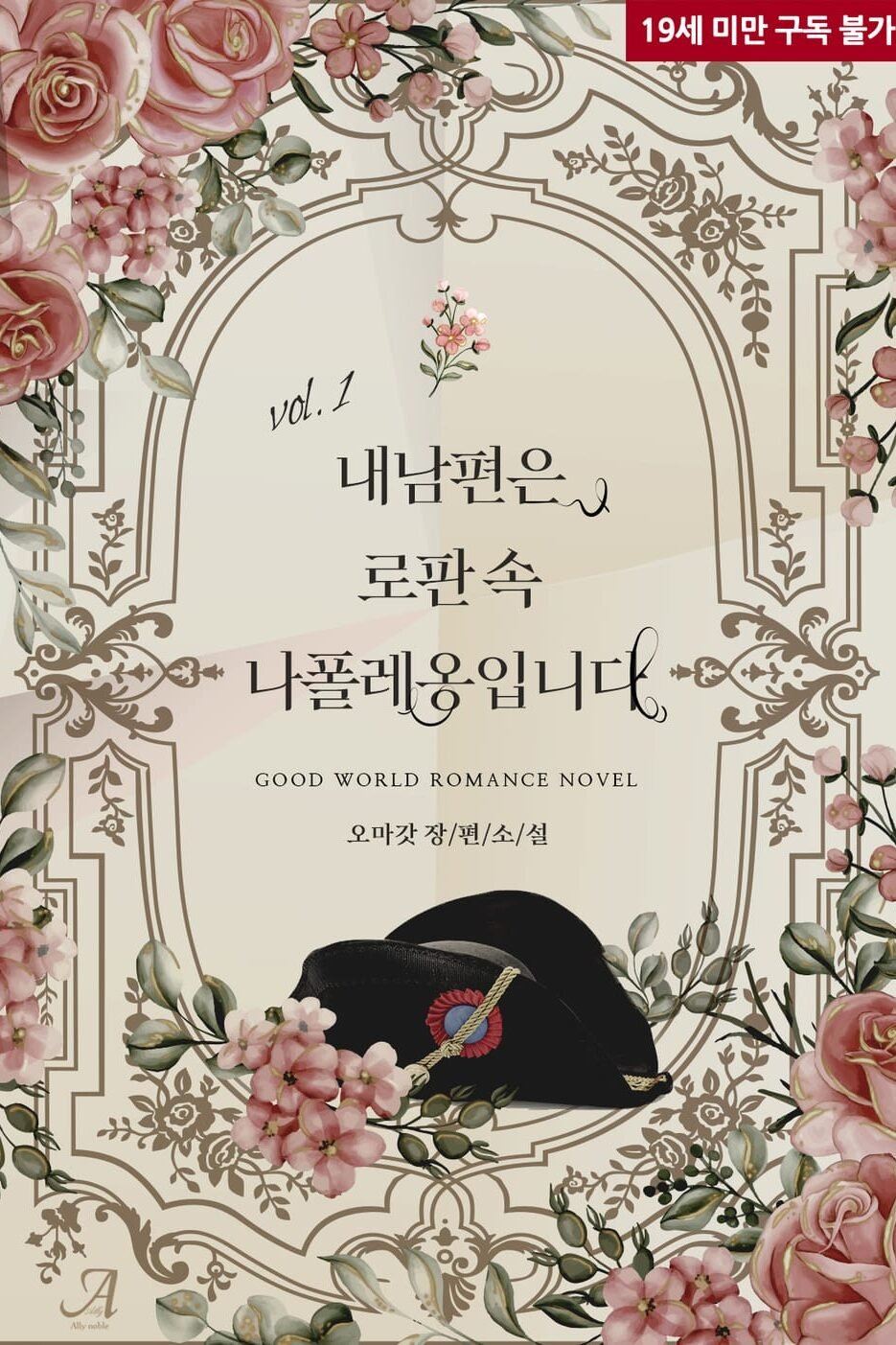
... Read More
I need to talk about how the author used clothing as worldbuilding. The very first thing we learn about this party is that Iette can barely breathe because of the corset. Not some grand description of chandeliers or fancy food—we get suffocation first. And then the explanation: Rococo style, banned after the revolution, but the new upper class imitates the old nobles anyway. That single detail tells you everything about this society. The Revolution happened. The guillotines ran. The power structures shifted. And the fashion? Identical. The revolution changed laws but not human nature. People still want to perform status through consumption and restriction. "The dresses of this era were Rococo-style clothing like what people such as Queen Marie Antoinette wore at the Palace of Versailles." And then the visual contrast! The party is all tight corsets and perfumed fans and whispered threats, and then they escape to this riverside overlook—quiet, dark, open water, Killian talking about missing the sea from his island home. The shift from the stifling ballroom to the breathable night air is basically the story telling you where the real truth lives. Not in the performance, but in the honest moments away from it. The newspapers Valide brings at the end also build this world so efficiently—post-Terror media boom, Monture Press as the credible one, competitors slacking on fact-checking. You get an entire economic and intellectual landscape in three lines of dialogue. The world feels lived-in, not decorative.
... Read More
Let me walk through the structure because I genuinely think this is well-crafted pacing. You open with physical comedy—Iette winded from walking, Killian confused, 'cellmates' dropped like a grenade. Quick breath. Then the noble confrontation hits like a ton of bricks, Iette handles it in under a page, and you'd think the chapter would just end on that high note. But no—the author pushes them to the riverside, lets the energy drop, and then extracts Killian's entire emotional backstory from a man who barely talks. That is a dangerous move and it almost never works, but here it does because the quiet follows the noise and your body literally slows down reading it. Then—cut to Iette at her desk, unable to finish the article, hand itchy where he kissed it, Valide arriving with newspapers. The chapter doesn't end on romance or revelation; it ends on the grinding daily reality of running a press. Which is the perfect tonal reset because it reminds you this isn't just a love story or a political drama—it's a story about people trying to build something ordinary in extraordinary times. The transitions are seamless too. Banquet → river → desk → doorbell. No chapter break needed. It flows like one continuous evening. And the cliffhanger? Not a dramatic one. Just Iette staring at her incomplete work, her hand still tingling, Valide walking in. Life continues. That's more unsettling than any cliffhanger.
... Read More
The dialogue in this excerpt is genuinely excellent, and I mean that as a technical assessment, not just fandom praise. Each character has a completely distinguishable voice, and I could identify who was speaking without checking the tags. Iette's voice is chaotic, emotional, and self-interrupting. She starts sentences and abandons them. She gets excited and forgets herself. 'The Reign of Terror won't last long! Soon Napoleon will appear and sweep across all of Europe. I need to see Napoleon before I die…' — that breathless stream of consciousness is pure Iette. She's a history nerd who can't help herself when the topic comes up, and her dialogue reflects that compulsive enthusiasm. Valide's voice is layered. On the surface, he's playful and mocking — 'Madam Fleur, what do you mean the Reign of Terror won't last long?' — but there's an edge underneath. His formal address ('Madam') contrasts with his irreverent content, suggesting someone who performs politeness while despising what it represents. The lullaby scene is perfect in this regard: he sings beautifully while providing a service that should be embarrassing, turning humiliation into something almost sacred. Killian is the hardest voice to write well, and the author nails it. Minimal words. 'I protested the current government's orders, and that was that.' When he does speak more, it's measured and observant. His dialogue reveals information only when necessary, which makes every word carry weight. The banter between Valide and Killian especially — they have this unspoken rhythm where Valide provokes and Killian absorbs. It feels like a relationship that's been building for years, even though we only see its early stages.

Leave a comment

You must be logged in to leave comments. or
