My Husband is Napoleon in a Romance Novel - Reviews

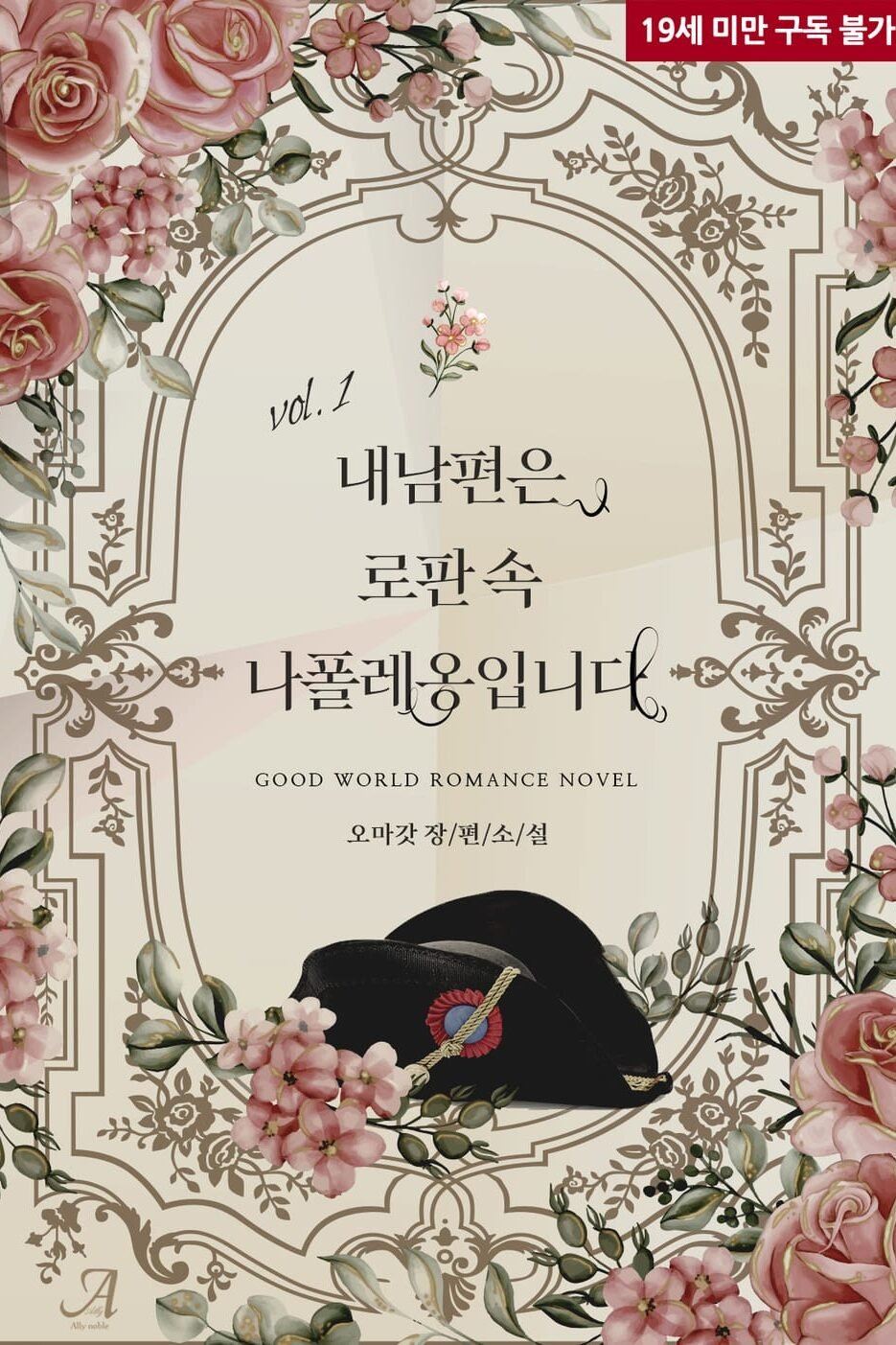
My Husband is Napoleon in a Romance Novel
+Add to Custom List
Sort
Add review
... Read More
The stakes in this story are brutal and immediate, and the author never lets you forget it. We're in Revolutionary France during the Reign of Terror — a period where the difference between freedom fighter and executed traitor could be measured in days, sometimes hours. Iette's situation is the most visceral: she doesn't know why she's imprisoned, doesn't know her own name, and could be executed tomorrow. The fear is raw and relatable. When she finishes her soup because 'this might be my last meal,' that's not dramatic flair — that's genuine terror masquerading as acceptance. Killian's stakes are different but equally high. He disobeyed a direct order from the head of state and is now sitting in a cell waiting to see if that defiance will be remembered or punished. The Vendée reference hangs over everything — if he'd followed orders, tens of thousands would've died and he'd be clean. By choosing conscience, he chose danger. Valide's stakes are the most ambiguous. He seems unbothered, but his calm might be a performance. He clearly has grudges and opinions, and in a regime this volatile, having strong opinions can be a death sentence. The fact that he jokes about the guillotine rather than fearing it suggests either genuine courage or genuine despair. What makes the conflict work is that none of these characters are powerless. Iette has knowledge that could save them all. Killian has military talent that makes him valuable. Valide has connections and charm. They're trapped, but they're not helpless — and that tension between their agency and their confinement is where the real suspense lives. The question isn't whether they'll escape. It's what version of themselves they'll become once they do.
... Read More
There's something deeply ironic about a history student transmigrated into a version of Revolutionary France where Napoleon isn't a conqueror but a bakery name. The author seems to be playing with the theme of historical determinism — the idea that we can predict the future because we've seen it before — and then systematically dismantling it. Iette treats history like a cheat sheet. She knows Robespierre will fall. She knows soldiers will rise to power. She knows an empire will emerge. And she's right about the broad strokes, but completely wrong about the details. The real Napoleon isn't there — or rather, a different Napoleon might be rising right beside her in that cell, and she hasn't recognized him because she's too busy mourning the baker she expected to meet. The guillotine itself is the recurring symbol here. It's mentioned constantly — as a threat, as a joke, as a prediction, as the instrument that will eventually claim even its creators. The revolution devours its children, and everyone in that cell knows it, but they respond differently. Iette fears it. Valide mocks it. Killian defied it and paid the price. There's also the prison cell as a microcosm of the old regime — supposedly decent facilities for nobles and political prisoners, but still a cage. Valide points out the irony: 'Isn't this level of facility better than an inn?' The revolution promises freedom but creates new hierarchies. Iette, the outsider, sees this pattern clearly because she's studied it a thousand times in theory but has never experienced it in practice. The lullaby Valide sings is another symbol worth noting. A man who despises nobility sings beauty to a woman he pretends to look down on. Art persists even in darkness. That's the thesis right there.
... Read More
I literally had to pause after Killian's conversation with Iette at the party. Not because of some grand romantic gesture, but because of how TENDERLY he spoke to her. Think about it—he compliments her writing with genuine specificity: "Every single line was absolutely right." He doesn't patronize her. He doesn't treat her like some decorative noblewoman. He engages with her IDEAS. And then he suggests publishing them as a BOOK. A book. Under her own name someday. This man saw something in her words and wanted the WORLD to see it too. What killed me was the contrast with everything else around them. Here's Iette, who has spent the entire chapter calculating bonuses, performing social curves, calling Valide "cousin" while her chest stings a little each time. She's emotionally exhausted, running on ambition and survival instinct. And then Killian just... meets her as an equal. No performance required. No bonus chanted in her head. Just two people recognizing something real in each other. The physical descriptions during their exchange are doing SO much work too. His blue eyes, "deep and beautiful." She's entranced by the "jewel-like sparkle" in them. The hand kiss that feels like a knight's oath. These aren't just romance novel filler—they're the language of someone who has been starving for genuine human connection and is suddenly encountering it. And the worst part? Valide interrupts. Of course he does. Because their whole relationship is built on transaction, not recognition. I'm already writing this author a letter.
... Read More
Okay I need to talk about the absolute CHILL this gave me when Killian called her Iette for the first time. Like, readerly chill, goosebumps, everything. It sounds so small on paper but the way the narrative builds to it—Valide is there, the social event is happening, all these formal titles floating around—and then Killian just... drops it. "Iette." Simple. Direct. No Madam, no Mademoiselle, no hiding behind centuries of court etiquette. And the description of her reaction? "She felt her heart stop for a moment, then her whole body froze." Not because it was romantic in some cheesy way, but because it was the first time someone in this entire world has acknowledged HER—not the dead husband's byline, not the noble lady persona, not Valide's cousin-employee. Just Iette. The person she actually is. And Killian, who she's been approaching deliberately for information, who she thought was just another source, who turned out to be reading her articles with genuine respect... that's what makes it hit so hard. But then Valide shows up and completely shatters the moment. "Iette, there you are" in such a cold, businesslike tone. The way he immediately redirects everything back to the performance—the cousin act, the daughter Candide, the mansion arrangement—it's like watching someone gently pour cold water on something beautiful. And Killian just stands there processing that she's living as someone else's maid, that she has a daughter she hasn't even fully told him about yet. This guy who reads articles under pseudonyms and understands the structural oppression women face is now realizing the woman he's been talking to is literally invisible by design.
... Read More
The author doesn't need a thousand-word exposition dump to make this world feel alive. A few sharp details do it. Killian explaining military pay: "That's why all officers were nobles, and the standing army received the king's money. When the regime wasn't stable, pay was even cut off." One sentence and suddenly I understand the entire economic system. Then there's Iette's realization about women's status. The revolution happened, queens got dragged from thrones, and yet: "Marriage and divorce were restricted, of course, and freedom of publication was hard to obtain. Even engaging in politics, commerce, and finance wasn't easy." The salon scene itself is brilliantly atmospheric—the drowsy music playing inside while the ladies slip outside to gossip, fanning their faces to hide their expressions. "All this time, they'd been treating Iette with kind smiles while wearing masks." The imagery of literal masks over figurative ones? Chef's kiss. And that moment when Iette wanders outside alone after the salon, trembling, trying to process everything? The emptiness of that scene—no one coming to check on her, no one actually seeing her—it echoes the entire theme of isolation in this world. Every setting reinforces how trapped these characters are, especially women.
... Read More
I need to talk about this marriage. It's devastating. Iette genuinely ADMIRES Killian—watching him stride forward in that military uniform, thinking 'wouldn't a war god from mythology look like that?' She recommended THE OUTFIT. She wanted to present a united, unconventional front. And his response to her months of labor is... 'You've worked hard.' And turns away. The tragedy is she still loves him. Even after everything—the snubs, the exclusion, the humiliation—she's thinking about whether HER outfit was appropriate for the ceremony. She's worried about HIM. That's not just devotion, that's someone who's been worn down so thoroughly she's forgotten she deserves better. Then the prison scene flips everything. She's disoriented, terrified, has lost her memory, and what does she do? She immediately tries to light a candle despite having zero survival skills. She bangs her forehead against the bars in desperation. She's vulnerable in a way that makes my heart ache. And Killian—still locked up, still essentially a prisoner— Watches. Doesn't help. Just watches. The line 'That soldier's low, resonant voice inspired an unknown trust' made me freeze. She doesn't TRUST him. Or she did, before everything went sideways. Or maybe—just maybe—her BODY remembers something her mind has forgotten. There's something deeply tragic about a woman who built her entire world around a man who can't even look at her, and then wakes up in a prison with him still nearby, still silent, still inscrutable.
... Read More
'Puahahaha!' 'Hahahaha—' 'Oh dear' 'Alright, let me tell you right away' Valide is instantly my favorite character and I barely know him. The way he laughs at everything—her confusion, her forehead-banging, her random questions about dragons—is both genuinely funny and slightly unsettling. He's clearly enjoying this more than he should, watching her deteriorate with what feels like genuine fascination. Is he friendly? Manipulative? Both? The text says he 'scrutinized her thoroughly, finding it fascinating, which suddenly made her uncomfortable' and that line captures his entire vibe perfectly. Killian's dialogue is basically zero and that's the point. He has two lines in the entire excerpt. Two. And yet he dominates every scene he's in through absence. The narrative keeps emphasizing his silence, his indifference, the way he 'paused for a moment' eating breakfast before continuing like nothing happened. His character voice IS his silence, and it's exhausting to read because you feel Iette's frustration every single time. Iette's narrative voice is the star here though. Her internal monologue is sharp, self-aware, and deeply modern—a Korean university student who majored in history and immediately recognizes the French Revolution parallel. Lines like 'This was a possession story from the webnovels she'd read so much' and her吐槽 about not knowing how to light a candle because she's never handled anything but scented candles—that's the humor that makes this book work. It's not trying to be literary, it's trying to be fun, and it absolutely succeeds.
... Read More
This whole section is absolutely drenched in the theme of hidden identities, and I can't stop thinking about how layers upon layers of concealment operate here. Iette writes under her dead husband's name because women publishers would be rejected. She poses as Valide's cousin/maid to exist in spaces she shouldn't occupy. She performs the role of a grief-stricken widow at social events while secretly extracting information. Even Killian himself is somewhat hidden—everyone sees the cold, stiff General Basileca, but he's actually someone who deeply appreciates sharp writing and genuinely wants to connect. The name itself becomes this massive symbolic object. When Killian asks to call her "Iette," it's not just intimacy—it's an act of recognition, of seeing through all the institutional lies stacked on top of her. He says something that really got me: "Before the revolution, I would have called you Madam or Mademoiselle Iette." The old feudal titles represent the entire oppressive structure. Simply using her first name is quietly revolutionary. And then there's the daughter, Candide. A name she has kept completely separate from her public life. The fact that Killian reacts with visible surprise to learning she has a daughter—that's another layer of the hidden self breaking through. Every relationship in this scene is built on partial truths, and the tragedy is that the people who might genuinely understand each other can't fully see one another because the society they live in demands performance over authenticity. The revolution happened, but the walls? Still standing.
... Read More
Okay so this scene where Killian intercepts that moment with Jouan and Iette is genuinely one of the best character reveals in the entire batch. Think about it—the guy literally went from cellmate to triumphant general, and yet when he sees Iette being handled like political currency by some corrupt commander, his first instinct isn't some grand speech. It's physical action. He steps in, separates their hands, and grips hers. But here's what actually got me: the narration specifically notes that Killian's hand was "hot and careful," not cold and hard like Iette expected. And then Killian himself is seemingly surprised by how small and delicate her hand feels. That's a character beat right there—this man who's become an intimidating figure of war is still somehow aware of the human reality beneath the medals and epaulettes. And the sponsorship angle? Pure political theater. Valide practically weaponized Iette's plight against Jouan, knowing full well the toad-like commander would take the bait. Meanwhile Valide watches the whole thing with an unreadable expression as Killian walks away with Iette. The layers here are insane—Valide probably orchestrated this encounter knowing Killian would show up, and Killian maybe sensed it too. Three people playing chess while Iette stands there completely unaware of what just happened around her.
... Read More
The pacing in these chapters is absolutely fearless. You start with what feels like a standalone romantic beat—roses, a ring, a proposal-adjacent moment—and the reader is leaning into the sweetness. Then Killian drops the Mirat deployment and the genre immediately shifts. Romance gets interrupted by wartime stakes, and suddenly we're tracking Iette's anxiety about disease, separation, the uncertainty of a husband going to a place inspired by Napoleon's Egyptian campaign. But the author doesn't let us settle into 'worried wife' mode before crashing in the full-family-drama car. Jeanne and Monsignol appear in a crowded street, Killian grabs a guy by the collar, and within minutes we're learning about secret relationships, parental disapproval, and a child from a previous relationship. The scene transitions are so fast you barely catch your breath, which is actually brilliant because it mirrors how chaotic Iette's life has become since entering Killian's world. What works surprisingly well is that despite the rapid-fire revelations, each emotional beat gets room to land. The coffee house confrontation has three distinct movements: Jeanne's explosive declaration, Killian's defense of Iette, and the quiet aftermath where Iette finally confesses her deeper feelings. The Monsignol intervention acts as a pressure release valve—smooth, charming, slightly ridiculous—and then we're alone with the couple for the most vulnerable moment in the entire chapter. The only slight whiplash is the Napoleon reference, which feels a touch anachronistic for a character who's supposed to be immersed in this world. But honestly, it works as narrative anchoring for readers who need historical touchstones.
... Read More
There's this recurring image that keeps coming back to me throughout these chapters—the idea of people wearing uniforms that don't fit the selves underneath them. Killian in his shabby military uniform in prison versus the neat uniform with medals and splendid epaulettes at the party. He's physically the same man but the world sees someone entirely different now. The narration says he looked like "if he put his mind to it, a prison like that couldn't contain him" even back in his worst days. So what has actually changed? The uniform changed. The recognition changed. But the man underneath? Still that same blade-sharp presence. Then there's Iette—literally without memories, without a past, trying to fill a new identity like filling a uniform with a body that might not quite fit. She's a ghost haunting someone else's life, raising a daughter who looks exactly like her but belongs to a man she doesn't remember. And yet she's adapting faster than anyone could have predicted. The most powerful symbolic moment though is the hand grip. Killian's cold, hardened warrior hand—hot and careful around Iette's small, delicate one. Two people who've been through hell finding warmth in each other's touch, while the political machinery around them treats human beings as currency to be spent and traded.
... Read More
I need to talk about the emotional whiplash in these chapters because my heart cannot keep up. Killian kneeling with roses and a ring—he's nervous, awkward, fumbling through words that clearly don't come naturally to him. And Iette? She's just trying to be reasonable, trying to brush it off like it's no big deal, like she doesn't feel the ground shifting under her. But then he says he volunteered for Mirat because of HER. Not because of duty, not because of glory, but because she loves that history. That hit me like a truck. A man who doesn't say sweet things easily just built an entire military expedition around something she mentioned once. And Iette's reaction—tears, anger, fear for his safety—then slowly realizing that this stupid, brilliant man chose her above his own comfort and safety. She sighs in 'admiration at Killian's tremendous ability to act.' ADMIRATION. Not love yet, not quite, but the doorway is wide open. Then the bed scene. 'I'm ignorant about matters between men and women, so I don't know what that means. But... may I sleep in one bed tonight?' This man has proposed war zones and custom jewelry and family defiance, and his romantic grand gesture is asking to share a mattress because he has no idea how to say 'I want you' in any other language. And Iette, who just confessed she covets the position of his real wife, says yes without hesitation. She's found something she wants to have in this world. THAT'S the emotional core of this entire arc. The CP chemistry is off the charts precisely because neither of them is good at expressing feelings verbally, but their ACTIONS scream everything.

Leave a comment

You must be logged in to leave comments. or
