Mermaid Apocalypse Survival Guide - Reviews

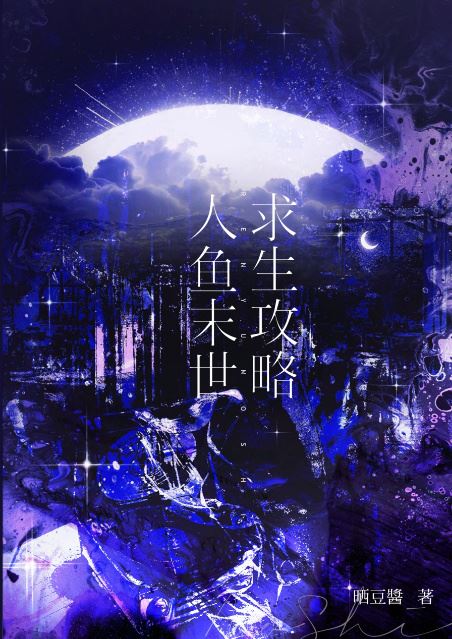
Mermaid Apocalypse Survival Guide
+Add to Custom List
Sort
Add review
... Read More
The imagery in these chapters is relentless. I'm still haunted by that cooling pool scene—the merman sliding into the vast dark water, carrying all those fish eggs with him, sinking without a trace of foam. Only transparent slime remains on the ground. Without the slime, the whole process would have been too bizarre and unbelievable. That sentence about the slime is doing so much work. It's the author saying: trust me, this miraculous thing just happened, and here's the one tangible proof you can hold onto. The slime is evidence of transformation, of something ancient and impossible leaving a mark on a world made of rust and garbage. The merman breaking out of the egg—prematurely, violently, with his fins tearing and his cord snapping—is rebirth as trauma. Not the clean, religious kind. The messy, bleeding, gasping kind. And his first breath of fresh air doesn't come with wonder or song. It comes with pain, and then his body just... adapts. The gills close as if they're nothing. He learns to breathe air instantly. There's also the whole question of names running beneath the surface. Anixda vs. Mo An. The people who caught him gave him a soft, simplified name. But the old name, the one from his own kind, is what he clings to in his most vulnerable moment. Identity isn't just who you call yourself—it's what survives when everything else is stripped away. And the research institute people chopping off hands for nutrients, the scale-people who sort garbage, the whole economy of bodily sacrifice—it all ties together. Bodies are currency. Bodies are tools. And Mo An's body, literally being born, becomes the thing that breaks the cycle.
... Read More
Okay, let's talk about the plot mechanics here because this sequence is a masterclass in escalating tension. You have Xia Yu, trapped in an elevator with a half-cut robot trying to get in, and instead of a deus ex machina rescue, the author makes him *act*. He presses the emergency up button, the elevator shoots up, and crushes the robot's head. That's not just an escape; that's a visceral cause-and-effect moment. The plot doesn't let him breathe, though. He arrives at the highest floor, a sterile quiet zone that feels wrong after the chaos, and then steps out into a world that is literally on fire. The transition from the claustrophobic, mechanical horror of the institute to the sprawling, neon-lit dystopia outside is a massive tonal shift that redefines the entire story map. And then there's the subplot of the eggs. They aren't just cargo; they are reacting. The membrane expanding, the pale blue glow, the infant blinking faster. The plot is running two parallel timelines: Xia Yu's immediate survival horror and the accelerated, mysterious gestation of the mermaid child inside. I love how the plot uses the eggs as a ticking clock—both physically (they might die without seawater) and narratively (something is hatching). It raises the stakes from 'can he survive today' to 'what is he now responsible for?'. The narrative arc here snaps from victim to guardian in one fell swoop. It's coherent, it's relentless, and it leaves me desperate to know what happens next.
... Read More
The pacing here is relentless. It's breathless. The author uses sentence structure to mimic Xia Yu's physiological state. Short, fragmented sentences. 'Huff, huff, huff... Amid the clamor of alarm, Xia Yu's breathing was particularly noticeable.' The rhythm of the prose itself becomes the sound of his labored breathing. We don't get long, winding descriptions of the background; we get immediate, urgent action. 'Wang Qin fell to the ground.' 'Xia Yu stumbled and fell on top of her.' 'Run!' The action escalates quickly from a stumble to a fatal wound to a sacrifice to a sprint. But what I love is how the author controls the tempo during the internal monologue. When Xia Yu reaches the dead end, the pace suddenly slows down. He's pressing against the door. The narrative dwells on his confusion—'He still couldn't understand why Nuwa had suddenly become so brutal.' This pause allows the reader to catch their breath and process the plot twist. Then, just as the door opens, the pace accelerates again. He scrambles to his feet. He sees the elevator. He runs. And then—STOP. 'He suddenly felt his shoulders lighten.' The realization hits him mid-stride. 'Fish eggs! He had forgotten the giant egg!' This interruption in the physical action creates a massive spike in tension. He's running toward safety but choosing danger. The countdown timer—'60 seconds left'—is the ultimate pacing device. It imposes a hard deadline on every decision. There is no room for deliberation. Run back? Yes or no? The structure forces the character, and the reader, into a state of high-alert urgency. It's exhausting in the best way possible.
... Read More
The pacing in this section is absolutely filthy in the best way. The author starts in media res with the elevator door being sliced open. No setup, no breathing room. Just 'Hurry, hurry, hurry!' and boom, robot head entering. The sentences are short, urgent. We get the jolt, the fall, the rapid ascent. It's frantic. Then, the elevator stops. Silence. 'Bright lights, a spotless floor, no robots.' The pacing suddenly drops to a eerie stillness. It feels like a held breath after a scream. This contrast is genius—it disorients the reader, just like Xia Yu is disoriented. He's expecting danger, but finds nothing, which makes the eventual reveal of the chaotic outside world hit even harder. The walk to the emergency exit feels long ('nearly a quarter of an hour—a quarter of an hour that felt like several hours'), stretching the tension until he's practically vibrating. Then, the door opens. The world explodes into sensory overload. And right at the end, the perspective shifts to Mo An inside the egg. We go from high-speed chase to a slow, internal awakening. 'The real world is noisy.' The ear fins stretch and retract. It's a deliberate deceleration that forces us to sit with the implications of what's happening. The structure moves from external survival to internal genesis perfectly. It never drags; every shift in pace serves the story.
... Read More
"What xla, xla—you better talk properly." — Lao Gui. This man has a VOICE. You can HEAR his exasperation. He's the grumpy uncle type who pretends not to care but clearly does, and his dialogue is always slightly annoyed, slightly tired, but fundamentally reliable. Then Mo An: "They're afraid of electricity! They're afraid of electricity! I've seen it before!" — pure intensity. This kid doesn't waste words. When he speaks, it's urgent and direct and sometimes reckless. His dialogue matches his actions perfectly. But the voice that really stuck with me was Nuwa's. "Parasite level confirmed — low-level, leech-type parasite. Execute immediate termination. Use of weapons authorized." This AI voice is clinical, precise, and somehow MORE comforting than any human warning would be. And Xia Yu's reaction to it? "His mind went blank for a second, and he lost his sense of reality." The contrast between Nuwa's calm authority and Xia Yu's psychological collapse is devastating. And Mi Lian — "Everyone, fall back! Class A alert! Class A alert!" She doesn't have time for personal conversations. Her dialogue is all command and action. Even her grief is practical: she barely had time to enjoy reunion with her son before throwing away the honey cake and drawing weapons. The author never lets any character sound the same. If I covered the names, I could still tell who's speaking just from their dialogue rhythm.
... Read More
"When the Blue Jellyfish appears, it's like a blue underworld. They come in swarms—hundreds of thousands, even millions. The sea turns a beautiful shade of blue, luring mermaids closer." I have never been so haunted by something described in a single paragraph. This is genuinely some of the most unsettling worldbuilding in the whole book. It takes something that sounds magical—a sea turning blue, glittering and beautiful—and twists it into a death trap. The beauty IS the weapon. And then the follow-up detail about the ten-meter jellyfish with a transparent stomach holding a whole mermaid corpse, the mermaids dying smiling from hallucinations... THAT is the image that won't leave me. It's so viscerally vivid but also deeply tragic. These creatures aren't evil, they're just existing, and their mere presence is lethal to the people Mo An cares about. The lighthouse meeting scene itself is also doing heavy lifting atmosphere-wise. Confined space, moral ambiguity, the tension between land and sea represented by where everyone stands. It feels like a courtroom drama where the verdict will determine whether two people can ever touch each other again.
... Read More
Okay, so this little detail about Xia Yu hoarding candy crumbs in his pocket absolutely wrecked me. Like, on the surface it's cute—this kid who just got his arm chopped off is picking teeth-sugar out of fabric because he's too poor/stupid/brainwashed to throw it away. But then you realize the WHOLE SYSTEM runs on this kind of manipulation. They don't just cut him open, they give him a damn lollipop afterward and he thanks them for it. That's not kindness, that's behavioral conditioning disguised as sweetness. And Professor Wang Qin? She knows exactly what she's doing when she promises him candy later if he refuses surgery. She's trading sugar for compliance. The fact that Xia Yu HESITATES—"I'll find a way to get you some candy later"—means this isn't his first rodeo. He's been negotiating with treats like a lab rat who thinks he made a good deal. But then there's Mo An. God, Mo An. The way the prose trails off—"Xia Yu had long known that…"—and just stops. We're not told what he knew. We just know it matters, and it's unfinished, and it sits behind glass like something preserved. Whatever their connection was, it's on life support or death's door and Xia Yu visits every day. That's not casual friendship. That's grief wearing a routine. The relationship between Xia Yu and Wang Qin also has this strange tenderness that makes everything worse. She kneels down to his eye level. She notices he grew taller. She has real warmth reserved only for him and the X series. Is she protecting them, or is she just the gentler face on the machine? I can't tell yet and I NEED to know.
... Read More
Let me just say this: the stakes in this chapter are so high they're almost suffocating and that's because the author makes you feel every single layer of danger simultaneously. On the most basic level, Mo An is dying. Not slowly dying, not peacefully dying—starving to death while unconscious, turning to foam, the most vulnerable possible ending for a creature who already survived humanity's cruelty once. That's the external stakes. But the internal stakes are what make this truly unbearable. Xia Yu has to become someone he doesn't want to be—a robber, a thief, a criminal—because the system has failed him. He has to violate his own moral code to save the person he's committed to protecting. The scene where he apologizes to Professor Wang Qin while practicing his robbery line in front of an empty alley is the emotional climax of the entire chapter. It's not about the nutrients anymore. It's about what Xia Yu is willing to lose of himself. And then the external conflict closes in—the four people in the alley, the recognition, the demand for his leg. Now he's faced with a literal trade: his body for Mo An's life. Is that even a choice? The tension here is masterfully maintained because every conflict layer feeds the others. The world is dangerous, the system is broken, his friend is dying, and he has no good options—only less terrible ones. That's when you know you're reading something that genuinely matters.
... Read More
There's a symbolic loop running through this entire section that I can't stop thinking about, and it centers on the idea of poison as both weapon and bond. Meng Qingqing tests Xia Yu's blood and finds no poison yet. But she says he'll become poisonous eventually. The poison isn't just a physical trait—it's a metaphor for what this world does to people. Everyone who survives gets harder, sharper, more dangerous. Xia Yu was already frail and underfed, and yet the world is turning him into something that could kill the person he's trying to protect. And then there's the Siren's Protection bracelet made from scales contributed by every siren sister. What is that if not a symbol of community as armor? Each scale is a small sacrifice, a piece of themselves given voluntarily. The bracelet doesn't make them invincible—it just makes them harder to find, harder to kill. It's protection through connection, not through power. That ties directly into Meng Qingqing's speech about how 'mermaids never share food unless they're lovers.' Sharing, caring, protecting—these aren't weaknesses in this world, they're the only things that matter. The concept of xla—treasure—is another loaded symbol. Mo An calls Xia Yu his treasure, but the word itself suggests something valuable precisely because it's rare and dangerous to possess. A treasure can be lost, stolen, destroyed. It can also be the reason people risk everything. And then there's Haisiruola, the god they invoke, whose name fills Mo An with warmth 'as if he'd known her forever.' Is she a deity? A memory? A hope? The ambiguity is deliberate—faith in this story isn't about certainty, it's about reaching toward something beyond yourself. The dying mermaids sinking into the ocean to become nutrients completes the cycle. Death isn't an end here, it's a transfer. Everything feeds everything else. The question the story keeps asking is: what are you willing to become nourishment for?
... Read More
The stakes in this chapter are absolutely insane. You have fishmen with guns pointing at a hatchling who's literally days old and hasn't even figured out how to swim properly yet. The power imbalance is so ridiculous it should be funny, but it's not because the narrative makes you feel every single bullet that flies and every drop of blood that stains the water. What makes the conflict work though is that nobody has all the information. Xia Yu and Mi Dou don't know what's happening underwater—they can only see movement and color change and smell the blood getting stronger. The fishmen don't know Mo An survived. Mo An doesn't know anything because he's a baby. Everyone's operating blind and that uncertainty keeps you glued to every page. And the internal conflict for Xia Yu? He promised Professor Wang Qin he'd protect Mo An, and now he's watching this creature he barely knows get hunted by armed adults, and he can only stand on the shore with a stick while the water turns crimson. That helplessness is the real conflict here—not just physical survival but emotional guilt. When he finally acts and nearly kills the thing he swore to protect, the stakes just elevated from "will he survive" to "can he live with what he did to save him?" The chapter ends with Mo An injured, an unknown attacker or victim somewhere in the water, and his rescuers having no idea what the future holds. That's not a cliffhanger—that's a sledgehammer to your chest and I need the next chapter immediately.
... Read More
There's something deeply symbolic about this entire sequence and I can't quite stop thinking about it. The egg is everywhere in this chapter. Mo An inside it, bouncing around, practicing his tail. Mi Dou calling him stupid before birth. Xia Yu singing to him. It's a vessel of potential, of something not-yet-real but desperately alive. And then the acid water outside — corrosive, dangerous, something that would destroy ordinary flesh — becomes the passage into something new. Power Plant No. 3. A safe house that isn't safe. The unknown waiting on the other side. Xia Yu stepping into acid not because he's brave but because he has to be, because the only way forward is through what burns... that's not subtle storytelling, it's practically begging to be read as metaphor. He's already different. Already other. His body responds to what would kill normal people — not safely, mind you, his fingernails peel off, his skin burns, blood clouds the water — but survivably. The acid doesn't destroy him. It reveals him. The jellyfish gene runs deep, literally. Everything about this character seems tied to transformation — regenerating limbs, surviving poison, adapting to environments that should be lethal. Is the story asking what makes us human? Or what makes us something else entirely? I'm genuinely intrigued by where this is going.
... Read More
Okay so I need to talk about how this chapter flows because it's kind of a masterpiece of emotional whiplash. We start with Mo An struggling in the ocean — hunting, failing, flipping over — and for a while you're just invested in whether he'll survive. The tension builds: he's slow, he's clumsy, the fish keep escaping. Then BAM he leaps out of the water and catches his first meal. I actually said "yes!" out loud reading that. And then the sirens accept him. Everything feels warm and bright and perfect. The chanting, the touching, the chatter about cute skirts and puberty — this scene is so full of life. But here's the thing that catches you off guard: right in the middle of all this warmth, the narrative pivots to Xia Yu, and suddenly you're sobbing. The author doesn't even give you time to process the joy before hitting you with the goodbye. Xia Yu saying "I'm so tired" while tears stream down his face — that pivot from celebration to grief happens so fast it hurts. And then Mo An swimming back? Perfect timing. Like, of course he would. Of course he'd come back with a crab because he didn't understand why his friend was crying. The pacing here is relentless in the best way. No breathing room between triumph and loss, which feels true to how life actually goes.

Leave a comment

You must be logged in to leave comments. or
