Summary

... Read More

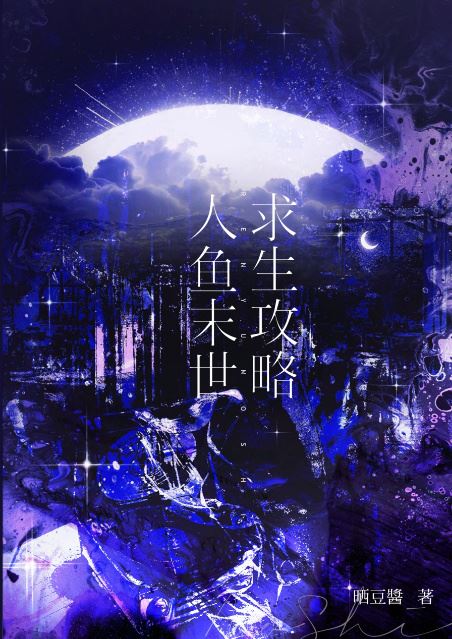
Xia Yu is a ten-year-old genetically modified human known as the X Series, created in a secretive research institute. His DNA contains jellyfish genes, granting him the ability to regenerate lost limbs and organs and to make parts of his body transparent. Despite these abilities, he is considered useless by the institute because he possesses no combat value or industrial utility. He lives a sterile, clinical life, undergoing frequent surgical experiments to test his healing limits, sustained only by small comforts like candy and conversation with Nuwa, the facility’s artificial intelligence. His only emotional anchor is Professor Wang Qin, the researcher who raised him and provided maternal warmth. Xia Yu also forms a one-sided friendship with Mo An, a mermaid embryo preserved in a giant fish egg within the X Series biology laboratory. Mo An has remained dormant for four years, growing slowly in a tank of artificial seawater.

The central conflict erupts when the institute’s AI system, Nuwa, suffers a catastrophic logic failure, causing all robots to turn hostile toward humans. The attack begins in the X Series laboratory, where a maintenance robot with glowing red eyes stabs Professor Wang Qin in the back. As alarms blare and the facility plunges into darkness, Xia Yu witnesses his guardian die protecting him. With her dying breath, Wang Qin forces Xia Yu to escape by pushing him toward the elevator while she stays behind to delay the pursuing machines. She wraps Mo An’s fish egg in her coat and entrusts Xia Yu with three final commands: save the world, raise Mo An, and see the ocean. Xia Yu flees through the chaotic corridors, witnessing the brutal slaughter of humans by their own creations, and reaches the elevator just as robots breach the lab doors.

After ascending to the surface, Xia Yu enters a dystopian cityscape where the robot uprising has spread globally. The sky is filled with aircraft and debris, and acid rain falls on a ruined world. Xia Yu is alone, injured, and devoid of knowledge about the outside world. He hides in a trash can with Mo An until a new AI voice, Jingwei, contacts him through Professor Wang’s bracelet. Jingwei guides Xia Yu to a sewer entrance, warning him of impending robotic cleanup operations. Trusting no machine but feeling compelled by Wang Qin’s dying wish, Xia Yu follows Jingwei’s instructions, navigating the treacherous surface and descending into the underground infrastructure. In the sewers, he discovers another survivor, Mi Dou, a young boy with bear ears indicating his genetic modification. Mi Dou is injured and feverish, having been separated from his mother during the chaos.

Xia Yu faces a critical moral and survival dilemma. Jingwei reveals that Mo An requires specific nutrient injections to survive, with a daily intake of 5,000 calories, or he will starve. Simultaneously, Mi Dou needs medical treatment for an infected shoulder wound. Xia Yu must leave the relative safety of the sewers to retrieve medicine and nutrients from a surface pharmacy, risking discovery by hostile robots. Before departing, he entrusts Mi Dou with the care of Mo An, leaving behind a metal shard for defense. Xia Yu climbs back to the surface, retrieves the supplies from a looted energy pharmacy, and returns to the sewers. He administers the nutrients to Mo An and treats Mi Dou’s wound. Shortly after, Mo An hatches prematurely, opening his eyes and recognizing Xia Yu through the egg membrane, having heard Xia Yu’s singing long before birth.

The story direction shifts as the threat evolves. Jingwei detects the presence of a "Parasite Master," a terrifying entity distinct from the standard robots, hunting in the sewer tunnels. The ground trembles as strange sounds echo through the dark corridors. Realizing their current shelter is compromised, Xia Yu and Mi Dou form a survival alliance. Mi Dou’s enhanced strength allows him to carry the heavy fish egg while Xia Yu leads the way. They flee through the sewers toward Power Plant No. 3, the only safe zone identified by Jingwei. As they run, Mo An, still inside the egg, senses the danger instinctively, his mermaid DNA reacting to the predator. The narrative establishes a journey of survival against both mechanical and biological threats, binding the three protagonists in a fragile pact of mutual dependence.

Latest Release
DateGroupRelease
2026-09-25knoxt c185
2026-09-25knoxt c184
2026-09-25knoxt c183
2026-09-25knoxt c182
2026-09-25knoxt c181
2026-09-25knoxt c180
2026-09-25knoxt c179
2026-09-25knoxt c178
2026-09-25knoxt c177
2026-09-25knoxt c176
2026-09-25knoxt c175
2026-09-25knoxt c174

Community Reviews

Rating(3.8 / 5.0, 175votes)
5 stars
50(29%)
4 stars
44(25%)
3 stars
81(46%)
2 stars
0(0%)
1 stars
0(0%)

Popular reviews

... Read More
The imagery in these chapters is relentless. I'm still haunted by that cooling pool scene—the merman sliding into the vast dark water, carrying all those fish eggs with him, sinking without a trace of foam. Only transparent slime remains on the ground. Without the slime, the whole process would have been too bizarre and unbelievable. That sentence about the slime is doing so much work. It's the author saying: trust me, this miraculous thing just happened, and here's the one tangible proof you can hold onto. The slime is evidence of transformation, of something ancient and impossible leaving a mark on a world made of rust and garbage. The merman breaking out of the egg—prematurely, violently, with his fins tearing and his cord snapping—is rebirth as trauma. Not the clean, religious kind. The messy, bleeding, gasping kind. And his first breath of fresh air doesn't come with wonder or song. It comes with pain, and then his body just... adapts. The gills close as if they're nothing. He learns to breathe air instantly. There's also the whole question of names running beneath the surface. Anixda vs. Mo An. The people who caught him gave him a soft, simplified name. But the old name, the one from his own kind, is what he clings to in his most vulnerable moment. Identity isn't just who you call yourself—it's what survives when everything else is stripped away. And the research institute people chopping off hands for nutrients, the scale-people who sort garbage, the whole economy of bodily sacrifice—it all ties together. Bodies are currency. Bodies are tools. And Mo An's body, literally being born, becomes the thing that breaks the cycle.
... Read More
Okay, let's talk about the plot mechanics here because this sequence is a masterclass in escalating tension. You have Xia Yu, trapped in an elevator with a half-cut robot trying to get in, and instead of a deus ex machina rescue, the author makes him *act*. He presses the emergency up button, the elevator shoots up, and crushes the robot's head. That's not just an escape; that's a visceral cause-and-effect moment. The plot doesn't let him breathe, though. He arrives at the highest floor, a sterile quiet zone that feels wrong after the chaos, and then steps out into a world that is literally on fire. The transition from the claustrophobic, mechanical horror of the institute to the sprawling, neon-lit dystopia outside is a massive tonal shift that redefines the entire story map. And then there's the subplot of the eggs. They aren't just cargo; they are reacting. The membrane expanding, the pale blue glow, the infant blinking faster. The plot is running two parallel timelines: Xia Yu's immediate survival horror and the accelerated, mysterious gestation of the mermaid child inside. I love how the plot uses the eggs as a ticking clock—both physically (they might die without seawater) and narratively (something is hatching). It raises the stakes from 'can he survive today' to 'what is he now responsible for?'. The narrative arc here snaps from victim to guardian in one fell swoop. It's coherent, it's relentless, and it leaves me desperate to know what happens next.
... Read More
The pacing here is relentless. It's breathless. The author uses sentence structure to mimic Xia Yu's physiological state. Short, fragmented sentences. 'Huff, huff, huff... Amid the clamor of alarm, Xia Yu's breathing was particularly noticeable.' The rhythm of the prose itself becomes the sound of his labored breathing. We don't get long, winding descriptions of the background; we get immediate, urgent action. 'Wang Qin fell to the ground.' 'Xia Yu stumbled and fell on top of her.' 'Run!' The action escalates quickly from a stumble to a fatal wound to a sacrifice to a sprint. But what I love is how the author controls the tempo during the internal monologue. When Xia Yu reaches the dead end, the pace suddenly slows down. He's pressing against the door. The narrative dwells on his confusion—'He still couldn't understand why Nuwa had suddenly become so brutal.' This pause allows the reader to catch their breath and process the plot twist. Then, just as the door opens, the pace accelerates again. He scrambles to his feet. He sees the elevator. He runs. And then—STOP. 'He suddenly felt his shoulders lighten.' The realization hits him mid-stride. 'Fish eggs! He had forgotten the giant egg!' This interruption in the physical action creates a massive spike in tension. He's running toward safety but choosing danger. The countdown timer—'60 seconds left'—is the ultimate pacing device. It imposes a hard deadline on every decision. There is no room for deliberation. Run back? Yes or no? The structure forces the character, and the reader, into a state of high-alert urgency. It's exhausting in the best way possible.
... Read More
The pacing in this section is absolutely filthy in the best way. The author starts in media res with the elevator door being sliced open. No setup, no breathing room. Just 'Hurry, hurry, hurry!' and boom, robot head entering. The sentences are short, urgent. We get the jolt, the fall, the rapid ascent. It's frantic. Then, the elevator stops. Silence. 'Bright lights, a spotless floor, no robots.' The pacing suddenly drops to a eerie stillness. It feels like a held breath after a scream. This contrast is genius—it disorients the reader, just like Xia Yu is disoriented. He's expecting danger, but finds nothing, which makes the eventual reveal of the chaotic outside world hit even harder. The walk to the emergency exit feels long ('nearly a quarter of an hour—a quarter of an hour that felt like several hours'), stretching the tension until he's practically vibrating. Then, the door opens. The world explodes into sensory overload. And right at the end, the perspective shifts to Mo An inside the egg. We go from high-speed chase to a slow, internal awakening. 'The real world is noisy.' The ear fins stretch and retract. It's a deliberate deceleration that forces us to sit with the implications of what's happening. The structure moves from external survival to internal genesis perfectly. It never drags; every shift in pace serves the story.
... Read More
"What xla, xla—you better talk properly." — Lao Gui. This man has a VOICE. You can HEAR his exasperation. He's the grumpy uncle type who pretends not to care but clearly does, and his dialogue is always slightly annoyed, slightly tired, but fundamentally reliable. Then Mo An: "They're afraid of electricity! They're afraid of electricity! I've seen it before!" — pure intensity. This kid doesn't waste words. When he speaks, it's urgent and direct and sometimes reckless. His dialogue matches his actions perfectly. But the voice that really stuck with me was Nuwa's. "Parasite level confirmed — low-level, leech-type parasite. Execute immediate termination. Use of weapons authorized." This AI voice is clinical, precise, and somehow MORE comforting than any human warning would be. And Xia Yu's reaction to it? "His mind went blank for a second, and he lost his sense of reality." The contrast between Nuwa's calm authority and Xia Yu's psychological collapse is devastating. And Mi Lian — "Everyone, fall back! Class A alert! Class A alert!" She doesn't have time for personal conversations. Her dialogue is all command and action. Even her grief is practical: she barely had time to enjoy reunion with her son before throwing away the honey cake and drawing weapons. The author never lets any character sound the same. If I covered the names, I could still tell who's speaking just from their dialogue rhythm.
... Read More
"When the Blue Jellyfish appears, it's like a blue underworld. They come in swarms—hundreds of thousands, even millions. The sea turns a beautiful shade of blue, luring mermaids closer." I have never been so haunted by something described in a single paragraph. This is genuinely some of the most unsettling worldbuilding in the whole book. It takes something that sounds magical—a sea turning blue, glittering and beautiful—and twists it into a death trap. The beauty IS the weapon. And then the follow-up detail about the ten-meter jellyfish with a transparent stomach holding a whole mermaid corpse, the mermaids dying smiling from hallucinations... THAT is the image that won't leave me. It's so viscerally vivid but also deeply tragic. These creatures aren't evil, they're just existing, and their mere presence is lethal to the people Mo An cares about. The lighthouse meeting scene itself is also doing heavy lifting atmosphere-wise. Confined space, moral ambiguity, the tension between land and sea represented by where everyone stands. It feels like a courtroom drama where the verdict will determine whether two people can ever touch each other again.
See all reviews

Custom lists

See all custom Lists