Mermaid Apocalypse Survival Guide - Reviews

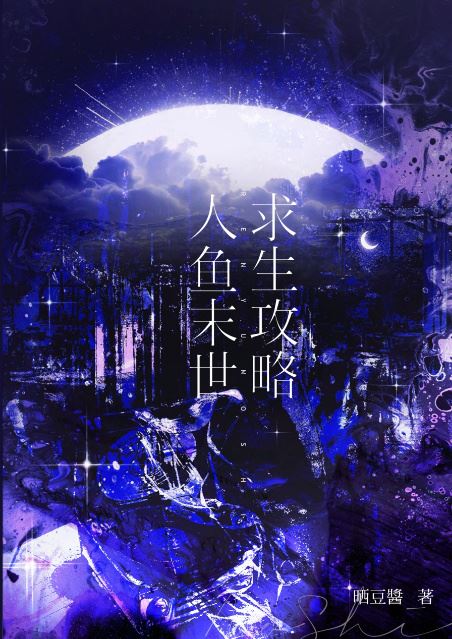
Mermaid Apocalypse Survival Guide
+Add to Custom List
Sort
Add review
... Read More
Let me just say this: the author understands tension the way a surgeon understands anatomy. They don't rush to the violence. They make you sit in the dread first. Xia Yu walking into that scrapyard, nervously glancing at the side of the road, hoping for a clue while simultaneously knowing he has to follow them—that's unbearable. You want to scream at him to run, but you also understand why he can't. He needs something. He's trapped by his own desperation. And then the transaction goes wrong and those men grab him and the shortest one says something almost casual like "We can start now" and you realize this was never about trading for a leg. It was always about lungs. Organs. He was never a customer in this deal. He was the product. "A more discerning man would have known not to rush." The narrator drops this line like a stone, and it stings because we've all been there. We've all rushed, impatience overriding every survival instinct, and paid for it. Xia Yu's tragedy isn't that he's weak. It's that he's good-hearted in a world that exploits good hearts. The stakes escalate perfectly. First it's Xia Yu on the table. Then Mi Dou attacks and gets kicked around. Then Mo An's egg cracks. Each beat raises the pressure, and just when you think it can't get more tense, the egg opens and a merman slides into cooling water and vanishes. The author doesn't resolve the tension—they redirect it. Now the question isn't just whether Xia Yu survives, it's what just emerged from that egg and what happens next.
... Read More
The worldbuilding in these chapters is doing some incredibly heavy lifting, and I want to talk about how the physical spaces shape everything we understand about this story. We start in water — deep, dangerous water with leeches that can swim. The author doesn't spend a lot of time describing the water itself, which is interesting. It's more about the danger lurking in it than the environment. Then they reach "the hard bricks of the opposite shore" and climb up laboriously. This is a world of concrete, water, and decay. Nothing natural survives here except the modified creatures. Power Plant No. 3 is described almost casually — "just ahead" like it's a destination on a road trip. But the fact that it exists at all tells us something enormous about this world. This was once industrial infrastructure. Once functional. Now it's a refuge for genetically modified humans and mermaid creatures hiding from... what exactly? The text mentions "The Great Purge" and that "resisting humans [were] killed." So this power plant wasn't just a building — it was a sanctuary. A place where the modified could live without being hunted. Then they find the door — aged, dilapidated, electronic lock cracked and dead. This is a world where technology persists but power doesn't. Where the infrastructure of the old world still exists but needs to be jump-started by a magical fish egg. The image of Mi Dou and Xia Yu using Mo An's bio-electricity to power an electronic door is one of the most beautiful worldbuilding moments in recent web fiction. Old world technology meets new world biology. They complete each other. And the warehouse! Canned beef, lamb chops, sweet corn, bottled water — a time capsule of the old world's abundance. This contrast between the desperate survival outside and the untouched supplies inside creates this haunting sense of loss. Someone stored all of this, expecting to come back. They never did. The visual of Mo An's gill clefts opening — "three cracks appeared on each side of his neck" — is simultaneously biological horror and beautiful transformation. These details make the world feel alive in a way that goes beyond description. Every location tells a story about what was lost and what's being reborn.
... Read More
The way this chapter paints the ocean is just... something else. There's this moment where Mo An finally breaks the surface, gasping for air after leaping out of the water, and the author describes how his gill slits close to form a smooth neck — that physical transformation happening right as he catches his first fish is absolutely cinematic. I could see the sunlight piercing through the waves, the disorienting flash of silver scales against the blue. And then there's the contrast: the warm, chaotic energy of the sirens welcoming him versus Xia Yu standing alone on the shore, hiding his tears. What strikes me most is how the world feels alive but also indifferent. The currents flip Mo An over and over again — the sea gives him life but also constantly threatens to take it away. Those phrases like "the school of fish kept shifting shape like a net" and "silver scales stirred the waves into thin streams" paint such vivid pictures. The lighthouse setting where Xia Yu watches from below, separated by water and species, adds this layer of distance that makes everything hurt more. I keep thinking about that final image — Mo An swimming back up, belly exposed, offering a crab to a crying Xia Yu. The physical separation between them (water surface as boundary) and the emotional weight of that gesture, sharing food meaning sharing life itself in mermaid culture. Just stunning composition.
... Read More
Okay, can we just appreciate how well this chapter maintains tension from start to finish? Because it's relentless. We start with internal conflict—Xia Yu's paralysis, his fear of making the wrong choice. Stay in the bin and risk the cleanup, or move and risk discovery? That's agonizing. Then Jingwei introduces external conflict with a deadline: 14 minutes. Suddenly the internal debate is obsolete; survival is the only option. But here's where it gets brilliant—the author doesn't let up even after the escape begins. Xia Yu is starving, exhausted, his ankle still healing (though magically recovered, apparently). He's physically compromised while running for his life. And the aircraft! Those things are described as 'an unshakable nightmare'—not just machines but psychological terror made manifest. The stakes couldn't be clearer: if they're caught, it's not just death, it's annihilation. 'Shattered pieces of flesh.' Chilling. But what really elevates this beyond a simple chase scene is the layered stakes. It's not just Xia Yu's life on the line; it's Mo An's. Every second of hesitation risks the egg. The author keeps reminding us what's at stake through Xia Yu's physical reactions—the trembling, the white lips, the desperate sprint. And when the explosion happens behind them, confirming the threat was real, the tension doesn't release; it compounds. Now they're in the sewer, safe for now, but the ground still shakes, dust still falls. The danger isn't over; it's just paused. That sustained anxiety is masterful. The final question hanging over everything: who is Jingwei, and can they trust it? The conflict has evolved from man-vs-machine to something more complicated. Maybe the real enemy isn't the aircraft—it's the uncertainty. And that's far scarier.
... Read More
"Mo An was very warm." That's it. That's the line. Four words and I'm emotionally compromised. Let me unpack this for a second because the way Mo An exists in this story is just... wow. He doesn't say much. He doesn't have a lot of scenes where he's doing grand things. But he literally kept three kids alive during a blizzard by being a heat source. His tail fins are nerve-rich which means every time he moves, every time he taps against the wall to announce his presence, he's probably feeling something. When he swings his tail too hard he experiences great pain. And yet—he's there. Every day. The scene where Xia Yu wakes up and immediately thinks about Mo An's warmth and eyes before anything else hit me hard. He was half-conscious, groggy, and his first instinct was to reach for the mermaid. That's not dependency, that's trust at its most fundamental level. And then Mi Dou's confession about dreaming he was hugging a big warm bear, only to learn it was Mo An the whole time. The innocence of that moment, the way these children wrap their emotional survival around a creature who can't even speak their language properly—it's devastating and beautiful. There's also this one detail that keeps bothering me in the best way: Mo An taps his tail against the inner wall to announce his presence after they've been together for days. He's learning to communicate. He's trying. This isn't just a creature keeping them warm, this is a relationship being built wordlessly, slowly, through small gestures. I'm a mess.
... Read More
"I'm going to save the world," Xia Yu says with a smile. That smile. That absolutely devastating smile. Because in the dream, it turns into a broken bubble. Right after he says those words, his face shatters. The imagery is so precise — a smile breaking apart like soap film, like something fragile that was never meant to last. And Mo An reaching for him, fingertips passing through soft transparent skin like jellyfish tentacles. Touch nothing. Hold nothing. That's the emotional core of this entire passage. When Mo An wakes up and immediately grabs Xia Yu's hand, pressing until his nails dig in — that's not panic. That's someone who just experienced the most realistic nightmare of abandonment and is desperate to recalibrate reality. "It must be a nightmare. Don't be afraid." Xia Yu pulls him into his arms. Silver strands smooth to the touch. And then he blows on Mo An's eyelashes. The gentleness of that gesture, the intimacy of it, the complete lack of self-awareness about how tender it is — it broke me a little. Xia Yu thinks Mo An is like a little brother. But Mo An doesn't think that. Watch what happens when Mo An jumps out that window. He doesn't look back. He doesn't wait for Xia Yu's permission or his protection. He chooses the sirens, chooses the unknown, chooses the path that takes him away. And Xia Yu, standing at the window, understands the truth before anyone else does: this might be permanent. The sea brought him here, and it will take him back. That's not a plot point. That's grief written in prose.
... Read More
Let's talk about the stakes because they just went from "we might freeze" to "we might get corrupted and never come back" in about three paragraphs. Jingwei drops this bombshell about the Electronic Corruption: an intelligent disease that affects humans, monsters, parasite hosts, parasites, full robots, and half-robots. Most corrupted areas have NO survivors. The reward is 50,000 points, which sounds amazing if you don't already know what happens to the people who go in there. Xia Yu's reaction is literally just: "50! 50! That's great! I want to go." And Mi Dou has to be the voice of reason. "If we were adults, we could go, but we're just kids." Which is both true and absolutely tragic because this world doesn't care that they're children. But here's what makes the tension work so well—the author doesn't just throw danger at them, they show us the slow creep of desperation. First there's the blizzard. Then the food runs out. Then the nutrient injections are almost gone. Xia Yu's decision to leave alone isn't heroic, it's desperate. "I still have my body. I can find a way." That line should terrify us more than anything Jingwei has ever said about corrupted zones. The surveillance camera at the end adds another layer—we don't know who's watching, why, or what they'll do with the information. The threats are closing in from every direction and these kids are just trying to survive another day. I'm not okay.
... Read More
I need to address the pacing of these chapters because the author has some serious skills. Let's trace it: you open with the lowest possible energy—three exhausted, terrified people in a dark room. Then Mo An HATCHES. The energy SKYROSETS. There's laughter, tails wagging, Mi Dou getting slapped (comically), genuine joy. This is the PEAK of the entire sequence emotionally. And then the author does what I can only describe as a literary trapdoor. *Knock knock knock.* Everything drops. Your stomach drops with it. You're reading along thinking 'okay this is the happy part, the post-transformation bonding moment' and suddenly you're on edge again. The transition from 'he's wagging his tail like a puppy' to 'someone just kicked our door in' takes approximately two paragraphs. That is reckless pacing and I respect it enormously. The chapter ends with Talos leaning into Mo An's personal space, diagnosing his psychological state, and making a threat wrapped in what sounds almost like concern. The cliffhanger isn't 'will they survive'—it's 'what does this man actually want?' and 'why does he seem to understand Mo An better than Mo An understands himself?' The author is playing 4D chess with reader emotions and I am happily captured.
... Read More
I came into these chapters expecting another escape sequence, and the author absolutely delivered — but not in the way I expected. Let me map out what just happened because this is where the plot gets really interesting: They're fleeing leeches (which are clearly connected to whatever happened during "The Great Purge"). They reach Power Plant No. 3, thinking they're safe. They're not — the leeches can swim. Xia Yu prepares to sacrifice himself. The fish egg (containing Mo An) activates its defense mechanism — bioelectricity. The leeches flee. They find a warehouse full of supplies. Mo An begins to hatch. That's a complete narrative arc in three chapters, and the escalation is masterful. But what I'm most excited about is the revelation about Mo An's nature. He's not just a creature in an egg — he's a living power source. The egg glowed blue, emitted sparks, and the text specifically notes "it felt like an electric shock." When they need to open the electronic door, Xia Yu intuitively uses Mo An to charge it. This isn't random — the author is establishing a pattern where Mo An's abilities are tied to survival in this world. The timing of Mo An's hatching is also narratively significant. He was supposed to stay in the egg for years. But the danger they're in has triggered premature hatching. His body is adapting to threats before he's ready. The gill clefts opening — "supposed to open again in a few years" — means his transformation has begun early, which usually means something major is coming. And there's this incredible detail about the mermaid's tail fin: "Its exact shape was unclear since the tail was curled tightly." The author is deliberately withholding visual information about Mo An's true form. Every time we get a glimpse — scales edged with blue glow, a tail fin beneath the fish tail — it's partial, obscured. This is classic misdirection. The reveal is coming, and when it does, it's going to recontextualize everything. Also: who is Jingwei? "That man must have been hiding something" about the parasite host. Jingwei is clearly connected to Professor Wang Qin and the institute, and I have a feeling the next few chapters are going to make their role in this world crystal clear.
... Read More
"Who!" Midou was startled. That single exclamation carries so much—fear, confusion, the jarring intrusion of technology into their little hiding place. The dialogue here is so grounded in panic that you forget it's fiction. These kids aren't delivering monologues; they're stammering, cutting each other off, asking questions they don't expect answers to. Jingwei's voice is chilling in its calm. "Because in recent years humans have relied too much on AI. When technological intelligence surpasses humans, humans are naturally discarded as crutches." That line though—it's delivered like weather report, not existential threat. The contrast between the AI's clinical tone and the desperate situation creates this eerie dissonance that stays with you. But the real masterpiece is what isn't said. When Mi Dou asks "What is it?" and Xia Yu stammers back "There's nothing. Nothing at all," you can feel how much more they're not telling each other. The silence between dialogue beats is where the real terror lives. Author knows that sometimes the scariest thing is when your friend says everything's fine while you're both running for your lives.
... Read More
There's something really haunting about Talos closing that car door and driving away. On the surface it's a practical decision — he smells like a mermaid now, the monster will follow him, better to lead it away — but it reads on another level as deliberate abandonment. These kids are alone again. Strapped into a car with no driver, speeding through an unfamiliar city, while the person who knew what was going on disappears. And Mo An — this creature who hatched prematurely, who hasn't even developed his outer ear fins yet, who can't see properly — is described as facing death from the moment of birth. "Without the protection of their pack, a young merman would never reach adulthood. Being alone meant death." That's not just worldbuilding. That's the central thesis of this whole scene. Xia Yu's panic when he tries to stop Talos from leaving, "Please don't do this!" — he's not just scared for himself. He's just formed a bond with this tiny fish-person and now the adult in the room is walking away. The white coat he clutching as he runs? That was Professor Wang Qin's gift. Even in chaos, he holds onto objects that represent care and mentorship. The autopilot car at the end is symbolically perfect too. These kids are being carried forward by something autonomous, something impersonal, with no one at the wheel. They don't know where they're going. They can only hold on and hope the system — whatever system is keeping them alive — knows what it's doing.
... Read More
Let me just say this chapter is a masterclass in controlled panic. The hunt sequence starts with this almost documentary-like tone—fishmen planning, weapons being aimed, the whole food chain suppression thing. And then suddenly BANG bullets are flying everywhere and the water turns red and you're just going "oh hell" the entire time. The way the author drops you right into the chaos without any exposition is risky but it pays off because you're too busy not knowing what's happening to get bored. What I loved though is how the pacing actually slows down at the exact right moment. After all that frantic energy with the gunfight and the bloody water, Mo An surfaces and just... sits there chewing on intestines. The contrast between that violent sequence and this quiet, confused hatchling staring at Xia Yu is chef's kiss. Like the chapter just exhaled and let you catch your breath before hitting you with another wave of dread when they realize he's injured. And that cliffhanger with the blood. You finish reading and immediately want to know whose blood it was, who got hurt, did the fishmen escape, what happens next. The chapter ends mid-rescue with no resolution and honestly I would've accepted if they'd left him in the water for another ten pages because that ambiguity is delicious torture. Five stars for keeping me emotionally hostage.

Leave a comment

You must be logged in to leave comments. or
