Kina’s Lover - Reviews

Kina’s Lover
+Add to Custom List
Sort
Add review
... Read More
"Of course. If it were me, I think the gift I'd like best would be the one my lover chose while thinking of me. Probably every woman would feel that way." Wait, hold up. Raon literally just said that to Kina. KINA. Who he's been casually hanging out with all day, helping him pick out a present for his fiancée-to-be. And then he thinks about it afterward and realizes what he actually meant? Like, the subtext is so thick you could spread it on toast. But here's what really gets me—Kina's reaction. She doesn't gloat. She doesn't even seem internally thrilled. She just feels... hollow. "Even though he was someone she had thought could never possibly become hers, she still felt hollow." Oof. That line hit me like a truck. She's been watching him for years from Bersha's side, faithful and steady, and when he finally says something that sounds almost tender toward her, it's not for her. It's for someone else. And she bottles it all up with a calm smile. And then there's Chris and Stella. Their whole relationship was painted as this fated, fairy-tale love story, right? Everyone kept saying it. But reading his breakdown after she dies—it's not pretty. It's messy, yes, but also kind of terrifying. He goes from grief to fury to blaming a servant in like three seconds flat. The contrast between how he treated Kina at the Imperial event (rude, dismissive) and how he clung to Stella is... a lot. Does he truly love anyone, or does he just love possessing things?
... Read More
I need to talk about this one moment because it has been looping in my head ever since I finished the chapter. After the assassination attempt, when Kina finally has a second to breathe, she reaches out and touches Raon's face—his wounds, the cuts from arrows and blades. And the narration says: "Raon found the feeling of her hand against his face strangely unfamiliar." Unfamiliar. That word hit me like a truck. They've been engaged, they've had their tensions, their misunderstandings, but this moment where she's literally checking if he's alive, her fingers trembling against his skin—that's when something shifts between them. It's not dramatic, there's no confession, no grand gesture. Just two people who survived hell looking at each other. And then Raon finding her asleep on the sofa, tears dried on her face, and him whispering "I am sorry" to someone who can't hear him... I literally sat there for a full minute after reading that. He failed to protect her. Despite being the strongest person in the room, despite fighting off an entire attack, he left her behind. And he knows it. That guilt is going to eat at him, and I can already tell it's going to shape everything between them going forward. Bersha's reaction was also so painful in its own way. She sees him covered in wounds, she's crying, and all he can do is hand her a handkerchief like a awkward teenager. But then he smiles at her—that same gentle smile he always uses to soothe her—and suddenly she believes everything will be okay. That's the tragedy of Bersha's character, isn't it? She's so devoted to him that even his half-measures feel like love to her. Meanwhile Kina is the one who actually saw him bleed, who felt his pulse, who touched his face.
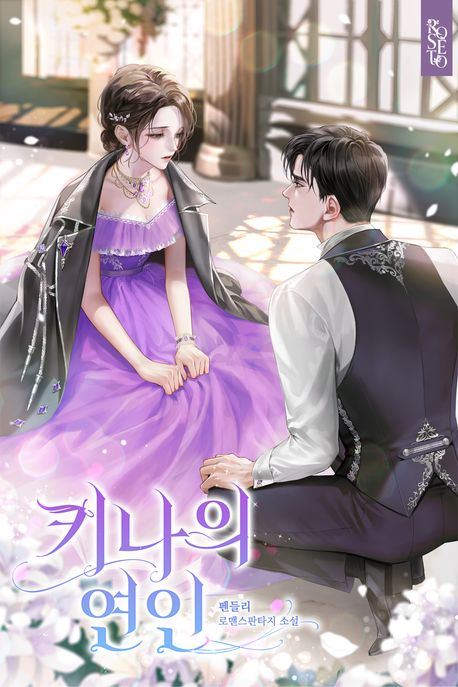
... Read More
The stakes in these chapters operate on three levels and they feed into each other like dominoes. Level one: the rebellion vs. the Empire. The rebels have numbers but the Knights have coordination and Raon can literally see magical residue. The rebels are losing—but not gracefully. They choose death over capture, and the author makes sure we feel the horror of that. 'They all stabbed their own hearts with precision.' That's not bravery; that's despair weaponized. Level two: Raon's internal conflict. He married Kina (or she married him) three months ago and hasn't been able to protect her, hasn't had a proper ceremony, and now he's saving women who look like her instead of her. What does he stand to lose? Everything he's trying to hold onto. His sense of duty, his self-image as a protector, possibly Kina herself if their marriage continues on this trajectory of near-misses and miscommunications. Level three: Dave's quiet stakes. He shows up at the poorhouse, sees Kina, and spends the entire chapter trying not to scare her away while simultaneously wanting to be near her. His conflict is internal and enormous but played completely straight-faced. If he screws this up, he loses his chance. If he stays silent, he also loses his chance. And through it all, the author never lets any of these conflicts resolve. The rebels are defeated but not destroyed. Raon is married but not happy. Dave is present but invisible. The tension doesn't come from will they or won't they—it comes from the agonizing certainty that everyone wants something and nothing is going to go the way they hope.

Leave a comment

You must be logged in to leave comments. or
