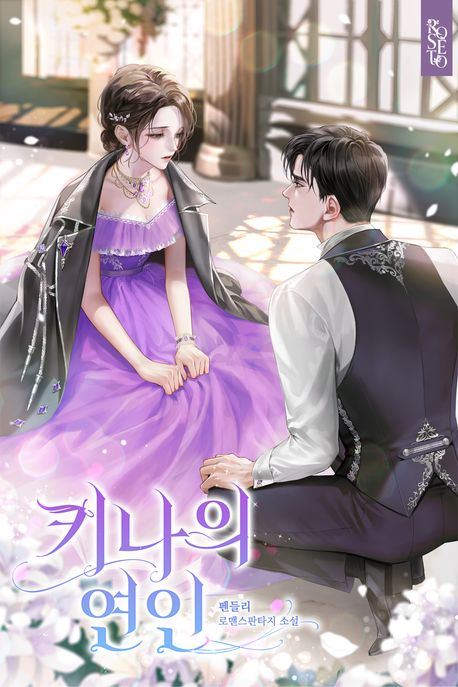
The dialogue in this section is doing so much heavy lifting through subtext, and honestly it's exhausting in the best way.
Let's start with Kina and Raon's first exchange after she arrives at the ducal residence. She says her help concerns "the family of my fiancé" — and immediately the narration tells us: "Perhaps it was only her imagination, but it sounded as though he were telling her that even this much was one of the things she could gain through a marriage meant to deceive everyone."
That's not dialogue, that's telepathy. Raon knows her. He knows exactly what she's feeling, and the conversation runs two levels simultaneously. Her: I'm being polite and professional. Him: I know you're calculating how much of yourself you've already sold.
Then Bersha, absolutely radiant in her certainty: "I know, you know, and Raon knows. As long as the people who need to know do, that's enough." This woman has never doubted anything in her life, and it shows in every syllable. Compare to Kina's entire existence: cautious, hedging, performing gratitude she doesn't feel.
The Chris and Bersha wedding dialogue is almost comedy in its normalcy. "It has been a while." "Yes." Two sentences between engaged people who haven't seen each other in weeks, and the nobles around them are already writing fanfiction. The gap between what's said and what everyone assumes is the author's signature move.
And Diari's conversation with Dave — two words exchanged. "The plan?" "As scheduled." Nods instead of explanations. This is a world where the most dangerous people speak the least. Every unspoken word carries more weight than Kina's rehearsed speech about repaying treatment expenses.
The line that killed me: "That must be how deeply Bersha trusted him. They were lovers who loved each other so much that they had even thought of a false marriage." Spoken by Kina, thinking about Raon, about to marry someone who loves another woman, and she says it with such warmth it almost breaks me.