Kina’s Lover - Reviews

Kina’s Lover
+Add to Custom List
Sort
Add review
... Read More
Okay so the hostage scene? I need a moment. Raon sees this woman grabbed by a robed rebel and his entire face just... goes rigid. Because she looks like Kina. Not IS Kina, but close enough that his body moves before his brain catches up. And then—plot twist within the twist—he throws the jewel back on the floor when he realizes it isn't her. That small action says SO MUCH. He saved her, coordinated perfectly with Seorin, but the moment it's over he essentially discards the reward because she'll never BE the Kina he remembers. The narrative structure here is brilliant because it mirrors that earlier palace scene where Dave grabs Kina and Raon watches helplessly. Same visual, reversed roles—he's now the one rescuing instead of witnessing—but emotionally identical. The rebellion subplot also ties in nicely: the rebels are dying by the dozens, choosing death over capture, and we learn their grievances come from nobles ruining lives over absurd reasons. But then Raon himself is marrying into that system. The story keeps flipping the moral lens so you're never quite sure who the villains are. Also? I love how the author uses the jewel as a recurring motif. It glittered on the dead rebel's body, Kina picked it up without thinking, and Raon threw it back like it meant nothing. But everything about that moment means EVERYTHING.
... Read More
Okay so let me just— THE POORHOUSE BURNED DOWN. I am still not over this. I went to bed reading this and I literally jolted awake staring at my ceiling at like 2 AM. Who sets fire to a building with children inside?? And then the fire is described like IT HAS ITS OWN WILL: "the building that had taken up the baton began to burn fiercely as though it were carrying out its own duty." The author basically turned a building into a character and I was NOT READY. But here's what got me—everything collapses at once. Kina's mother's keepsakes are GONE. The people from the poorhouse are ARRESTED. Raon has to suddenly propose to Kina. Chris is manipulating everyone like chess pieces. And THEN this burned figure walks out of the flames with violet eyes? Who IS that?? And the whispers at the end—"It's the Crown Prince's order"—I swear if Chris didn't already have my full hatred I would need to re-evaluate. The pacing in these chapters is actually insane. You go from sneaking into a poorhouse at night to watching it collapse to political marriages to whispered conspiracies and I am gasping for air the entire time. The chapter endings are basically just knives to the ribs every single time.
... Read More
There's a recurring image in this section that I can't shake: empty spaces. Kina's empty chair at the wedding she was supposed to attend with Raon. Dave's untouched beer. The drawing room where she waited and he never showed. The imperial throne that's suddenly under attack. Even Chris and Bersha's wedding — a union built on a foundation of secrets, with Raon and Kina performing intimacy they don't feel while the real couple performs happiness that maybe isn't entirely real either. The ashes are the central symbol. Dave turns paper into ash with a clenched fist — evidence, information, plans, all of it reduced to nothing. But ash also lingers. It spreads. It gets everywhere. The revolution Diari is planning works the same way: a single spark, invisible until it's too late. Then there's the mirror theme. Every character is reflected in another character's situation, and none of the reflections are flattering. Kina watches Bersha and Raon's genuine love from the outside, performing the role of the devoted fake fiancée. Chris stands beside Raon during the attack, and Raon's eyes show "an extremely powerful force" — for whom? For Bersha? For the empire? For Kina, sitting three rows back, unable to see his face? The wedding dress detail haunts me. Kina felt a "small thrill" at the thought of a pure white wedding dress. She allowed herself to hope, just for a moment, and the narrative immediately punished her for it by having Raon miss the fitting. The white dress becomes a symbol of everything she's not entitled to — not the real bride, not the chosen one, not even the acknowledged one. She's the substitute, the scarecrow, the placeholder. But here's what I can't stop thinking about: when the assassins burst in and chaos erupts, does the fake marriage suddenly become real in everyone's eyes? The nobles already imagine a scandal. The attackers probably don't care about romance at all. But Raon steps forward to protect everyone — Chris, Bersha, the Emperor, Kina — and in that moment, the performance might accidentally become truth.
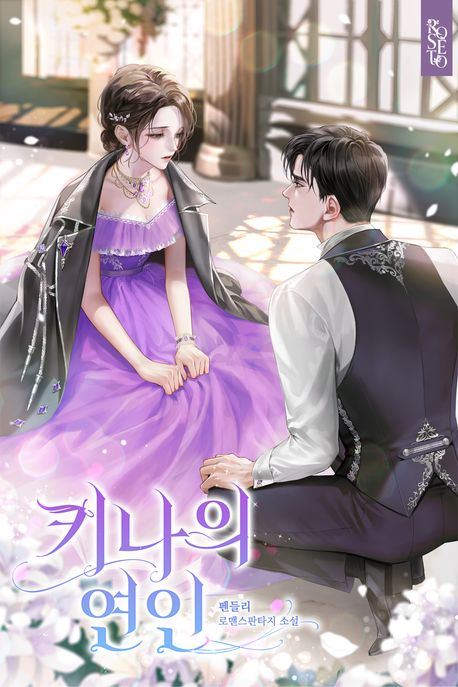
... Read More
I need to talk about this tavern scene because it is SO good and I don't think people are giving it enough credit. "A place that could only be found by pushing open the door in a tavern's corner and entering." Right there, the author establishes: this is a world with hidden doors and secret rooms. The ordinary tavern is a facade. The real story happens behind it. Then we get the description of Dave — the robed man who doesn't drink, doesn't smoke, has a face like a child crying, and yet his entire body radiates fury toward the world. How do you build a character in three sentences? That's the skill on display. And the detail about the beer never lessening? That's terrifying in its simplicity. It means he's been sitting there for hours. Or days. Time doesn't apply to him the way it applies to everyone else. The napkin-crushing-into-ashes moment is pure cinema. He folds paper, clenches his hand, and when he opens it — gone. Ashes scatter like black snow. The author trusts us to not explain how that works. It just IS. In this world, some people have capabilities we don't need to understand to fear them. Compare that to the Imperial Palace wedding scene: white cloths, setting chairs, chefs preparing banquets. Ordinary luxury. And then the doors fly open and it all shatters. The contrast between the two settings — one a dingy slum tavern hiding revolution, the other a gilded palace hosting celebration — they're mirrors. Both are about to burn. And Kina in Raon's drawing room, waiting, the warm tea going cold... that small domestic detail is its own kind of devastation. The steam disappearing, the long silence, the bitter smile. It's not dramatic like the assassination attempt, but it hurts more because it's real.
... Read More
I need to talk about Chris because I am SHOOK. This man loses his wife and his very first instinct is to find someone to execute? Not mourn, not investigate, not even process—he goes straight to "You will be the first" and gestures at knights. The chilling part isn't that he's angry. It's that he does it with the calm, measured voice of someone who has never faced consequences. "His voice, the only thing unchanged from usual, sent a chill through them all. He was clearly not in his right mind, yet he was covering that madness with the face and voice of calm he had been taught since childhood." That sentence alone tells you everything about this empire's power structure. The nobility is trained to perform composure even while unraveling. Even the officials listening—their reaction isn't outrage, it's fear. "A dangerous warning rang through their minds." They know what's coming. They know deaths are going to follow. And they choose silence because silence keeps them alive a little longer. The stakes escalation is brutal: a servant girl loses her job, then loses her freedom, then probably her life—all because Chris can't sit with his own grief. And then the poorhouse gets dragged into it. Kina, who has spent her whole life protecting that place, suddenly has Imperial Knights at her door. The personal conflict (her feelings for Raon) gets swallowed by a much larger one (the empire grinding people like her into dust). What I love is how the author layers these conflicts—Kina's quiet heartbreak runs parallel to Chris's loud destruction, and neither narrative undermines the other. They just exist side by side, and somewhere in the middle, the reader realizes: this story is about who gets destroyed when people with power stop caring.
... Read More
Can we just talk about how DIFFERENT these three men sound when they speak? Because it's actually remarkable. Chris has this way of speaking that's almost polite on the surface but underneath it's all blades. When he tells Raon "Don't meddle in things that have nothing to do with you" it sounds almost advisory, right? Like he's giving a helpful tip. But the subtext is literally a threat wrapped in silk. And then later with Kina—"At least you must not forget that fact"—said so smoothly, like he's sharing wisdom rather than delivering psychological warfare. Every line from Chris reads like he's performing kindness while actually doing damage. It's disgusting how well-written it is. Raon is the opposite—he barely wastes words. "Things have changed." "Yes." "I want to do it that way." He doesn't do speeches. He doesn't do manipulation. When he says "They'll be released by today" he's not negotiating, he's stating a fact and walking away. The contrast with Chris is almost comical. And Bersha! Her dialogue is all fragmented and emotional—"And to my……" trailing off because she can't even finish the sentence without breaking. But then that moment where she stops crying, looks at Chris, and says "Go ahead with it" with a smile? That shift from broken to calculating in one line had me REELING. She's not just a victim here. She's playing her own game.
... Read More
Okay, the shift from the jewelry shop to the memorial service to the poorhouse raid—this author really just pivots the entire emotional temperature without warning and I am NOT okay. One minute you're in this soft, slightly awkward scene where Raon is letting Kina help him pick out jewelry and you're like 'aww this is sweet' and the next minute Imperial Knights are storming into the poorhouse dragging teachers out while children are crying and Kina is physically blocking their path getting shoved with a foot. The visual of that moment is brutal: "Her body, which had been blocking them with both arms stretched wide, staggered at a single gesture from a knight, and she fell to the ground." A single gesture. She threw her whole body in front of armed men and they just—pushed her over like she was furniture. And Devilito grabbing her hand, eyes full of tears but not crying because he's trying to be brave for her. This isn't worldbuilding in the traditional sense of describing castles and magic systems. This is worldbuilding through violence. You understand exactly what kind of empire this is within a few paragraphs of the raid scene. The Crown Prince has absolute power, the law is a weapon, and the poorhouse—this place Kina has devoted her life to, touched by her mother's hands everywhere—gets treated like nothing. Meanwhile, Stella in the glass coffin, looking peaceful enough that "it seemed she might sit up at any moment." That image haunted me. The contrast between a beautiful, staged death and the ugly, desperate power grab that follows it. The author doesn't need to describe the empire's politics exhaustively. One scene with a trembling maid and a hollow-eyed grief-stricken Crown Prince tells you everything.
... Read More
The image that has been stuck in my head since I read this is Kina inches of the floor, backing away from a dead nobleman's blood as if it might infect her. Let me just say that aloud: the author described a woman crawling across a stone floor while death drips toward her like water, and it was one of the most viscerally horrifying sequences I've read in this genre. Not because of gore, but because of the sensory detail—the sound of the blade cutting flesh that she'd never heard before, the way her hips touched the cold floor, the man reaching toward her with his last breath before being cut down right in front of her. And then the robed man appearing behind her, silent as death itself, looking down at her while she's already facing another sword. The contrast between the two robed men is chef's kiss—one is the angel of death coming for her, the other is... what exactly? Some kind of guardian? The description of him wrapping his arm around her waist and holding her tightly, then burying his face in her shoulder while calling her name with something like longing—it's romantic in a way that's completely twisted by the context. She should be terrified and she is, but there's also this strange warmth to it that the narration somehow makes you feel. The central hall itself felt like a character. Arrows pouring in like rain, the.second floor swarming with attackers, the nobles who weren't trained warriors swinging swords they barely knew how to use, the Imperial Knights desperately outnumbered. It's a battlefield inside a palace during a wedding feast, and that juxtaposition of celebration turned slaughter is what makes it so unsettling. You can almost hear the chandeliers shaking from the impact of arrows.
... Read More
Okay so let me just say this: I laughed out loud at the dramatic irony going on here. Like, of COURSE Raon and Kina can't have their wedding moment because the universe is actively weaponizing coincidence against them. The author is playing 4D chess and honestly I'm here for it. The structure around this whole subplot is genius. We have Chris and Bersha's wedding happening as the main event — bright, celebrated, full of hope — and right under our noses, this other wedding is supposed to happen too, except it's fake, it's hollow, and it's barely holding together. Then BAM, armed men burst through the doors and suddenly everyone's pretending nothing happened. The nobles? They immediately spin it into a sordid romantic scandal. Of course they did. The people watching are eating popcorn while real danger unfolds. What strikes me most is how the plot keeps weaving three threads together: the real conspiracy to attack the imperial family (Diari's plot), the fake marriage between Kina and Raon, and Chris and Bersha's genuine love story. These aren't separate — they're colliding. The assassination attempt IS the collision point. And that moment when Raon stands up? "An extremely powerful force in his eyes" — the author doesn't overexplain. We feel it. The knights are too few. The attackers have bows on the second floor. This is escalation done right, not some cheap shock value. It makes you wonder: was this always the plan, or did something change? I keep thinking about how Raon sent letters to two places but could only finish one. The desperation of that detail! He's trying to prepare for every possibility and still falls short. By the time Kina reads his note — "too much work" — she's already been sitting there for hours. The narrative distance between what he meant to do and what actually happened is where the real story lives.
... Read More
"Was I very late?" "No. It was simply that my heart could not sit still." I keep coming back to this exchange. Two lines. That's it. And yet Raon just dropped the most honest thing he's said all novel, and Kina just received it and chose to pretend she didn't hear the subtext. The dialogue here is doing SO much work underneath the surface. He's practically confessing and she's treating it like small talk. Compare that to Chris's dialogue later: "Tell me about her movements." Short. Commanding. Dehumanizing. He doesn't ask the maid how she's feeling or whether this is difficult for her. He extracts information like a resource. And when she cracks under pressure and blames the poorhouse, his response is barely two sentences: "So I intend to punish all of them. You will be the first." No elaboration. No theatrical villain monologue. Just cold, efficient cruelty delivered in the most casual register possible. That's great voice work from the author—different characters don't just say different things, they occupy completely different relationships with language itself. Kina's dialogue is also fascinating because of what she REFUSES to say. Almost everything she communicates is filtered through politeness, through deflection, through changing the subject. "It's all right. Bersha is my friend too." —said while hoping his unkind thoughts might be diluted. She wants to say something else. We know she wants to say something else. But she doesn't. Her silence is her voice. The narrator's voice is restrained too—almost clinical when describing terrible things, which makes them hit harder. "Everyone listening to their exchange fell silent." Seven words. That's all it takes. The author trusts the reader to feel the weight without excessive emotional direction.
... Read More
I NEED TO TALK ABOUT THE OPENING SCENE. You read it once and think it's just a tense hostage situation, but then Diari's former face rises in Ining's mind and BOOM—the villain has been watching this whole time. That twist hit me like a truck. Let me trace how the author builds this: First, we get the raw desperation—Ining bound, watching helplessly as the masked man toys with his fiancée. The language is almost primal here: "he writhed like a caterpillar." Then the man says the line that changes everything: "At the very least, I do not commit filthy acts like coveting another man's woman." And suddenly Ining remembers who this is. Diari. A man who once said, "We are not thieves, and we are not as filthy as these people." The irony is absolutely suffocating. This is the kind of reveal that makes you slam the book shut and just stare at the ceiling. And then—just when you think the revenge storyline has reached its emotional climax with Diari and Ribor walking away from the burning castle—the narrative pivots HARD to the imperial political plot with Chris and Raon. It's jarring, sure, but it works. The author is showing us two parallel engines of destruction: the personal revenge arc (Diari's group) and the institutional response (Chris's knights). Neither is safe. Neither is clean. Also—Dave showing up at Kina's window? That's not a tangent. That's the plot setting up the next crisis. I can feel it.
... Read More
This story opened with me all soft and fluttery—Raon asking Kina for help picking gifts, the jewelry shop scene, the almost-confession-adjacent moment—and then BAM. Stella is dead. Like, we go from "Are you going to propose?" to a glass coffin in three chapter jumps and I did NOT need that. Here's what I appreciate about the structure though: the author uses the memorial service as this devastating pivot point. Everything before it was building toward personal connections—Kina and Raon's quiet moments, Bersha's warmth, the poorhouse's gentle community. And then the memorial service arrives and suddenly it's about power, death, and the machinery of the empire. The chapters don't just progress chronologically; they escalate tonally. Each scene raises the temperature. The flashback intercut with Chris interrogating the maid is also clever pacing. Instead of showing us Stella's death directly, we get the aftermath through a扭曲 (distorted) lens—Chris's fractured mind projecting blame outward. It's more unsettling than any dramatic death scene could be. And then cutting to the poorhouse raid immediately after? That's not just shock value. It's structural symmetry. The people who loved Stella most—Kina, who helped organize the poorhouse event she attended—become the next targets. The narrative treats Kina's world and Chris's grief as connected forces, and the pacing makes you feel that connection viscerally. If I had one complaint, it's that Raon's internal monologue section felt slightly detached from the emotional chaos happening around him. But maybe that's the point—he's observing, analyzing, not yet fully implicated. We'll see.

Leave a comment

You must be logged in to leave comments. or
