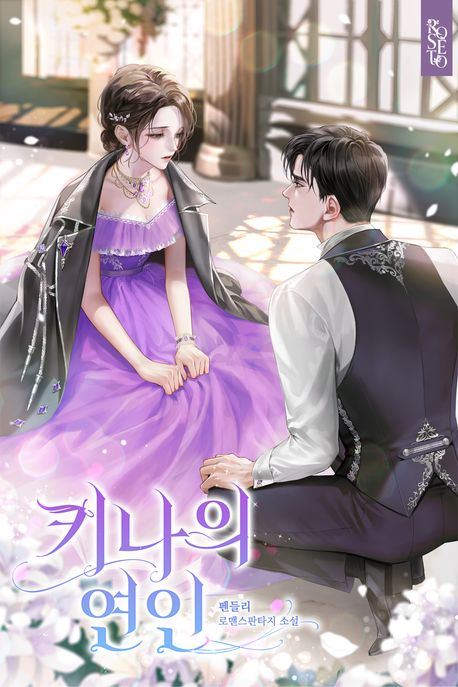
Kina’s Lover
Novel Info
  • Author:
  • Status:Ongoing

Summary

... Read More
Duke Raon Graize and Viscount Sennet's daughter Kina enter a loveless marriage arranged by political necessity after the Crown Princess Stella dies from a fever contracted at an Imperial orphanage event. The empire's strict marriage laws force Crown Prince Chris to wed Raon's lover Bersha, but Chris devises a deception: Kina will marry Raon as a placeholder so he can later free them both when he becomes Emperor.

Kina has secretly loved Raon since their first meeting, long before he became Bersha's lover. At the orphanage event that precedes the tragedy, Crown Prince Chris publicly humiliates Kina by reminding her she exists only through Bersha's friendship. Shortly after, Stella dies, and Chris blames the poorhouse staff, ordering their torture. When Kina petitions for mercy, Chris demands she marry Raon as part of his scheme to protect Bersha and Raon's relationship.

Devastated by the poorhouse children's forced relocation and witnessing the tortured staff, Kina accepts Chris's terms to save innocent lives. She prepares to leave the only home she has ever known, promising the children she will visit. Meanwhile, Raon struggles with his forbidden feelings for Bersha while being ordered by Chris to oversee wedding preparations. He repeatedly rejects Chris's attempts to reunite him with Bersha, knowing such a relationship would destroy them all under the empire's laws.

Kina encounters Raon at a fabric shop where he is selecting materials for Bersha's wedding. She drapes cloth over his shoulders and offers him words of comfort about time and belonging, recognizing his pain. This brief connection reveals to Raon that Kina sees through his composure. When Bersha later tries the same cloth, Raon abruptly rejects it, realizing he chose the fabric specifically because it suited Kina, not Bersha.

Chris announces his plan to close all capital poorhouses, forcing Kina to relocate the children she cares for. She watches Devilito, a ten-year-old she has raised since infancy, leave for a new home, keeping her promise to visit him. The emotional weight of abandoning the poorhouse that has been her life breaks her resolve, yet she endures for the sake of those she protects.

Chris orchestrates Kina and Raon's marriage as a political deception. Raon visits Kina at her family's residence and proposes, acknowledging the shamelessness of his request given their history with Bersha. He admits he cannot abandon his feelings for Bersha but believes he can offer Kina protection and companionship. Kina, understanding her own impossible position and Raon's genuine suffering, agrees to the arrangement.

The marriage proceeds in a quiet ceremony at an empty temple with no guests or celebration. Raon remains emotionally detached throughout, while Kina conceals her heartbreak behind formal politeness. Chris and Bersha's wedding follows shortly after, though both are unhappy about their forced union. Chris grants Raon permission to continue his relationship with Bersha privately, believing this arrangement will eventually lead to their true happiness when he ascends the throne.

Kina moves into the Graize residence as Raon's wife, maintaining the facade of a devoted duchess while secretly supporting Bersha's relationship with Raon. She continues managing charitable work and maintains contact with the relocated poorhouse children, finding purpose in their wellbeing despite her personal loss. Raon visits Bersha regularly, their forbidden romance continuing under Chris's watchful eye and protection.

The story establishes a complex web of political obligation, unrequited love, and sacrificed happiness. Kina's strength lies in her selflessness and dedication to others, while Raon remains torn between duty and desire. Chris, grief-stricken and unstable, wields his power to protect those he loves while destroying institutions that failed his wife. The empire's rigid laws create barriers that no amount of love can easily overcome.

Latest Release
DateGroupRelease
2026-10-03dusk blossoms c40
2026-10-03dusk blossoms c39
2026-10-03dusk blossoms c38
2026-10-03dusk blossoms c37
2026-10-03dusk blossoms c36
2026-10-03dusk blossoms c35
2026-10-03dusk blossoms c34
2026-10-03dusk blossoms c33
2026-10-03dusk blossoms c32
2026-10-03dusk blossoms c31
2026-10-03dusk blossoms c30
2026-10-03dusk blossoms c29

Community Reviews

Rating(0 / 5.0, 39votes)
5 stars
0(0%)
4 stars
0(0%)
3 stars
0(0%)
2 stars
0(0%)
1 stars
0(0%)

Popular reviews

... Read More
The way these chapters are structured is honestly masterclass storytelling. Chapter 8 opens with Kina entering Chris's space, tense and formal, and within minutes she's on the floor offering her life. The pacing here is RARE—Chris stretches out his silence, makes her wait, lets her squirm. 'Raise your head.' Three words, and he's already won. Then Chapter 9 immediately pivots to the poorhouse, the children crying, the farewell with Devil. It's like the author knows we just read about Kina being manipulated and needs to immediately remind us WHAT she's sacrificing. The emotional whiplash is intentional. And then Chapter 10 opens with... the wedding dress fitting? After everything? That contrast is everything. We go from the horror of the dungeon to the softness of white fabric and rose-brown hair, and it almost feels wrong. Like, the story shouldn't be this beautiful after that. Then Raon walks in and the pacing slows to a crawl—every gesture, every glance, every barely-spoken word between Bersha and Raon stretches out. The author forces us to sit in that awkward silence Kina feels. And then Kina leaves and the chapter just... trails off with Chris's voiceover about Stella. The cliffhanger isn't an explosion, it's a sigh. A regretful, aching sigh. The structure here doesn't rely on action—it relies on emotional compression. Every scene is packed so tight that by the end you're breathless, even though nothing 'happened' in the traditional sense.
... Read More
Okay so this whole chapter basically explodes from page one and I didn't even realize I was holding my breath until the very end. The assassination attempt at the Crown Prince's wedding is such a classic setup but the author does something really smart here—they don't just make it a big battle scene, they fracture it into multiple threads happening simultaneously. Raon fighting on the front lines, Kina cowering in absolute terror, Bersha being dragged away screaming his name. Three completely different emotional registers playing out at once, and the cross-cutting between them is what makes it so gripping. The plot twist I didn't see coming was the robed man saving Kina. Not Seorin, not Raon, this completely unknown figure who just appeared out of nowhere, killed his own comrade, grabbed Kina, called her by name, and vanished into thin air with a mage backing him up. That single moment rewrote everything I thought I understood about the rebel forces. Are some of them defecting? Is there a faction war within the rebellion? I'm dying to know. And then there's the Ining subplot dropped in at the end like a cold bucket of water after all that chaos—this cruel noble tormenting lovers for fun, and then getting captured by the exact same robed men. It feels almost too neatly parallel, like the author is setting up some poetic justice theme that I can't quite pin down yet. What I can say is the pacing never lets up. Every chapter ending hooks you into the next one. I started this batch at 10 PM and it is now 2 AM and I cannot stop reading.
... Read More
The scene composition in these chapters is genuinely cinematic. You've got the rebel ambush inside a lord's castle—dark robes, magic circles forming in central halls, the glint of jewels on the floor—and then it CUTS to Kina pushing a carriage full of warm fabric through the capital outskirts, wearing plain commoner clothes. The juxtaposition is intentional and it works. The author builds this world where the nobility's cruelty spawns rebels who stab their own hearts rather than surrender, where Imperial Knights coordinate nationwide operations, where magic exists but is worn thin by overuse. And then you have the poorhouse, which feels like a completely different world despite being in the same city. Children running out to greet Kina, the director asking for help with the roof before winter, Dave's golden eyes catching light as he stares. These aren't just settings—they're emotional temperature gauges. The rebel scenes are cold, metallic, desperate. The poorhouse is warm, cluttered, alive. Even the brief scene with Crown Princess Bersha has that courtly atmosphere where every compliment from the Madames carries underneath it a current of barely concealed resentment toward Kina's seat of honor. The world feels lived-in because the author doesn't just describe locations; they describe how people MOVE through them.
... Read More
Okay so let's talk about Dave. Because I have SO MANY QUESTIONS. This guy creeps into a married woman's bedroom, watches her sleep, plays with her hair, casts a spell to ease her fatigue, and leaves before dawn. And then he comes back the next morning and tells Ribor casually that he went out "for a bit"? Who does that? Who DOES that?? But here's what's actually terrifying about it—it's not that Dave is a cartoon villain. It's that he's broken in a way that makes him both dangerous and pitiful. Remember earlier? The text literally says: "Dave, who used to speak little and regard people with hostility, had come to converse much more often after living with Ribor. These days, he seemed to recognize him as something like a companion." This man was taught basic human connection and it genuinely changed him. And yet—he still crawls through windows at dawn. Ribor's advice to him is simultaneously the funniest and saddest moment in this whole batch: "Try meeting her properly dressed and without the robe... then try meeting the woman naturally, as if you don't know her." As if you don't know her. Like Dave has any chance of being anything other than a nightmare in human form around her. And Dave's response—"She's afraid of me"—said with actual vulnerability? That destroyed me. Meanwhile, Raon and Kina are doing what? Signing marriage papers in a cold temple with no kiss, no ring, no ceremony. But she gives him a medicine case because she can't give him a handkerchief—"That was something meant for people who loved each other." AND YET she lies awake every night worrying about whether he's safe. These two are falling in love in the spaces BETWEEN words. How is Dave supposed to compete with that??
... Read More
I need to talk about how the pacing in these chapters just GRABS you by the throat and doesn't let go. The chapter opens with Bersha crying into her pillow—raw, immediate emotion—and then BOOM, Chris enters drunk, and within pages we get the most insane proposal ever: "Marry me and have your love with Raon." What. The. Hell. That twist came out of nowhere and I literally gasped. And then the next scene? Chris and Raon drinking together, both broken men who lost the same woman, confronting each other. The emotional whiplash is intentional and it WORKS. But what really kept me turning pages was the rhythm of the conversations. Chris and Bersha's dialogue—her pleading, his cold detachment, then this weird moment of solidarity where they're both just destroyed. Then Chris and Raon, where the tension builds slowly like a pressure cooker. Raon calling him out on punishing people who had nothing to do with it, Chris exploding, throwing a glass. The conflict escalates scene by scene and each one ends on a note that makes you need to read the next. The Kina interlude in the carriage was a great breather though—quiet, intimate, almost gentle. It gave me a moment to catch my breath before getting slammed again with the Bersha return scene. And that ending? Chris asking about Kina, offering to send a letter? After everything? My brain couldn't process it. The structure here is basically a series of emotional landmines and the author places them perfectly.
... Read More
There are so many symbols layered in these chapters that I need to unpack. First—alcohol. Chris isn't just drinking; he's trying to drown something. Every time he lifts that bottle, it's not about pleasure, it's about erasure. And the glass he throws at Raon? Shatters. Just like everything else in his life. But here's what got me: the handkerchief Kina uses to wrap Raon's wound. A soft cotton square against broken glass. It's such a small detail but it represents everything—tending to wounds that can't be seen, the quiet acts of care in a world full of violence and duty. Then there's the law itself as a symbol. The marriage law isn't just plot mechanism; it represents how the Empire consumes individual desire on the altar of tradition. Both Chris and Bersha are sacrificed to it. Chris sacrificed Stella (indirectly, through the system's failure), and now Bersha sacrifices her love for Raon. The law demands blood and hearts. "I won't create a second regret"—Chris's final line. Regret is basically the thematic backbone here. Everyone is haunted by what they couldn't prevent. Chris regrets not protecting Stella. Raon regrets not being able to save Bersha from this fate. And the poorhouse victims? They regret nothing—they were just erased. The repetition of failed protection, of being too late, of power that looks like authority but feels like nothing... that's the real story beneath the romance.
See all reviews

Custom lists

See all custom Lists