Killing the Possessor - Reviews

Killing the Possessor
+Add to Custom List
Sort
Add review
... Read More
The imagery in this section is genuinely cinematic. Let me paint you a picture: a door burst open by furniture and evil spirit force, this woman with TRANSLUCENT EXTRA ARMS behind her in black clothing resembling a musical instrument, pressing people into walls like they're making roommates for drywall. And the way the author describes it—'the wall felt strangely soft'—that's horror-adjacent body horror and I respect it. But what really made the world feel alive was the transition. One minute you're in this gothic haunted palace setting with supernatural threat, and the next—bright sunlight, chalk dust, old TV in the corner, students in uniform. The contrast between the dark spirit world and this normal-looking middle school classroom was jarring in the best way. It made me believe that this world operates on dream logic, where memories and hauntings are connected. The evil spirit naming mechanic too—once Camil says 'Elizabeth Coreldi' the whole reality shifts. That's a beautiful worldbuilding rule.
... Read More
Okay, so the whole premise is a massive setup—a college student gets hit by a truck and wakes up in a world where possessing someone's body is a capital offense? And then to add insult to injury, she's not even the protagonist of the story she was reading. She's an extra. A villainous extra who slapped a prince in public. I lost it when Dahlia casually drops that bomb. One minute I'm like, 'Oh, this is just a reverse harem fantasy,' and the next I'm spiraling because the plot just flipped on its head. The way the author uses knowledge of the source material as both armor and a ticking clock is brilliant. Every conversation is a minefield, and the protagonist's internal monologue constantly references game/dialogue choices. It's like watching someone play a visual novel on hard mode where a wrong turn means execution. The real masterstroke is how the exposition about Hongik Ingan is woven in—not as a info-dump, but as a desperate survival plan. She needs them, but the pacing of their arrival (or lack thereof) creates this agonizing suspense. And that ending cliffhanger with the masked agent asking 'Kimchi arrayo?'—perfect. It's a test, a wink to readers who know the lore, and a potential lifeline for our protagonist all at once. The plot isn't just moving; it's calculating every risk and reward.
... Read More
I need to process what just happened with Mockingbird and the whole name thing because it's been RATTING AROUND IN MY HEAD ALL DAY. The letter arrived with the subject line "Kim Sae-i's Salvation – from Mockingbird." But then the system addressed HER as Kim Sae-i, not Camilli Mute. So someone out there knows she's an external entity, a possessor, and they're calling her by her REAL name while deliberately using a bird as their alias. A mockingbird—someone who mimics, who appears helpful but might have hidden intentions. Is this person actually trying to help her, or is this a game within a game? And then there's the Hope name that opened everything. "She's my only hope." Simple. Devastating. The name Hope is such an ordinary, almost naive word, but in the context of a woman fighting for her literal survival in a foreign world, it carries such weight. It's ironic AND sincere simultaneously. The QR code appearing in a world without smartphones is another symbolic layer—it's a violation of the world's internal logic, a crack in the fiction that suggests someone from OUTSIDE this reality is pulling strings. Mockingbird isn't just helping; they're manipulating the system itself. The secret santa parallel Camilli makes—remembering how she first got the game as an anonymous gift—is deeply unsettling because it connects her current predicament to something from her REAL life. What if the boundaries between worlds aren't as clear as she thought? What if this wasn't entirely random? The idea that Mockingbird might not even be human haunts me more than any ghost story ever could.
... Read More
I came in expecting a fun isekai survival story and somehow walked away thinking deeply about identity, autonomy, and what it means to be human in a world that strips that away based on something you can't control. Let that sink in. The concept of "possession" operates on at least three levels here. First, there's the literal level—people whose souls have been displaced into other bodies. Second, there's the social level—possessors are hunted, tortured, and executed, treated as things rather than people. And third—and this is the one that really got under my skin—there's the level of performance. Our protagonist has to PERFORM being Camilli Mute every single day. She has to mimic mannerisms, suppress her true voice, and wear someone else's face while silently screaming inside. Isn't that its own kind of possession? The slow erasure of self through the necessity of survival? The chapter counter—[1 chapter remains until your stay expires]—is such a brilliant symbolic device. It reduces human life to a consumable resource, something with a limited shelf life. You don't have years. You have chapters. And when the chapter ends, you're gone. It reframes the entire narrative as a countdown, making every interaction feel charged with desperation. Ren Abyss checking her pulse is another image that won't leave me. He's touching the one place where life shows itself most viscerally—her heartbeat—while simultaneously being the instrument of her potential death. The irony is almost poetic. He's searching for evidence of her true nature while she's desperately trying to keep her own pulse from betraying her. And that name—Saving Possessors. The title of the novel-turned-game she read before being transported. An innocent title that sounds hopeful and heroic, but turns out to be the very world that's killing people like her. The gap between intention and reality, between story and experience—that's the bitter heart of this whole thing.
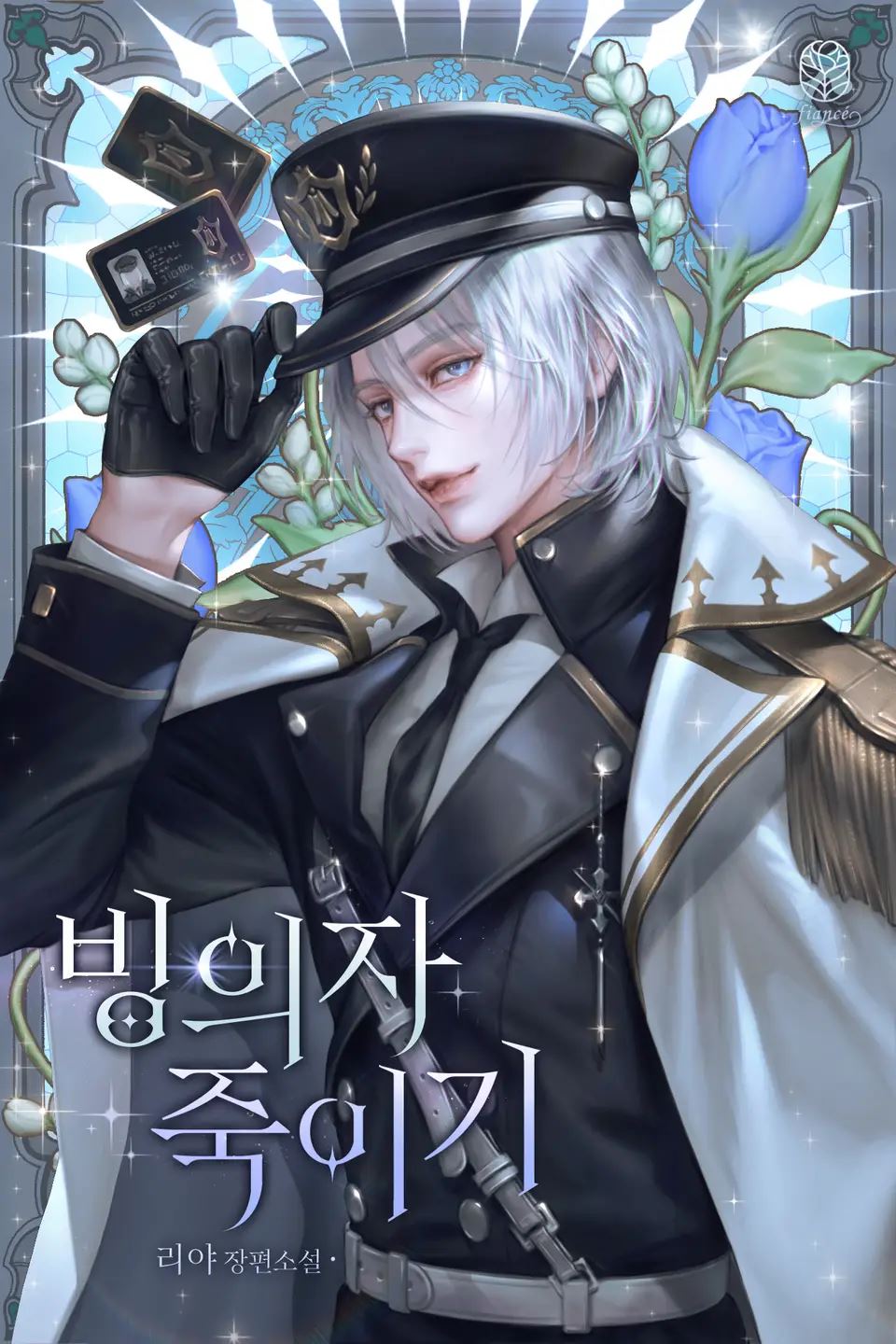
... Read More
Let me just say this first: Dante Mute is the most interesting person in this entire household and I need to talk about it. Here's this guy—five years older, no blood relation to Camilli whatsoever, adopted heir status, top of his class, polite to everyone, genuinely kind—and yet Camilli can't bring herself to trust him because she's playing a role. The tragedy is that the REAL Camilli would've treated him poorly too. She was rude to everyone, even people who were genuinely good to her. And now our protagonist has to navigate this relationship while pretending to be someone who would reject that kindness. That's not just acting—that's emotional labor. And then Glinda. 'Don't you think it's time to start looking for another suitor?' Right after someone almost died. RIGHT AFTER. The husband just sits there and nods along. The sheer audacity of this woman is making me physically angry. But here's the thing that surprised me—Dante actually says 'I'm in favor, Camilli. It's a good idea' when she says she doesn't want to get married. Not because he's being difficult, but because he genuinely seems relieved that she's choosing her own path. His face is flushed. He's smiling. This man has feelings and I am NOT okay with this. Dahlia on the other hand—'pouting, jabbing her fork into a piece of fruit'—she's already positioning herself as the threat. The youngest step-sister who's being pushed aside. I can already see where this is going.
... Read More
What struck me the most emotionally isn't some grand romantic moment or tearful confession—it's this quiet, devastating line where she thinks to herself about the possessor man: "A world that's the harshest for possessors… …Should I help him?" She just decided to walk away. She just calculated that staying safe was worth abandoning a terrified, crying human being who did nothing wrong. And she knows it. She clicks her tongue in frustration at her own weakness, but there's this undercurrent of genuine anguish underneath all her calculated冷峻. I kept coming back to that because it feels so honest. This isn't a protagonist who's comfortably heroic. She's someone who's been through something terrible enough to make her choose survival first, but who hasn't completely lost her capacity for compassion. That friction—that space between what she does and what she wishes she could do—is where the real emotional weight lives. And then there's the body-hopping itself. Think about how disorienting and violating that must be. She wakes up not knowing who she is, in a body that isn't hers, speaking a language she shouldn't know, and every time she gets "exorcised," she doesn't go home—she just lands in ANOTHER body. The maid calls out to her as "Miss Camilli" and she has to pretend to be this person whose life she doesn't understand. That loneliness has to be suffocating. She can't tell anyone who she really is because everyone around her would kill her for existing. The relationship with Ren Abyss also carries this weird emotional charge. He's dangerous, yes, but he kisses her hand with this performative courtesy, whispers that he hopes she returns early from the ball, says they'll see each other again like it's a promise rather than a threat. There's something deeply unsettling about the way he looks at her—like he's trying to solve a puzzle he's not supposed to be solving.
... Read More
Okay so the demon attack in the pub wasn't just filler action—no, no, this was literally the inciting incident that changes EVERYTHING for our protagonist. Think about it: she's already in hostile territory trying to survive, and then BOOM, the guy she was actively trying to avoid shows up out of nowhere to save her life. The layers here are insane. What I found really clever was the author's use of the earlier ball scene as a flashback within this chapter. The narrative drops us into chaos first—the demon attack, the rescue, the stunned silence—then suddenly pivots to Chapter 1's events at the ball, showing us Ren watching Camilli the whole time, and then that balcony scene where she literally grabs him by the collar and kisses him while drunk. Then we're thrown back to the present and she doesn't even RECOGNIZE him. Wait, what? She calls him by his full title but doesn't recognize his FACE? That's the kind of plot twist that makes you immediately re-read the passage three times to figure out what's going on. And then Chapter 2 introduces Bali Aidepen at the tailor shop, and I'm already fully invested in the mystery of who these people are and what Hongik Ingan actually is. The pacing between these chapters feels intentional—each one raises more questions than it answers, which is exactly how you keep someone turning pages at 2 AM. The structure of alternating between present-day tension and past revelations works really well here. It's not just exposition dumps; the ball scene recontextualizes everything about Ren's behavior in the present. When he says 'the pain of a breakup isn't something you can drown in alcohol—you erase it with a new love,' it hits completely different knowing he heard those exact words come from Camilli's lips the night before. Is he testing her? Is he suspicious? The author is playing with dramatic irony like a boss. And honestly, the fact that our protagonist (who we don't even fully know the name of yet in this section) was NEARLY KILLED because of a meeting arrangement with Hongik Ingan? That's a ticking time bomb of consequences waiting to explode. I cannot wait to see how this all ties together.
... Read More
Let me just— the system message. I need a moment. [The residence period for ‘Kim Saei' is currently set to ‘Chapter 18.' After this period, your soul will be erased.] ERASED. Not died. Not killed. *Erased.* As if I never existed at all. I read that twice and my stomach dropped so hard I had to put the phone down. And the worst part? The system gives us hope like “Please do your best to renew your residence permit!” in that cheerful robotic voice, and then when the protagonist frantically asks HOW—nothing. [Access to related information is unavailable.] I actually shouted at my screen. Who does that? Who puts a countdown timer on someone's life and then refuses to explain the rules? But honestly, what wrecked me the most wasn't the fear—it was the laughter. The protagonist's reaction to the three conditions: skilled immigrant, investment immigrant, marriage immigrant. They burst out laughing at how bureaucratically absurd the path to survival is. Like, of course the universe demands a marriage visa in a fantasy world. Of course. And then they seriously consider contract marriage as a legitimate survival strategy. The sheer desperation wrapped in deadpan humor—“I'll just divorce after I get the permit”—was both hilarious and heartbreaking. The detail about avoiding marriage talk at Korean family gatherings but now being forced into it as a life-or-death plan? I swear the author saw right through all of us. That specific cultural touchstone made the whole situation land so much harder. This isn't just a transmigration story—it's about someone who wants to go home and the horrifying realization that “home” might not even remember them anymore.
... Read More
I HAVE to talk about Glinda. Girl is a FORCE. She marches into the carriage mid-argument with Camilli and literally one word from Dahlia—"Mother, I'm tired"—and GLINDA SHUTS UP INSTANTLY. The woman just went from hawk mode to silence like someone flipped a switch. And what's funny (read: horrifying) is that she was YELLING at Camilli about not dishonoring the family, as if SHE is the one who showed up to a debut ball in last season's dress because her mother barely gives her pocket money. The hypocrisy is SO thick you could cut it with a knife. But here's what actually got me—Dante. He catches Camilli in a quiet moment, tells her she looks beautiful, then GRABS her shoulder with this earnest, almost desperate expression: "Next time something like this happens, don't just keep it to yourself, please tell me." And Camilli's entire internal monologue is just a torrent of confusion and irritation. She's like... this man doesn't know her father's money is what's funding his entire existence, yet he's acting like HE'S the generous one offering her kindness? It's giving main character energy from someone who has zero clue about the power dynamics at play. The Camilli-Dahlia thing is also wild. They went from tearing each other's hair out (LITERALLY fell into a lake together??) to Dahlia asking Camilli for encouragement before her debut. And Camilli, despite everything, still managed to give her sister a genuinely kind thing to say: "You're pretty. If you don't mess up, you'll have lots of suitors." Then she bit back the rest of that sentence about Dahlia's brain being missing a screw. Iconic. I love how these two are somehow becoming actual siblings even though they clearly want nothing to do with each other.
... Read More
Let me just say this: the palace ball description gave me MAJOR cinematic vibes. The author really understood the assignment when they described the long line of carriages at the entrance—comparing it to morning rush hour is such a BRILLIANT touch. It immediately grounds this fantasy noble setting in something so relatable and mundane. You can literally SEE the grand chandeliers, the flowers, the curtains, and THEN the reality check of heat and dust and frills. "Every time it fluttered, it sent dust flying into the air, and I felt like I was going to go crazy from the itching in my nose." This single sentence does SO much work. It's not just a description—it's Camilli's internal discomfort with the entire situation manifesting physically. The oppressive heat, the suffocating dresses, the artificiality of it all. And the woman in the absurdly oversized puffed-up dress standing alone? That image stayed with me. She was described like an abandoned prop against a wall, quietly sipping wine with a bitter expression. The word "wallflower" was literally used and I felt it. The contrast between the bright blue dress and her dull aura—that's the kind of detail that makes a scene breathe. The arrival message was chef's kiss too: "[Welcome to the playfield.]" Suddenly the entire ball transforms from a social event into something gamified and dangerous. The environment itself feels alive with possibility and threat simultaneously.
... Read More
The pacing here is relentless in the best way. It starts mid-crisis—we already know the protagonist is possessed, already know she was exorcised—and then immediately launches into exposition dumps that feel like desperate information-gathering. The structure is essentially a countdown clock. Every paragraph raises the stakes: Who suspects me? What did I do in this body? Where's the helper organization? Why aren't they coming? The author uses Dahlia's visits as rhythmic punctuation—each appearance reveals new backstory (the slap, the prince) while also advancing the tension. Those interruptions break up the internal monologue perfectly. They're like pressure valves that also inject new threats. The week-long time jump ('despite waiting over a week') is a smart structural choice—it compresses downtime while emphasizing isolation. Then bam, the agent arrives. The chapter structure mirrors the protagonist's psychological state: fragmented, anxious, jumping from memory to present reality to future fear. The prose itself speeds up during moments of panic (shorter sentences, more internal screaming) and slows during revelations. That final line—'But, as always, knowing something and experiencing it firsthand are two diff'—cuts off right at the cliffhanger. No resolution, just the beginning of a new threat. It's pacing that makes you want to immediately open the next chapter.
... Read More
The stakes in these chapters are genuinely sky-high and the author never lets up for a second. Let's break down what's actually at risk here because it's not just 'will our protagonist survive'—it's layered multiple levels deep. On the surface level, there's a DEMON attacking people in a crowded pub. Our protagonist is nearly killed. She's a possessor—someone whose soul has been taken over or merged with another being—and she's clearly vulnerable. The Public Security Bureau, led by Ren, hunts down possessors. If they discover she's not the real Camilli Mute, what happens to her? The text doesn't explicitly say, but the implication is chilling. Then there's the Hongik Ingan angle. Our protagonist was meeting with them because she needs their help to survive and presumably to reclaim her own identity. But the meeting location was compromised—they ran into both a demon AND investigators. Our protagonist literally thinks: 'If I had said the wrong thing when I met the investigator guy, I would have been dragged straight to the Public Security Bureau.' That's a death sentence waiting to happen. And Ren? He's caught between duty and obsession. His subordinate reports that the agents of Hongik Ingan showed up when they 'didn't have to'—meaning they chose to stay and fight rather than flee. Ren's theory: their target is someone important. And he suspects that target is Lady Mute. So now you have a possessor pretending to be a noblewoman, a secret organization hunting her, an investigator who's personally interested in unraveling her identity, AND a demon that clearly has its own agenda. The ballroom flashback adds another layer of conflict. The public breakup between Prince Wainer and Camilli Mute sent shockwaves through the capital. Rumors are everywhere. And Ren was watching her the entire time, following her to the balcony. What was he planning to do? The text implies he had information about something that happened fifteen years ago—something only the real Camilli and he know about. Whatever that is, it's clearly connected to why possessors are being hunted and why Hongik Ingan is involved. The tension never drops. Every scene ends on a question or a revelation that raises the stakes higher. Our protagonist escapes the pub but is now under suspicion. Ren decides to investigate the Mute household. Bali Aidepen appears with unclear loyalties. And somewhere underneath all of this, the original Camilli Mute is gone—or changed—and nobody quite knows why. I am physically incapable of stopping reading.

Leave a comment

You must be logged in to leave comments. or
