Killing the Possessor - Reviews

Killing the Possessor
+Add to Custom List
Sort
Add review
... Read More
I need to talk about how good the dialogue is in these chapters because honestly it's elevated the entire reading experience for me. The exchange between our protagonist and Ren feels so natural despite the high-stakes situation. Look at this back-and-forth: 'Why did you come here so late at night?' 'Huh?' 'I came to drink.' 'Drink?' 'Alone?' 'Is there a problem?' It reads exactly like how two suspicious people would actually talk to each other—short, clipped, layered with unspoken meaning. The protagonist's internal monologue during this conversation is also brilliantly written. She's frantically calculating in her head: 'What excuse could I make to sound natural?' And then she lands on the truth-shaped lie about her breakup, which is simultaneously honest and deceptive because the real Camilli DID break up with her lover. But the dialogue shines even more in the flashback sections. The ball scene conversation between drunk Camilli and Ren is *wild.* "Isn't this what you wanted?" "You've got it wrong. I—" "Liar. You've been watching me all along, haven't you? For a long time." She calls him out before he can even form a denial. And then her proposal: "So let's be together. It'd be even better if we could just roll around together while we're at it." The casual vulgarity of it is so perfectly drunk-Camilli. She's done performing refinement. This is a woman who's had enough of pretending. And Ren's response—'I'm tempted, but I'm not into things that get people talking'—is such a perfectly calibrated line. He's rejecting her, but he's also being honest about the practical implications. And then he leaves. No dramatic confrontation, no emotional breakdown. Just a man who recognizes danger and removes himself from it. The narrator's voice throughout is also distinct and engaging. Our protagonist's inner thoughts are witty and self-aware: 'How can someone who is not one of the male leads look that good?' That fourth-wall-adjacent humor gives her a modern, relatable voice that contrasts nicely with the more formal dialogue between Ren and his subordinate. Even the secondary characters have distinct voices. Bali Aidepen's "Follow me" is terrifying in its brevity. Madam Marion's overly eager sales pitch feels like a completely different register from everyone else. The author clearly understands that dialogue isn't just about what characters say—it's about how their speech patterns reveal who they are.
... Read More
Okay, can we just talk about this whole "previous reader" arc because it absolutely wrecked me? I thought Bali was being harsh for no reason during their little meeting, right? I was sitting there annoyed, thinking she was just being her usual snobby self. Then Hawk casually drops that this other girl spilled all their secrets to the Public Security Bureau because she fell for Ren Abyss?? Like—WHAT. She mistook herself for the female lead and then threw everything away for a man she barely knew? The audacity is almost impressive in the most horrifying way possible. And honestly, what hit me hardest wasn't even the betrayal itself—it was Bali's reaction. She could've been furious, dramatic, any of that. Instead she just got cold. That shift from playful to chilling in the mirror was so subtle but so effective. She didn't yell, she didn't cry. She just said "a foolish reader is worse than useless" and that was it. The emotional maturity—and ruthlessness—of it all. Meanwhile I'm over here wanting to hug the protagonist because apparently she's the only sane one left. But then the money pouch moment. Hawk just appearing out of nowhere like a magician and handing over a silk pouch that turns out to be loaded with gold? And his line "It's a token of goodwill. You can think of it as an apology." Apology. FOR SETTING ME UP WITH A DANGEROUS ENCOUNTER. And the protagonist's immediate response is basically "okay, I accept this bribe, everything is fine now." It's kind of hilarious how transactional all these relationships are. Every connection in this book runs on some kind of exchange—information for protection, gold for loyalty, charm for cooperation.
... Read More
That scene where the guy takes off his mask after calling me a “reader”—I literally stopped scrolling. It was such a small moment but it meant everything. One second he's this intimidating figure holding a dagger to my neck, and the next he's grinning like he just found a treasure map. The shift in his demeanor told me so much about Hongik Ingan without a single exposition dump. These people aren't just a secret organization—they're desperate, paranoid, and genuinely thrilled that someone “outside” understands their world. But what really got me was the protagonist's internal reaction. They didn't melt at the attention or play into the “chosen one” narrative. They were *relieved*. “You have no idea how much I've been dying for you to show up.” That line hit different because I could feel the exhaustion underneath it. This person has been surviving alone, guessing, stumbling through conversations where every wrong word could get them killed, and suddenly someone offers them a lifeline. Then the system drops the 15-day death sentence right after. I laughed, then immediately felt sick. It's cruel storytelling, making you feel safe for exactly three seconds before yanking the rug out. But I also love it—the protagonist doesn't spiral for long. They start making lists. They strategize. They cross out the investigator like “absolutely not, that's my death wish.” That quick, darkly comedic decision felt so *real*. This isn't a fragile protagonist—they're terrified but functional, and that balance is why I keep coming back.
... Read More
There's something deeply symbolic about the mirror scene with Bali that I can't shake. She's looking at herself in the mirror, trying on different outfits, while simultaneously examining whether the protagonist is worth her time. The mirror becomes this double symbol—both literal self-reflection and metaphorical testing of identity. Which made me think about how much this entire narrative is obsessed with identity. Who are you really? A reader? A possessor? A reincarnator? The previous girl thought she was the female lead. The protagonist is pretending to be a noblewoman while knowing she's actually from another world. Bali is both a noblewoman and someone who remembers her past life. The number three keeps showing up too. Three readers total. Three types of people in this world (possessors, reincarnators, and... what are the rest?). It feels deliberate, like the author is building a triadic structure where the protagonist's journey is framed against two failed examples. The girl who became too enamored with fiction, the girl who lost herself entirely. And then there's the gold pouch—the physical representation of every transaction in this world. Money, information, loyalty, survival. Everything has a price and everything is currency. Even the seemingly warm gesture of giving someone gold is actually just a down payment on future cooperation.
... Read More
Okay so let me just say—the whole setup in these chapters is genuinely clever and I need to talk about it. We've got Camil stuck in some novel world as a player character, right? And the first male lead she runs into is Prince Wyner, who apparently used to be her childhood sweetheart but now... I don't know what their thing is? The book deliberately keeps this ambiguous and it's driving me insane in the best way. Affinity at 88 and they're still tangled up somehow. But then—plot twist—they don't just fight the evil spirit, they get dragged INTO a memory. A flashback. From Camil's actual past in the real world. A middle school classroom. Bullying. Go Hyeji. This is NOT a standard villainess-isekai setup and I'm here for it. The way the author uses the supernatural mechanism (naming the evil spirit) as a plot device to unlock backstory is genuinely satisfying. Classic 'aha' moment energy. Makes you want to go back and re-read everything with fresh eyes.
... Read More
The atmosphere in these chapters is thick enough to cut with a knife. You've got this opulent, almost suffocating mansion setting—marble floors, glass crafts, fragrant flowers, heavy drapes—that contrasts sharply with the brutal reality lurking underneath. The worldbuilding here is all about creeping dread rather than flashy descriptions. It's in the details: the maid's wary glances, the casual mention of exorcism as a routine punishment, the fact that holy water is just another household item. The author makes the societal prejudice feel lived-in. This isn't a world that explains its racism against possessors; it's a world where that racism is baked into every interaction, every power dynamic. The scene where the protagonist lies in bed, absorbing the nauseating wrongness of Dahlia's body, really sells the physical alienation of possession. It's not a clean transfer; it's a violation of her own senses. And that final scene with the Hahoe mask-wearing agent in the dark bedroom—that's pure gothic tension. The contrast between the comfortable bedroom and the life-threatening secret society visitor encapsulates the whole world: beauty masking terror. I love how the magic system feels like a curse rather than a gift. Possession isn't portrayed as supernatural wonder; it's a death sentence waiting to happen. The world feels real because its danger feels systemic, not arbitrary.
... Read More
What do these characters actually stand to lose? Let's break it down because it's more complicated than just 'don't get eaten by a ghost.' Prince Wyner has no combat ability against spirits—his entire identity as a protector is fundamentally broken in this scenario. He's literally useless against the very threat he's sworn to handle. That's psychological stakes, not physical. Camil is in an even more precarious position: she doesn't remember her original mission, her 'player' status just activated, and every time she interacts with the spirits she's getting pulled into memories that seem to carry emotional weight far beyond the immediate danger. The Coreldi spirit wants to turn people into 'wallflowers'—which I'm now reading as a metaphor for being frozen in place, unable to move forward in life. That's what happened to her: six years of rejection, public humiliation, despair. And the ending of this batch reveals Camil's OWN unresolved conflict—bullying, guilt, a girl who left because of her silence. The stakes just went from 'survive the ghost' to 'confront your own moral failures.' That escalation is chef's kiss.
... Read More
Beneath the surface thriller elements, there's this haunting exploration of identity and belonging. The protagonist isn't just hiding from persecutors; she's inhabiting a body whose history she doesn't understand, performing a personality that might be monstrous. The repeated emphasis on 'Camilli Mute' versus 'I' speaks to this fragmentation. There's also the symbolism of possession itself—as both salvation (she survives) and curse (she's hunted). The world treats possessors as evil spirits, but the narrative clearly positions them as victims of circumstance. The exorcism that 'saved' the original Dahlia is recontextualized as violence. Even the Holy Water becomes ironic—the liquid meant to cleanse is also a weapon of persecution. The Hongik Ingan motto referencing 'benefiting humankind' while operating as a secret resistance group adds another layer: who gets to define humanity? The recurring motif of performance—the protagonist constantly acting, lying, manipulating perceptions—ties into larger questions about identity as social construct. And that final test with kimchi? It's about cultural memory as survival. Only someone from another world would know it. Knowledge becomes both shield and marker of difference. This isn't just a romance fantasy with high stakes; it's a meditation on what makes us human when everything else is stripped away.
... Read More
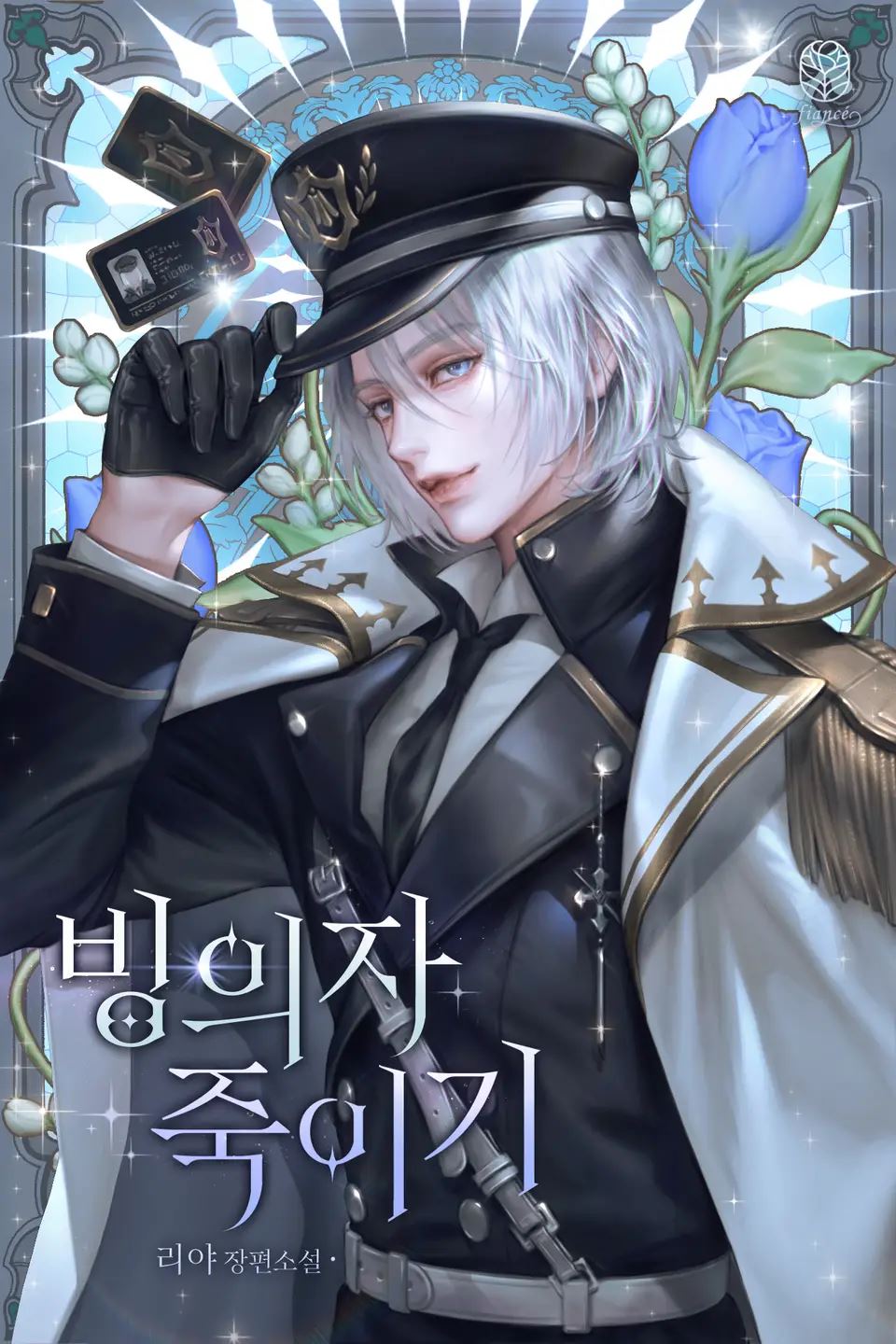
I need to talk about Ren Abyss because this character has completely locked me in their grip. From the moment he appears—silvery hair, delicate features that somehow read as more terrifying than any brute, a smile that doesn't reach his eyes—he radiates this palpable danger. He's described as an executioner, a torturer, someone whom even the underground fears. And yet the writing makes him magnetic in the most uncomfortable way possible. The wrist scene is where everything clicked into place for me. He grabs her hand after she tries to pull away, lets his fingers trail up to her inner wrist, and rests two fingers there like he's checking her pulse. "Miss Camilli, it seems that you get nervous whenever you're standing in front of me." He's not just observing her—he's INVESTIGATING her. He already knows something is off about this woman who's supposed to be the perfect noble lady, and he's playing with his food. And what does our protagonist stand to lose if Ren figures her out? Everything. Execution. Torture. The same fate as the possessor man she initially turned away. The stakes couldn't be higher, and they escalate the moment she realizes the exorcism didn't send her home—it displaced her into Camilli's body. Now she's living on borrowed time in an unfamiliar form, surrounded by people who might report her, with an executioner who's clearly onto something. The external conflict is razor-sharp, but what really got me is the internal one. She's morally torn about whether to help the possessor man on the street. She knows it's probably a trap, but something in her still flinches at seeing an innocent person suffer. That tension between self-preservation and empathy—that's the engine driving this whole story, and it's making every page ache.
... Read More
Okay so the opening line alone is already pulling me in—'In just fifteen days. I'd try, but the chances were pretty much zero.' The protagonist just dropped this bomb about a limited lifespan and immediately goes into survival mode. Love that energy. Instead of panicking, they start making actual plans: figure out how to renew the residence permit, find the female lead, whatever. It's the most grounded reaction to an impossible situation, and honestly that's what makes the plot feel so believable. Every step they take is calculated. No heroics, no sudden powers—just someone trying to stay alive in a world that's clearly designed to kill them. The scene at Loitri is where things really kick into gear. The way Hongik Ingan uses a book code to communicate is such a cool touch—it ties back to the original story's methods and makes the organization feel like it actually operates like a real intelligence network. 'Is there anyone in Parensha who doesn't know him? He's famous for showing up at Loitri every midnight.' The protagonist deciphers it, goes to the meeting place, and then—boom—demon attack. Not a foreshadowed one either, just pure chaos dropping into the scene like a car crash you can't look away from. That's good plotting. You don't need every twist to be predicted. Sometimes the story just needs to punch you in the face.
... Read More
Let me just say this: the pacing is absolutely ruthless in the best possible way. The prologue drops us into a full-blown crisis—a possessor begging for help, an executioner arriving, and the revelation that the protagonist is one too. Then Chapter 1 immediately pivots to her origin story, explaining how she got here, and before we can even catch our breath, she's exorcised and thrown into a brand new body. That's two complete arcs in seven chapters and I am emotionally exhausted. The structure is cleverly layered. The prologue functions almost as a cold open in a TV drama—we see the protagonist making a choice, facing a consequence, and then the entire foundation shifts. Chapter 1 rewinds to explain how she got here, which is a risky structural move, but it works because by then we already care about her survival. The chapter counter hovering above her head ([1 chapter remains]) acts as a ticking bomb that never stops ticking, even as the narrative jumps between different moments in time. There's a moment mid-prologue where the pace almost stutters—I'll admit that. The exposition about Dahlia Mute's family history and the lake incident felt slightly dragged out compared to the breathless energy everywhere else. But honestly, it barely registers because the next scene slams us right back into chaos with the exorcism. And then the Camilli body transfer hits like a punch to the gut. The cliffhanger ending—her realizing she's now in Camilli's body while the maid casually drops the news about Lady Vivalon being exposed as a possessor—is exactly the kind of structural bait that makes you immediately open the next chapter. No filler. No rest. Just relentless forward momentum.
... Read More
"The pain of a breakup isn't something you can drown in alcohol. You erase it with a new love." I need a minute. That line is everything. It's the kind of sentence that sits in your chest and refuses to leave. Because on one level it's just… advice? A cool-headed observation from a handsome investigator guy? But then you layer in the context and it becomes this devastating piece of dramatic irony that basically breaks my heart. The original Camilli said those exact words to Ren while drunk on his collar at a ball, proposing they sleep together as some kind of revenge-pact against her breakup pain. And now the new Camilli—this person wearing her face and living her life—stands in front of him and tells the SAME EXACT STORY about breaking up with her lover. She's repeating the script without knowing it. And Ren, who heard those words come from the real Camilli's mouth the night before, just lets it slide with this half-smile and walks away. The tragedy here is so thick you could cut it with a knife. He's standing there processing the fact that the woman who grabbed him drunk and propositioned him is somehow GONE, replaced by this cautious, clever person who's trying to survive in someone else's identity. And he can't tell anyone because—why? What does he know? What happened fifteen years ago? Our protagonist's emotional state throughout this whole encounter is also so well done. She's terrified. She just fought a demon. Her legs are trembling. She's putting together a lie on the spot to protect herself from a man who clearly suspects something. And yet she manages to sound almost casual about it. 'Does that make sense?' she asks with sarcasm, trying to regain some control of the situation. The vulnerability underneath is palpable. And Ren's internal monologue after she walks away—"He wiped her presence from his mind, the lingering attachment gone. He figured he wouldn't have to care about Camilli Mute anymore. At least, not until today… until he met her again at Loitri." That 'until today' is the most crushing three words. He told himself he was done with her, and here she is again, and of course he's immediately drawn back in. The unspoken tension between them is off the charts. Two people who clearly share history, one of whom remembers it and one who doesn't, circling each other like predators who might also be... something else. I'm emotionally compromised and I need to sit down.

Leave a comment

You must be logged in to leave comments. or
