Summary

... Read More

Kim Saei, a college student from Earth, dies in a traffic accident after reading the novel Saving Possessors and finds her consciousness transferred into the body of Dahlia Mute in a fictional world where possessors are hunted as evil spirits. The world operates on a system where each chapter of existence grants a limited timeframe for survival, enforced by a mysterious interface that displays her remaining time. After enduring an attempted exorcism by a high-ranking priest named Vice, who mistakes her for a demon possessing Dahlia, Saei is forcibly ejected from that body and inhabits the body of Camilli Mute, Dahlia’s half-sister and the ex-girlfriend of Prince Wainer, one of the novel’s male leads. This new identity places her in immediate danger, as Camilli had publicly slapped the prince, causing a scandal that draws intense scrutiny from the Public Security Bureau. Saei’s survival depends on renewing her residence permit before her current chapter expires, with the ultimate goal of obtaining indefinite residency through fame, wealth, or marriage to one of the lead characters.

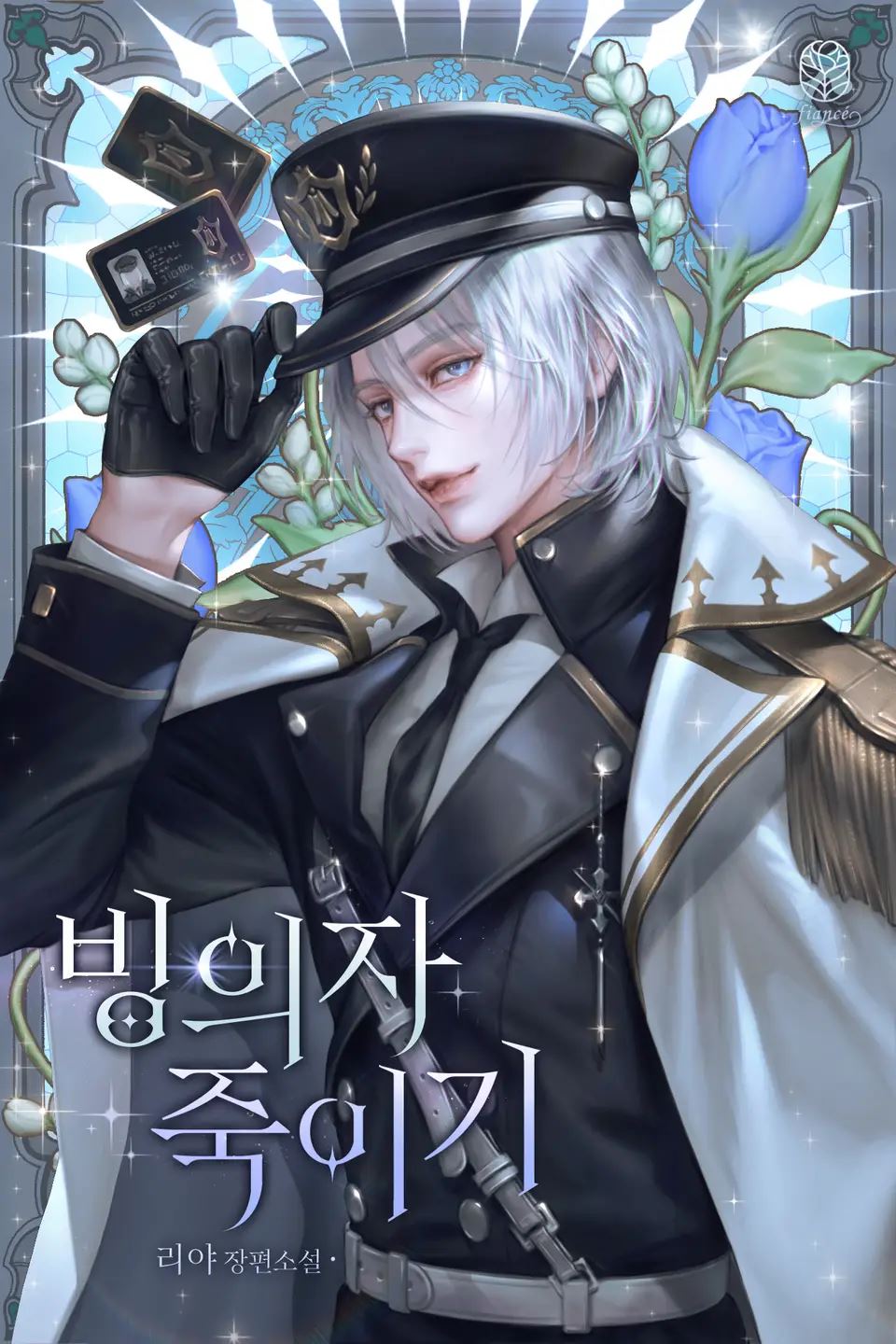
The core conflict centers on Saei’s desperate attempt to navigate a hostile society while hiding her true identity as an otherworlder. She learns that the Public Security Bureau, led by the silver-haired investigator Ren Abyss, actively hunts possessors, subjecting them to brutal interrogations. Ren, known for his sadistic tendencies and his role in executing possessor cases, becomes increasingly suspicious of Camilli due to behavioral anomalies that do not match the original character’s personality. Simultaneously, Saei makes contact with Hongik Ingan, a secret organization dedicated to protecting possessors. An agent verifies her identity as a Korean otherworlder through cultural tests, revealing that she is also a wizard by virtue of possessing Camilli’s magical aptitude. The organization provides her with detailed background information and warns her of the dangers she faces, but their protection is limited by the need for secrecy in a world saturated with spies.

Key turning points occur as Saei realizes the precariousness of her situation. After narrowly avoiding capture by Ren during a chance encounter at a tavern where a demon attack occurs, she understands that her lack of recognition of him signals a significant deviation from the original timeline. This observation prompts Ren to expand his investigation to the entire Mute household, suspecting that the person he encountered is not the original Camilli. Saei also discovers that the current Empress is a dimensional traveler like herself, adding political complexity to her plight. The revelation that her residence time is tied to the narrative chapters of the novel forces her to accelerate her plans to secure a marriage alliance or achieve continental fame before her time runs out.

The story direction shifts as Saei attempts to integrate herself into high society while maintaining her cover. She attends family gatherings where her stepmother Glinda pressures her to marry Viscount Holles’ heir, a match Saei rejects to preserve her autonomy. Meanwhile, she seeks guidance from Bali Aidepen, the leader of Hongik Ingan, who offers further assistance but emphasizes the risks of her position. Saei’s interactions with Prince Wainer remain strained due to Camilli’s past actions, yet she recognizes him as a potential ally or romantic option for securing her permit. The narrative builds tension around the impending confrontation with Ren, whose instincts suggest he may uncover her secret, forcing Saei to rely on her wits and the fragile support of Hongik Ingan to survive in a world where discovery means death.

Latest Release
DateGroupRelease
2026-09-27citrus aurora c149
2026-09-27citrus aurora c148
2026-09-27citrus aurora c147
2026-09-27citrus aurora c146
2026-09-27citrus aurora c145
2026-09-27citrus aurora c144
2026-09-27citrus aurora c143
2026-09-27citrus aurora c142
2026-09-27citrus aurora c141
2026-09-27citrus aurora c140
2026-09-27citrus aurora c139
2026-09-27citrus aurora c138

Community Reviews

Rating(3.8 / 5.0, 59votes)
5 stars
16(27%)
4 stars
19(32%)
3 stars
21(36%)
2 stars
3(5%)
1 stars
0(0%)

Popular reviews

... Read More
The imagery in this section is genuinely cinematic. Let me paint you a picture: a door burst open by furniture and evil spirit force, this woman with TRANSLUCENT EXTRA ARMS behind her in black clothing resembling a musical instrument, pressing people into walls like they're making roommates for drywall. And the way the author describes it—'the wall felt strangely soft'—that's horror-adjacent body horror and I respect it. But what really made the world feel alive was the transition. One minute you're in this gothic haunted palace setting with supernatural threat, and the next—bright sunlight, chalk dust, old TV in the corner, students in uniform. The contrast between the dark spirit world and this normal-looking middle school classroom was jarring in the best way. It made me believe that this world operates on dream logic, where memories and hauntings are connected. The evil spirit naming mechanic too—once Camil says 'Elizabeth Coreldi' the whole reality shifts. That's a beautiful worldbuilding rule.
... Read More
Okay, so the whole premise is a massive setup—a college student gets hit by a truck and wakes up in a world where possessing someone's body is a capital offense? And then to add insult to injury, she's not even the protagonist of the story she was reading. She's an extra. A villainous extra who slapped a prince in public. I lost it when Dahlia casually drops that bomb. One minute I'm like, 'Oh, this is just a reverse harem fantasy,' and the next I'm spiraling because the plot just flipped on its head. The way the author uses knowledge of the source material as both armor and a ticking clock is brilliant. Every conversation is a minefield, and the protagonist's internal monologue constantly references game/dialogue choices. It's like watching someone play a visual novel on hard mode where a wrong turn means execution. The real masterstroke is how the exposition about Hongik Ingan is woven in—not as a info-dump, but as a desperate survival plan. She needs them, but the pacing of their arrival (or lack thereof) creates this agonizing suspense. And that ending cliffhanger with the masked agent asking 'Kimchi arrayo?'—perfect. It's a test, a wink to readers who know the lore, and a potential lifeline for our protagonist all at once. The plot isn't just moving; it's calculating every risk and reward.
... Read More
I need to process what just happened with Mockingbird and the whole name thing because it's been RATTING AROUND IN MY HEAD ALL DAY. The letter arrived with the subject line "Kim Sae-i's Salvation – from Mockingbird." But then the system addressed HER as Kim Sae-i, not Camilli Mute. So someone out there knows she's an external entity, a possessor, and they're calling her by her REAL name while deliberately using a bird as their alias. A mockingbird—someone who mimics, who appears helpful but might have hidden intentions. Is this person actually trying to help her, or is this a game within a game? And then there's the Hope name that opened everything. "She's my only hope." Simple. Devastating. The name Hope is such an ordinary, almost naive word, but in the context of a woman fighting for her literal survival in a foreign world, it carries such weight. It's ironic AND sincere simultaneously. The QR code appearing in a world without smartphones is another symbolic layer—it's a violation of the world's internal logic, a crack in the fiction that suggests someone from OUTSIDE this reality is pulling strings. Mockingbird isn't just helping; they're manipulating the system itself. The secret santa parallel Camilli makes—remembering how she first got the game as an anonymous gift—is deeply unsettling because it connects her current predicament to something from her REAL life. What if the boundaries between worlds aren't as clear as she thought? What if this wasn't entirely random? The idea that Mockingbird might not even be human haunts me more than any ghost story ever could.
... Read More
I came in expecting a fun isekai survival story and somehow walked away thinking deeply about identity, autonomy, and what it means to be human in a world that strips that away based on something you can't control. Let that sink in. The concept of "possession" operates on at least three levels here. First, there's the literal level—people whose souls have been displaced into other bodies. Second, there's the social level—possessors are hunted, tortured, and executed, treated as things rather than people. And third—and this is the one that really got under my skin—there's the level of performance. Our protagonist has to PERFORM being Camilli Mute every single day. She has to mimic mannerisms, suppress her true voice, and wear someone else's face while silently screaming inside. Isn't that its own kind of possession? The slow erasure of self through the necessity of survival? The chapter counter—[1 chapter remains until your stay expires]—is such a brilliant symbolic device. It reduces human life to a consumable resource, something with a limited shelf life. You don't have years. You have chapters. And when the chapter ends, you're gone. It reframes the entire narrative as a countdown, making every interaction feel charged with desperation. Ren Abyss checking her pulse is another image that won't leave me. He's touching the one place where life shows itself most viscerally—her heartbeat—while simultaneously being the instrument of her potential death. The irony is almost poetic. He's searching for evidence of her true nature while she's desperately trying to keep her own pulse from betraying her. And that name—Saving Possessors. The title of the novel-turned-game she read before being transported. An innocent title that sounds hopeful and heroic, but turns out to be the very world that's killing people like her. The gap between intention and reality, between story and experience—that's the bitter heart of this whole thing.
... Read More
Let me just say this first: Dante Mute is the most interesting person in this entire household and I need to talk about it. Here's this guy—five years older, no blood relation to Camilli whatsoever, adopted heir status, top of his class, polite to everyone, genuinely kind—and yet Camilli can't bring herself to trust him because she's playing a role. The tragedy is that the REAL Camilli would've treated him poorly too. She was rude to everyone, even people who were genuinely good to her. And now our protagonist has to navigate this relationship while pretending to be someone who would reject that kindness. That's not just acting—that's emotional labor. And then Glinda. 'Don't you think it's time to start looking for another suitor?' Right after someone almost died. RIGHT AFTER. The husband just sits there and nods along. The sheer audacity of this woman is making me physically angry. But here's the thing that surprised me—Dante actually says 'I'm in favor, Camilli. It's a good idea' when she says she doesn't want to get married. Not because he's being difficult, but because he genuinely seems relieved that she's choosing her own path. His face is flushed. He's smiling. This man has feelings and I am NOT okay with this. Dahlia on the other hand—'pouting, jabbing her fork into a piece of fruit'—she's already positioning herself as the threat. The youngest step-sister who's being pushed aside. I can already see where this is going.
... Read More
What struck me the most emotionally isn't some grand romantic moment or tearful confession—it's this quiet, devastating line where she thinks to herself about the possessor man: "A world that's the harshest for possessors… …Should I help him?" She just decided to walk away. She just calculated that staying safe was worth abandoning a terrified, crying human being who did nothing wrong. And she knows it. She clicks her tongue in frustration at her own weakness, but there's this undercurrent of genuine anguish underneath all her calculated冷峻. I kept coming back to that because it feels so honest. This isn't a protagonist who's comfortably heroic. She's someone who's been through something terrible enough to make her choose survival first, but who hasn't completely lost her capacity for compassion. That friction—that space between what she does and what she wishes she could do—is where the real emotional weight lives. And then there's the body-hopping itself. Think about how disorienting and violating that must be. She wakes up not knowing who she is, in a body that isn't hers, speaking a language she shouldn't know, and every time she gets "exorcised," she doesn't go home—she just lands in ANOTHER body. The maid calls out to her as "Miss Camilli" and she has to pretend to be this person whose life she doesn't understand. That loneliness has to be suffocating. She can't tell anyone who she really is because everyone around her would kill her for existing. The relationship with Ren Abyss also carries this weird emotional charge. He's dangerous, yes, but he kisses her hand with this performative courtesy, whispers that he hopes she returns early from the ball, says they'll see each other again like it's a promise rather than a threat. There's something deeply unsettling about the way he looks at her—like he's trying to solve a puzzle he's not supposed to be solving.
See all reviews

Custom lists

See all custom Lists