Imperial Lament - Reviews

Imperial Lament
+Add to Custom List
Sort
Add review
... Read More
This chapter moved so fast it made me dizzy. One minute it's Huinyeong in the bath, the next she's being dragged by her hair, then she's at the banquet, receiving gifts, seeing her fiancé's hand brush hers, getting a kitten from Prince Yik, and then finding out he's got a pregnant concubine. The author just keeps stacking scenes on top of each other, no breathing room. And that's why I couldn't stop reading. It's relentless. There's no dull moment. Even when it slows down—like when she's stroking the kitten—that quiet moment immediately twists into her realizing Prince Yik is going to be a father. The pacing is almost aggressive. It doesn't let you sit with the tragedy. It just keeps moving, tighter and tighter, until you're left gasping at the end. Brilliant manipulation of reader attention.
... Read More
I want to talk about the structural genius of how these chapters build tension, because honestly the author is playing 4D chess with pacing here. The sequence goes: crisis (Crown Princess sick) → disruption (Wi-pyeong appears) → confrontation (he demands the baby) → escalation (he calls her his wife) → violation (he takes the baby) → horror (Suk-on's memories of his past behavior) → climax (Crown Prince arrives, takes the baby back) → resolution (Wi-pyeong's reaction) → twist (his mother's advice to kill the Crown Prince) → epilogue (his whispered fantasy). Eight beat changes in roughly this span, and each one raises the temperature. Most writers would stumble here — either rush through and lose impact, or slow down and kill momentum. But the author manages to do both simultaneously. The physical action (grabbing the baby, the confrontation) happens fast and breathless, while the internal revelations (Suk-on's memories, the mother's manipulation, Wi-pyeong's inner monologue at the end) slow us down to absorb the horror. The cleverest structural choice is probably the placement of Suk-on's flashback sequence. Right after Wi-pyeong has taken the baby and is acting possessive, we cut to Suk-on remembering his past atrocities — the vocal cord man, the hanging child. This does triple duty: it deepens Wi-pyeong's characterization, it raises the stakes (what has this boy done before?), and it gives us a breather from the present-tense action. It's a pressure valve that also adds fuel. And that final section — Wi-pyeong's POV shift after his mother speaks — is where the pacing really earns its keep. We go from external conflict (the public confrontation with the Crown Prince) to internal landscape (his memory of the baby, his fantasy of taking her). The story doesn't resolve; it opens wider. The Crown Prince won this battle, but Wi-pyeong now has a plan, and his mother has armed him with philosophy. The reader is left not with closure but with dread, which is exactly where you want them at the end of a chapter sequence like this. The chapter ends with 'It was moving. I have never felt such an intense pleasure as I did at that mome' — and that cutoff is... intentional? Because the sentence trails off mid-word? If so, that's either a transcription error or a devastating structural choice. Either way, it leaves me hanging.
... Read More
The stakes in this book are absolutely relentless and I mean that in the most terrifying way. Let me just list what Huinyeong has already lost: her father (dead), her identity as a real princess (shattered), her fiancé and his entire family (executed or enslaved), her dignity (gone), her privacy (nonexistent), and potentially her newborn child (WHERE IS HE??). She has nothing left and the emperor is systematically making sure of that. The external conflict is clear—he holds all power, she holds none. But the internal conflict is where this gets truly unbearable. She WANTS to die. She's prayed for it. She's asked Buddha for it. But she can't even do that for herself because the emperor won't allow it. Every scene raises the stakes further. When he tells her there's no baby in Yangmyeong Hall, the question becomes: is Ryu alive? Did the emperor kill him? Give him away? Hide him? The suspense is razor-sharp because we know this man boiled a concubine alive without hesitation and executed his own brothers. There is zero moral boundary he won't cross. And yet Huinyeong stays—partly because she has nowhere else to go, partly because maybe some part of her still clings to the hope that he might show mercy. That hope is her tragedy. The emperor himself is conflicted too, though he'd never admit it. He pushes her, torments her, mocks her father—but he also touches her with something that almost looks like pain when she cries. He asks if she misses her father and then laughs, but he also calls her by her title, his Consort, repeatedly. Is he trying to break her or keep her? The ambiguity is what makes this so tense. I'm genuinely afraid for this child and for Huinyeong's sanity.
... Read More
I've been thinking about this prince nonstop since I finished reading. He's not just a character—he's a symbol, and the author wraps him in meaning so densely that every glance at him carries weight. First: the prince as replacement. The emperor has literally replaced Huinyeong with copies. 'Each time Wi-pyeong's rule expanded, new women were brought into the prince's residence... They were all undeniably beautiful.' But 'no imitation could ever surpass the original.' The women are substitutes; the prince is the real thing—the one thing the emperor truly values because he represents power secured, succession guaranteed. And yet Huinyeong loves him as a son, not as a political asset. That disconnect is the tragedy. The name 'Ryu' matters too. When Huinyeong cries 'Ryu back,' she's not just saying her child's name—she's claiming him asherself. The emperor calls him 'the imperial prince,' a title of state. She calls him Ryu, a name of family. This naming conflict is the central tension of the entire novel, compressed into one word. There's also the symbolism of the breast milk scene, which I know sounds strange but hear me out. The prince refuses Yu-on's milk. He was fed by his mother despite her weakness and illness. Milk as love versus milk as duty. When the emperor takes the baby from Huinyeong, he's not just separating mother and child—he's redirecting the child's sustenance away from maternal love toward institutional care. The wet nurse becomes a metaphor for the state claiming the individual. The killed toddler from the opening isn't just backstory. It's the thesis statement. The emperor has already shown what he'll do to a child that threatens his power. The imperial prince survives only because he's useful. If he weren't the heir, he'd be dead like his sibling. This theme—that children are valuable only insofar as they serve the father's ambition—permeates every scene. Huinyeong's transformation from princess to concubine is another major symbolic arc. Her title changes, her clothing changes, her posture changes—but the deepest change is internal. She went from 'flawless composure' to 'dazed and broken.' The symbol here is the crumbling of identity. She was Cheongyo, daughter of the emperor, and now she's just 'Consort Huinyeong,' a woman who exists relative to men. Her noble birth, once her greatest asset, becomes her greatest burden because it makes her fall seem greater. The mint tea scene is surprisingly symbolic too. Mint for calm, for clarity, for healing—and yet it changes nothing. Hyoyoung offers comfort that cannot comfort. The ritual of tea-drinking in the palace is supposed to represent grace and civilization, but it's just another performance, another layer of control dressed in courtesy. And perhaps the most potent symbol: the loosening knot in Huinyeong's kimono. Something meant to hold things together is coming undone. Her identity, her dignity, her position—all of it is held on by a single knot, and it's slipping.
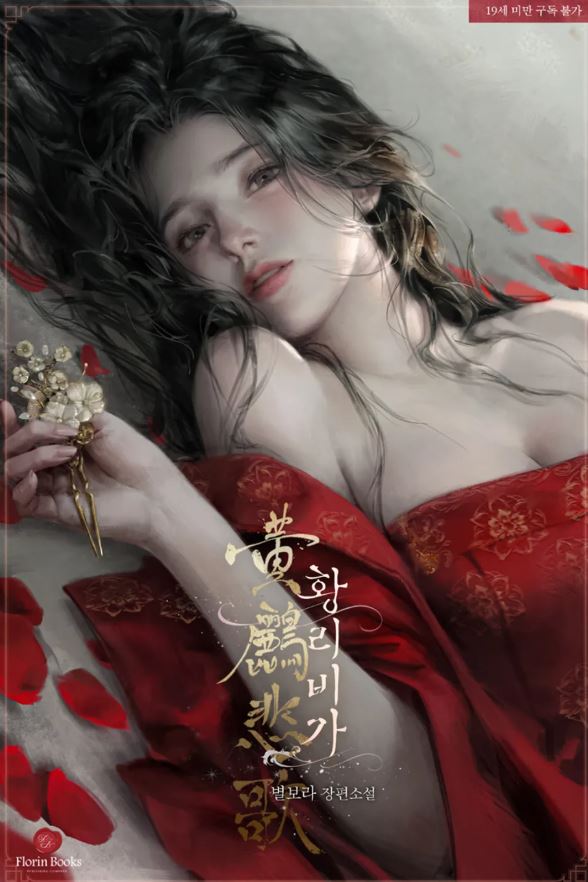
... Read More
Okay I need to just... sit with this for a second because that ending. That final passage. 'Sunlight and peace. It was a beautiful name.' I actually had to put the phone down. Let me unpack why this hit me so hard. Throughout these chapters, Wi-pyeong is presented as this almost monstrous figure — cold, calculating, unhinged. He grabs a newborn like it's an object, he talks about killing his own half-brother, his mother practically coaches him on it. But then the narrative slips, just for a moment, into something genuinely heartbreaking. He remembers calling her 'Little Oriole' because she was small and adorable, like fruit on a cherry blossom tree. He said her real name out loud and rolled it around in his mouth like it was something precious. Not like a threat — like a prayer. And then the line: 'One day, he would come for it again — For the light that Yeon-pyeong had taken away from him.' That's it. That's the whole story right there. This isn't just obsession or entitlement, whatever you want to call it on the surface. Somewhere underneath all the cruelty and the palace politics, this boy who apparently has never smiled in his entire life found something — someone — who made him feel warmth for the first time. And his father-figure took it away. So of course he's going to take it back. The tragedy is that he doesn't even know the difference between love and possession. He genuinely thinks calling the baby his wife makes sense. His mother told him that to get something, you have to destroy whoever has it. That's the only framework he's ever been given for desire. And I'm sitting here thinking — is he the villain here, or is he just the most broken person in the palace? I keep going back to the image of him looking at the sunlight on the floor. It's the first time in these chapters anyone has described anything as beautiful through his eyes. The peony imagery, the gold, the jewels — none of that moved him. Just a patch of light. Just a name. God.
... Read More
I am not okay. I am genuinely not okay after reading the scenes between Hyoyoung and Huinyeong. This is the kind of female friendship in historical fiction that gets written so rarely—where one woman actually SEEING another woman, truly seeing her, and it breaks your heart. Let me start with this line that destroyed me: 'The woman her husband loved. She was also a woman that Hyoyoung herself had loved for a very long time.' That's it. That's the whole tragedy compressed into one sentence. Hyoyoung married Wi-pyeong knowing he would love someone else, and she chose to do it anyway. Not because she was naive, but because she understood the geometry of this palace and knew there was no other path. But what gets me is the tenderness underneath all of it. When Huinyeong stumbles into the room, poorly dressed, barefoot almost, looking like she hasn't slept in days—Hyoyoung's first instinct isn't resentment. It's worry. 'Her eyes began to sting.' She remembers when they were young, when Huinyeong was the emperor's only daughter, when she had dignity and protection. And now? Now she's wearing a nightdress because she ran through the palace in a panic to get to her son. The emotional complexity here is insane. Hyoyoung admits that when the emperor fathered his first child with Lady Hyang, she didn't feel bitterness. But when he started bringing women to the prince's residence who looked exactly like Huinyeong—that's when 'her heart truly began to rot.' Because that wasn't just about the emperor's preferences. That was about him replacing Huinyeong with copies, erasing her uniqueness, turning her into a template. And Huinyeong! Oh god, Huinyeong. She's twenty-four and she 'had not taken a single step forward since that moment.' Five years ago she was a princess with impeccable manners, standing before her father even when she burned with fever. Now she can't even hold herself together. The emotional decay is visible in every detail—the untied hair, the crooked kimono, the way she keeps calling herself 'this humble girl' like she can't remember her own name. But the most heartbreaking moment? When she snatches the baby from Yu-on's arms and holds him tight, her eyes vacant, whispering 'Ryu cannot live without me.' She doesn't believe she can survive without her son. And honestly? In this world, maybe she can't. The friendship between them is dying. Not because they want it to, but because the palace demands it. Every scene together is both an act of love and an act of survival. Hyoyoung protects Huinyeong because she loves her. Huinyeong comes to Hyoyoung because she has nowhere else to go. And the emperor sits at the center of it all, watching, controlling, making sure neither woman forgets who owns them.
... Read More
I need to talk about Wi-pyeong because I am still not over him. This man is a mess and Huinyeong is tangled up in his mess. Look at how he treats her. He calls for the royal physician because she's ill. He wipes her face. He wraps his robe around her shoulders. But he also seized her hair. He threatened to kill anyone who saw her skin. He told her her father had to die for them to be together and then said, "I regret nothing." That's not love. That's obsession wrapped in a gilded package. And Huinyeong? She trembles. She sobs. She calls him "Your Majesty." But she also stays. She let him have her. She asked for this, or at least she didn't run. Their dynamic is toxic as hell and I'm completely hooked. Every time he touches her it's either gentle or violent, and there's no in-between. It's exhausting to read but I can't stop.
... Read More
I keep coming back to the sensory details in this chapter. The author doesn't just describe a bedroom scene—they construct an entire miniature universe of power, wealth, and entrapment, and every object in it has meaning. The golden bed. That's not decorative filler. That's the throne room translated into private space. Everything about the setting is designed to remind Huinyeong that even in intimacy, she has nowhere to hide. The silk bedding she clutches. The translucent hemp fabric that clings. The way the light catches the gold. These aren't just aesthetic choices—they're architectural arguments. Wi-pyeong's palace is his body extended outward. Every surface, every textile, every flicker of light belongs to him. When Huinyeong presses against the wall, she's not just touching stone—she's touching his domain. And then there's the smell. "You smell of a baby. The scent of Ryu." This detail is so small and so devastating. Wi-pyeong inhales her skin and identifies his son on her body. The child exists everywhere in this scene without being present—he's the ghost haunting every physical contact, the third party in their bed. The sensory world of this novel has become so saturated with Ryu that even sex is contaminated by fatherhood. The contrast between the luxurious setting and the brutality of what's happening is the author's signature technique. Delicate dolls shaped like women. Blue birds belonging to sultans' concubines. Silks and porcelain from the western regions—all these beautiful objects once given to Huinyeong as gifts, now echoing in a room where beauty and violation are indistinguishable. The palace itself is a museum of Wi-pyeong's affection, and Huinyeong is both its curator and its most precious exhibit. I also want to mention the visual progression of the scene—the way her skirt gets systematically removed, the ribbons between his teeth, the translucent fabric bunching at her navel. These aren't gratuitous; they're choreography. Each piece of clothing removed is another boundary crossed, another layer of her public身份 stripped away until there's nothing left but raw vulnerability in a gilded cage.
... Read More
Okay, so Wi-pyeong is genuinely one of the most unsettling characters I have ever read. And the worst part? The text makes it painfully clear that he wasn't just born this way — he was manufactured. His mother, the Imperial Noble Consort, is perhaps more terrifying than he is. Think about this: she raises a son to see human beings as insects. She whispers into his ear that "a great man must claim a woman in the same way" — invoking historical precedent to normalize what is basically sexual predation dressed up as tradition. She watches him demand a baby as a future wife and... what? Is proud? The text says her eyes shone "as though she were gazing upon something precious." PRECIOUS. She is raising a monster and calling it brilliance. And Wi-pyeong himself — his emotional range is exactly one setting: possessive obsession. The scene where he stares at baby Yu-on and treats her like the most beautiful object in the world, then gets genuinely petulant when told no, is nightmare fuel wrapped in silk. But what gets me is how he treats EVERYONE ELSE. So-hwa notices this. He looks at her with the same expression he'd give a table or a vase. Lifeless. Empty. Like the entire world is background noise except for whatever he decides he wants right now. But then there's Huinyeong in the present timeline, and everything changes. He gently kisses her forehead. He remembers holding her as a baby with "unsettling familiarity." Five years of marriage, three children, and she STILL cannot comprehend what he feels for her. That line — "she still could not understand him" — hits like a punch. The tragedy isn't that she doesn't love him. The tragedy is that she can never, ever understand the thing inside him that made him want her before she could even walk. Who is the real villain here? Wi-pyeong, obviously. But who handed him the knife?
... Read More
"Such lovely jealousy. It makes me want to bite you." I need to talk about this line because it changes everything we thought we knew about their dynamic. This isn't just a creepy emperor having his way with a reluctant wife. This is a man who genuinely, genuinely notices her emotional reactions and finds them delicious. He's not indifferent—indifference would almost be kinder. He's *watching*. Every flinch, every tear, every moment she calls out for someone else and he intercepts it. And Huinyeong—oh god, Huinyeong. Her internal state in this chapter is a masterpiece of literary psychology. She's negotiating with herself in real time. She remembers being scared of him as a child, then wanting him anyway, then accepting his gifts while feeling guilty about it. She's carrying a century of contradictory feelings about one man and none of them get to cancel each other out. The most heartbreaking part is her distinction between "Huinyeong" and "Consort." She tells herself the woman on his lap isn't really her—that the real Huinyeong died when her father lost power. That's not just dissociation, that's survival architecture. She's building a wall inside herself so high that Wi-pyeong can physically touch her body but never reach the person underneath. But then—and this is what broke me—they have a child together. Ryu. And Wi-pyeong's entire relationship with fatherhood reveals its true shape. He called all his other children excrement. Named none of them. Let them die. But Ryu gets a name, gets sent to the Empress's Palace for safety, gets acknowledged. And Huinyeong is so tangled up in hatred that she can't even process that her son is the living proof of everything he did to her. Ryu is Wi-pyeong's only son, which means Ryu is Wi-pyeong's greatest victory. Every time Huinyeong looks at her child, she has to decide whether to love him or despise him, and the author will not let her make that choice cleanly. Wi-pyeong himself—his relationship with his own dead children is the key. He never named them. Never held them. Called them filth. And yet he needed a son from Huinyeong specifically. Why? Because she was the one he couldn't kill. The one gift he couldn't discard. Ryu is the only child Wi-pyeong ever wanted, and the only child his mother was someone he destroyed everything to possess.
... Read More
The water imagery in these chapters is relentless and every instance means something different. First, the lotus pond. Cold winter water. Ice brushing against her shins. Frozen lotus leaves tangling in her skirt. This is where she tries to die with her baby—and where she's pulled back by Wi-pyeong's iron-cold hand. Water as death, water as rescue, water as punishment. All at once. Then there's the plum blossom. Red plum in winter, fragile and beautiful, picked from the mountains of Dubong. "It is because it wished to rest in Your Highness's embrace." The Wing Prince says this and it sounds like a compliment but it's really a warning—something beautiful that belongs in someone else's hands. Huinyeong IS that plum blossom. Delicate. Out of place. Desired by dangerous men. Her father's words echo throughout: "Keep your distance. Fear him." But the deeper theme here is about fragility as a form of powerlessness. Huinyeong's physical weakness—her fevers, her coughs, her inability to leave the palace—is what makes her vulnerable to Wi-pyeong. She can't run. She can't fight. She can barely stand. And yet her father says the Wing Prince is dangerous, implying that physical weakness doesn't equal safety. "This world was foul and clouded. What would become of the prince once she was dead?" She considers suicide not just for herself but because she believes the world is too corrupt for her child. That's the thematic core—this isn't just a personal tragedy, it's a critique of the world that produces men like Wi-pyeong and women like Huinyeong, where the only options are submission or death.
... Read More
The external conflict is straightforward on paper: Wi-pyeong wants the baby, the Crown Prince won't give her to him, so Wi-pyeong's mother tells him to kill his half-brother. But the brilliance of these chapters is how every layer of conflict feeds into the others until there's no escape route for anyone. Let's map it: Layer one — the Crown Princess's illness. She's too weak to nurse, which creates the logistical crisis that makes Wi-pyeong's abduction possible. If she were healthy, Yu-on wouldn't be holding the baby alone, and Wi-pyeong wouldn't have gotten within ten feet of her. But the author doesn't waste time making this feel coincidental. The illness is the foundation that everything else is built on. Layer two — the stepmother relationship. Wi-pyeong and the Crown Prince have never been close, but there's a veneer of respect maintained 'as long as the Emperor lives.' The Imperial Noble Consort has effectively replaced Empress Gong-sun, and this power shift is what gives Wi-pyeong the confidence to make a move. He knows his mother's influence buffers him from consequences — or so he thinks. Layer three — the maternal manipulation. This is where the stakes get truly poisonous. The Imperial Noble Consort doesn't just enable Wi-pyeong's obsession; she intellectualizes it. She frames patricide (well, fratricide) as a historical necessity, quoting the Founding Emperor's conquest of Dong-o. She's not just telling her son to kill — she's giving him a mythological framework that makes murder feel like destiny. And Wi-pyeong, who has never questioned anything his mother gives him, accepts it immediately. Layer four — the Crown Prince's vulnerability. He's dealing with a sick wife, a missing child, and a stepsibling who clearly lacks normal moral boundaries. His warning to Wi-pyeong ('Never touch Huinyeong again') is firm but carries the implicit understanding that force hasn't worked before. He's outmatched in this moment, and he knows it. The internal conflicts are equally rich. Wi-pyeong genuinely doesn't understand why the Crown Prince's objections matter — in his worldview, if he wants something, his mother gets it for him. The cognitive dissonance of being told 'no' is so foreign that he registers it as humiliation rather than a legitimate boundary. And Suk-on, caught between her brother's monstrosity and her duty to the family, can only watch with 'a cold unease crept down her spine.' The Crown Princess's conflict is entirely offstage but it's the engine driving everything. She's dying. She can't protect her child. And the child — Huinyeong, innocent, eight days old — is now the prize in a game where the rules are 'kill or be killed.' What I find most chilling is that nobody in this scene is wrong from their own perspective. The Crown Prince wants to protect his daughter. Wi-pyeong wants the only thing that ever made him feel alive. His mother wants power and sees her son's obsession as leverage. The story doesn't offer a clean moral battlefield — it offers a house of mirrors where everyone's reflection is distorted, and the baby is the only innocent thing in the room, and she has no say in any of it.

Leave a comment

You must be logged in to leave comments. or
