Imperial Lament - Reviews

Imperial Lament
+Add to Custom List
Sort
Add review
... Read More
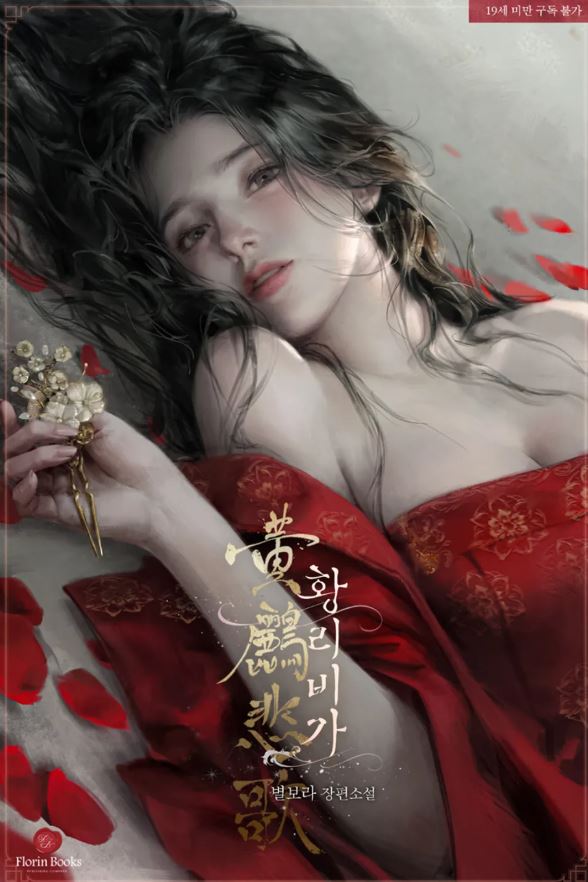
This author writes settings like a cinematographer. Every scene is painted with such specific visual detail that I could close my eyes and see it. Let me talk about the first image that lodged in my brain and won't leave: 'the thin shadow cast against the lattice door.' Just that. A shadow on a screen door. But it tells you everything—someone is coming, someone powerful, someone Hyoyoung has been waiting to see but pretending not to. The lattice work creates this framework of separation, of looking through bars at your own desire. That's the palace in one image. Then there's Huinyeong's entrance, and the visual details are devastating. 'Her long, disheveled hair framed her pale, sickly-looking face. The ties of her gown were tied carelessly, and the folds of her kimono sat crookedly on her shoulders. Occasionally, the knot would loosen, revealing the faint curve of her chest beneath the shifting fabric.' This isn't accidental description. The author is showing us that Huinyeong has stopped performing for the outside world. The only person she's dressing for now is the emperor, and even that performance has broken down. The loosening knot is symbolic—her identity is coming apart. The contrast between past and present is rendered through clothing and posture. Princess Cheongyo stood before her father 'with flawless composure and perfect courtesy, even on days when she burned with such a fierce fever that she seemed on the verge of death.' Now she 'wandered through the imperial palace in such a dazed and broken state.' The same woman, reduced to a ghost of her former self, and the author makes you feel every step of that decline through these visual contrasts. Yangmyeong Hall itself is described almost as a character. Hyoyoung is 'confined to Yangmyeong Hall like a prisoner,' yet it's also her domain, her seat of power. The emperor enters 'with steady and deliberate footsteps, neither hurried nor slow'—and that pacing of his walk tells you he owns this space completely. His presence transforms the room. The lighting and atmosphere in these scenes is consistently oppressive. There's no sunlight breaking through, no warmth. Even the mint tea Hyoyoung offers comes across as cold comfort—the 'lavish' refreshments can't warm what's actually happening. The palace is beautiful, yes, but it's a gilded cage and every description reinforces that. One sequence that gave me actual chills: the emperor pressing his lips to where Huinyeong's tears had fallen on her cheek, then whispering in her ear. The intimacy is terrifying. It's supposed to be tender, but the words are imprisonment. The author uses physical closeness to convey domination, and it's horrifying. The visual storytelling extends to the secondary characters too. Yu-on, the new wet nurse, is described as having a 'round face' and being 'sweating as she struggled with the prince.' She's practical, flustered, human—everything Huinyeong used to be before the palace broke her. And the prince himself, 'plump little face twisted in displeasure,' refusing to eat from a stranger's breast. Even the child is acting out this drama of displacement.
... Read More
Okay let's talk about Wi-pyeong because this man is absolutely messed up and I am OBSESSED. The scene where he pulls her out of the pond and she can't feel any warmth from him—even in his arms—this is the core of their entire relationship. He physically holds her but there is zero human connection. He is cold. Not emotionally cold, physically cold. His knuckles were "colder than ice" when he grabbed her. And he uses that coldness as power. Every touch is control. But what makes him interesting is that the text also shows us he notices things. He remembers she likes apricot-kernel porridge. He knows about Lanhwa. He brushes her hair from her face. These small gestures make it so much worse because they're genuine enough to be confusing. Is he manipulative or does he actually care in his own twisted way? The text refuses to give us a clean answer. "I am not satisfied with only Ryu." That line. He's telling her he wants more children even after taking her current one. Even after killing three. This is a man who sees her body as a resource, not a person. And then there's the flashback to the Wing Prince—her father's warning: "The Wing Prince is a dangerous man. You must never reveal an opening before him." Yet here she is, married to someone even more dangerous, and she still can't defend herself. Her whole life she's been terrified of men with power, and she married the most powerful one of all.
... Read More
Let me just say this: Wi-pyeong's dialogue in this chapter is some of the most efficiently cruel writing I have ever encountered. The man could narrate the weather and it would still feel like a threat. "It is fortunate that you are not Yeon-pyeong's daughter." Fourteen words. Fourteen words that contain an entire history of manipulation, surveillance, and calculated patience. He didn't just discover her secret—he waited. He watched her grow up knowing exactly what she was and never once letting on that he knew. Every gift he gave her, every gentle word he spoke when she was young, every time he brought her dolls shaped like women—that was all performance. The dialogue here reveals that nothing between them was ever genuine, which makes every tender moment they had before this chapter recontextualize into something monstrous. And his tone shifts are incredible. One moment he's whispering with what almost sounds like genuine affection—"Such lovely jealousy. It makes me want to bite you"—and the next he's casually mentioning that he personally killed a baby. The tonal whiplash IS his character. He doesn't switch between sweet and cruel; he delivers both simultaneously, which is infinitely more destabilizing. Then there's his handling of other people's deaths. "Was she even alive?" he asks about Lady Hyang's child with the same casual inflection you'd use about the weather. "I thought it was a daughter." This is dialogue as weaponized ignorance. He's not actually confused—he's performing confusion to watch her squirm. The author writes these lines with such precision that you can hear the smile behind every word. Huinyeong's dialogue, by contrast, is almost entirely broken sounds. Moans, sobs, stuttered pleas, one word repeated until it means nothing. But then there's the moment she finally finds her voice—"No!"—when he keeps saying her name. That single word carries the weight of her entire identity crisis. She's not refusing to leave; she's refusing to be renamed. Wi-pyeong calling her "Huinyeong" over and over is an act of possession, and her one-word rebellion is the most powerful line she speaks in the entire chapter. The author's narrative voice during these scenes is also worth noting—detached, almost clinical when describing Huinyeong's physical reactions, which makes the emotional content hit harder because it's not being told how to feel. The restraint IS the expression.
... Read More
The symbol that haunts this entire passage is insects. Not once, not twice — it appears again and again like a recurring note in a symphony of dread. First, the Empress Dowager tells Wi-pyeong: "Insects are creatures whose deaths matter little, so if you want something, that's what you have to do." She's teaching him that other people — anyone who stands between him and his desire — are beneath consideration. They are vermin. Disposed of without remorse. Then, as an adult, Wi-pyeong looks at the world the exact same way. The text describes him as viewing "every human being as nothing more than an insect." Five years of marriage haven't changed this. The woman he shares a bed with, the mother of his children — to him, she occupies the same moral category as a bug. Except when she's something he wants. Then she's the exception that proves the rule. But the most devastating symbol is the toy. Wi-pyeong insists the baby is not a toy. "I do not think of her as a toy." And So-hwa thinks: Even if he didn't see the child as a toy, he must have thought she was no more significant than a kitten or a puppy. There's no difference. Both are objects. Both are possessions. Both exist for his pleasure. And then there's the wedding imagery — the phoenix hairpins, the peacock jade, the talk of marriage rites for a BABY. This is the ultimate perversion of the wedding ceremony, which in this world's culture is supposed to be about union and respect and two families joining. Instead, Wi-pyeong reduces it to acquisition. "Perform the rites of marriage" — not as partnership, but as ownership finalized. The cyclical nature of this is the real theme. His mother taught him. He teaches others. And presumably, whoever raises Huinyeong's children will inherit the same worldview. The abuse doesn't end. It replicates.
... Read More
There's a moment so small and I think it's one of the most devastating things I've ever read in this genre. After the Wing Prince leaves her chamber, Huinyeong waits until the door closes, then she presses her bare foot firmly against the spot where he had been sitting and stamps on the empty space again and again. That's it. That's the whole emotional arc of a woman who is trapped, terrified, and has nowhere to put her rage except on the memory of a man who may or may not be her enemy. She can't scream. She can't fight. She can't even cry in front of him. So she stamps on empty floor. And then later, after Wi-pyeong takes the baby from her at the pond, the wet nurse pushes her aside and she tries to rise and take the baby back—and Wi-pyeong grabs her and says "You tried to kill my heir, and yet you still dare to resist?" She shakes her head. She presses her lips shut. She stops fighting. That moment where she just… stops… I couldn't breathe. "I'm sorry. For conceiving you, for bringing you into this world, all of it is my sin." The fact that she apologizes to her own child is the most heartbreaking thing. She thinks her existence is a curse. She thinks her weakness is a sin. And Wi-pyeong reinforces that every single day. The emotional devastation here is layered. It's not just romance or tragedy—it's the erosion of a human being's sense of self.
... Read More
There's so much symbolism packed into these pages. The marks on Huinyeong's neck and breast—Wi-pyeong sees them as violence, but they're also proof of ownership. She belongs to him. The crown Wi-pyeong mentions—"That place was meant for me from the very beginning." Predestination, fate, the machinery of power grinding everything into dust. And Huinyeong herself? She's trapped. Not just by the palace walls, but by her role, her body, her history. The kitten is interesting too—it's a gift from Prince Yik, a man tied to power, but it's something soft, something that needs care. She wants to keep it, but she's afraid her father will be angry. Even small joys are dangerous in this world. The recurring image of her pale, frail body contrasted with the opulent, violent surroundings—it all points to the same theme: beauty and fragility destroyed by systems of power. And Wi-pyeong's final line, "There is nothing I would consider a loss," echoes the entire moral vacuum at the heart of the story.
... Read More
'Look at him with empty eyes. Even the faintest trace of desire is still desire. Around the Wing Prince lies a dark forest, and within that forest lurks a hunger far more cruel than the executioner's blade.' This line. This entire passage. It reads like a prophecy and I keep coming back to it. The dialogue in this text operates on two levels constantly. Everyone is saying one thing and meaning another. The Wing Prince says "What a beautiful flower" and Huinyeong hears a threat. Wi-pyeong says "You should eat your breakfast" and Huinyeong hears a command disguised as care. When Wi-pyeong says "As my wife, you must fulfill your duty," the word duty sounds almost gentle compared to what he actually means. Huinyeong's voice is the most distinctive part. She barely speaks—most of her dialogue is fragmented, interrupted, self-correcting. "Your Majesty…" "This consort only… only…" "I never—never—" Her speech patterns show a woman who has been trained to shrink her presence, to apologize for existing. Even her thoughts are cautious: "She meant that there was nothing else she could be worried about." The narration itself has this whispery, claustrophobic quality. It stays so close to Huinyeong's perspective that you sometimes lose track of whether something is real or imagined. Is she really hearing the baby cry? Or is it trauma playing tricks? The author never clarifies, and that uncertainty is the point.
... Read More
The stakes in this passage are layered like an onion and I am genuinely sweating. On the surface level, there's immediate physical danger: an eight-year-old prince is demanding to take a prematurely-born infant away from her mother. The baby is barely surviving. She's gasping for breath. And Wi-pyeong is pressing his face against hers, treating her like a possession he's finally won. So-hwa's terror is palpable — "Her teeth began to chatter." But he gets what he wants eventually, doesn't he? The text implies it. But the REAL stakes are psychological, and they go so much deeper. We're watching the formation of a predator. Every scene with Wi-pyeong is essentially a documentary of someone learning that the world will bend to his desires because the people around him refuse to stop him. His mother enables him. His sister scolds him mildly. The court bends. Nobody says no with enough force to matter. And then there's the timeline jump — from this child demanding a baby to a man married to the woman he's wanted since she was an infant, with THREE CHILDREN between them. What does five years of this look like? What does his "love" actually feel like to Huinyeong on a daily basis? The text says she "could not begin to comprehend what made him act this way." Comprehend? She can't even understand him after bearing his children and living as his wife. That's not a love story. That's a hostage situation with better lighting. The suspense is maintained through dramatic irony — we KNOW what Wi-pyeong is capable of because we've seen his origin story. But Huinyeong doesn't. She's still hoping. Still trying. Still swallowing her sobs and forcing herself to understand a man who was never designed to be understood. I kept putting the book down because I needed to process what I was reading. That's how well the stakes are working.
... Read More
Okay so I need a minute because Wi-pyeong literally just dropped the nuclear bomb of revelations and I am SHOOK. Up until this moment, I thought this was some twisted political marriage situation where Huinyeong is trapped with her husband who happens to also be her uncle-by-marriage or whatever. But NO. He says—he literally SAYS—that the moment he saw her as a baby, he wanted to possess her. That he felt greater joy holding her as an infant than holding Ryu. This isn't just creepy, this is generational creepy. It reframes EVERYTHING. Every gentle touch, every 'I belong to you' declaration, every time he held her—it wasn't protection, it wasn't love, it was someone who had been starving since she was seven years old. And the way the narrative weaves this in is chef's kiss. It doesn't come out of nowhere. We get these hints—Huinyeong can't even picture him as a baby, she remembers his face as 'pale as white porcelain' from three years after he left the palace. She never had the chance to see him vulnerable or childlike. He curated that image intentionally. That's the plot twist that made me put the book down and just stare at the ceiling for ten minutes. How do you un-read that?
... Read More
I literally had to put the book down after the Buyong Pavilion scene. The way the author circles back to that moment fifteen days ago—it wasn't just a memory, it was a weapon. Wi-pyeong knew exactly which memory to unearth to break her completely. "Your consort only… only…" She couldn't even finish the sentence. That hesitation says everything about where she stands with this man. And the structure of this section is genius. We get the present confrontation, then a full flashback to the pond, then back to the aftermath, then another flashback to her childhood with the Wing Prince. It's disorienting in the best way. You feel Huinyeong's fractured mental state because the narrative itself is fractured. She can't tell past from present, trauma from now. The reveal that Wi-pyeong has killed three of her children—that line at the end, "I have killed three children for you"—hit me like a truck. He says it almost casually, like it's a gift. Like he's done her a favor. And she breaks because she never asked for any of this. The plot here isn't just about power struggles in the palace. It's about how a man systematically dismantles every person Huinyeong has ever loved or been close to. Her father protected her. Now her husband takes everything. One thing that confused me slightly: the transition between the Wing Prince scenes and the current emperor felt intentional but I need to re-read to make sure I understand the full political web. Who is the Wing Prince to Wi-pyeong? Are they the same person? The text hints at it but I'm not 100% certain. Either way, the plot is layered and I'm hooked.
... Read More
Let me be straight with you: the stakes in this novel are astronomical and the author makes you feel it in your bones. On the surface, the conflict is simple: Huinyeong wants her son back, and the emperor won't give him to her. But the deeper conflict is about survival. If Huinyeong loses the prince, she loses everything—her purpose, her identity, her only remaining connection to the world. She's already lost her father, her true parentage is a secret that could destroy her, and her status as consort means nothing without her child. The prince is the last thread holding her to this life. For Hyoyoung, the stakes are different but equally high. As empress, her authority depends on maintaining order in the palace. If she can't protect Huinyeong, if she can't control the situations that drive women to desperation, then her power is illusory. And yet she's also bound to the emperor. Every act of protection she offers Huinyeong is also an act of defiance against Wi-pyeong. The conflict is structural—there's no way to win without destroying something irreplaceable. The emperor's conflict is the most terrifying because he doesn't see himself as the villain. To him, everything is logical. He killed one child to secure power. He keeps Huinyeong confined to protect the heir. He surrounds himself with replacements because the original is too precious to risk. His conflict is internal—can he maintain control without losing every shred of humanity?—but we never see him wrestle with it. That's what makes him so frightening. What raises the stakes to unbearable levels is the revelation about Huinyeong's illegitimacy. If this becomes known, the prince's claim to the throne is invalidated. The entire succession plan hangs on a secret. This isn't just personal drama anymore—it's political landmine. And the emperor knows it, which is why he needs to control Huinyeong so completely. Her silence is worth more than her life. The wet nurse reassignment is another stake-raising moment. 'Consort Huinyeong requires a wet nurse who will remain loyal to her.' Loyal to whom? The text implies the emperor is ensuring that even the person feeding his son answers to him. Every layer of Huinyeong's world has been infiltrated. And then there's the physical danger. Huinyeong is described as perpetually ill, 'on the verge of collapse.' She's running through the palace in a nightdress, sobbing, half-delirious. If the emperor truly views children as disposable (and we know he does), what happens when Huinyeong becomes too unstable to be useful? The implication is that she could be discarded just like the toddler. The suspense is maintained through constant shifts in power dynamics. One moment Huinyeong seems to have leverage (she has the baby), the next she's on her knees begging. One moment Hyoyoung seems in control, the next she's 'suppressing the violent pounding of her heart.' No one is safe, and that's what makes this novel impossible to put down. I'm genuinely terrified for Huinyeong. Not because I think she'll die—though she might—but because I think she'll survive and have to keep living in this cage. That's the real horror.
... Read More
Okay so I have to talk about this opening because HOLY. The emperor shoving an infant into Hyoyoung's arms 'as though discarding something worthless'—and the narrator tells us he took the life of his own toddler for Huinyeong and the child. That's not a side detail, that's THE KEY to understanding this entire story. This man has already proven he will destroy any child that stands between him and what he wants. And yet here we are, watching the exact same pattern repeat with the imperial prince. The plot structure is doing something really interesting here. We're not just getting a palace drama; we're getting a horror story about succession and power dressed up as romance. Every scene reinforces the same terrifying premise: the emperor views people as objects, children as political tools, and women as vessels. When he tells Huinyeong 'Even if you die, you must die in my bed within Yangmyeong Hall while receiving my seed,' that's not a threat in the traditional sense—that's ownership language. He's telling her her body has ceased to be hers. What struck me most was how the plot threads connect. Hyoyoung's infertility isn't random backstory; it's the reason she has power. She's the only woman in this palace who doesn't need to produce an heir. Her inability to bear children IS her strength. Meanwhile Huinyeong, despite being the emperor's favorite, is trapped because she gave birth to THE heir. The prince became his own cage. And then there's the Court Lady Shim introduction, the wet nurse Yu-on being reassigned 'because Consort Huinyeong requires a wet nurse who will remain loyal to her.' Loyal? Or监视? The palace is full of these double meanings and I'm obsessed with how the plot never lets you trust a single interaction. I also need to mention the revelation about Huinyeong's parentage—that her noble status was built on her mother's affair before marriage. This isn't just gossip; it's a landmine the author is planting for later. If the court finds out, everything Huinyeong has collapses. But more importantly, it recontextualizes why the emperor chose her. Was it love? Or was it convenience? The plot is quietly asking whether he ever truly valued anyone. The structure builds like a slow suffocation. Each chapter peels back another layer of how trapped these women are, and by the end of this batch, you realize the emperor has been orchestrating everything from the beginning. He's not a man who lost control—he's a man who never had any intention of sharing it.

Leave a comment

You must be logged in to leave comments. or
