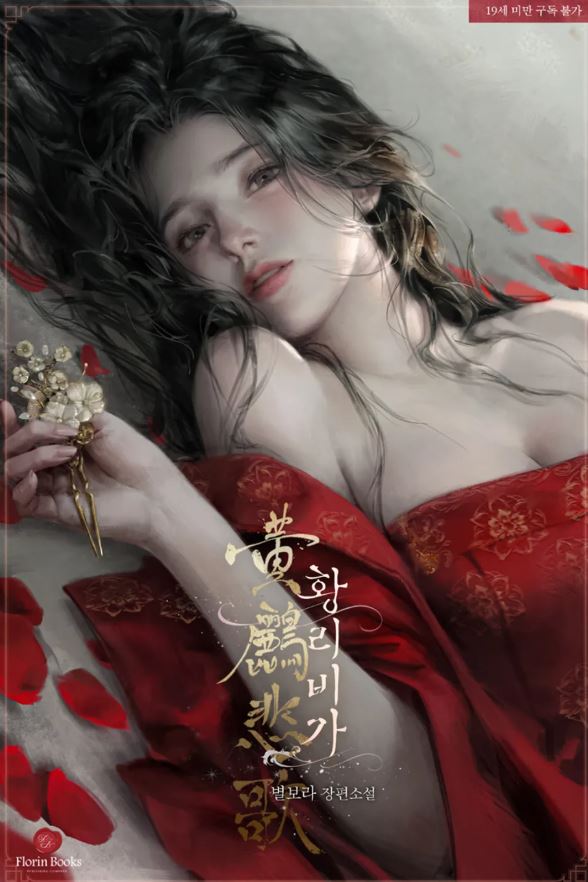
This chapter raises the stakes to a point where I genuinely don't know how Huinyeong survives it. Not emotionally—she's already in freefall. But the question of what she has left to lose is terrifying.
On the surface, the external conflict is clear: Wi-pyeong is the most powerful man in the kingdom, and he has decided that Huinyeong belongs to him. She cannot escape him physically, politically, or legally. Her father is dead. Her clan is destroyed. Everyone who ever showed her kindness is dead. The only person she has left is her son Ryu, and even he is Wi-pyeong's son, born from this exact violation. Every conflict resolution available to her has been foreclosed.
But the internal conflict is where the real damage lives. Huinyeong's body is responding to Wi-pyeong in ways she cannot control. Her tears, her sobs, her desperate cries—they're interspersed with physical responses that betray her. And this is the most brutal form of conflict the author could construct: a woman whose mind screams no while her body refuses to obey. She hates him with every fiber of her being, and yet here she is, trembling, gasping, caught in something she cannot stop. The conflict isn't just Wi-pyeong vs. Huinyeong—it's Huinyeong vs. her own physiology, and she is losing.
The stakes keep escalating too. First it's her reputation—already destroyed. Then her autonomy—gone. Then her son, who becomes both her refuge and her prison. Wi-pyeong mentions sending Ryu to the Empress's Palace as if it's practical consideration, but it's really a reminder: your child lives where I allow him to live, and I can change that decision anytime.
What makes this conflict so unresolvable is that Wi-pyeong genuinely believes he loves her. He's not a cartoon villain here—he's a man who thinks his possession is devotion, his violence is courtship, his control is care. And Huinyeong can't convince herself otherwise because the evidence is mixed enough to drive her insane. He killed everyone she loved, yes, but he also cried when she was jealous. He named his son, yes, but that son was conceived through rape. There is no clean moral position to occupy, and that moral ambiguity is where the real tension lives.