I Woke Up and Got Married - Reviews

I Woke Up and Got Married
+Add to Custom List
Sort
Add review
... Read More
Here's what's actually wild about this scene and I need to unpack it: These four people are in a competitive live-action shooting game. The rules are simple — survive, eliminate the other teams, win. They have a tactical advantage: good positioning, presumably good players. And then they LOSE because they got distracted chatting about tea. Not because the enemy was better. Not because of bad luck. Because two of them forgot the game was happening. This is peak dramatic irony and I love it. The stakes were real — Tang Jin is literally screaming into a loudspeaker about how they threw a winning position — but the reason they lost is the most domestic, intimate, comfortable thing imaginable. They weren't captured. They weren't outsmarted. They were just... too relaxed with each other to stay focused on external threats. And Chi Suinian's personal stakes? Even higher. He's already frustrated with Lu Zhiyue's lack of situational awareness (scared of crows, no social filter). Now he has to watch from the control room as Tang Jin dissect their failure, knowing full well that if Lu Zhiyue opens his mouth again, the embarrassment compounds. Hence the leg kick. Hence the forced retrieval. The conflict isn't just about winning a game — it's about surviving the social aftermath of playing a game together. The tension here operates on three levels simultaneously: the game itself (external conflict), the relationship dynamics (interpersonal conflict), and Chi Suinian's internal struggle between wanting space and needing to protect his partner from himself. Three layers of stakes converging on "we lost because we were happy" and I am absolutely ruined.
... Read More
The pacing here is masterful. You've got this entire chapter built around a single encounter—the parking lot meeting, the restaurant scene, the exit—and it never drags because the tension keeps escalating in tiny increments. It starts small: Ding Xuxing spots them, smiles, blocks Chi Suinian's path. Classic provocation. Then he brings up the meal invitation. Then the investment pitch. Then he pushes his cousin forward. Each escalation is slightly more audacious, and Lu Zhiyue shuts it down slightly more firmly each time. The rhythm is almost musical at this point—you know what's coming before it comes, but you keep reading to see HOW he handles it. What I love is the mid-chapter pivot. When Ding Xuxing is internalizing his frustration—'He had seen Lu Zhiyue and Chi Suinian escorting a patient into the hospital earlier and had deliberately waited outside to create a chance encounter'—that's where the author shifts gears. We get a full POV moment from the antagonist, and suddenly the stakes feel higher because we understand WHY Ding Xuxing is doing this. He's not just a scheming cousin, he's genuinely obsessed with Chi Suinian. Then the fingertip tug at the end creates this beautiful cliffhanger-like moment without actually ending on a cliffhanger. It's the kind of beat that makes you want to immediately read the next chapter to see what happens with that unresolved tension.
... Read More
Beneath the comedic chaos of forced marriage and amnesia, this opening is quietly exploring some really interesting questions about identity and how much of ourselves is built on memory versus instinct. The central motif is the car—literally and metaphorically. The sports car that Chi Suinian wanted to buy becomes the catalyst for everything: Lu Zhiyue snatches it, sends it to the Chi family, Chi Suinian crashes trying to confront him, and ends up in a hospital bed with no memories. The car represents desire and competition, but also the fragility of control. He thought he could have what he wanted, and instead lost everything—including his sense of self. But here's what fascinates me: the author keeps returning to the body as a site of truth that contradicts memory. Chi Suinian doesn't remember being married, but his body remembers everything—dodging Lu Zhiyue's reach faster than before his injury, his hand trembling with weakness, the visceral anger at the thought of sharing a bed with his enemy. The body knows what the mind has forgotten. This connects to a deeper theme about identity: are we our memories, or are we our instincts, our reflexes, our emotional responses? If Chi Suinian rebuilds his memories but keeps hating Lu Zhiyue on an instinctual level, which version of himself is more real? The hospital room itself functions as a liminal space—a place between states where the normal rules don't apply. He's partially paralyzed, partially remembering, partially alive in a life he doesn't recognize. Tang Jin calls it a "ridiculous soap opera," but the author seems to be saying something about how strange it is to wake up and find your entire world has been rewritten without your consent. And Lu Zhiyue's behavior—flying back specifically to see Chi Suinian wake up, the cold exterior hiding what might be genuine concern—raises the question: when memory is stripped away, what remains? Is their rivalry just habit and history, or is there something underneath it that even they haven't fully acknowledged? The sports car was just the beginning of a much deeper pattern of entanglement. "What kind of horror story was this?" Chi Suinian asks, and honestly, that's the perfect summary of the thematic premise.
... Read More
Let me just start by saying: the shift from that demolition area to Chi Suinian's bedroom is PEAK storytelling and I am not okay. You've got this grimy shantytown on the outskirts of Jin City, rubble everywhere, damp alleys, a battered iron gate that creaks open just a crack. Night has fallen, hardly anyone comes this way. It's atmospheric as hell—the kind of place where secrets hide behind scorpion tattoos and red tracksuits. And then, suddenly, you're in a warm, softly lit bedroom with milky-white tonic soup simmering on the table, antiseptic cotton swabs, and the sound of running water from the bathroom. The contrast is so sharp it almost hurts. What I love about the shantytown scene is how lived-in it feels. Chen Hai following Lu Zhiyue like a shadow, knocking on the gate—not exactly gently—getting his face pushed into chicken and duck droppings in the process. The damp alley, the single light flipping on inside, the wariness in Zhao Li's narrow eyes. You can SMELL that place. It's gritty and real and tense. But then you cut to Chi Suinian lying in bed, waiting, until Aunt Chen brings him soup. Two whole bowls. The broth is described as "milky white, thick and aromatic, enough to make one's mouth water" and I swear to god I was hungry just reading that. The warmth of that domestic moment—the way Lu Zhiyue comes home late, carrying a medical kit like it's nothing, like bringing first aid to his injured partner is just... what you do when you come back to someone you care about. The bedroom scene itself is masterfully built. Every sensory detail counts: the antiseptic sting, the cool cotton swab, the warm breath on sensitive skin, the rustle of fabric as the robe falls open. The flickering lights before Chi Suinian's eyes in Chapter 51, the hair brushing against his abdomen, the bedsheet gripping his fingers. It's intimate without being explicit, charged without being crude. The author understands that tension lives in the spaces between actions—in what's felt rather than what's shown. And honestly? I've never wanted to throw a pillow at a fictional character more than I wanted to throw one at Chi Suinian in that moment. Pure comedy gold.
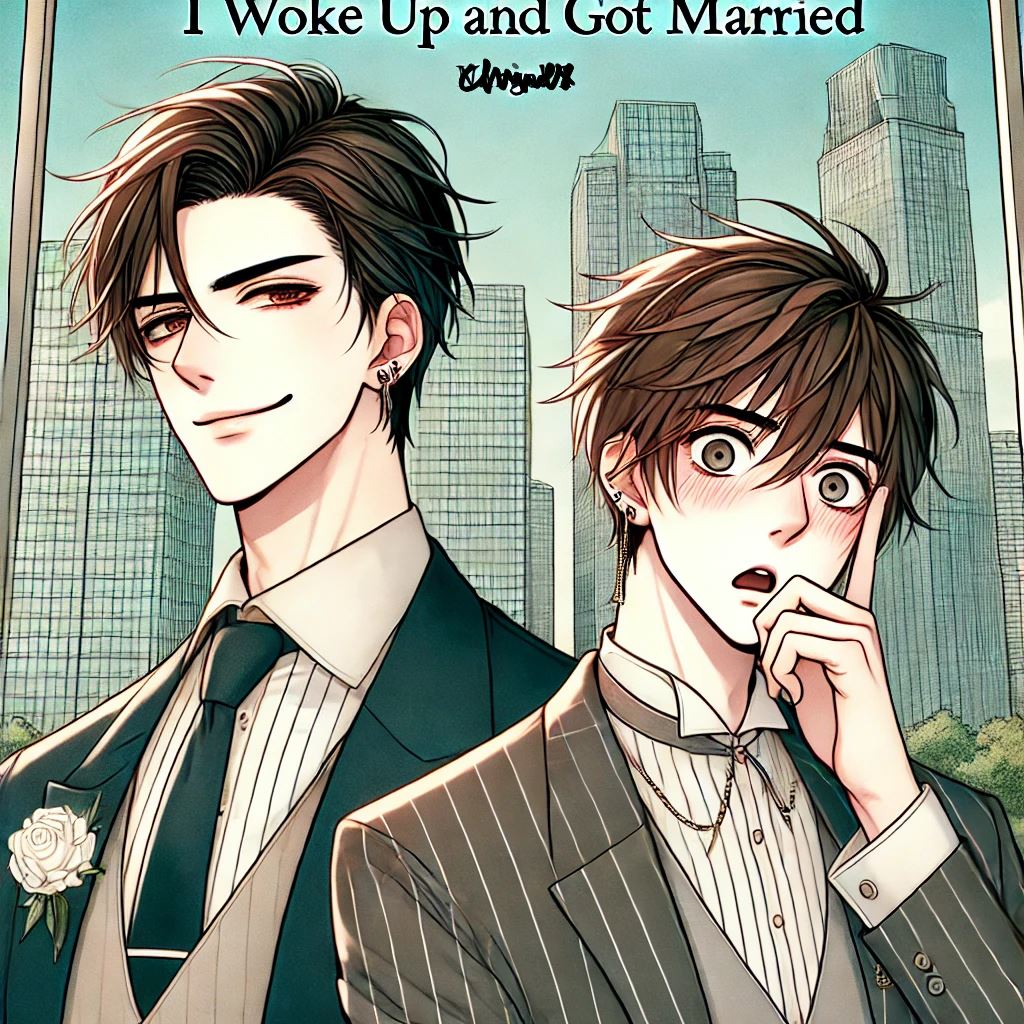
... Read More
Let me just say — the way the plot unfolded in these chapters is absolutely deliciously layered. We open with our protagonist waking up from a three-month coma with amnesia, which by itself is enough drama for most books, but no — the author keeps throwing grenades. First hit: he discovers he got married. A whole year ago! To someone he apparently despised since childhood. The sheer audacity of finding out you're married and your previous self was apparently obsessed with your spouse? I love it. The cognitive dissonance Chi Suinian is experiencing is painfully funny — he genuinely questions whether he was "possessed by an evil spirit" at some point. And honestly, given everything we've learned, the possession theory isn't too far off. But then comes the second bombshell that completely reframes the entire situation. The bankruptcy document Qin Suitian presents — "Chihao Group Bankruptcy Certificate." Chi Suinian thinks he's ruined, right? His family empire is gone. But wait — Lu Zhiyue saved the company with ten billion dollars. Not just invested, but personally bailed him out. Now they're financially intertwined. Any divorce causes market instability. So essentially, his husband has trapped him in this marriage through corporate leverage. That's a brilliant power play. And here's where I think the real plot twist hides — Qin Suitian isn't telling the whole truth. That "bankruptcy certificate" is apparently outdated. He slips it into his pocket when leaving. Why? Because he knows there's something more going on. And he deliberately doesn't mention Chi Suinian's amnesia when talking to him. This man is playing both sides, and I need to figure out which side he's actually on. The subplot threads here are connecting in ways that make me want to immediately turn the page. The auto show, the late-night encounter, the sudden personality flip — it all points to a manipulative game where nobody is being entirely honest.
... Read More
This chapter is a masterclass in controlled chaos. Chi Suinian storms out of Lu Zhiyue's house at 2am, then immediately regrets it by noon the next day — that's not just plot, that's character psychology in motion. The fake marriage contract is the perfect ticking time bomb. Every time Chi Suinian tries to burn it down, Lu Zhiyue just... doesn't care. The scene where Chi Suinian sells his cars and then turns around and refuses to sign is peak contradictory behavior. He's furious at being cornered, at his own desperation, and honestly? He's probably furious at himself most of all. The subtext here is thick — this whole financial crisis isn't just about money, it's about power dynamics in their relationship. Who holds the cards? Who needs who less? And the ending tease with Chi Suinian waiting at Lu Group's office while people gossip about him is setting up for a confrontation that's gonna explode. I'm genuinely invested now.
... Read More
The riding arena scenes are incredibly vivid. I could literally see the dust flying, hear the horses' hooves, feel the panic of the crowd. But what struck me most was the transition from chaos to stillness. Once Lu Zhiyue carries Chi Suinian out of the arena, they end up on this quiet mountain path. The text says 'The mountain path was quiet and empty.' Just two sentences, but the shift in atmosphere is enormous. You go from hundreds of people, screaming, horses galloping, the whole circus — to complete silence, just the two of them on a bench. The detail about Lu Zhiyue taking off Chi Suinian's shoe and resting his foot on his knee — this is such an intimate gesture played completely straight. There's no fanfare, no dramatic music, just this ordinary act of medical care that becomes somehow charged because of who's doing it and how. 'His fingers were long and clean. When he applied pressure, faint blue veins stood out. Those elegant hands slid down from the calf, finally stopping at the swollen ankle.' I swear the author wrote this scene specifically to make me lose my mind. The contrast between the public spectacle of the arena and this private, quiet moment on a bench creates such a beautiful emotional contrast. And then the three girls appearing at the end like some kind of Greek chorus is just the cherry on top.
... Read More
The setting in this batch is doing a lot of heavy lifting without ever feeling like the author is showing off. You've got this resort — private rooms, a combat shooting range, a restaurant area, staircases connecting different floors — and it immediately feels lived-in. The detail about Tang Jin being on the first floor 'because he's disabled, so he has no choice' is the kind of worldbuilding that makes a setting feel real without any descriptive passages at all. It's just practical, character-driven information that tells you everything you need to know. But the most striking spatial moment is the doorway scene. Chi Suinian pausing mid-step, tilting his head to listen through the wall, hearing Ye Xu's voice carry across the private room. The architecture of the resort becomes a narrative tool here — walls that are thin enough to overhear, corridors that cross paths unexpectedly. It creates this sense of a world where secrets aren't safe, where people are always one corner away from being heard. And then there's the detail about the shooting range — 'like real-life CS' with pro players available for hire who are 'basically human aimbots.' This isn't just flavor text. It establishes the social world of these characters: they're wealthy enough to book private resort experiences, they're young enough to treat combat simulation as entertainment, and there's a whole underground economy of hired players. It's a tiny window into a much larger world, and it's done in three sentences. The resort isn't just a backdrop — it's a pressure cooker where all these tensions are about to collide.
... Read More
The setting shifts are doing so much work in this passage. It starts at a hospital entrance—gloomy, clinical, people in medical distress or waiting for news. Then they step outside into the parking lot, and the atmosphere changes completely. Lu Zhiyue is standing there, handsome enough to draw blushes from passersby, which immediately signals that we're in a different social space now. This isn't a hospital anymore, this is Jin City elite territory. The author gives us this beautiful contrast between the warm scene Chi Suinian's companions were painting inside the hospital and the actual cold reality outside. 'The atmosphere at the parking lot entrance was gloomy, far from the harmonious scene that Chi Suinian and his companions portrayed.' That sentence does triple duty—establishing setting, mood, and the gap between perception and reality all in one. Then they move to the restaurant, which is described through Ding Zhouzhou's pitch: 'I know a nice Chinese restaurant nearby. The ingredients are fresh, and the place has a high spending threshold.' High spending threshold—that's the author telling us this is upper-class territory without needing to describe chandeliers or white tablecloths. The setting IS the character dynamics. Ding Xuxing picked somewhere expensive because he wanted to impress Lu Zhiyue, and Chi Suinian noticed immediately. The restaurant scene itself is brilliantly staged—everyone seated, food untouched, tension thick enough to cut. No one eats. That's the most powerful visual in the whole chapter.
... Read More
Lu Zhiyue's dialogue is absolutely unhinged and I'm here for it. 'I just took off my clothes and slept with my husband, how can you be shameless?' SHAMELESS? The audacity. The complete lack of self-awareness. And then the underwear reveal—raising his hand, fingertips hooking black fabric—like he's presenting evidence in court. 'I just wanted to say that you seemed to have thrown your underwear to me.' Oh, I threw it? Sorry not sorry, apparently. This man plays both victim AND prosecutor. Meanwhile Chi Suinian is all short, sharp bursts: 'Get out!' 'Shut up!' 'Say one more word and I'll tear your mouth apart!' The contrast is delicious. One speaks in flowing, calm sentences even when saying provocative things; the other stammers and yells and can barely form coherent arguments because he's physically compromised and emotionally overwhelmed. But here's what makes the dialogue work—it's not just different voices, it's different power positions. Lu Zhiyue controls the conversation by never taking it seriously. When Chi Suinian demands divorce, Lu Zhiyue just says 'No, the contract time has not expired.' Deadpan. Not angry, not pleading, just stating facts. And then he turns it around: 'You did it and don't want to take responsibility? What kind of scumbag are you?' SCUM BAG. This man inverted the entire moral framework so quickly I got whiplash. The dialogue isn't just character expression—it's combat. And Lu Zhiyue is winning.
... Read More
Let me just say this upfront: I was NOT prepared for the stakes in this section to escalate so fast. We go from 'oh, Cheng Song is annoying' to 'Chi Suiyan is dying in a hospital bed' in about fifteen pages, and I kept having to reread to make sure I wasn't misreading. The drinking contest itself is a masterpiece of misplaced confidence. Chi Suiyan proposes it - 'How about we play a different game?' - and Cheng Song thinks he's won because his friends are loud and numerous. But here's the thing: Chi Suiyan knew exactly what he was doing. He KNEW he couldn't handle ten glasses of hard liquor after a coma, and he did it anyway. Why? Because the information he needed was worth the risk, or because he couldn't think of any other way to get it, or because deep down he's been looking for an excuse to break. Cheng Song's desperation is almost worse. Six glasses in and he's 'hugging the trash can, vomiting without shame' but still tries to reach for his seventh glass because backing out in front of his friends isn't an option. This is what happens when masculinity becomes a performance - even self-harm becomes something to compete at. And Lu Zhiyue arrives like a force of nature. The text doesn't slow down at all - 'Before Xu Lingtao could finish, Lu Zhiyue was already striding out the door.' He doesn't ask questions. He doesn't prepare. He just moves. And when he finds Chi Suiyan 'unsteady and pale,' the author writes that it sent 'a flicker of frustration and concern through him.' A FLICKER. This man feels everything so quietly it barely registers as movement. The real stakes aren't about information or pride or winning. They're about survival. The doctor's reprimand lands like a judge's gavel: 'This behavior will harm him.' And the final image of Lu Zhiyue watching Chi Suiyan sleep, and Chi Suiyan 'suddenly grabbing his hand and holding on tightly' - that grip is everything. It's not gratitude. It's not love. It's something more urgent and more terrified. Someone is holding on because they don't want to be alone when they wake up.
... Read More
Let's talk about dialogue, because this author writes characters who actually SOUND different and that's so rare. Tang Jin's voice is instantly recognizable. From his very first line—"Man, after seeing so many women, I had no idea the rehab department had so many pretty girls. Tsk."—you know exactly who he is. He's the comic relief best friend who's slightly unhinged but genuinely cares. His dialogue is full of casual interjections, interruptions, physical comedy embedded in speech. "What does this have to do with being shameless? I'm genuinely appreciating beauty." He says things like he's thinking out loud, which makes him feel incredibly real. Even his chip-eating is woven into his dialogue: "mumbled through a full mouth" and tossing the empty bag into the trash can while still talking. This is how actual friends talk. It's messy and overlapping and full of non sequiturs. Then there's Chi Suinian, whose voice is sharp, curt, internally verbose but externally restrained. "You have no shame." "Shut up. What nonsense are you spouting?" Short sentences. Raspy voice (which the author cleverly uses to differentiate his dialogue from before the accident). Even his internal monologue has a distinct flavor—analytical, sarcastic, prone to dramatic exaggeration ("What year do you think it is?" "…??? What kind of horror story was this?"). Lu Zhiyue gets the fewest lines but each one is perfectly calibrated. "You're awake." Four words. Cold. Final. The assistant's single line—"Madam, you've finally woken up"—is even more effective because of how flatly delivered it is. The humor comes from the contrast between the assistant's professional calm and the absolute chaos of what that word implies. The banter between Chi Suinian and Tang Jin about the marriage situation is genuinely funny: "I don't know why you two even got married. You keep fighting, and one of you is bound to end up a widower…" followed by Chi Suinian's feeble spoon-throwing attempt. The author uses dialogue not just to convey information but to build character dynamics in real time. Every exchange reveals something about power, intimacy, and history between these characters. Also worth noting: the translation reads so naturally that you almost forget it's translated. The rhythm of the conversations feels native, not stiff or overly formal.

Leave a comment

You must be logged in to leave comments. or
