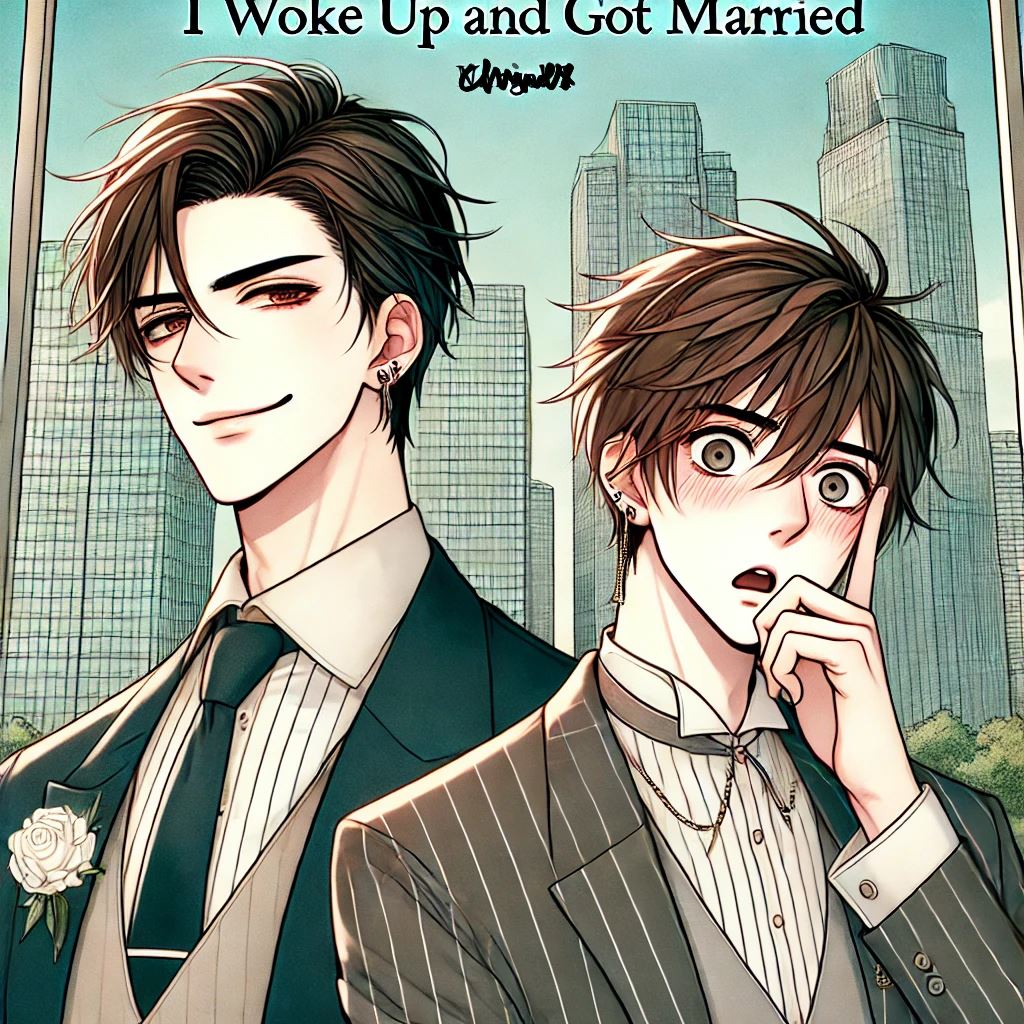
The dialogue in these chapters is so distinct it's almost musical. First off, the friend group banter at the start sets the tone perfectly. Lu Heng's flailing excuse and Tang Jin's deadpan delivery establish this weird, loyal, chaotic trio energy immediately. You know these guys before the main plot even hits. But then Chi Suinian's voice clicks into place, and it's pure, uncut ice. His line to Lu Zhiyue after the movie—'What are you laughing at?'—is deceptively simple. On the surface, it's just a grumpy boyfriend complaint. But read it again. He's been caught with disheveled lips in a place with surveillance cameras, by his emotionally constipated best friend, and his first instinct is to attack the laugher. It's so him. And Lu Zhiyue's responses? Masterful. 'You look handsome even with the mask on.' Smooth. Devastating. He knows exactly how to unbalance Chi Suinian. And then the public lip-rubbing scene, the dialogue is so economical it aches. 'Happy?' 'Barely.' That's it. Two words each. It says so much about their dynamic: Chi Suinian demanding satisfaction, Lu Zhiyue offering exactly what's asked, and both of them perfectly content with this bizarre, public intimacy. It's their love language, rendered in staccato bursts. When Chi Kaidong shows up, his voice is immediately recognizable. That polished, fake warmth. 'Nothing, really. Just haven't seen you these past few days and got worried.' It's dripping with manipulative honey. Chi Suinian's counter is razor-sharp: 'I grew up without one. Don't know him.' Chilling. Flat. Final. And Lu Zhiyue? He doesn't even address Chi Kaidong directly. He looks at Chi Suinian and says, 'Funny—I don't recall you ever mentioning you had a father.' That's not dialogue for the father; that's dialogue for Chi Suinian. It's a shield, a weapon, and a declaration of solidarity, all in one sentence. The woman in red, too—her lines are all about status and pragmatism. 'President Lu? You really didn't know?' And her swift exit, 'Save it. Don't ever contact me again,' is so perfectly in character. She's there for the money, and when it looks like it's drying up, she's out. The narrative voice itself is a joy. It dips in and out of Chi Suinian's head without ever getting messy, catching his dry observations ('Which genius came up with that idea?') and his sharper, more vulnerable thoughts in equal measure. The humor is dry, the tension is thick, and every character's speech pattern is locked in tight. I'm here for it.