I Woke Up and Got Married - Reviews

I Woke Up and Got Married
+Add to Custom List
Sort
Add review
... Read More
Let's map out what's actually at stake here because this is getting dangerously close to suffocating. On the surface: Chi Suinian is trapped in a high-walled mansion, recovering from a life-threatening injury, with Lu Zhiyue as his caretaker-captor. Tang Jin and Lu Heng try to rescue him and fail spectacularly — Tang Jin sprains his ankle and now there's a third person potentially in danger. The stakes just expanded from one imprisoned person to three. But then you peel back the layer about Dr. Zhao. Was the original diagnosis at Jincheng City Hospital legitimate or engineered? If Chi Suinian's amnesia was manufactured or exploited, then his entire sense of self — his memories, his identity, his trust in medical professionals — is built on a lie. That's not just physical imprisonment, that's psychological erasure. And the worst part? Chi Suinian himself is starting to doubt whether his suspicions are valid. "Maybe it's just paranoia" — said the character whose paranoia is clearly well-founded. That internal conflict between trusting your instincts and doubting your own mind is where the real tension lives. Meanwhile Lu Zhiyue is sitting right there, touching Chi Suinian, watching him with this unreadable calm, while Tang Jin and Lu Heng are literally watching from across the room unable to intervene because the power dynamic is so overwhelmingly one-sided. Every scene is stacking new layers of consequence on top of each other and I am absolutely not okay with this.
... Read More
Let me just say: the scene transitions in this chapter are immaculate. We go from an intimately tense bedroom moment—where Lu Zhiyue is literally kneeling to help Chi Suinian put on shoes—to the next day's breakfast table where the air is colder than liquid nitrogen. Then straight to Tang Jin's resort, then the hot spring pool, then a phone call, then back to flowers and memory. The author doesn't waste a single second. Even the Lu Heng awkward voice crack on the phone—"Ahem… why don't you both quit the game and then continue talking?"—that's not filler, that's PACING. It's the narrative hitting the brakes on a scene that's gotten too hot, letting us exhale before launching into the next emotional beat. But here's what really works: the flower scene. Chi Suinian sees balloon flowers at the resort, and suddenly we're in memory lane. The transition from present to past is seamless. Half a year. Seventh grade. The timeline clicks into place like a puzzle piece we didn't know was missing. The hot spring scene is where the pacing slows down deliberately. We linger on Chi Suinian sinking into the water, on the mist, on the phone vibrating. It's a quiet moment before the emotional bomb drops—Qin Sui Tian's call about the double payment. And then immediately after, we're left with Chi Suinian's irritated frustration, and the lingering thought: he's still thinking about those flowers. This chapter moves like a thriller disguised as a romance. Every transition is charged. Every silence means something. The author knows exactly when to speed up (breakfast argument) and when to stretch time (the hot spring, the phone call ending). Masterclass pacing.
... Read More
Okay so I NEED to talk about this bathroom scene because it is SO much of an atmosphere game. Like, read this: "The room was silent, the windows were open, and the air was fresh. The only sound was the faint noise of running water from the bathroom." And then "the bathroom walls were semi-transparent. From Chi Suinian's angle, he could vaguely make out a flesh-colored silhouette behind the glass." That's it. That's all you need. The author doesn't even describe Lu Zhiyue fully — just a silhouette through mist. But somehow it hits harder than if it had been explicit. The author really understands that what you imply is more dangerous than what you show. And then the steam comes out when the door opens, and we get "warm skin, damp kisses, burning breaths against his ear" — a flood of sensory memory that crashes into Chi Suinian like a landslide. The whole scene is built on temperature and texture: warm steam, pinewood scent in the air, the cool shock of realization. Every detail is doing double duty as both setting and emotion. By the time Lu Zhiyue says "Come in and talk," the room itself has become an extension of the tension between them. I swear the author knew exactly what they were doing every single step of the way.
... Read More
Can we just appreciate how the author uses sensory detail to turn a bedroom scene into something cinematic? Let me start with the dining room — faint scent of alcohol mixed with pleasant cherry fragrance floating through the air. That's it. Two sensory notes and suddenly I'm standing in that room. I can smell it. The alcohol is heavy and sharp, but the cherries soften it, make it almost romantic in a way that feels unintentional on Lu Zhiyue's part. The villa itself feels like a character. Uncle Zhang pacing at the door, the empty first floor, the dining room corner where Lu Zhiyue sits isolated despite being surrounded by people who all chose to leave. There's this profound loneliness to the scene that contrasts with how crowded it could have been. Five people in the house, none of them staying. Then the bedroom — second floor, the blanket being pulled over, the physical exertion of carrying someone you're clearly frustrated with but refuse to abandon. The author never describes the room directly, and that's perfect. We don't need wallpaper patterns when the emotional geography is this precise. Qin Suitian's apartment was warm and domestic with its five dishes and one soup, Ning Chen's cooking filling the space. The Lu villa is cold and酒精-scented, full of people who know too much but say nothing. These two homes are mirrors of the two relationships in Chi Suinian's life — one chosen and easy, one complicated and inescapable.
... Read More
'After getting cursed out like that, his mood must've been horrible. She wasn't about to get caught in the crossfire.' — and then Jiang Ying sees Lu Zhiyue smiling. Like, actually smiling. Faint but unmistakable. I literally dropped my phone. This man just got hung up on, treated completely coldly, and he's sitting there unable to focus on work because he's too busy being delighted. That's not romance—that's obsession dressed up as sophistication. And then he calls his friend Xu Lingtang and says 'Chi Suinian probably likes me' and Xu Lingtang is just sitting there processing that his friend went from business elite to wedding-planning mode in approximately thirty seconds. The CP chemistry here isn't in grand gestures or sweet moments. It's in the quiet devastation of Lu Zhiyue's happiness being contingent on a maybe. He doesn't know for certain. He's operating on 'probably likes' and building a fantasy wedding in his head. That's either the sweetest thing I've ever read or the most terrifying, and I can't decide which. Meanwhile Chi Suinian is over there genuinely distressed about his conflict, running from the calls, composing his face to look bad on purpose because 'it'd be better if he looked awful—Lu Zhiyue might finally get lost for good.' The fact that he THOUGHT that, that he considered it, means something already shifted.
... Read More
Lu Zhiyue's dialogue is so good it's actually insulting. The man doesn't even try to be smooth - he just talks and talks and slowly corners Chi Suinian until there's nowhere left to run. "It's not time to leave yet. Where are you going?" - simple, direct, already establishing that he's going to interfere. "The next class is with the head teacher. She'll take attendance. The consequences of skipping class are serious." - this is the tone of someone who knows exactly what they're doing but frames it as concern. And then the whole cafeteria exchange: "Don't like celery?" "Carrots are good for your eyes, and you won't eat those either? A bit picky, huh... Chicken legs are good, you're not getting them?" He's going through the entire menu like he's conducting an inspection. Then he just adds a braised chicken leg to Chi Suinian's tray and says "I'm treating you, no need to thank me." And when Chi Suinian tries to push it back, Lu Zhiyue just laughs and puts it right back. "Can't be picky." "Look at how skinny you are. You need to eat more meat to build up." What I love about their dialogue is how Chi Suinian's voice is shorter, sharper, more contained. His responses are mostly one-word bursts - "Move." "What are you doing?" "No thanks." "Mind your own business!" He's trying to shut things down. Lu Zhiyue keeps the conversation going. That contrast creates this whole dynamic where Chi Suinian feels like he's drowning in words he didn't ask for. And then the ultimate moment - "You're always following me, making noise everywhere I go, can't shake you off... Lu Zhiyue, are you in love with me or something?" It's everything Chi Suinian has been holding in, compressed into one explosive line. Perfect.
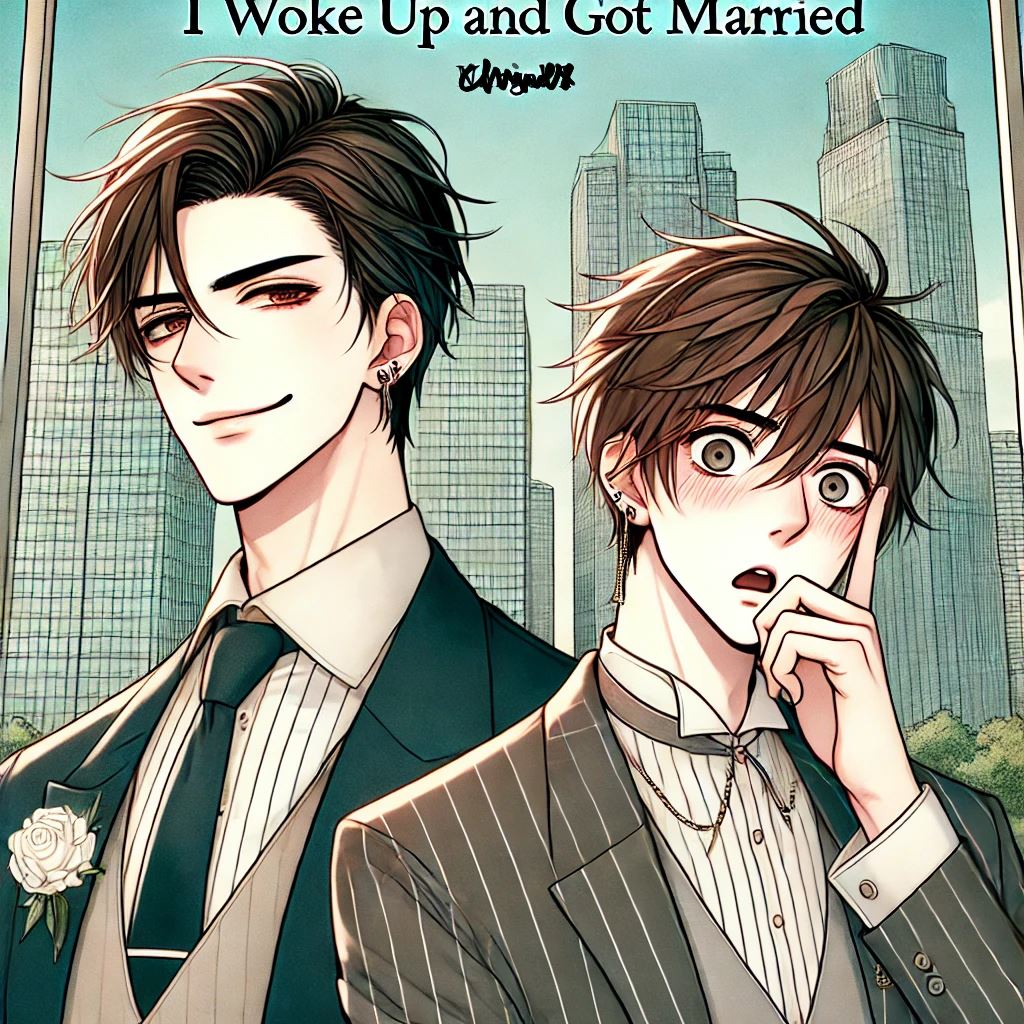
... Read More
I keep coming back to the flower order and what it represents. Green lisianthus - I looked this up because the detail mattered. In flower language, lisianthus represents gratitude, appreciation, and eloquence. The green variety adds meanings of new beginnings and abundance. For Lu Zhiyue, this ice-man who struggles to express anything warm, to ORDER flowers for his husband feels like a seismic event. But here's what's haunting me: he doesn't know WHY he's ordering them. Or rather, he knows the practical reason - 'given that Mr. Chi hadn't been angry with him this afternoon despite the earlier drama, their relationship seemed to have softened.' The flowers aren't about romance; they're about strategy. They're a peace offering wrapped in petals. And yet - and this is the twist - the act itself IS romantic, even if his motivation is transactional. Because someone who has never shown warmth suddenly trying to show it, even clumsily, even instrumentally... that counts. The coma is another symbol I can't shake. Chi Suiyan just woke up. His body is still recovering. And he immediately chooses to confront someone who wanted him dead or at least very uncomfortable. The self-destruction isn't just recklessness - it's a pattern. He hurts himself before anyone else can. And then there's the trash can. Cheng Song vomiting into it while his friends cheer. Chi Suiyan's body betraying him after ten glasses. The hospital bed. All of these images of the body failing, of vulnerability made visible, of people reduced to their physical limits - it's a recurring motif that keeps pulling at me. What does it mean to be weak in a world that rewards strength?
... Read More
Let's talk about Lu Zhiyue because this man is a menace and I need everyone to understand that. The waist grab. The hand twist he refuses to let go of. Grinding his own fingers while smiling like nothing's wrong. 'Hold still. Everyone's watching.' BRO. He heard the threat, he acknowledged the pain, and he chose to ignore both. This is not romance, this is a hostage situation with better lighting. But here's the thing — when Chi Suinian twisted his hand and got no reaction, the power dynamic shifted. Lu Zhiyue expected submission, got defiance, and for a split second I think even HE was surprised. The silence after Chi Suinian says 'you don't want this hand do you' is deafening. And then the heel drop. The absolute audacity to stomp on someone's foot mid-crisis and still maintain composure. Their whole interaction is this weird push-pull where neither will blink first. Meanwhile Tang Jin walks in, sees Lu Zhiyue's disheveled state, and immediately asks if he's sick. The man looks like he went twelve rounds with a ceiling fan and Tang Jin's first instinct is medical concern. The friendship between Chi Suinian and Tang Jin is genuinely sweet though — 'you look awful' delivered with actual worry underneath the snark. And Chi Mingyao calling Chi Suinian 'heartless' while defending the son who allegedly did drugs? The irony is so thick you could cut it with a knife. Family loyalty is a funny thing when the facts don't support it.
... Read More
Can we talk about how Chi Suinian actually RETRIEVED the lilies and took them home instead of throwing them away?? That is a character moment of the highest order. He pretends it's to show Uncle Zhang and the others, but come ON. He kept the ugly flowers. Meanwhile, the whole friend group dynamic is so well-drawn. Tang Jin is the chaotic best friend who nearly drove into a river and is obsessed with drifting, Lu Heng is the sharp-tongued but deeply caring one who shows up with sunflowers and immediately roasts the lilies. And Lin Qi—sweet Lin Qi who gets a red envelope and a month of paid leave from Lu Zhiyue, the ultimate good employee outcome. But the real chemistry gold is between Chi Suinian and Lu Zhiyue. Lu Zhiyue says he already started pursuing him and Chi Suinian is visibly flustered in front of their friends. The embarrassment is palpable. And then Yuan An appears and Chi Suinian feels GUILT looking at Lu Zhiyue? That line hit different. These relationships are layered and messy and I'm here for it.
... Read More
Something keeps coming back to me throughout this chapter and it's COLARS. Or rather—the COLLAR. The way Chi Suinian instinctively tugs it up, the way it slips down to reveal the marks, the way Lu Zhiyue grabs it during the confrontation. The shirt itself becomes this symbol of everything he's trying to hide and everything he can't. Those two kiss marks on his neck aren't just evidence of intimacy—they're visible proof of ownership, of vulnerability, of a body that was touched while he was defenseless. Chi Suinian's first reaction isn't romantic, it's suspicious: "Just how many liberties had Lu Zhiyue taken while he was asleep?" He doesn't trust that his own body was treated gently in his moment of weakness. And the shirt that won't stay buttoned? That's basically the whole relationship in fabric form. Chi Suinian tries to cover up, to maintain control, to present a composed front—but something keeps pulling it open, revealing what's underneath. Whether it's the marks or the truth about Lu Zhiyue's feelings, he can't keep it contained. Then there's the cold water that doesn't cool him down. The heat that won't leave. His body betraying him even as his mind tries to stay rational. The physical and the emotional are constantly tangled here. But the deepest symbol might be the marriage itself. Qin Suitian talks about binding Ning Chen with a contract because he can't rest easy otherwise. And Chi Suinian is left wondering—was his own marriage just another contract, another performance? Or is there something real beneath all those years of careful lies and half-truths? The book seems to be asking: what does commitment look like when trust is broken? Can you rebuild something when the foundation was built on a story that wasn't true?
... Read More
I keep coming back to how the physical space in this chapter mirrors the power struggle happening inside it. The author really understood that setting IS story. Let me paint this for you: Chihao on this particular day. Employees whispering in break rooms, scattering like cockroaches when Qin Suitian walks by, the guy who was gossiping about Suinian's 'bad temper' turning pale. This is a corporation where the leadership vacuum creates a pressure cooker atmosphere. Everyone knows something is shifting. The walls have ears and the ears are terrified. Then the conference room itself — door not fully closed, two muffled voices inside, the anticipation building before Suinian literally kicks it open. The sound. The shock. The hot tea splashing on Chi Kaidong's gray suit. These details matter because they ground the emotional violence in something physical and real. You can HEAR the teacup shatter. You can SEE the tea staining that expensive fabric. And the contrast between the cold, corporate exterior — shareholder meetings, board positions, Wall Street heavyweights — and the raw, personal brutality happening behind closed doors. That's where the atmosphere gets dangerous. This isn't just a business dispute. It's a family massacre happening in a company that doesn't even know its own name is being used as ammunition. The author builds this world where every whisper in the hallway and every closed door carries weight. You feel the tension in the air like humidity before a storm.
... Read More
I need to talk about the opening scene because WOW. The author wrote something so simple but so tender that I immediately melted. Lu Zhiyue adjusts the AC from 23 to 16 degrees, Chi Suinian shivers and rolls toward him for warmth, and Lu Zhiyue just wraps his arms around him and goes back to sleep. That's it. That's the whole scene. But the intimacy of it! The domesticity! The way Lu Zhiyue is so satisfied just holding him? And then later when Chi Suinian is pretending to be Lu Zhiyue's assistant to avoid awkwardness with Uncle Pang, you can almost see Lu Zhiyue's internal reaction. He froze for a second! The reader knows exactly what he's thinking. And Chi Suinian internally panicking about nearly biting his tongue - the unspoken communication between them is everything. Lin Weixing's perspective adds such a painful contrast. He hasn't slept all night thinking about Chi Suinian, bringing him breakfast like some nervous teenager. Meanwhile Lu Zhiyue just... exists in Chi Suinian's personal space like he has every right to be there. Because he does. The possessiveness isn't aggressive here, it's just... natural. Like breathing.

Leave a comment

You must be logged in to leave comments. or
