I Want to Walk Through Your Abyss - Reviews

I Want to Walk Through Your Abyss
+Add to Custom List
Sort
Add review
... Read More
I literally could not breathe when D'Hiver said "don't cry" before kissing her. HOW is that not manipulation on a goddamn masterclass level? She just broke down sobbing about losing everyone she's ever loved and his first instinct is to shut it down with a kiss like she's a toddler having a tantrum. And then he goes and whispers something so tender during sex: "If I am the reason you live… then you become the reason I live as well." My stomach just dropped through the floor. But here's what absolutely destroyed me — the morning after. He didn't sleep at all. Just lay there watching her like he was memorizing every second. "As one of the most special moments of my countless nights." Countless nights. He's been alive for centuries and THIS moment is what he'll hold onto. That is simultaneously the sweetest and most horrifying thing I have ever read. He means it genuinely — and that's what makes it so toxic. He's not lying about loving her. He's lying about everything else. And then the dream sequence with Blanche and Suki just layered on top of ALL of it. She reaches for them, feels NOTHING because they're dead, and keeps asking "why did you close your eyes so soon?" Meanwhile D'Hiver is planning to do the exact same thing. The parallel hit me like a truck.
... Read More
This flashback absolutely wrecked me. I need to talk about it before I lose my mind. Violette's fear of thunder isn't some randomly assigned character quirk—the author spent several paragraphs building this whole childhood memory, and every single detail lands like a hammer. Seven years old. Her sister Blanche collapses. Violette searches the entire estate for medicine and ends up trapped in a basement. The door shuts. Darkness. Thunder roaring. She screams and pounds on the door and NO ONE COMES. Their voices are right outside—"Didn't you hear something?" "Hear what?" "I thought I heard a voice from inside…" "That's impossible. Who would even come all the way here?" Their voices faded away. THAT line broke me. She was eight feet from salvation and they just… walked away. And then her father shows up and calls her ungrateful. Ungrateful. For trying to save her sister. For almost dying in a dark basement. This is the origin of everything. This is why she fears solitude. This is why she clings to D'hiver. This is why the pact exists. Every behavior she displays now—the dependency, the inability to leave, the twisted gratitude mixed with resentment—it all traces back to that basement door closing and the voices walking away. And the worst part? D'hiver doesn't know any of this. She literally says "It was something I had never even told D'hiver." She carries this whole traumatic core alone while being held captive by the man she believes is her only salvation. The stakes here aren't just about whether she escapes. They're about whether she can ever separate survival from genuine connection. If the person who freed her from one form of abandonment is the same person creating another, what does that make her love for him? Is it real or just trauma bonding dressed up as romance?
... Read More
I need to talk about D'Hiver Keith because this man is a whole ecosystem of contradictions and I am obsessed. On one hand: he showed up on a cliff to a thirteen-year-old girl who was literally considering hanging herself. He gave her a reason to live. He protected her, raised her, became an archmage under his guidance, proposed, married her, and told her she was his first and last love. That is genuinely sweet. Like, genuinely. The way he holds her, the way his composure cracks when she touches his hair—this man who has lived for centuries, who is feared and revered as a monster, melts completely for her. That warmth is real. On the other hand: he keeps a forbidden room in his castle. He WARNED her about it with this expression I quote: "For the first time, D'Hiver wore an unfamiliar expression. As if troubled." Troubled. Not scared. Not angry. TROUBLED. Like he was afraid she'd find out something he couldn't control. And then he literally left her alone in that castle for FIVE YEARS and came back to her bedroom in the middle of the night. Mid-life—mid-ETERNITY crisis energy, honestly. But the real gem is their dynamic. Violette is codependent as hell and she KNOWS it. "Having lost the pillar of my life, and with even my father turning his back on me, I had no room left for doubt. I could only take the hand he offered—without question." That line hit me like a truck. She has no sense of self outside of him, and he—for all his gentleness—is the center of her entire world. Is this love? Or is it survival? The book seems to be asking that exact question without answering it. And then there's the sword scene. She doesn't even hesitate when she hears the voice. Instinctively, she walks into the forbidden room. The sword CALLS to her. After everything D'Hiver taught her, everything she's built with him—her destiny pulls her toward something else entirely. I'm already worried.
... Read More
Let me just sit with this imagery for a second because it's everywhere and I can't unsee it. The garden. In the present it's barren—just like Violette's relationship with her family. Dead. But in the past, before she was born, it's full of pink blooms. Her mother sits among them. Happy. Hopeful. The garden mirrors her mother's timeline—alive while she was alive, dead after. And the name. VIOLETTE. The flower she's named after. But her father calls it "Violette" with distaste. He named her after something beautiful and then treated her like poison. The flower was supposed to be a promise and became an insult. Then there's the sword—Teslai. A weapon. Something designed to cut, to kill, to separate. But instead of offering her violence, it offers her understanding. It asks questions instead of giving answers. The sword becomes a confessor. Is that on purpose? The ultimate tool of destruction showing her the truth about what destruction actually costs? And the clocks. Time literally reversing. Every moment of her life leading back to a single choice her mother made—to have her despite knowing it would kill her. Her father's words: "Hatred lasts longer than love." And Violette's response: "It turns into resentment. And it never ends." That's the thematic core right there. Love fades. But hate? Hate metabolizes. It feeds on itself. And Violette has been feeding it for her entire life. The question the book keeps asking—without ever stating it outright—is whether resentment is a prison or a compass. Right now she's using it as both.
... Read More
Let's talk about dialogue because honestly, the voices in this section are doing so much heavy lifting. D'hiver's voice is the most distinctive, and that's terrifying in itself. Throughout this entire exchange, his tone never really shifts. When he says "You turned back time, didn't you?" about Violette's monumental act, he's almost bored. When he tells her "They abused you" with casual dismissiveness, it's the same voice as when he was being intimate. This consistency is deliberate — the author is telling us that D'hiver doesn't have emotional range. He has performance. The gentleness was never real; it was always just... a setting. Compare that to Teslai: "Your position is... rather special." Deadpan. Clinical. The pauses feel like actual thinking, not manipulation. When he leans in and whispers "Then become a transcendent being," it's offered as practical advice, not temptation. That's the voice of something that doesn't understand human weakness. And Violette's dialogue shifts dramatically across this section. At first she's fragmented — "What am I to you?" — barely coherent questions. Then she becomes sharp and accusatory: "What you've done to me—does that mean nothing? In your eyes, this isn't abuse?" By the end, she's reduced to childlike repetition: "D'hiver... D'hiver, D'hiver..." The author uses her speech patterns to show her regression, her loss of agency, her desperate climb back toward dependency. The line that stuck with me: "Meaningless resistance will only harm you. I don't want that." He says this while being the source of all harm. The self-awareness of his own toxicity is what makes his dialogue so chilling — he knows exactly what he is, and he's okay with it. There's no delusion. No romantic tragic hero delusions. Just pure, unvarnished selfishness wrapped in beautiful words. And that's the author's genius here: the dialogue doesn't lie, but it also doesn't tell the whole truth. D'hiver is literally telling us who he is. He's just making sure she likes the answer.
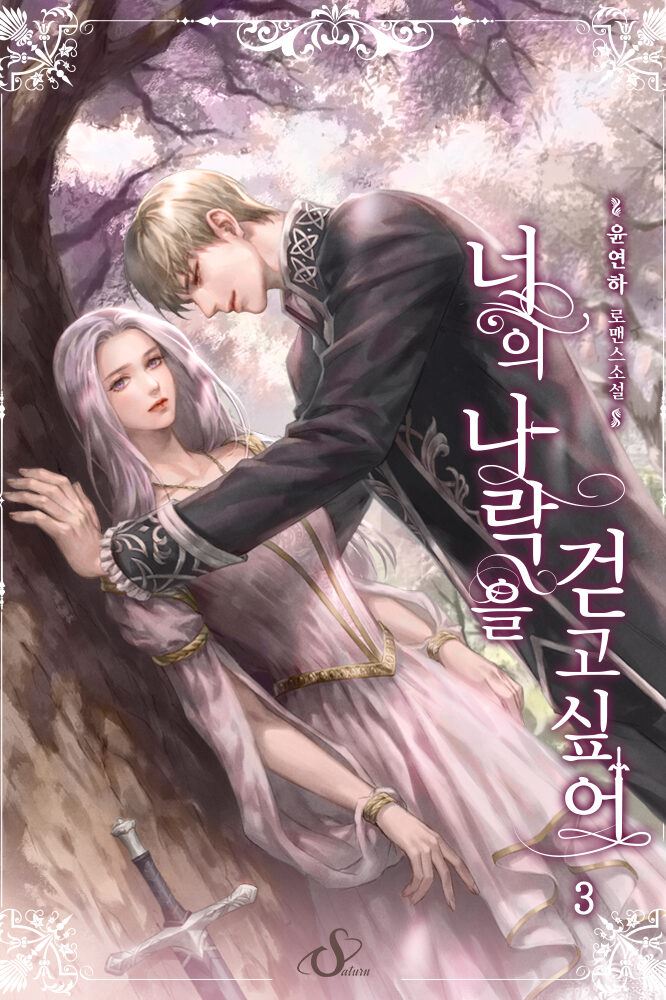
... Read More
Let's talk about how D'Hiver speaks versus how everyone else does, because the contrast is deliberate and it cuts. Everyone around him is loud. Violette screams. Her father spits. Teslai echo. Even her mother's quiet moments have tremors and unspoken words. But D'Hiver? He doesn't raise his voice at all. His lines are short. Calm. Almost bored. "Don't." "Let's go back." "You still don't understand?" "The only place you belong... is by my side." It's not confidence. It's something worse. It's certainty so complete that he doesn't feel the need to perform it. Every other character is fighting to be heard. He doesn't need to. And then there's the father—Roland. His dialogue is all performance. "I swore I would cherish you no matter what." "I could even make a vow." These are the words of a man who understands that language is a weapon and uses it accordingly. The tragedy is that Violette almost believed him. Almost. Once. A long time ago. But the most interesting voice in this passage is Teslai's. Not because it's fancy—it's the opposite. Clinical. Questioning. It doesn't tell Violette what to feel. It asks her to find out for herself. "Why not find out for yourself whether your family truly abandoned you?" That's not manipulation. That's actually respect. And that's somehow more dangerous than any threat. The author uses dialogue like a fingerprint. You can tell who's speaking without seeing the name tag. That's craft.
... Read More
Let me lay out the stakes because they are NOT subtle and Irespect that. External conflict: obvious. There's a sword with a history tied to a fallen empire, a rebellion, and possibly the Seven Lords. D'Hiver is clearly connected to this history in a way he hasn't shared with Violette. The sword chose HER. Whatever comes next, she's in it. Internal conflict: this is where it gets GOOD. Violette has built her entire identity around D'Hiver—"he was the first person who ever said he would become something for me. That he would become the reason for my life." She has no self outside of him. And now the narrative is pulling her toward something ELSE. The sword isn't just an object—it's a call to purpose, to power, to a destiny that belongs to HER, not to him. That's the real conflict: can she become her own person without losing the love that sustained her? Can D'Hiver let her go without losing her? The suspense is maintained masterfully through omission. We know D'Hiver is hiding something. We know the forbidden room matters. We know the sword is significant. But the author refuses to connect the dots for us. Each chapter drops a new piece—the troubled expression, the five-year absence, the dying companions, the summoning voice—and we're left scrambling to assemble the picture. What I find most terrifying is that the author has made us FALL IN LOVE with this cozy, isolated romance. We WANT them to stay in that castle forever. And the book is systematically dismantling every安全保障. Suki is gone. The cat is gone. Now the sword is calling. What's left for Violette to lose? The answer, presumably, is everything. And that's exactly why I'm reading.
... Read More
Okay so. Teslai. This sword. It shows up, drops some cryptic nonsense about D'Hiver being right about something (which immediately sets my teeth on edge because I HATE when people validate the villain), and then—plot twist—it actually steers her toward the one thing that matters. Not revenge. Not death. Looking back at her origin. The structure here is so deliberate. First the pact revelation (we already knew about the marriage vow but seeing it framed as a literal tether to D'Hiver's side of time), then the father reveal through the time travel scene, then D'Hiver himself physically appearing to stop her. Each beat escalates. The chapter isn't just hitting one high note—it's stacking them. And the way it ends with her saying "I hate you" to her father and D'Hiver walking in like he owns the place? Chef's kiss. That's not coincidence, that's the author saying the web is tightening. Also the detail about her mother knowing and choosing to have her anyway—that changes EVERYTHING about what we thought we knew. Her father hid the message. He's been curating her ignorance this whole time. The plot just handed me a loaded gun.
... Read More
Okay so this scene where D'hiver brings Violette food she's allergic to and literally watches her choke? I have SO many thoughts. On the surface it looks like pure sadism, right? But then he actually panics—"Vivi!" he shouts, and his eyes show "a mixture of panic and worry." So is he truly incapable of caring, or does he care so badly he doesn't know how to express it except through control? The fact that he brought food AT ALL shows he thought about what she might want, even if he completely botched it. That's not nothing. But then here's what gets me—when she offers to eat the crab deliberately to prove a point, he's caught completely off guard. This isn't some villain who anticipated every move. This is a man who has shaped her for so long that he genuinely couldn't predict she'd rather die than play along. And her line after: "What exactly are you expecting me to eat?" followed by him saying "The Violette Keith I know wouldn't just sit still like this." He wanted rebellion. He wanted her to fight him. And when she finally does fight—by weaponizing her own allergy—he didn't have a single countermove. The tragedy is that he probably didn't even realize what he was doing until it was too late. She held out one hand, offered one chance for him to stop, and he chose to push further. No wonder she ends the whole thing with "So don't ever speak to me of love again." That's not a dramatic threat. That's someone who looked at the person who claimed to love her and realized he'd rather watch her choke than admit he was wrong.

Leave a comment

You must be logged in to leave comments. or
