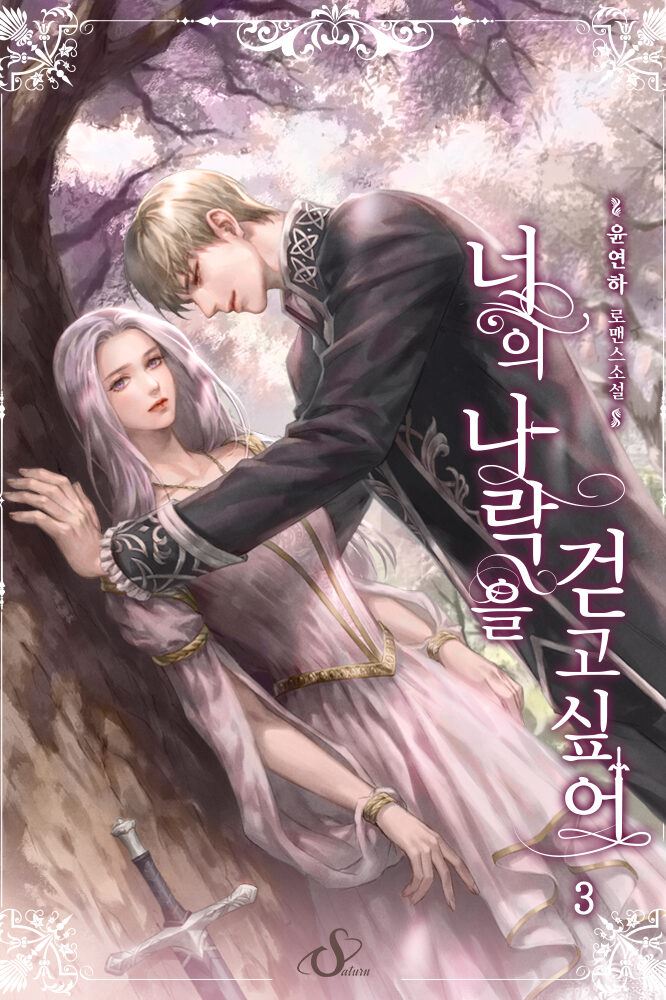
I Want to Walk Through Your Abyss
+Add to Custom List
Genres:
Novel Info
  • Author:
  • Status:Ongoing

Summary

... Read More

Violette Silcania was born into the distinguished Silcania family, a lineage of renowned magicians, but her birth was met not with joy but with grief. Her mother died giving birth to her, and her father, Roland, held the infant responsible for the loss of his beloved wife. Roland attempted to kill Violette in the delivery room, but was stopped only when Blanche, the mother’s nurse, threw herself in front of him. Blanche raised Violette in secret within the estate, providing the only love the child ever knew. However, Violette remained an outcast in her own home; her father viewed her as a cursed existence, and her older sister, Hermes, harbored a deep, festering hatred for her, believing Violette stole their mother’s life and all the love that should have been hers. After Blanche died when Violette was twelve, the girl was left utterly alone, her will to live extinguished by years of neglect and abuse.

On the anniversary of Blanche’s death, a thirteen-year-old Violette attempted suicide at the edge of the estate. She was stopped by a stranger, D’hiver Keith, the kingdom’s guardian and a being feared as a monster. D’hiver shared his own profound loneliness and promised to become the love Violette had been denied, urging her to live. When Violette questioned how she could live without the love she had just lost, he declared, "Then I’ll become your love." Later that year, royal envoys arrived demanding that the Silcania family send a daughter to be the next Psyche, a bride offered to the monster to maintain the kingdom’s protection. Fearing for his favored daughter Hermes, Roland chose Violette instead. Despite her protests, she was forced to leave, told by her sister that her existence was a sin and that she should be grateful to die in her place.

Violette traveled to D’hiver’s castle, expecting death as all previous Psyches had suffered. Instead, D’hiver appeared before her on the cliffside, fulfilling his promise. For five years, Violette lived in the castle, protected and cared for by D’hiver and an elderly maid named Suki, who had also been a Psyche decades prior. During this time, Violette grew from a broken child into a confident archmage, finding happiness she had never known. She formed a close friendship with Honoré, a messenger who visited the castle, and D’hiver eventually returned from his duties as guardian, reuniting with her. They married, and Violette believed she had found her eternal purpose in him.

However, the idyll was shattered when D’hiver led Violette to a forbidden underground chamber. There, a sentient divine sword named Teslai revealed the truth: D’hiver was the boy raised by the Divine Sovereign, Zesti, as a weapon for vengeance. After he killed the seven lords who betrayed Zesti, she cursed him with immortality, dooming him to watch everyone he loved die while he wandered alone forever. The sword revealed that Violette was the reincarnation of Zesti and the only being capable of killing D’hiver. D’hiver had sought her out not out of love, but because he desired death, manipulating Violette’s loneliness to raise her as a tool to end his eternal suffering.

Violette confronted D’hiver, who confessed that he had used her. He admitted that he wanted to die and had chosen her specifically because she was the one who could grant that wish. He claimed ownership over her, stating that while he could abandon her, she could not abandon him because he was the meaning of her life. Overwhelmed by the betrayal and the realization that her entire existence had been a lie, Violette fled into a violent storm. As a carriage approached, she deliberately stepped into its path, choosing death over a life built on deception. Just as she was struck down, she resolved to deny D’hiver his desired death, refusing to let him escape his cursed immortality through her sacrifice. The story ends with Violette lying broken and bleeding in the rain, having severed the bond of love that D’hiver had manipulated, leaving him alone once more with the eternity he had sought to escape.

Latest Release
DateGroupRelease
2026-10-03dusk blossoms c20
2026-10-03dusk blossoms c19
2026-10-03dusk blossoms c18
2026-10-03dusk blossoms c17
2026-10-03dusk blossoms c16
2026-10-03dusk blossoms c15
2026-10-03dusk blossoms c14
2026-10-03dusk blossoms c13
2026-10-03dusk blossoms c12
2026-10-03dusk blossoms c11
2026-10-03dusk blossoms c10
2026-10-03dusk blossoms c9

Community Reviews

Rating(0 / 5.0, 33votes)
5 stars
0(0%)
4 stars
0(0%)
3 stars
0(0%)
2 stars
0(0%)
1 stars
0(0%)

Popular reviews

... Read More
"Love and doubt cannot coexist. You chose to trust the words of that worthless piece of metal over me." I need to sit with this for a moment. The entire chapter is basically one massive emotional detonation, but this particular exchange between Vivi and D'hiver is the kind of thing that makes you stare at your ceiling at 3am. Let me just say — the way D'hiver frames it is absolutely devastating. He literally reduces their entire relationship to a binary choice: either trust him completely, or trust that sword. There's no room for her to be angry, to need context, to feel wounded. In his mind, her hurt is a betrayal of HIM. I'm genuinely shook. And then Vivi's response — she just quietly shakes her head and says she can't deny what he's done. No more screaming, no more tears. That shift from explosive grief to hollow silence is so much worse. It's the sound of someone's heart officially breaking. I loved how the narration described it: "the one being hurt in that moment... it was me." She hit her sister, sure, but it was her own soul that got scarred. The family dynamics are also doing a lot of heavy lifting here. Her father trembling, caught between his dead daughter's reflection and his living daughter who he clearly fears — and then Eri showing up looking exactly like mother, all golden hair and mocking smiles, and Vivi just... snapping. The slap felt earned in the worst way. There's something so tragic about Vivi finding pleasure in her sister's pain because it's the first time she's ever had any power in that house. But the real emotional gut-punch is at the end. "He didn't love me." It was obsession. That's the note the whole chapter ends on, and I am not okay.
... Read More
I need to stop and just appreciate how this book SOUNDS. Like, the narrative voice itself is a character. Violette's internal monologue has this haunting, almost dreamlike quality—her sentences often trail off, she repeats phrases for emphasis, she questions herself constantly. It reads like someone thinking out loud in the dark, which is perfectly appropriate because that's basically what the entire book feels like. Take this exchange with Suki, who is honestly my favorite character by virtue of existing: "W-W-Who are you?!" "That's a bit harsh. It's only been five years, have you already forgotten me? Don't tell me you've gone senile." COMEDY. Absolute comedy. D'Hiver—a being feared as a monster, a transcendent entity—gets scolded like a teenager who came home past curfew and his reaction is just… running a hand through his hair like "yeah okay, I hear you, Suki." The humor lands perfectly because it's so human in a story full of immortal beings. And the sword's voice? Completely different register. When it speaks, the prose shifts. Shorter sentences. More weight. "Violette Silcania. Yes… it has been a very long time since a child worthy of wielding me has appeared." There's this archaic formality to it, this distance that contrasts sharply with D'Hiver's intimate, breathy closeness. Two beings speaking to Violette in two entirely different languages—one as lover, one as something older. The author never lets the prose get pretentious though. Even in the most intense emotional moments, the language stays grounded in physical sensation: warm breath, rough skin, trembling lips, the texture of hair between fingers. That's what makes it work.
... Read More
I am not okay with how good the dialogue is in these chapters. Specifically—D'hiver's lines. The man cannot just say nice things and expect me to survive. Let me just re-read this one: 'I was wondering if you'd at least wipe your mouth.' 'There's no way I would...' 'Why not? You're pretty.' HE JUST FLIRTED WITH SUKI. He flirted with his elderly servant and made her turn the color of a tomato. And then he grabs Violette's hand and runs away LIKE HE'S COMMITTED A CRIME. The pacing of that entire exchange is comedy gold. The way Suki sputters 'You always say—no matter how crooked your mouth is, your words should be straight!' and D'hiver just... accepts he's wrong... it's hilarious and also him being genuinely charmed by her flustered reaction. But then it pivots to this: 'But you're even more beautiful than I imagined. I think I finally understand what it means to lose oneself at the sight of someone.' I need to sit down. He says that to Violette immediately after flirting with Suki. The man is dangerous. And the worst part? Violette melts for him every time. 'That fleeting smile—that atmosphere unique to him—was so captivating it felt as though it froze the air itself.' She literally writes that he's entrancing. She knows he's problematic and she still can't resist. Honoré's voice is such a nice contrast though. His lines are calm, warm, unhurried. 'If I gave you something, would you be that happy too?' He's testing something gently, not manipulating—just genuinely curious about her capacity for joy. And Violette's response 'having you by my side is the greatest gift' is so earnest it hurts now that he's dead. Suki's voice is the loudest of all—sharp, protective, theatrical. 'What kind of outsider man would dare—!' she starts and then cuts herself off because she literally can't finish that sentence. COMEDY.
... Read More
There's a line somewhere in here that I keep coming back to and it's the one about Suki dying. Let me find it. Yes: "Starting with her, everything that had once been with me began to disappear, one by one: Even the smallest things — the cat D'Hiver had given me and all the things that had become important in my life during the five years he was gone. In the end, only he and I remained in this vast world. But somehow, that was enough." But somehow it's NOT enough. Because the book is clearly building toward the opposite conclusion. The way the author writes loss—as gradual, quiet erosion rather than dramatic events—is devastating. Blanche left. Suki died. The cat died. Every person and thing that made Violette's world feel full is slowly being stripped away until all that's left is D'Hiver. And the terror of that isn't stated outright but it pulses through every paragraph like a heartbeat. The romantic moments are also painfully tender in a way that makes the underlying dread worse. His wedding night confession: "You're my first… and my last love. Until the day my life comes to an end." His lips on her chest, his voice trembling—this man who has existed for centuries, who has never needed anyone, is completely undone by her. And Violette's response is equally raw: "I may not be your first… but I want to be your last. At least for as long as I live." She's begging. She's literally begging him not to leave, not to die, not to go somewhere she can't follow. And then the author takes her INTO the forbidden room and introduces a sword that speaks to her like a god calling a pilgrim. The emotional whiplash is real. I loved them so much and now I'm terrified for them both.
... Read More
"In my world, you're all I need." "I want to be the only one in your world as well." These two lines bookend the entire conversation about love and they reveal everything. D'hiver's voice throughout this passage is so distinctly his—calm, manipulative, occasionally vulnerable but never quite admitting it. He says things like "You don't want this, you don't want that… Do you even know what this 'love' you're so desperate for is?" and you can almost hear him wearing that crooked smile. He's provoking her. He always provokes her. But then Violette—oh, Violette turns the knife herself. "At the very least—it's not what you're giving me." That's it. Three words that dismantle his entire worldview. She's not yelling. She's not crying. She's stating a fact with the kind of quiet clarity that makes a man who's spent centuries controlling every outcome suddenly have no words. And then the myth reference! "Love can't exist with doubt." She quotes a god of love abandoning Psyche back at him. This is a woman who has been reading between the lines her entire existence and has finally decided to write her own ending. The dialogue between them is never balanced, but it's NEVER boring. Every exchange moves the power dynamic a millimeter, and by the end of their conversation, the balance has completely shifted—even though physically she's still locked in his bed. The author's voice during the narrative passages is also worth noting. There's this clinical precision when describing intimate moments—"His crimson gaze moved slowly, as though licking over every part of me"—that creates this unsettling atmosphere. It's not glorifying the abuse. It's documenting it with the kind of raw honesty that makes you look away and then look back again.
... Read More
I just finished reading these chapters and I am emotionally compromised. The pacing here is absolutely ruthless and I love it. Let me trace the arc because it's so deliberate. We start small—Violette complaining about Blanc the cat preferring Honoré over her. This is everyday, domestic, almost sitcom energy. Then D'hiver shows up and the tone shifts. He gets closer, the intimacy builds, his hand starts bleeding, he pulls away. The tension spikes but it's still warm, still tender. 'I'll be with you until the day your life comes to an end.' That line is supposed to be romantic. It's supposed to be a promise. Then we cut to Honoré. Lighter. He's reading by a tree. They banter. She wears a beautiful dress he compliments. They press foreheads together. She feels happy. Truly, genuinely happy for the first time in the narrative. The chapter is practically glowing at this point. Then Suki appears and the mood darkens again. She drops these heavy revelations—fifty years, other Psyches died, you're special, don't go against him, live as though you are dead. The dialogue becomes urgent, almost panicked on her end. Violette doesn't fully understand yet, which is realistic—she's still in the sunshine phase. D'hiver re-enters and for a few paragraphs it's almost comedic. The lying, the flirting with Suki, running away hand-in-hand with Violette. It feels safe again. He says 'May all the time you have left be happy—without regret.' Such a beautiful line. Such a devastating line in retrospect. And then the very next line: 'But the very next morning, In the beautiful lake within the garden, my Honoré was found as a corpse.' ONE PARAGRAPH. One paragraph to go from the warmest moment in the entire book to absolute devastation. No transition. No warning. Just cut to black and then Suki bursting into her room screaming. The structural violence of that pacing is incredible. I physically gasped.
See all reviews

Custom lists

See all custom Lists