I Want to Walk Through Your Abyss - Reviews

I Want to Walk Through Your Abyss
+Add to Custom List
Sort
Add review
... Read More
THE STAKES HERE. Are you kidding me? Let's enumerate because my hands are literally shaking: 1. Violette could become a transcendent mage—more powerful than D'Hiver. But the cost? Her mother died in childbirth. The implication is clear: power like this has always demanded blood. 2. She confronts her father—a man who looked at her and saw only disgust. And for the first time she says it out loud: I hate you. Not because it'll hurt him. Because she finally believes it. But then D'Hiver appears and stops her. The father is the wound. D'Hiver is the bandage she refuses to wear. And she's standing in the doorway between them. 3. Teslai tells her she's not the only human who can reach transcendence. Which means D'Hiver might not be the only option. The sword is offering a third path. But D'Hiver won't let her look. 4. The message her mother left—hidden from her, curated by her father—contains something she chose to reveal only at the moment of death. What does that message say? What did she know that her father spent years preventing her from learning? Every scene in this passage raises the floor. There's nowhere to fall that isn't deeper. And the worst part? Violette knows it. She says it herself: the only place she belongs is by D'Hiver's side. She hates him. She wants to kill him. But she also has nowhere else to go. That's not a cliffhanger—that's a noose.
... Read More
Okay can we just talk about the BROKEN DOLL scene for a second because I am still not over it? She throws something at him in pure rage — probably the doll he gave her, right? — and it shatters on the floor. His reaction? Furrowed brow. Slight displeasure. Flicks his finger and it's GONE. Not even a word about it. Like her anger, like her pain, like whatever memory that doll represented — just deleted with a wave of his hand. "The answer you come to… will only ever be one." What does that even mean? He's basically saying: no matter what you feel, no matter how betrayed you are, you will still choose me. Because you have no one else. Because I've systematically removed everyone who ever loved you. And Violette — poor, broken Violette — she's lying there in physical agony and her first thought is "was I the only one allowed to feel this way? Shouldn't I be angry at him for everything? Why am I the one crumbling?" THAT is the kind of psychological操控 that leaves scars deeper than any physical wound. She spent the previous chapters believing she was his equal partner, that they had something real. Now she knows she was never anything more than a convenient vessel for his loneliness across centuries. The worst part? I still want to protect her. I HATE that about myself.
... Read More
I need a moment. Just—give me a moment. So Violette goes back in time and watches her parents. The father is grotesque. Fake affection, fake promises, that hand on the belly that makes her want to vomit. We've seen this version of him before and it never gets less painful. But then the mother turns to where Violette is hiding and says "Come out." She KNOWS. She's been aware the whole time. And instead of running, she tells her daughter the truth: that child will suffer, that child won't be loved, that child will live in eternal loneliness. And then she walks away. Not in disgust. Not in fear. In determination. She goes to a secret room—hidden from her husband—and records a message for her unborn daughter. A message her father would later hide from her. She chose to die so her child could live, and she left a breadcrumb trail hoping someday her daughter would find it. And Violette stands there, invisible, watching this woman she barely knew become the only person who ever tried to reach across the years to save her. The prose doesn't even try to be dramatic here. It just says: "She had spoken about the child's happiness, yet never mentioned her own death." One line. That's all it takes. I am not okay. This woman doesn't get a name in this chapter. She doesn't get dialogue beyond a few sentences. But she just eclipsed every character in this entire book. And Violette—the girl who has spent her whole life feeling abandoned—finally sees proof that she was wanted. By someone. Before anyone else proved otherwise.
... Read More
'I want it to stop. Everything...' — that line hit me so hard I actually paused reading to breathe. Violette is sitting there, sobbing, hands over her face like she can hide from whatever nightmare she's in. And you know what? I've been there. That feeling of just wanting the whole damn world to shut up for five minutes. The emotional whiplash in this section is absolutely relentless. One moment she's remembering D'hiver's gentle touch — "The most important person within me" — and the next, his face drops like a mask falling off and it's just... nothing. Pitch black. No expression. Just something grotesque underneath all that performance. And then she wakes up gasping like she's drowning and Teslai is there, cold hand on her head, and honestly? His coldness feels warmer than his warmth ever did. But the part that really destroyed me was the storm. The thunder rolls in and suddenly we're not dealing with complex psychological manipulation — we're dealing with a little girl who just wants someone to hold her ears and say "there's nothing to be afraid of." She calls for Blanche. She calls for Suki. They don't come. And then, against every shred of pride and pain, she whispers his name. "D'hiver." The moment she said it, I felt something break. Not because I'm happy she gave in — but because I understand exactly why. When you've been alone your whole life, when loneliness becomes a physical weight pressing on your chest, sometimes you'll take whatever comfort you can get even if it comes wrapped in barbed wire. Even if you know it's poison. Even if part of you knows he'll use this against you later. And he does. Of course he does. "You can't live without me" — said while touching her cheek like he's being gentle, while smiling that fake smile that never reaches his eyes. The tragedy isn't that she's weak. The tragedy is that she's been so starved for love that she'll accept any version of it, even the counterfeit. And he's so used to getting his way that he genuinely doesn't understand why she'd ever say no. "My beloved wife... will you stop indulging in foolish fantasies?" He thinks she's the one being unreasonable. He thinks her pain is a choice. The absolute disconnect between his perception and reality is what makes this so emotionally devastating.
... Read More
Okay I need a minute. I need like five minutes just to process what just happened in these chapters. We go from this gorgeous, tender moment between Violette and D'hiver—where he basically tells her he'll stay until her life ends, where she feels genuinely happy for the first time, surrounded by people she cares about—and then BAM. The very next morning, Honoré is floating dead in a lake. What kind of writer does that?? Like, are you okay?? Did you mean that? But here's what actually got me—the setup was so deliberate. Suki literally warned her that seeing Honoré would bring pain. She said it straight out: 'You must stop seeing Honoré. In the end, it will only bring you pain.' And Violette, bless her trusting heart, just... didn't really get it. She thought Suki was being dramatic. And now Honoré is dead. That foreshadowing hits different when you look back at it. The structure of these chapters is also interesting. It basically mirrors a roller coaster—Violette starts by complaining about her cat preferring Honoré (so cozy and mundane), then she has this incredibly intimate moment with D'hiver where he touches her face and his hand starts bleeding, then she spends time with Honoré feeling genuinely happy, then Suki drops all these cryptic warnings, and then—poof. Dead friend. The whiplash is intentional. I think. And what about D'hiver being there when she finds the body? 'Don't come. Stay there. Don't look.' He's trying to protect her from seeing it, but she already saw. That image—'wide, lifeless blue eyes' drifting beneath the lake—is going to haunt me. The fact that Violette struggled to break free at the very end... I need the next chapters immediately.
... Read More
The sensory details in this section are absolutely suffocating in the best way. We start in near-total darkness—"How many days had I spent in that darkness?"—and then the blinds ing sunlight hits Violette's eyes like a physical assault. That transition from darkness to light mirrors her entire psychological state: she's been preserved in some kind of stasis by D'hiver, cocooned in isolation, and waking up is both relief and terror. But what really strikes me is the room itself. Clothes scattered everywhere. Bare skin against bare skin. The sheets she clutches until her knuckles go white. This isn't a bedroom. It's a cage with better lighting. And then Teslai appears—a sword that talks—and the entire spatial logic of the scene shifts. One moment she's pinned beneath D'hiver's weight, the next she's wrapped in a blanket staring at a weapon on the floor. Teslai's presence changes the chemistry of the room entirely. He's cold where D'hiver is consuming. He's distant where D'hiver is overwhelming. His line "I am nothing more than a sword" followed by "Is that so? Then I shall return to a sword" and then literally transforming back into a blade—this is worldbuilding through character design that I didn't know I needed. The magic system feels tangible here. You can feel the weight of enchantments, the reality of pacts that bind souls. The sealed room with no wind but a breeze that brushes past her like a hand stroking her hair—this is a world where magic isn't just spelled, it's breathed. And that final image of Teslai offering power that "surpasses even D'hiver Keith" temporarily makes the impossible seem possible. The barrier CAN be broken. The prison CAN be left. And that tiny sliver of hope is what makes the next chapter's conflict so much more painful.
... Read More
Death as the great equalizer — and also the great separator. Every single person in Violette's life dies or leaves, and the pattern is almost ritualistic. Mother, Blanche, Honoré, Blanc, Suki, Suki. She keeps losing the people who chose to stay. And D'Hiver? He's the one person who can NEVER leave — and that's what makes his eventual departure the most terrifying threat in the entire story. The darkness motif is everywhere too. She describes walking through "endless darkness" alone, then a "single ray of light" appears — Blanche, then Suki — and both vanish. The light isn't salvation; it's a reminder of what she'll lose. It's almost cruel the way the narrative gives her hope in dream form only to snatch it away. And D'Hiver himself — he's described with cold, crimson eyes that turn from warm to chilling. His touch brings both pleasure and excruciating pain simultaneously. "A new sensation spread through me… something buried deep within me stirred to life." She's being reborn into something that will ultimately consume her. The castle itself becomes a gilded cage: "we shut ourselves away from the outside world, filling each other's lives with nothing but ourselves." Isolation as intimacy. Dependency as love. "You cast me into an even deeper, more merciless one." That line — the abyss metaphor bookends the whole section. She thought she was being saved FROM darkness. She was being prepared FOR it.
... Read More
I stayed up way too late reading this chapter and I have no regrets. Let me break down why this pacing works so well, because the author really knows how to build and release tension. The chapter opens mid-confrontation — we're already in the thick of Vivi's anger, already hearing D'hiver's gentle voice trying to calm her. No exposition, no warm-up. Just right into the emotional chaos. That's a bold choice and it immediately signals to the reader: something big has happened, and we're here for the aftermath. Then the escalations come one after another like dominoes: 1. D'hiver reveals the truth about why he saved her (ten lives replaced) 2. Vivi's existential crisis peaks — everything was fake 3. Eri bursts in like a tornado of golden hair and entitlement 4. Vivi physically attacks her sister for the first time 5. The father reveals his hypocritical split between concern and fury 6. Vivi nearly goes further — "I can't bring myself to take something precious from you again" 7. Teslai the sword appears and drops the ultimate truth bomb 8. D'hiver's final confession that it was obsession, not love Each beat raises the stakes higher. By the time we get to step 7, I was genuinely breathless. And the sword's dialogue is perfectly placed — it comes right after Vivi's emotional peak, when she's already fragile, and then D'hiver's reaction to the sword adds another layer of conflict on top of it. The ending is particularly well-timed. After all that noise — the shouting, the slapping, the dramatic revelations — the chapter ends almost quietly with "He didn't love me." Three sentences. That's it. The anti-climax is the point. All that energy, all that drama, and the final result is this cold, quiet realization. The one moment I felt slightly rushed was the transition from Vivi confronting her father to the sword appearing. It went from family drama to supernatural element very quickly. But honestly, in a chapter this long and this dense, I'm not going to complain.
... Read More
Okay so let me just start by saying the doll imagery in this chapter is absolutely brutal when you really think about it. Vivi walks into that room and what does she see? Dolls. Every single one given to her by D'hiver. The violets scattered on the floor — flowers named after her, yes, but also flowers that are beautiful, delicate, and easily crushed. The white curtains, the entire aesthetic of that space — it's a display case. She's not a person living in a room; she's a collectible in someone's collection. And now she knows it. The parallel between Vivi and her sister Eri is doing so much thematic work here. Eri is loved because she resembles their mother. Vivi is loved — or so she thought — because she resembles Zesti, the Divine Emperor. Neither of them is loved for being themselves. The book keeps asking this question: when someone loves you only as a reflection of someone else, is that love real at all? D'hiver himself seems genuinely confused by this distinction. He says "no one but you will ever enter my sight" like that proves something, but it doesn't — it proves the opposite. She's the only one because she's the only one who fits the mold. And then there's Teslai, the sword. The name itself feels significant — it sounds like a person's name, which makes sense given that it has a voice and a personality. But here's the thing: Teslai represents truth. Cold, blunt, uncomfortable truth. D'hiver literally told Vivi not to go to Teslai. Why? Because Teslai would tell her things he didn't want her to know. The sword becomes a symbol of the knowledge that destroys illusions. And Vivi's interaction with it — calling it a "worthless piece of metal" half-jokingly, then later realizing she trusted it over D'hiver — that's the moment she chooses reality over the fantasy he built for her. The entire chapter is basically about what happens when the mirror cracks and you finally see your own face instead of someone else's reflection.
... Read More
Let me just say this pacing is INSANE and I need everyone to understand why. The chapter opens mid-intimacy—no buildup, no warning, just D'hiver on top of Violette and you're immediately in the emotional complexity of the moment. Then it shifts to the food scene, which escalates FAST from awkward to life-threatening in about three paragraphs. She eats the crab. She chokes. She collapses. Blackout. And THEN—the flashback. The author could have given us a quick summary of her thunder phobia, but instead we get a full, detailed childhood trauma sequence that takes its time. It breathes. It lingers. It doesn't rush. And when she wakes up, the conversation with D'hiver about love and doubt unfolds in real time, paragraph by paragraph, like we're sitting there watching the walls between them crumble. Then D'hiver leaves. The door slams. And Teslai just… appears. No fanfare. No dramatic entrance. Just a voice and then a sword on the floor. The offer of escape comes so casually that for a second you forget how huge this moment is. "If you wish to leave this place, I can assist you." That's it. After everything we've read, after the choking and the trauma and the philosophical dismantling of their entire relationship, the practical solution to all of it is offered in a voice that sounds almost amused. And then the chapter ends mid-pact negotiation. "If I break…" The text cuts off right at the most crucial moment. I literally gasped. Not because it's a cliffhanger in the traditional sense—I gasped because the pacing had built this entire tower of emotional tension and then opened a door I had completely forgotten was there. Escape was always possible. She just never knew it. And now she knows, and the chapter ends before we find out what she chooses. Absolutely masterful structure.
... Read More
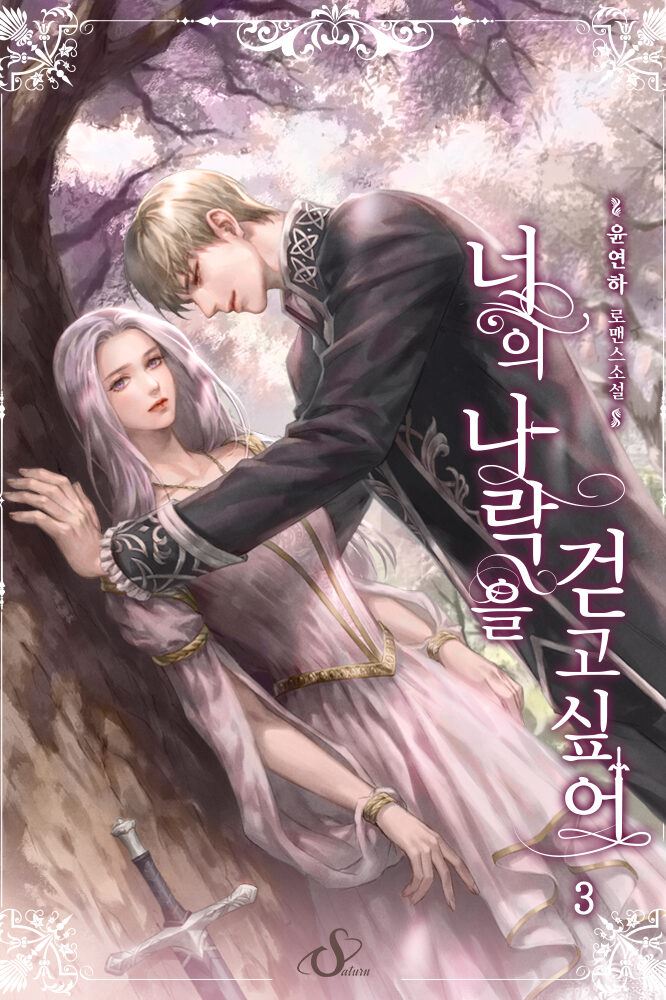
"White curtains swayed gently in the breeze. The room was filled with dolls that he had given me one by one. Everything here had been given to me by D'hiver after I arrived." I need to talk about this scene because the atmosphere in this chapter is absolutely suffocating and I mean that in the best possible way. The opening scene — the confrontation between Vivi and D'hiver — takes place in what seems like a grand room, possibly in the father's house. There's a door bursting open, golden hair fluttering, a dramatic entrance. The text describes Eri as "radiant, like the sun — so different from me, with my pale, miserable moon-like hair." This visual contrast isn't just aesthetic; it's thematic gold. Sun and moon, golden and pale, beloved and replaceable. The lighting of the scene itself tells you everything about the power dynamics. Then the scene shifts — "Gradually, the scenery around us started to change." And suddenly we're in Vivi's room in D'hiver's castle. The transition is seamless, almost dreamlike, which makes it feel even more unsettling. One moment she's in her father's house confronting her family; the next she's in her gilded cage, surrounded by the evidence of her captivity. The description of that room is where the worldbuilding really shines. Violets scattered on the floor. White curtains. Dolls. Every single object is a gift from D'hiver, every single object a symbol of his control. The author doesn't need to explain that this is a prison — the decor does it for them. "From beginning to end, it all felt suffocating. Like something dreadful, quietly and unmistakably." And then Teslai appears. The sword with a translucent blade, sitting on the bed like it's waiting for someone to come home. The voice that comes from it — impossible to tell if it belongs to a child or an adult, a boy or a girl — adds this uncanny, almost ghostly quality to the scene. It's not a typical fantasy weapon; it's something alive, something that judges, something that knows too much. The final image of the chapter — Vivi alone in that room, surrounded by gifts that are now just objects of torture, tears falling endlessly — is cinematic in the best way. I could see this as a film scene. The camera slowly pulls back as the white curtains wave and the violets scatter across the floor.
... Read More
I have so many thoughts about D'hiver in this chapter and honestly some of them contradict each other which is exactly why he's such a fascinating character. On one hand — the man killed almost ten people to create the version of Vivi he needed. TEN. Not ten acts of violence, ten PEOPLE. And he says this almost casually, like it's a minor detail. "You killed almost ten people just to create the version of me that you needed" — and then Vivi realizes the horrifying implication: if her sister had been the one who wanted to die instead, he would have slaughtered countless more until it was Vivi's turn again. This isn't love. This is curation. He didn't choose her; he engineered her. But then — and this is what makes it so complicated — the text makes it clear that his feelings NOW are genuine. He is devastated. He's pleading. He says "can't you take it out on me instead?" and his voice falls into a whisper. He's not fake right now. The problem is that his genuine love is built on a foundation of murder and manipulation, and you can't un-know that. His relationship with his father is also interesting. The father calls Vivi "a demon" after she says she could have taken everything from him. But the father himself is clearly complicit — he created the family dynamic where Eri is beloved and Vivi is replaceable. He's trembling, worried about Eri, but his hands shake with concern while his eyes burn with fury. The man literally cannot look at his daughter without seeing a monster, even though she's doing exactly what his family taught her to do. And Eri! Oh my god, Eri is supposed to be the villain of this family but the text is so careful not to let her off the hook. She admits outright that she pitied Vivi at times, felt grateful she didn't have to take her place, maybe even thought she'd treat her better. And then — "the moment I saw your face, all of that disappeared. No matter how hard I try... I just can't bring myself to like you." That's cruel, yes, but it's also honest. At least she's not pretending. The sister-sister dynamic here is giving me major trauma-bond energy. They hate each other, sure, but they're both victims of the same broken family structure. Vivi just happens to have the power to hurt Eri back now.

Leave a comment

You must be logged in to leave comments. or
