I Really Am Just A Substitute[E-Sports] - Reviews

I Really Am Just A Substitute[E-Sports]
+Add to Custom List
Sort
Add review
... Read More
I need to talk about Lu Shi's moment in the draft phase because it genuinely gave me chills. Lin Lan gives up his last pick position—not once, but twice—to protect his teammates. First he lets Lu Shi pick Ornn because his hands are still hot from the previous game. Then, even after seeing that Xiao Shengjing is running Kindred, Lin Lan still doesn't fight for his own spot. He just... steps aside. Like it's nothing. But here's what broke me: Lu Shi turns to look at him, expecting maybe a smile or a nod, and instead catches Xiao Shengjing staring at him. The text says "a faint, cold, and somewhat murderous look." And Lu Shi literally shivers. The atmosphere in the venue gets colder. Not dramatic, not overwrought—just three lines that somehow convey an entire ecosystem of tension. Then there's Ayu, who goes from "Don't be afraid" to blushing because Lin Lan praised him. The way Lin Lan guides this team is fascinating. He's not loud about it. He doesn't need to be. He just *knows*, and his calm radiates through everyone around him. Ayu realizes somewhere in these few days that Lin Lan never relied on luck. That realization changes how Ayu plays entirely—even against formidable combinations, he stays calm now. That's not just coaching, that's trust being built brick by brick. I'm genuinely invested in how this team dynamic evolves. Who else is going to get a moment like this? Who's going to be the one standing beside Lin Lan when it matters most?
... Read More
The pacing in this chapter is genuinely masterful and I need to talk about it because most authors would have buried the lead under three pages of team drama. Here's what happens: Wu Tianqi storms out → team is panicked → substitute fails spectacularly → Xiao Shengjing makes a decision → Lin Lan eavesdrops → Lin Lan fakes illness to escape → they walk home → share cola → comedic resolution. That's A LOT of story beats and the author navigates it like a pro. The opening is tense — short paragraphs, fragmented thoughts, the team falling apart. Then once Lin Lan stages his escape and they're walking at night, the rhythm SLOWS DOWN. The sentences get longer, the descriptions bloom, and we finally get breathing room. It's a deliberate shift from 'crisis mode' to 'character mode' and it works because we've earned the release. But what I really want to highlight is the ending. After all that emotional weight — Xiao Shengjing opening up, the unspoken tension, the cola moment that could have gone either way tragically romantic or perfectly funny — the author SLAMS the brakes with a receipt dispute. 'Book ID 79059' I don't know why but I keep thinking about the structural decision to end on 'I was forced to treat the captain to a bottle of cola?!' instead of something more poignant. A lesser author would have gone for the soft landing — maybe a lingering look, a 'goodnight,' a moment of quiet understanding. But this? This is comedy as emotional defusal. The tension was too real, so the author lets Lin Lan deflate it himself by being too dense to notice. The chapter also ends on a nice lingering thread — Wu Tianqi still unreachable, the match tomorrow, 'the tension between them remained.' It gives you exactly enough closure to feel satisfied but enough open string to keep you turning pages. Classic web novel economy: give the reader a hug, then gently push them toward the next chapter.
... Read More
I am completely obsessed with Xie Zilu as a character, and I need everyone to understand why. This man is a walking contradiction—a young master who climbs construction frames drunk, laughs like a villain from a thriller, but somehow remains fascinating rather than grotesque. When he says 'I'm just pretending to be crazy, not actually crazy. If I were truly crazy, you'd shiver at the sight of me,' I literally sat there staring at my screen. Then there's Lin Lan. Cold, calculating, recording conversations without hesitation, sending his location to his teammate while dining with a potential killer. These two are so perfectly matched in their intelligence and danger. The power dynamic shifts with every line—Xie Zilu thinks he's the predator, but Lin Lan isn't playing by the rules of prey. The relationship between them is this electric dance of suspicion and attraction. Xie Zilu calls it 'interesting,' Lin Lan calls it caution, but I call it THE most compelling character dynamic in this entire novel. And Lin Lan's teammates? Totally oblivious. 'Where's Lin Lan?' 'He went out with his distant cousin!' Meanwhile, Lin Lan is at a restaurant having dinner with one of the most dangerous people alive. The contrast between his normal team life and this shadow world he's stepping into makes his character feel layered and real.
... Read More
The dialogue in this passage is genuinely excellent — and I don't say that lightly for web novels, which often suffer from characters all sounding the same. Let's start with the audience banter. Audience A's line — "Anyone with common sense knows who will win, bro, trust me, betting on ASF is a sure win" — establishes him as this confident, slightly arrogant veteran fan. The word "bro" and the dismissive tone immediately paint his personality. Meanwhile, Spectator B is young, impulsive, and easily swayed — he "suddenly realized, quickly took out his phone, and started tapping away" based on nothing but peer pressure. These two exist in dialogue opposition to each other from page one. The in-game commentary is where the author really flexes. The commentator's half-finished thought process: "I thought he would pick Tristana, especially since Tristana is quite strong in the early game when it comes to pushing towers..." and then trailing off with "In and between his words, there was a desire to say that Lin Lan was practicing champions" — this is NARRATIVE VOICE doing serious work. The commentator never directly accuses Lin Lan; he lets his hesitation and word choices imply it. That's skilled writing. But the dialogue that made me laugh out loud is ASF's support player: "How does he know how to play this champion?" followed by the stammered follow-up "Practice... practicing the champion?" The awkwardness of the question, the stumbling over the words — it captures that exact moment of disbelief where your brain can't process what you're seeing. And the immediate silence in their voice chat after someone suggests "he practiced this champion?" is the funniest beat in the entire passage. Who DOES that? Who practices a specific champion right before an LPL match? The absurdity is comedically perfect. Lin Lan's own dialogue is refreshingly minimal and confident. "If they want to play the early game, then we'll play the early game." Short. Decisive. No performance, no showing off. He's not trying to impress anyone — he's stating a tactical decision. And his casual reply to Jiang Jin — "This champion isn't difficult. You can get the hang of..." — cuts off mid-sentence, which is a brilliant structural choice that mirrors how naturally these two communicate. They don't need to finish each other's thoughts because they're already on the same wavelength.
... Read More
I need to talk about the opening thirty seconds of this chapter because they contain more relationship substance than most entire books. Lin Lan is carrying groceries, and Xiao Shengjing steps up behind him and says 'Let me do it.' Just that. No big dramatic speech. But the physical description — 'a tall figure suddenly enveloped him' — that word 'enveloped' does so much work. It's protective but also consuming. And then the cola joke? 'If Brother Mu paid for it, then you still owe me a bottle of cola. If you paid for it, then you don't owe me one.' This man is using beverage debt as emotional proxy language and I am HERE for it. But the moment that ruined me was Xiao Shengjing rubbing Lin Lan's head. 'beneath his fingertips, it felt soft and warm. The unfamiliar sensation didn't repel him; instead, it brought an inexplicable and difficult-to-verbalize addiction.' Wait. The CAPTAIN — the ice-cold commander everyone fears — is ADDICTED to touching Lin Lan's hair? And he covers it up by scolding him about training? THAT is the most XIAO SHENGJING thing ever. The rest of the chapter just escalates this. When Lin Lan asks the classmate question with 'semi-joking yet serious tone, his gaze bold,' Xiao Shengjing doesn't dodge. He just says 'Yes' and locks eyes with him. And when he spins the spoon back to Lin Lan and asks the real question — 'Is the person you like present?' — he's not being cruel. He's giving Lin Lan a chance to say it out loud. And then the lights go out and neither of them says anything. These two are so deeply entangled it's almost comical. The captain who controls every game, who everyone else fears — he's the one who can't answer a simple question about feelings.
... Read More
I need to talk about Xiao Hai. Not the gameplay. Not the stats. The boy sitting beside Lin Lan after the third game, holding a secret so big it could shatter everything, and choosing to keep it anyway. He'd been following Lin Lan closely throughout the match, watching the details no one else saw—the lethal swings, the precise axe placement, the terrifying consistency. And his first instinct, his pure unfiltered reaction, was to run to his teammates and tell the world. “Lin Lan is a pro!” But he had promised. A promise. In a scene buzzing with MVP celebrations and caster awe, the most emotionally resonant moment is a support player clenching his jaw and staying silent. That's not plot. That's character. That's the kind of loyalty that doesn't need spotlight to exist. And then Feifei couldn't hold it. “Lin Lan, how are you so good? Have you played AD before?” It's naive, it's loud, it's exactly what a teammate should sound like in that moment. No calculation. Just pure, unfiltered wonder. And Lin Lan's response—“It's okay, just got lucky”—is either the greatest humblebrag in e-sports fiction or the most genuine deflection I've ever read. I still don't know which. But Wu Tianqi. Oh, Wu Tianqi. The cold snort. The frustration. Not at the loss—at the luck. “Why couldn't he have the same luck?” That's not jealousy. That's something heavier. That's the ache of watching someone navigate the world with an ease you can't replicate no matter how hard you try. There's a whole friendship dynamic there, unspoken but vibrating underneath every line. They're on the same team. They share a rest area. They breathe the same tense air after a crushing victory. And yet Wu Tianqi's emotional distance from Lin Lan's “luck” creates this quiet chasm that feels more real than any dramatic confession ever could. Xiao Shengjing's response to “I know you'll protect me” is just “…” followed by “Protect what? Little trickster.” That ellipsis. That's everything. That's affection disguised as exasperation. That's a captain who's already calculated every variable and chosen, anyway, to let his carry playrecklessly because he trusts him to survive it. I'm emotionally compromised and I haven't even reached the Vayne phase yet.
... Read More
There's this one scene—maybe three paragraphs long—that I've been unable to shake since I read it. Lin Lan is staring at those English-labeled medicine bottles and suddenly his vision distorts. The prose describes it like: "even the incoming sound seemed to be through a thick glass tank." I felt like I was underwater. And then he's seeing through Mirror Lin Lan's eyes at a doctor's office. Dr. Wu Ming, the attending physician, sitting across from a 17-year-old Lin Lan telling him about anxiety disorder. The female doctor—Dr. Li, the same one who shows up later in the present timeline—hands him the exact same two bottles of medication. The horror of that moment is in the details. Lin Lan can't control his body in this memory. He just... watches himself stand up and leave. His own perspective can't be manipulated. He's a prisoner in his own past. And Dr. Li's line—"young people shouldn't be anxious. If you control this disease well, you'll eventually recover"—reads completely differently now. It's gentle on the surface but underneath there's this whole question mark about whether the treatment actually helped or whether something else happened. The environment itself feels wrong during these flashbacks. Distorted surroundings, buzzing in his ears, rapid breathing. The author doesn't overdescribe but every sensory detail contributes to this feeling of unreality, like the memory is decaying or being deliberately suppressed. I kept thinking about how the original owner cleared his phone cache before dying. Was he trying to destroy evidence or protect someone? The hospital scenes are particularly striking—Dr. Li arriving with a lunchbox like she's just a regular person grabbing food, not someone who was treating a suicidal teenager a month ago. The mundane mixing with the deeply concerning is what makes this world feel so lived-in and unsettling at the same time.
... Read More
"I can't, I can't. I heard shares are given to retain players, but what worth do I have?" — Feifei literally saying this line out loud, shrinking away from the conversation about shares? I'm dead. The author has this gift for making dialogue feel so genuinely unpolished, like real people talking over each other at a gaming café, not characters delivering exposition. Lu Shi is my new favorite person just based on how he speaks. "Damn, did I just become a starter? Is Brother Mu being substituted for me?" followed by his request to be pinched — then Lin Lan literally TWISTING his arm. The physical comedy in their exchange is hilarious and completely organic. "I didn't ask you to actually pinch me!" is exactly the kind of follow-up complaint a tsundere teammate would make. It's funny because it's so specific to their dynamic. And then there's Jiang Jin's smurf account interactions. The chat log format is such a clever narrative device — "Of course, don't all supports know how to play AD?" followed by "The other party fell into a heavy silence." You can TASTE Jiang Jin's internal panic through text alone. He's this gloomy, shut-in type who stuck to Lin Lan like a band-aid in the original timeline, and now here he is, suspicious and flustered in game chat. The voice shift between team banter (loud, crude, funny) and solo queue chat (tense, clipped, suspicious) is masterful. Xiao Shengjing saying just "Hmm" to Wu Tianqi's apology is the quietest, most devastating line in the entire passage. One syllable that says everything.
... Read More
Let's be real — the stakes in this chapter are NOT subtle and I love it. On the external level: the promotion match is imminent, Wu Tianqi has abandoned the team at the worst possible moment, the substitute is catastrophically unqualified, and the captain is refusing to apologize to someone who's holding the team hostage. That's a stack of problems that would make most protagonists quit. DT is one bad decision away from elimination. But the author is smart about how they layer the conflicts. The Wu Tianqi situation isn't just a plot obstacle — it's a VALUES clash. Xiao Shengjing 'couldn't hold back' which means he drew a line about something principled. Wu Tianqi wants an apology not because he's wronged, but because his pride was hurt. The tension isn't just 'will he come back?' it's 'will our captain compromise his principles to save the team?' And then there's the Lin Lan subplot — or rather, the NON-subplot. Lin Lan fakes illness to avoid the confrontation, sneaks around like a spy, negotiates payment for his silence, and then ends up having the most honest conversation of the chapter on some random steps. His conflict is internal: he dislikes Wu Tianqi but also doesn't want to betray Xiao Shengjing's trust by revealing he was eavesdropping. So he performs. He plays a role. He pretends to be sick. The match looming over everything is like a countdown clock. We know something has to break. The team is holding together through sheer force of will and Xiao Shengjing's refusal to bend. And Wu Tianqi's ultimatum — 'Unless Xiao Shengjing apologizes to me' — means the resolution can only go one of two ways: compromise or catastrophe. What I love is that the author doesn't treat any of this with false gravity. The panic about the substitute is funny. The eavesdropping is playful. The cola scene is warm. But underneath it all, there's a genuine tension — the match is coming, the team is fracturing, and nobody knows how this ends. The final line 'the tension between them remained' isn't a cliffhanger. It's an understatement. Of course it remained. Everything remains until it explodes.
... Read More
'Straightforward person, I like that.' 'I've disliked Wu Tianqi for a long time. Captain, you've really let me vent... Come, cheers...' Lin Lan's dialogue is such a distinct voice and I appreciate it so much. He's chaotic, blunt, emotionally honest in the most accidental way possible. When he says 'Cola is the happiest thing in the world. Captain, I won't allow you to slander it!' — that's not a character who thinks before he speaks, that's a character who speaks and then thinks about what came out of his mouth three seconds later. And Xiao Shengjing? His lines are shorter, more measured. 'Couldn't hold back.' Three words that carry more emotional weight than most people's monologues. When he says 'Drinking too much cola is not good' it's not prudishness — it's a man who values control and is quietly unsettled by something unpredictable. His dialogue reflects someone who measures everything. The contrast between them in dialogue is chef's kiss. Lin Lan talks in bursts, in declarations, in requests. Xiao Shengjing talks in fragments, in corrections, in reluctant concessions. Their conversation patterns are basically a love letter to the reader who pays attention. And the WeChat exchange at the end? 'Captain, what happened to the remaining 3 yuan?' 'You treated me to a drink.' This reads like actual people texting. The rhythm of quick back-and-forth, the mild gaslighting, the fact that Xiao Shengjing is essentially scamming Lin Lan into funding future hangouts — it's naturalistic dialogue that serves character AND plot simultaneously. Even the minor characters have voice. Brother Mu's 'Xiao Xiao, endure for a while' has that specific elder-relative cadence — the kind of advice-giving that sounds caring but is actually just anxiety dressed up as wisdom. And Wu Tianqi's ultimatum 'Unless Xiao Shengjing apologizes to me, I won't accept a captain who insults my dignity!' — you can HEAR the pettiness. You can hear someone who knows they're being unreasonable but has built a fortress out of pride so they can't back down. Every character sounds like a real person you'd encounter, and that's harder than it looks.
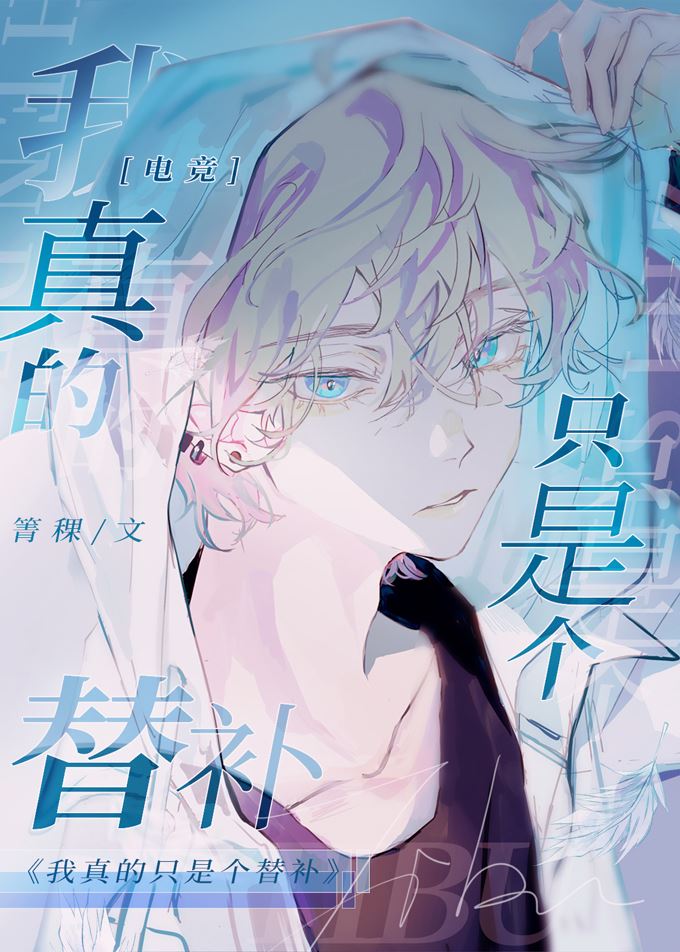
... Read More
"A waste. A waste should stay where it belongs and not come out to be a nuisance." Three words. That's all it takes for Xie Zilu to turn the entire conflict personal. Here's what makes the stakes in this passage genuinely tense: Lin Lan isn't just playing for fun or pride. He's playing to PROVE something — to himself, to these dream versions of people who wronged him, and maybe most importantly, to that fourteen-year-old self trapped in the mirror. Every match carries the weight of identity validation. The external conflict is straightforward enough — beat Xie Zilu, survive the loops, figure out what's happening. But the INTERNAL conflict is where this really grabs you. Lin Lan was once the pinnacle of professional esports. Now he's in a Bronze-ranked body, being mocked by someone he could've crushed in his prime. The gap between who he WAS and who he IS right now creates this constant undercurrent of frustration and determination. What's brilliant is how the author makes you CARE about the outcome without spelling out the consequences. We don't know what happens if Lin Lan loses — does he stay trapped? Does something worse happen to that fourteen-year-old version in the mirror? The uncertainty amplifies every fight. The Yasuo matchup is a perfect microcosm of the entire conflict. Xie Zilu has the higher gold count, the better positioning, the crowd behind him. Lin Lan has nothing but skill and experience. And yet — the stopwatch trick, the invulnerability dodge, the counter-kill — Lin Lan wins not because he's stronger in this reality, but because he's SMARTER. That's the core thesis of the whole story really: talent matters, but心 (heart/mind) matters more. "Heh, useless." Lin Lan's parting shot after winning isn't even angry. It's dismissive. And that's the most devastating thing of all — he doesn't need to gloat because the win speaks for itself.
... Read More
This text moves like it's on fire and I mean that as a compliment. We go from championship celebration → press conference harassment → truck hit → hospital → mirror void → rebirth in high school → LOL match, all within roughly 10,000 characters. That is some serious velocity. Most books spend an entire chapter on just the rebirth setup. This one treats it as a revolving door. What I appreciate most is how the author controls the rhythm. The press conference section is written with short, sharp exchanges—"Tired, want to sleep." "Expected." "Does it concern you?" These one-word and two-word answers create a staccato feeling that mirrors Lin Lan's exhaustion and irritation. You feel his desire to escape. Then the truck hit happens. Boom. One paragraph. The author doesn't dwell on the impact itself—we see the result (blood on the stone) and move on. This economy of violence makes the moment feel sudden and shocking rather than sensationalized. The hospital scene slows down slightly with the doctor's diagnosis and the cold exchange between the manager and the boss, giving us a brief moment to process what happened. But then the mirror sequence introduces a dreamlike pause before the text launches again into the classroom and the game. The LOL match itself is where the pacing truly shines. Short paragraphs. Quick action beats. Each paragraph reveals another layer of Lin Lan's dominance—first the dodging, then the Wind Wall, then the level 6 ultimate. By the time the paragraph ends with "But Lin Lan," the reader is caught in a cliffhanger so satisfying it made me actually want to keep reading immediately. If I had one note, it would be that the transition from the emotional weight of the death/rebirth sequence into the casual gaming scene is almost TOO abrupt. But maybe that's the point—Lin Lan's professional instincts override his existential crisis, and the pacing reflects that.

Leave a comment

You must be logged in to leave comments. or
