I Really Am Just A Substitute[E-Sports] - Reviews

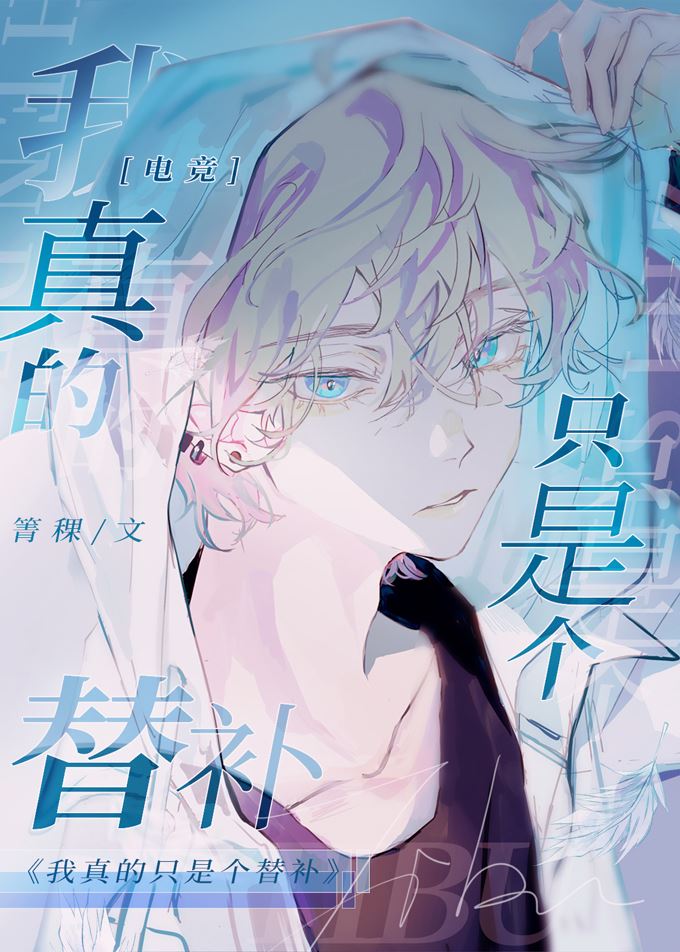
I Really Am Just A Substitute[E-Sports]
+Add to Custom List
Sort
Add review
... Read More
There's something really special about how the author renders this esports arena. It's not just "people playing a game." The director is switching cameras, the commentators are scrambling to catch up with replays, the audience is LIVE-reacting — "Big bro, is DT going to win?" "Don't worry, they won't win" — and the chat is a whole separate character with its venomous commentary. The most vivid image for me is the Darius ultimate descending like a guillotine. That word choice isn't accidental. It's theatrical, brutal, final. Wu Tianqi doesn't just die, he's EXECUTED. And then the black and white screen — that's the moment the reader is forced to stare at the consequence alongside him. You can feel his desperation. Lin Lan's kill animations are choreographed like action movie beats. "Raising his twin guns triumphantly before leaving" — that's cinematic. Even the Kai'sa death has style: she tries to resist, believes she can turn it around, and is simply too slow to comprehend the machine-gun bursts. The text makes you SEE the speed difference. And Jiang Jin's ward placement above the dragon pit — so quiet, so invisible, a single green marker in the fog of war that becomes the turning point of an entire engagement. The worldbuilding isn't in exposition, it's in these moments where the environment itself becomes a weapon.
... Read More
This section is obsessed with duplication. Not clones, not twins—parallel selves. The Lin Lan who died in this world. The Lin Lan who crossed over. The Xiao Shengjing from home versus the captain. They're mirrors, but the reflections are warped. The deeper theme isn't transmigration; it's *empathy as identity*. Lin Lan refuses to abandon the dead version of himself. "For you, he might be an insignificant person, but for me, he is another version of myself." That's the thesis. Belonging isn't about geography; it's about taking responsibility for every iteration of your soul. The symbol of sleep is doing heavy lifting too. Those two-hour windows aren't just a plot device; they're metaphors for the thin membrane between self and other, between here and there, between waking life and the raw truths that surface when the mind drops. You only cross over when both sides are vulnerable enough to fall. The mirror scene—Lin Lan seeing the original owner's face, hearing him beg for help while the doctor works on his own body—is the ultimate symbol of unbridgeable distance. You can see yourself dying, but you can't reach across. And the pills. The suicide. The choice to end it when rescue was impossible. That's not weakness; that's a different kind of love, turned inward. The author keeps circling back to the idea that some people are stranded in life, even when they're surrounded by others. Lin Lan and the original owner were both alone in their respective beds. Xiao Shengjing and the captain are both loving the same man from opposite sides of a wall. The theme resonates because it's quiet. It doesn't preach. It just shows us two bodies in one room, one waking and dreaming at the same time.
... Read More
The dialogue in this chapter is deceptively minimal, which is exactly why it lands so hard. Look at Jiang Jin's questions: 'Are you a professional player?' 'Can you play Draven?' 'Can I add you as a friend?' Each one is a small probe, a tentative reach. But Lin Lan's replies are scalpel-sharp: 'No, are you?' 'It's okay.' 'Just playing support is too dull.' There's a rhythm to their exchanges that feels almost musical if you read it aloud—the staccato bursts, the deliberate silences, the way Jiang Jin's longer explanations always get cut off by Lin Lan's curt acknowledgments. What makes it work is the subtext dripping from every line. When Jiang Jin says 'I can't play jungle. Can I join your team as a support?' that's not a request; that's someone handing over their dignity and asking if it's acceptable currency. And Lin Lan's voice? It's weary, precise, occasionally cruel but never careless. Even his teasing about Draven has weight: 'This hero is so difficult to play, can't even catch the axes'—he's mocking himself, or maybe mocking what Jiang Jin thinks of him, and then immediately proves him wrong. The narrative voice itself is worth noting: observational, unflinching, with moments of dry humor ('He mustered the courage to send him this message'). It never romanticizes, never sentimentalizes. Just facts, quoted speech, and the spaces between where everything actually lives.
... Read More
I need to talk about how the author manages tension in a chapter that is literally mostly about someone WATCHING games instead of playing them. That should be boring. By all accounts it should be boring. But the author keeps pulling you in through micro-tensions—the coach testing Lin Lan, the match itself, Wu Tianqi getting more insufferable by the second, and then that explosive moment where Lin Lan finally snaps back. The structure is basically: setup (Lin Lan watches, gets sleepy) → conflict (Wu Tianqi is terrible, Lin Lan suffers silently) → turning point (Lin Lan calls him shit) → payoff (Xiao Shengjing carries) → aftermath (team dynamics, next day, meeting). It's a classic arc but executed with this easy rhythm that doesn't feel formulaic because the author keeps injecting character moments between the plot beats. The chapter break at the meeting is where the pacing really shines though. We go from a lazy morning routine—brushing teeth, messing with hair, casual breakfast conversation—straight into a tense team meeting where Wu Tianqi is flexing his false authority and Brother Mu is dropping career-ending threats. The whiplash is intentional and it works. You feel the calm before the storm, and then the storm hits. > "If we fail to qualify this time, DT will never have a chance." The sentence just hangs there. No climax, no fight scene, no dramatic music. Just cold facts delivered in a room full of people who know exactly what's at stake. That's restraint, and I respect it.
... Read More
What makes this chapter work is how it raises stakes on multiple levels simultaneously. On the personal level: Lin Lan goes from anonymous employee to shareholder. His identity within the organization fundamentally shifts. He is no longer expendable. On the team level: Brother Mu's fear of provoking Wu Tianqi introduces political tension. There is an unspoken conflict between Lin Lan's new status and Wu Tianqi's existing position. This is a powder keg waiting to explode. On the narrative level: Lin Lan's awareness that he must eventually leave creates tragic dramatic irony. The reader knows something the characters don't — that this investment in him may be temporary, making every moment of acceptance feel precious and painful. The stakes are also oddly low and high at the same time. Yes, shares matter. But more than that, the stakes are about belonging. About being seen. About being chosen. Lu Shi's gossip scene at the end raises the stakes again — now three people know, and keeping this secret becomes a new challenge. Wu Tianqi's potential reaction hangs over everything like a storm cloud. The author has created a perfect nested conflict structure: external (Wu Tianqi), organizational (team dynamics), and internal (Lin Lan's sense of self-worth). All three are interlocking, all three matter, and none of them can be ignored going forward.
... Read More
The dialogue in this passage is deceptively simple. On paper, most of it is short and functional. But the character voices are so distinct that you never confuse who's speaking. Lin Lan's voice is direct and slightly self-deprecating—"What should we eat tonight? I'm so hungry; I might starve." Even after winning a crucial match, his first thought is dinner. That's him. Grounded, hungry, unpretentious. Lu Shi is the comic relief with a side of genuine warmth. His over-the-top explanation for the ointment's origin—fan dropped it, staff member's medication box, accidental discovery—is hilarious precisely because he KNOWS it's absurd. "Do you think I'm a three-year-old?" is such a Lu Shi line. Xiao Shengjing speaks in fragments. "Found it." Two words that carry an ocean of meaning. When pressed, he can only manage more evasion. His silence IS his dialogue. And the viewer chat reactions—"He plays the game handsomely, looks handsome, really, so handsome, help!"—add this great meta layer of noise that contrasts with the quiet intimacy of the corner scene. The author uses different registers of speech to differentiate scenes effortlessly, and the banter among the DT teammates feels lived-in, like these people actually hang out together.
... Read More
Can we just appreciate how funny this chapter is? The KFC scene alone deserves its own award. Lin Lan ordering a bucket of chicken legs and then forgetting (or rather, remembering) that the Silly Dog made him hate fried chicken. His internal monologue about feeling "truly blissful" now being able to eat it peacefully—then Lin Lan with food smeared around his mouth, Xiao Shengjing offering a tissue, and Lin Lan immediately deflecting with "just watch me eat, and please don't enlighten me with any weird knowledge." The author's voice in this chapter is doing something really clever. It's switching between three registers seamlessly: the comedic banter (Lu Shi and Feifei barging in like robbers, tearing the last chicken leg in half), the warm slice-of-life moments, and then—bam—heavy sci-fi exposition delivered with genuine emotional weight. Xiao Shengjing's dialogue is particularly striking. He doesn't explain the parallel world theory like a textbook. He gives Lin Lan a concrete example: "In the original world, you were always in a coma. As long as you fall into a deep sleep here, you should wake up there." Practical. Clear. Then immediately undercuts it with the devastating follow-up: "But why haven't you woken up in three months? Because the consciousness of Lin Lan in this world has trapped you." And his closing line—"You must come back..."—with that ellipsis trailing off as he collapses. The author isn't just writing dialogue; every line is doing double duty, advancing both plot and emotional arc simultaneously. That's craft.
... Read More
I was not prepared for this chapter to go from funny moving-day chaos to gut-punch on the rooftop of the old base. Xiao Hai is one of those characters who exists in the background until he doesn't, and then you realize everything he's been carrying. The line that destroyed me: 'Ayu and I have known each other for more than ten years, since kindergarten. He was not doing well back then. I just wanted to protect him for a lifetime.' Protected him. Not loved him, not wanted to play with him — PROTECT him. That word does SO much heavy lifting. And then his guilt about forcing Ayu into professional gaming, about bringing him out of his home environment, about how Ayu's grandma is now in danger because of it — it's this tangled mess of love and responsibility and self-blame that feels painfully real. Lu Shi's reaction, though, was genuinely sweet. 'You don't have to sacrifice your whole life for him.' He's right, of course, but you can feel Xiao Hai's conviction that he owes Ayu everything. This friendship is beautiful and tragic and I can already tell it's going to get worse before it gets better.
... Read More
I've been thinking a lot about the smurf account motif and honestly it's become the central metaphor of this entire section. Lin Lan playing on an alternate account while being literally the best support player in the room is such a loaded image. He's hiding his true self, staying invisible, playing below his level — which mirrors how he's been treated by Coach Zhang and by the team structurally. The rejection he experienced in the original timeline translated into silence in this one. But Jiang Jin sees through it. He says 'This was undoubtedly an esports genius' while playing on a normal account, recognizing talent that others chose not to see. There's also the QQ number exchange as a symbol — in the original timeline this was the moment everything went wrong ('he fell off the horse because of **'). The author is deliberately replaying this scene but with different energy. What was once a point of failure is becoming a point of connection. The dual lives, the hidden identities, the tension between who you are and who you pretend to be — it all feeds into this larger theme about authenticity in competitive spaces. Lin Lan's secret gaming sessions are basically his sanctuary, the one place where he's free from team politics and expectations. The smurf account isn't just a gameplay choice; it's an emotional one.
... Read More
What are the stakes in a chapter where nobody dies and nobody fights? Everything. Obviously. The external conflict is minimal — it's a game night before a match tomorrow. But the INTERNAL conflict is running at maximum voltage. Lin Lan has just revealed a suicide attempt to people who are now looking at him differently. He's exposed a part of himself that previous-Lin Lan kept hidden, and he's doing it while being someone who 'only acquired part of the memories without the full emotional depth' — meaning he's navigating trauma he doesn't fully understand with people who care about him more than the original owner of this body ever did. Xiao Shengjing's conflict is even more layered. He's the Captain. He's composed. He controls every situation. And yet — his hand tightens on a water cup without his awareness. He notices Lin Lan's hesitation. He asks the question that could change everything. And then he sits in silence afterward, still staring. The highest stakes moment is that question: 'Is the person you like present?' This is a moment where both characters stand to lose something massive. If Lin Lan says yes, he's exposing himself to rejection from the one person whose opinion matters most. If he says no, he's lying to someone who clearly already suspects the truth. If Xiao Shengjing pushes further, he risks everything they have. If he doesn't — the gap between them widens. And then the power goes out. The universe intervenes. The tension doesn't resolve — it PRESERVES. Both men are saved from consequence but also condemned to continued uncertainty. That's not a happy ending. It's a suspended animation. And honestly? It's more agonizing than any confession could have been.
... Read More
There are two objects in this text that keep looping in my head, and they seem to be lying to each other. The first: the medicine bottles. Both still mostly full. One hidden in the innermost cabinet, the other opened but clearly not taken regularly. If Mirror Lin Lan had a mental illness severe enough to attempt suicide, why were the pills untouched? The most obvious reading is that he never took them. Which raises the question—did he want to get better and fail, or was the diagnosis wrong from the start? The second object is the phone. "All chat records in the original owner's phone were wiped clean, even the cache was cleared." This is the more disturbing detail, and I think the author knows it. Someone who plans to die doesn't typically spend time meticulously wiping their digital footprint. That takes deliberation. That takes intent that isn't purely about ending suffering. Together, these two symbols create this incredible tension. The pills suggest self-neglect—the illness wasn't being treated. The cleared phone suggests careful planning—the death wasn't impulsive. One points to someone who was drowning and didn't ask for help. The other points to someone who was helped to drown. And then there's the line that breaks everything open: "In the mirror, the last thing he said was: Save me." Not "I'm sorry." Not "goodbye." Not even a plea to someone specific. Just "Save me." As if the act of looking in the mirror was itself the moment of crisis, as if seeing his own reflection was what pushed him over the edge. The author seems to be asking: when a person says they want to die, how do we know whether they meant it—or whether someone made sure they couldn't say anything else?
... Read More
I need to be real about this—the undercurrent of Lin Lan's suicide attempt is haunting every single interaction in this passage and I can't stop thinking about it. Xiao Shengjing literally cannot enjoy a normal moment with him. They're in an elevator, it's slightly intimate, and then BOOM—'Lin Lan looked too normal; he didn't seem like someone who would commit suicide. But the more normal he appeared, the more uneasy Xiao Shengjing felt.' This is psychologically devastating to read because it means Xiao Shengjing is now viewing Lin Lan through the lens of potential self-harm, and every smile, every joke, every 'cute gesture' is being filtered through that terrifying question mark. What is the motivation? Will he repeat it? The stakes here are incredibly high and the author doesn't even need to dramatize it—the mere fact that this thought keeps intruding on Xiao Shengjing's mind makes it feel omnipresent. And Lin Lan himself seems almost disturbingly fine about everything. He discusses his hospitalization like it's a minor inconvenience, talks about owing money casually, helps carry snacks with energy. Is this genuine resilience or is he numbing himself? The external conflict of the upcoming DT match looming as possibly 'the last game' adds another layer—what happens if Lin Lan is gone? What happens to the team? What happens to Xiao Shengjing? Every scene now carries this double meaning, this weight behind the surface-level comedy and team bonding. I found myself clutching my chest multiple times reading this.

Leave a comment

You must be logged in to leave comments. or
