I Really Am Just A Substitute[E-Sports] - Reviews

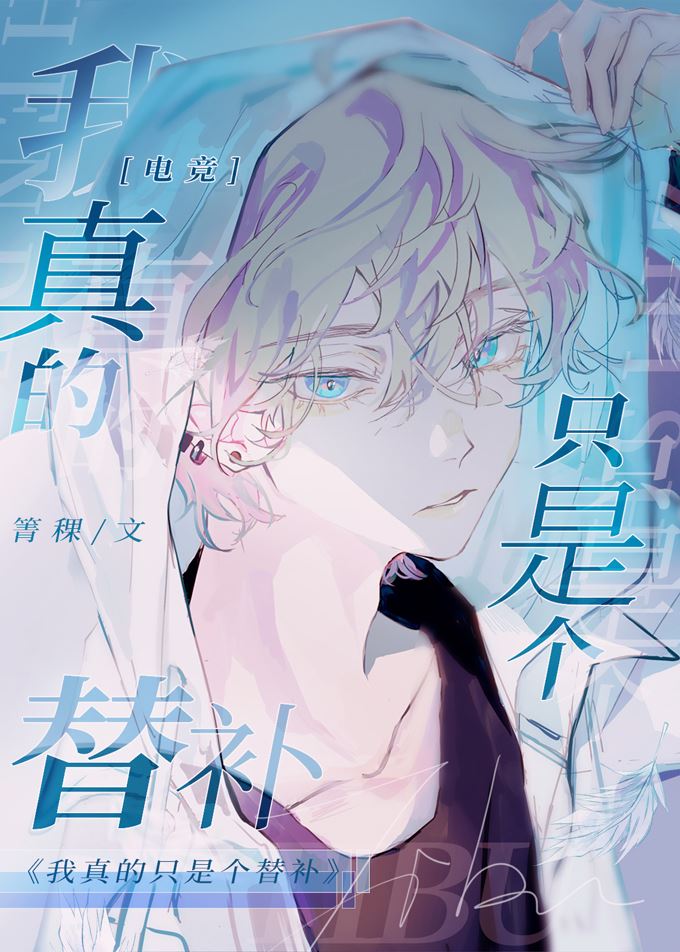
I Really Am Just A Substitute[E-Sports]
+Add to Custom List
Sort
Add review
... Read More
Let me just say this author understands suspense better than most people understand anything. The way this chapter progresses is masterful. You start with this light, almost comedic atmosphere — Xiao Shengjing owes Lin Lan a cola, Feifei is snickering, Lu Shi is being Lu Shi. The tension from yesterday's incident is present but dampened by humor. Then the match begins and immediately things go wrong. Not explosively wrong, but incrementally wrong. Ayu playing poorly. The commentary making sympathetic jokes. The audience flooding the chat with 'this support is wasted.' It builds and builds until you're sitting there thinking something has to break, and then it does — Ayu starts making mistake after mistake, and suddenly you realize it's not about skill, it's about something else entirely. The second game continuation with Wu Tianqi subbing in gives you false hope that things might stabilize, but Ayu's state only gets worse. And then the cliffhanger drops right at the worst possible moment, cutting off mid-sentence with 'was hit by a car yesterday and t'. The letter 't' hanging there like that is one of the most brutal editorial choices I've ever encountered. I had to immediately open the next chapter and I am not even mad about it.
... Read More
I need to talk about how the author controls tension here because it's masterful. The entire passage operates on this principle of building and releasing in micro-cycles. You start with Lin Lan handing over the cola—small domestic moment, nothing much happening. Then Xiao Shengjing asks about Lu Shi, and suddenly there's a spike of tension. Lin Lan undercuts it with the Feifei excuse, and you'd think that's the release, but no—it's just deflection. Then we cut to the team defending Xiao Shengjing, which expands the emotional scope dramatically, and THEN we get the revelation about the rooftop scenes and the guilt loop. The pacing here is essentially a staircase where each step goes down deeper. And the ending? Abrupt brake. Literal collision with a pillar. After all that emotional accumulation, the chapter ends on physical comedy that feels like the narrative exhaling because it can't hold any more weight. But here's what I love: the structure itself mirrors the emotional state of both characters. Xiao Shengjing is all tight control masking unraveling, and Lin Lan is all movement masking avoidance. The pacing of the prose matches the psychology. That's not accidental. That's craft.
... Read More
The pacing in these chapters is genuinely impressive and I need to talk about how the author structures the reveal. We start with Lin Lan — the former world boss, the guy who apparently smirked like a villain — but then he's suddenly the one asking about Xiao Hai's hand in the group chat. That opening beats you into questioning everything you thought you knew about him. Who is this person? What did the original timeline do to him? Why does Wu Tianqi's old smirk overlap with his current expression? Then we CUT to the hospital, Ayu's conversation with Xiao Shengjing, and suddenly we're getting this slow-burn information drip about Lin Lan's personality — self-deprecating, sensitive, always watching from the shadows. The author is building empathy for him in between scenes without ever stopping the momentum. The emergency meeting is where everything converges. And oh my god, the tension sequencing: Coach Zhang lays out the impossible situation, someone suggests throwing, Wu Tianqi makes his case to bench Lin Lan, Lu Shi sweats in the corner... and then LIN LAN JUST STANDS UP. Lazy, cat-like, hands in pockets, while everyone else is dying inside. That entrance is EVERYTHING. It's like the author held the entire team's anxiety in that room and then released it with one character walking in. The final line — "The expression on Wu Tianqi's face would surely be very interesting, wouldn't it?" — is such a perfect button on these chapters. We're left wanting the confrontation, desperate for the matches, and already emotionally invested in Lin Lan winning. And then we get cut off mid-scene with Lin Lan still brushing his teeth the next morning, completely unfazed while Xiao Hai panics. Classic Lin Lan. Classic author move.
... Read More
Okay so this chapter had me sitting there going 'OH' at my phone like an idiot. Lin Lan falling asleep on Xiao Shengjing's lap and just... holding on. And Xiao Shengjing not even telling him to get off. That's new. In previous chapters, Xiao Shengjing would've pushed him away with some dry remark at minimum. But this time he just let him hold and hold and then asked 'Did you fall asleep?' in the most casual tone ever. Meanwhile Lin Lan wakes up worried about drooling. BRO. You were asleep on someone's lap during a team outing and your first thought is about drool? Priorities. But here's the thing that actually got me — Lin Lan can't sleep well after leaving Xiao Shengjing's embrace. He literally notices it. He sits up in bed, slaps his own face in the mirror trying to wake himself up, and then immediately blames it on 'original owner's emotions.' Can we talk about how his body remembers comfort before his brain catches up? That's not possession. That's attachment. That's him literally craving that warmth without even understanding why yet. And then later when he's being all pufferfish angry about the 2000 yuan, Xiao Shengjing squats down IN FRONT OF HIM like 'come on, look at you being mad.' Patting his head. Laughing. This man has thoroughly lost the ability to maintain even a thin veneer of composure around Lin Lan. He's a shareholder now, dressed in glasses and documents looking all scholarly, and he still can't contain his laughter at Lin Lan's ridiculousness. The power dynamic shifted and he's clearly enjoying it. Also Lin Lan saying 'now that you're a shareholder you have to keep your word' while threatening to make a fuss every day — that's not a threat, that's him wanting an excuse to bother Xiao Shengjing regularly. The man is writing his own love letter through passive-aggressive financial demands. I'm deceased.
... Read More
The author literally has a CHARACTER say "the pace was already fast enough, but Lin Lan still felt it was not sufficient" and I think that's the key to understanding the entire structure of these chapters. Every section moves. I mean literally every single paragraph pushes the narrative forward. There is no filler. No breathing room. Lin Lan pushes the bottom lane turret, coordinates for Drake, rotates to mid, forces the pace, takes Rift Herald, pushes top — it's one aggressive play after another and the text itself feels like it's running on adrenaline. The dragon fight sequence is masterclass pacing. You have the setup (vision control, both teams converging), the false move (starting the dragon when they clearly won't take it), the trap springing (Lin Lan abandoning the objective), the climax (that ULTIMATE unleash), and the resolution (Nexus exploding before twenty minutes). All of that in what, two paragraphs? Two and a half? And the aftermath — the replays, the online barrage, the commentator reactions, the shift in how everyone perceives Lin Lan — that's the structural payoff. The author lets the victory breathe for just enough time to savor it, then pivots immediately to the consequences: the changing perceptions, the comparisons to world-stage players, the realization that DT might actually dominate ALL bot lanes in the LPL. What I loved most was how the author uses speed as a thematic device. The commentators keep saying "too fast, too fast" — the output is too fast, the hand speed is too fast, the pace is too fast. It's almost comical how overwhelmed they are. And then there's the closing image: Lin Lan raising his guns, joyfully firing shots that "prove his dominance." The chapter doesn't end on the victory screen. It ends on him celebrating. That's the author's way of saying: this wasn't just efficient, it was FUN for him. Also — side note — did you catch how the author handled the item build moment? Lin Lan returns to base, completes his items, and prepares for the fourth Drake. One sentence. That's it. No dwelling on the economics or the builds. The author knows we get it and moves on. Respect.
... Read More
Okay so let me just say this paragraph is a MASTERCLASS in building tension through revelations. First you get the Jiang Xi thread—seems like a simple mystery setup, right? Look at the class photo, zoom in on a mole, get pulled into a memory. Feels almost cozy. Then BAM, Xie Zilu comes in with the love letter was a BET thing, and suddenly the social dynamics are way darker than they appeared. But the absolute kill shot is Xiao Shengjing pulling out those medical records. Dissociative Identity Disorder? A treatment plan to ELIMINATE the primary personality and KEEP the secondary one? And the signature—it's not even Lin Lan's handwriting, it's the OTHER Lin Lan's. Who signed away their own existence?! The fact that Lin Lan is questioning whether regaining his memories will erase HIM entirely is such a brilliant narrative stakes shift. This isn't just about solving what happened anymore—it's about whether the narrator even has the right to exist. I've read a dozen transmigration novels and this layered identity crisis beats most of them hands down.
... Read More
Okay, so the plot here isn't about some grand tournament arc or anything—it's really just two guys circling each other in ranked games, right? But that's what makes it work. The whole thing hinges on that one solo queue match where Lin Lan absolutely dismantles Jiang Jin, and then Jiang Jin still doesn't quit but instead joins the enemy team to 'prove him wrong.' That's not just a plot twist; that's character-driven storytelling at its finest. You can feel how every beat—the three-page analysis, the voice message rejection, the fan uproar—stacks up to make that final confrontation inevitable. And then we cut back to the present with Draven, and suddenly you're like... wait, who's actually dominating now? The narrative keeps flipping the power dynamic without ever feeling cheap. What really got me was how Lin Lan's casual cruelty ('Just playing support is too dull') cuts deeper than any villain monologue could. It's not a bad guy versus good guy story; it's two people who refuse to let each other be the last word.
... Read More
The pacing in these chapters is doing some serious heavy lifting and I want to unpack why it works so well. The chapter opens with the aftermath of DT's victory — the barrage reactions, the fan culture, the sense of celebration. It's warm and communal. Then Coach Zhang gives everyone hugs except Wu Tianqi, and suddenly the mood shifts. Wu Tianqi leaves 'in a huff' and we get his internal monologue about stealing stocks and pushing Lin Lan out. This is where the chapter pivots from celebration to looming conflict without any fanfare — just a quiet pivot that hits harder because of the contrast. Then the author switches to the ENG vs IB match at 7pm golden prime time, and suddenly we're in a completely different emotional register. Hot, chaotic, intense. But Lin Lan is just watching from behind the screen, relaxed, almost detached. 'He just needs to sit back, relax, and enjoy the show.' That detachment is the pacing genius here — after all the tension of the previous match, Lin Lan is now the observer, not the participant, and the power dynamic has completely flipped from the original world. The chapter ends on a lighter note with Lu Shi and Jiang Jin chatting about reaction speeds, but we know Wu Tianqi is plotting. The author is keeping multiple threads in motion simultaneously and the rhythm never feels rushed or dragged. Each section breathes differently but they're connected by the underlying tension of what's coming.
... Read More
There's this one image that stuck with me: the lantern descending from the sky, carrying that faint orchid glow, just as Ayu finally last-hits the minions they needed. Dark Passage. Thresh's W skill. It's not just a game mechanic—the timing feels almost ritualistic. Lin Lan has been setting this up since level 2, counting minions, tracking XP, reading enemy habits. And the moment Ayu is ready, the lantern arrives. It's a trust exercise disguised as gameplay. But I think there's something deeper here about the whole premise of "the hacker." Everyone assumes he's cheating because he seems too good—or wait, actually at first they assume he's so bad he must be faking it, and then when he proves himself they still can't accept it without some explanation. The chat literally debates whether it's prediction or cheating. That's the symbol: the inability of spectators to separate skill from shortcut, excellence from illegitimacy. Lin Lan doesn't care. He just plays. The orchid glow on that lantern isn't just visual flavor—it's proof that something rare and deliberate just happened, something that can't be replicated by copying someone else's stream. The deeper theme here is about recognition. Lin Lan was known as "the hacker from Xia Xia's livestream" before he even stepped onto the stage. His identity was pre-assigned. But in this match, he reclaims it through action, not explanation. And the author never lets him give a speech about it either—he just stretches his fingers and moves on.
... Read More
On the surface, this chapter is about winning a match. But the stakes run deeper than a scoreboard. Lin Lan isn't naturally an AD carry—he's playing Lucian AND Kalista, two of the most mechanically demanding champions in the game, and his hands are literally hurting. Every spear he throws is a risk. Every match is his body paying the price. The external conflict is clear: ASF vs. DT, the crowd doubting them, the betting audience losing their shirts. But the internal conflict is what stays with you. Lin Lan rubs his wrists subconsciously—he's been pushing through pain without complaining. And Xiao Shengjing notices. That's the real stakes here: being seen when you've spent your whole life trying not to be. The handshake grab creates a micro-tension spike that resolves almost instantly, which is brilliant. For a split second, you think something bad is happening, and then it turns out to be genuine admiration. The author uses that false alarm to remind us how much these players operate under pressure—even a friendly gesture feels loaded in that environment. And the ointment scene? That's where the stakes become irreversibly personal. Xiao Shengjing has been preparing for this moment without Lin Lan knowing. He's been watching, caring, anticipating needs. The quiet intimacy of it makes the competitive world around them feel colder by contrast.
... Read More
This chapter is structured like a perfect emotional rollercoaster and I want to appreciate how the author controls the pacing here. It starts tight—in media res with the ointment already applied, the soreness gone. We drop right into the car scene with zero setup needed. The tension builds gradually through Lin Lan's increasingly inappropriate help, peaking at the contact lens removal. Then it DE-escalates fast—Xiao Shengjing sends him away, we get the comedic Lu Shi explanation beat, and there's a brief relief. Then the private apology scene acts as a pivot. It's slower, more intimate, almost romantic in its pacing. Every action is deliberate—the knock, the peeking, the cola, the gentle hands. This is the emotional core of the chapter and the author takes their time here. After that payoff, we get COMEDY relief with the training skip and Jiang Jin's 36 tips. It's lighter, faster, almost goofy. And then—SMACK—the Xie Zilu call. The abrupt shift from "let me send you hand exercises" to "I'm on a lighthouse and might fall to my death" in three paragraphs. That cliffhanger landing is masterful. The author knows exactly when to make you breathe and when to punch you in the stomach.
... Read More
Jiang Jin asks 'Do you also like plushies? I have many in my room; I can give them all to you.' That's not just dialogue, that's a personality diagnosis. The guy has shelves and beds overflowing with plushies stacked next to neatly organized data. He treats a cat plushie as a match-day talisman. And his approach to confession is basically 'here's all my stuff, please take it.' The vulnerability wrapped inside such a weird, specific offer is hilarious and touching at the same time. Then Lin Lan's response: 'I don't want them.' Three words. No explanation, no softening, no 'that's sweet but.' Just immediate, honest rejection. But the narration immediately undercuts the harshness with 'He, not disliking them, doesn't mean he likes them, okay?' That internal voice—defensive, slightly exasperated, very Lin Lan—tells you everything about how he processes emotions. He doesn't have the vocabulary for 'I understand what you're actually doing and it's making me uncomfortable' so he just goes with the literal interpretation. The broadcast chat reactions are also doing serious narrative work. '[Xiao Jin's gaze!!!]' '[He understands all the peculiarities of our Ah Jin!!!]' This is the author letting the world react to intimacy without the characters themselves having to articulate it. The dialogue is sparse but every line is doing double or triple duty. Feifei whispering to Xiao Shengjing is barely two sentences and yet you get the entire love triangle dynamic. This author knows that what characters don't say is often louder than what they do.

Leave a comment

You must be logged in to leave comments. or
