I Really Am Just A Substitute[E-Sports] - Reviews

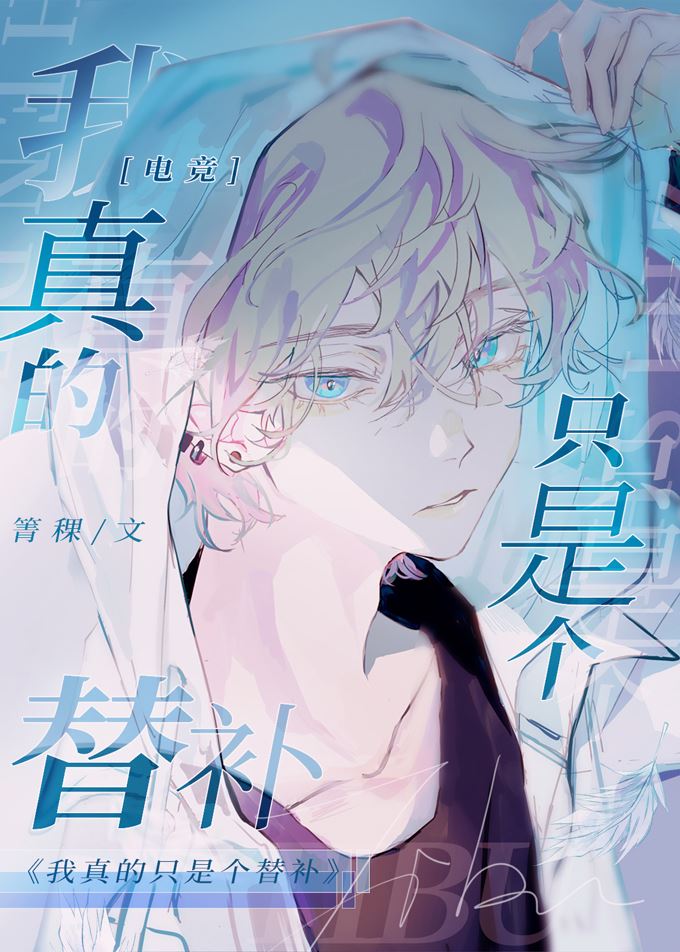
I Really Am Just A Substitute[E-Sports]
+Add to Custom List
Sort
Add review
... Read More
Can we just talk about that one moment where a tear falls on Lin Lan's hand and he looks down to see it? Like, this guy who just destroyed an opponent in a game, who's literally trash-talking Xie Zilu with zero remorse, breaks down because someone he cares about is crying for him. Xiao Shengjing is the emotional anchor of this whole mess. The fact that he's the one begging Lin Lan to wake up—"Don't leave me, please"—says everything about their relationship without a single exposition dump. And Lin Lan's reaction? He's startled, confused, but he doesn't push him away. That's who he really is underneath all the bravado. Then there's Xie Zilu, who gets absolutely crushed in that first match. But the author doesn't make him a villain. Look at how he glances back before leaving, "expression somewhat complex." There's history there. Respect maybe. Or regret. I don't know yet, but I want to. What fascinates me most is Lin Lan's own self-perception. He says he didn't do much, calls it "a piece of cake," but inside he's reflecting on how he distanced himself from his old teammates after rising to fame. The version of him in the mirror world might be weaker physically, but emotionally he's more honest. Both versions are lonely in different ways.
... Read More
There's something really powerful about the theme of unexpectedness here. Lin Lan is supposed to be a support—people see the role and immediately dismiss him. "Frustratingly, a support transitioning to AD dared to play so aggressively?" That line captures the whole prejudice he's fighting against. But he doesn't just play support well; he redefines what a support can do. The axe imagery is symbolic too. Every axe Lin Lan throws represents a choice, a decision point. Most Draven players obsessively catch every axe because that's what you're supposed to do. But Lin Lan deliberately leaves one behind as a trap. "Did Lin Lan intentionally throw the axe that he didn't catch after flashing?" This isn't just gameplay—it's psychological warfare. He's exploiting not just mechanics but human psychology, using his opponent's expectations against them. "League of Draven officially begins"—that final line hits hard. It's like宣告 Lin Lan has entered a new era. The text keeps questioning whether he's really LDL's substitute, whether an LPL AD player could do this, and the answer slowly becomes obvious: he's not a substitute. He's the real thing, maybe even better. The theme of true talent breaking through stereotypes runs through every paragraph.
... Read More
The dialogue in this chapter is doing SO much heavy lifting and I want to give the author a raise. Let's talk about Wu Tianqi's voice first, because it's perfectly crafted to make you despise him: > "You should focus on playing around me when I go on stage. You should all follow my command when I pick Jayce." That's not just bad gameplay advice—that's a personality reveal in three sentences. Arrogant, clueless about his actual role, and utterly lacking in self-awareness. Every time he speaks, you can hear the echo of every toxic teammate you've ever had in your life. The author knows exactly how to make dialogue carry subtext, and Wu Tianqi is their masterpiece. Then there's Lin Lan, whose internal voice is so distinct from everyone else's. His sarcastic observations—like when he reflects on the streamer story and thinks about how he'd teach Wu Tianqi a lesson—are written with this dry, almost cold humor that makes every page turn feel earned. And Xiao Shengjing barely says anything but when he does, it lands: > "The substitute should watch the support screen, not the top laner's." Three words that simultaneously shut Lin Lan down AND show he's actually paying attention. That's elite dialogue writing right there. The coach Zhang's lines are understated too—he goes from smiling to serious in one beat when Lin Lan says they're behind in kills, and that silence tells you more than any lecture could.
... Read More
This chapter fundamentally shifts Lin Lan's relationship with DT — from employee to stakeholder. The plot moves through several layers: first, Coach Zhang's vague promise of something important; then Xiao Shengjing's clandestine meeting; finally, the revelation that Brother Mu has decided to give him shares. What makes this work is how the author withholds information deliberately, mirroring Lin Lan's own confusion. We experience the same suspense he does. The subplot involving Wu Tianqi is crucial here. Brother Mu's hesitation to announce the decision publicly stems from fear of provoking Wu Tianqi — this creates immediate tension between loyalty to the team and concern for internal politics. It's a realistic depiction of how organizations handle sensitive decisions. The plot twist isn't dramatic; it's emotional. Lin Lan discovers he's been considered one of their own all along. The reveal that Xiao Shengjing voluntarily gave up one of his own share points to ensure fairness shows how much the team values him. This is character-driven plotting at its best — every decision flows naturally from established motivations.
... Read More
So Lin Lan and Xiao Shengjing crack open that school forum and what do they find? A wall. Just... a wall. The club posts are encrypted, locked behind a gate they can't climb. And that one sentence in the Gotham club description—'Welcome to the land of desire'—chills me every time I reread it. It sounds so casual but it's basically the thesis of this whole story, isn't it? Desire as a doorway into something dangerous. What kills me is how much truth is right there but completely out of reach. The evidence is one click away, and yet the whole architecture is built to keep people like Lin Lan on the outside. It's not just a technical barrier—it's class power dressed up as school policy. That line about cliques being a 'crucial lesson at Shengyuan' and wealthy parents sending their kids there? Yeah. That's the author telling you everything you need to know about why Xie Zilu has been operating with impunity. But the real plot twist for me isn't the mystery setup—it's the memory traversal itself. Lin Lan tries to trigger the original host's memories from those photos and barely gets anything useful. The story is basically saying: you can inherit someone else's pain, but you can't inherit their truth. The gaps in those memories are where the real investigation has to happen. I'm watching him piece together evidence now, but something tells me the photos he can't remember are the most important ones. Also: 'This group has been involved in several murders, and the police have investigated multiple times without any success.' The police already know something is going on and can't touch them. That means Lin Lan is working entirely alone against a system that's already tried and failed. Which raises the question—is he the hero or just the next casualty?
... Read More
Can we talk about the symbolism here because WOW. Lin Lan choosing Kog'Maw—the “Big Mouth,” the “Bottomless Abyss”—is not accidental. This is a champion whose entire identity is consumption, who grows more terrifying the longer the game goes on. And Lin Lan himself? He just absorbed someone else's memories, swallowed another person's experiences to find the truth, and now he's about to devour this entire matchup. The name alone connects to something deeper about him. Then there's the 4-protect-1 strategy itself—four people wrapping around one, creating a shell while the real weapon waits inside. That's basically Lin Lan's entire existence in this story: constantly carrying unbearable weight alone, protected by people who chose to stand beside him. Even the tower falling at the ten-minute mark feels symbolic. Ten minutes—the earliest possible—suggests that what's coming won't just be winning. It'll be destruction. And that's exactly what Kog'Maw does. It doesn't just defeat opponents. It consumes them entirely. I keep thinking about that name “Abyssal Mouth” and what it means for a character who has swallowed truths he probably never wanted to know.
... Read More
There's this one passage that I literally had to pause and re-read because the imagery was so vivid: 'All you could see was his mouse moving so fast that it seemed to take flight.' My god, that's not just a gaming detail, that's cinema. You can literally see it. The big screen, the crowd holding their breath, commentators lowering their voices like they're in a cathedral. The author doesn't waste words on grand descriptions but whenever they do zoom in, it lands. And the setting of the final fight—it's not just 'a teamfight happens.' It's at the Elemental Dragon pit, the Cloud Soul just respawned, WS's fourth dragon. The stakes are crystallized: if Lin Lan loses this, DT is done. The arena itself becomes a character. Even the VIP section with Xie Zilu watching intently adds another layer—this isn't just players on a screen, it's an entire ecosystem of observers, each with their own stake in what Lin Lan does next. The visual of Lin Lan flashing behind the enemy jungler, reversing everything in a single move, is the kind of moment that stays with you. Weapon had been pounding him relentlessly moments before, and now the tables turn so completely it's almost absurd. The text says WS's jungler 'suddenly feeling a chill down his spine'—that physical reaction from the opponent is what sells the scene.
... Read More
Here's what's been haunting me since I finished this section: the support role isn't just a gameplay position—it's the entire metaphor for what this story is about. Xu Shengwei has spent his whole career playing AD, carrying team responsibility on his shoulders, being individualistic and reckless. But Lin Lan chooses him for support. Not because it's easy, but because that's exactly what Xu Shengwei needs to grow. Think about it. Support requires you to watch your carry, anticipate their moves, block damage for someone else, sacrifice your own spotlight. It's the ultimate act of trust—both giving and receiving. When Xu Shengwei finally flashes to block that fatal blow in the second engagement, he's not just learning a mechanic. He's learning to trust Lin Lan enough to put himself on the line for someone else. That's a huge thematic shift for a character who's spent his life operating solo. And Lin Lan himself—former AD player who learned support to understand the other perspective—models exactly what growth looks like. He's not commanding Xu Shengwei to change; he's showing him, playing alongside him, letting him learn through doing. The duo lane becomes this beautiful symbol for mentorship, for the kind of bond that's built through shared vulnerability rather than forced teamwork. There's also the darker thread running through all of this: IB freezing talents versus DT developing them. One organization sees players as assets to be controlled; the other sees them as people to be nurtured. That contrast shapes everything about how these characters interact and grow. The support role, in the end, is about learning to play for someone else—and that's the heart of this entire narrative.
... Read More
I need to talk about Zou Hao for a second because this chapter absolutely ruins him and I love it. He comes in here with this whole plan — intentionally lose to Irelia to poison public opinion against Lin Lan, act aggrieved, play the victim. Classic manipulator energy. But the story gives him exactly what he deserves: he picks the one champion he can't outplay, against the one player who's going to dismantle him in real time. And the worst part? He doesn't even see it coming. The text says it straight up — 'in front of Lin Lan, he seemed to have turned into fish on a chopping board.' That's not just a gaming metaphor, that's a character verdict. Zou Hao spent so much time thinking about optics and crowd control that he forgot the actual skill gap between them. Lin Lan, on the other hand, is fascinating because he's completely silent throughout this. No internal monologue, no gloating, no showboating. He just plays. Every Q reset, every dagger placement, every frame-perfect dodge is executed with this cold, mechanical precision that says he's not even angry or affected by Zou Hao's tactics. The guy walked into a lion's den thinking it was a photo op and got eaten alive. Meanwhile Lin Lan doesn't even break a sweat. That contrast between Zou Hao's escalating panic and Lin Lan's absolute stillness is what makes their dynamic so satisfying. One man is performing for an audience, the other is just hunting. And honestly? I hope Zou Hao never recovers from this mental break.
... Read More
This batch moves like slow poison and I am here for it. Start with the police being shut out, move to the forum investigation, hit the failed memory traversal, then the next morning scene where Lin Lan looks like death warmed over, and THEN the walk by the river where everything just... stops. No action. No dialogue. Just two people walking and a coat being offered like it's the most natural thing in the world. That structural choice—pausing the investigation for a personal moment—is what separates this from a standard mystery thriller. The author could've kept cranking clues, but instead chose to let us sit with Lin Lan in his exhaustion. The revenge plot is still there, yes, but it's being subordinated to something rarer: character development that doesn't feel forced. The memory traversal failure is a brilliant pacing device too. Instead of giving Lin Lan easy answers, the author denies him—and by extension, us—the satisfaction of quick resolution. We're forced to wait, to doubt, to sit in the frustration alongside him. 'The truth was right in front of them, yet locked away. Truly frustrating.' That line is the whole story in one sentence. And the cliffhanger ending—'the consequence of being too comfortable was that Lin Lan, who was mentally exhausted, accidentally fell as'—is perfection. Not a dramatic revelation, not a fight scene, just the moment where the guard drops and something shifts. Whatever happens next, I know this relationship is never going back to how it was. The author understands that the most tension isn't in the chase—it's in the silence between heartbeats.
... Read More
Let me just say Coach Zhang's scene is a masterclass in showing而不是telling. He hugs Lin Lan, then hugs Jiang Jin, praises Shengjing's rhythm, compliments Feifei — and 'there was no mention of Wu Tianqi.' That's it. That's the whole scene. One sentence does more character work than three pages of explanation could. The coach knows. The team knows. Wu Tianqi knows. Nobody says it aloud but the silence is deafening. Then later you get this exchange between Lu Shi and Jiang Jin about reaction speed which reveals so much about their dynamic. Lu Shi is the excited hype man type — 'This lader is amazing, and he's still a newcomer...' — full energy, spreading the enthusiasm. Jiang Jin is more measured but still passionate, and that moment where he 'earnestly replied' about reaction speed then 'looked at Lin Lan with eager eyes' asking if it's nearly 500 — you can feel how much he admires Lin Lan. He's basically seeking validation for his own assessment. And then Lin Lan's response is just so casually devastating: 'No, it's just that IB's mid-laner is too weak.' He doesn't need to flex, he just states it as fact. The dialogue here is efficient — every line reveals character or advances the plot, nothing is wasted. The author trusts the reader to pick up on subtext.
... Read More
Let me just say this author understands how to make a protagonist's internal voice feel alive. Lin Lan's thoughts are consistently one of the best parts of this whole novel. Take this moment where he's being forced to move boxes and his internal complaint goes: 'Did he know how much his hands were worth? These hands had won two solo championships, three S-series World Championship titles, and numerous championships in various domestic and international competitions. Even when he casually picked up a bottle of mineral water, the boss would shout to put it down. If it weren't for the insurance company's refusal, these hands would almost have been insured.' Three S-series WORLD CHAMPIONSHIP TITLES and he's being made to move furniture for a team that clearly should be paying him in gold, bro. The contrast between his epic credentials and his current existence as a pack mule is comedy gold. And then his immediate follow-up thought about checking if he drooled on Xiao Shengjing's shoulder? Priorities. The dialogue between Lin Lan and Xiao Hai at the rooftop also feels very distinct — Xiao Hai's sentences trail off, he hesitates, he talks around his feelings. Lin Lan is direct and practical. Lu Shi is all exclamations and panic. Each character has a fingerprint in how they speak.

Leave a comment

You must be logged in to leave comments. or
