I Really Am Just A Substitute[E-Sports] - Reviews

I Really Am Just A Substitute[E-Sports]
+Add to Custom List
Sort
Add review
... Read More
There's a reason this chapter stays with you after you finish reading. Beneath the surface-level thriller plot, there are symbols and themes that work on a much deeper level, and I'm still processing them. The frame Xie Zilu climbs represents something enormous—a precarious position between sanity and madness, between control and chaos. He's literally standing on the edge of death while talking about 'pretending to be crazy.' Is he climbing toward freedom or toward destruction? The parallel to Lin Lan's own psychological journey—dealing with dissociative identity disorder, questioning what's real and what's coerced—creates this beautiful symbolic echo. Then there's the mask. The Masked Man. Xie Zilu's hands are 'reminiscent of the Masked Man' but clearly different. The mask represents hidden identities, performed selves, the faces we wear to survive. Both Lin Lan and Xie Zilu are wearing masks—Lin Lan pretending to meet a cousin, Xie Zilu pretending to be insane. Who is the real person underneath? And the game itself—the yes/no questioning, the three questions, the restaurant meeting—is a metaphor for the entire narrative structure. Life as a series of dangerous games where the rules keep changing. Lin Lan says 'I hope you can survive until tomorrow,' and Xie Zilu replies with that eerie laugh. They're both players in something much larger than either of them understands.
... Read More
"Draven could indeed be played this way. But in practice, no one could maintain perfect positioning in the chaos of a team fight." That line hit me like a physical blow because it's the entire thesis of Lin Lan's arc right here. The author doesn't just give us a protagonist who's good—he gives us a protagonist who operates in the impossible gap between theoretical possibility and practical execution. And then he has the audacity to make us watch him walk through that gap like it's a casual stroll. Look at the structure of this sequence. It's not linear. It's a deliberate dismantling. First, we get the mechanical explanation (axe positioning, mouse movement), which grounds the skill in something tangible. Then we get the institutional context (LPL veterans can't do this, very few players even theoretically can), which raises the stakes from “talented” to “anomalous.” Then we get the historical echo—Jiang Jin remembers another support-turned-AD—and suddenly Lin Lan isn't alone in a void. He's part of a lineage, a pattern, a ghost story that keeps resurfacing. And then the numbers. 9-0. 12-0. 16 kills, 0 deaths, 0 assists. The assist count is the real killer here. This isn't a team-player narrative. This is a solo symphony where everyone else is just providing the stage. The Baron secure, the high-ground slaughter, the fountain dive—that's not just a victory. It's a narrative erasure. The LPL team doesn't just lose; they're stripped of their last shred of dignity, and the text makes sure we feel every ounce of that humiliation through the barrage of comments, the casters' helplessness, the phrase “disgraceful!” echoing like a verdict. But the real plot twist isn't the win. It's the fourth game. The opponent bans Draven. Punishes DT with three bans instead. Watches their top-tier picks get countered by a Vayne lock-in that makes the chat implode. The narrative isn't just “protagonist wins big game.” It's “protagonist wins so thoroughly that the opposition's strategic response becomes part of his next victory.” That's not a subplot. That's meta-game storytelling, and it's executed with surgical precision. The tension doesn't drop after the crystal explodes—it pivots, coils tighter, and aims at game four like a drawn bowstring. I'm not even halfway through this batch and I already can't sleep.
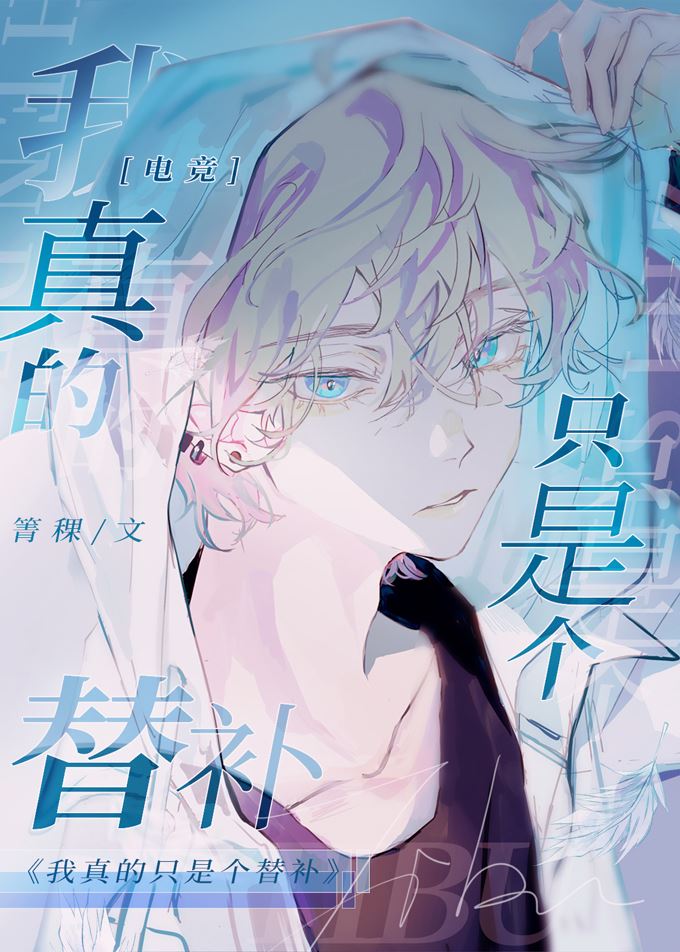
... Read More
Okay so let me just say — the dynamic between Lin Lan and Xiao Shengjing here is chef's kiss good. In his previous life, Lin Lan was clearly obsessed with this guy. Like, full-on simp energy. But now he's in this new world where Xiao Shengjing literally can't be bothered to look at him? The reversal is delicious. And then Lu Shi being absolutely brutal about it, telling Lin Lan straight up that Xiao Shengjing thinks he's a fool and won't even bat an eyelid if he dies? Brutal. But here's the thing that got me — when Lin Lan clips his hair up and suddenly Lu Shi can't stop staring at his eyes? That moment felt genuinely tender underneath all the snark. And then Lu Shi walking away with that weird line about "we both benefit from this" like some kind of emotional landmine... I need to know what that means and honestly I'm kind of worried about Lin Lan not questioning it enough. He just accepted it and moved on.
... Read More
The dual-world structure here is honestly brilliant. Lin Lan isn't just playing games—he's trapped between two versions of his own life, and the mirror is the only doorway. What threw me was how casually the author reveals that he can move between them at will, yet chooses to stay and help the other Lin Lan anyway. That's not plot convenience; that's character choice driving the story forward. The pacing in these chapters is razor-sharp. We go from a satisfying gaming victory—Lin Lan absolutely demolishing Xie Zilu—to a gut-punch moment where Xiao Shengjing is sobbing in his arms, begging him to wake up. Then BAM, back to the mirror world, and suddenly we're in a selection match where Lin Lan has to prove himself as a 0-5 support player. The tonal whiplash is intentional, and it works. One thing that really stood out: when Lin Lan realizes the Dragon Soul mechanic doesn't exist in the mirror world yet. That detail alone tells me the author has been planning this for a while. World rules are different between the two realities, and Lin Lan's knowledge from his world becomes his greatest weapon. But it also raises the question—who or what is pulling him through the mirrors, and what happens when he finally wakes up for good?
... Read More
I know most of this chapter is about moving and Xiao Hai's existential crisis, but I cannot stop thinking about Xie Zilu. The author drops this information like a casual footnote — Lin Lan asks Xiao Shengjing why a girl got transferred from the class group, and Xiao Shengjing reveals that Xie Zilu's family has control over the school's board of directors through real estate development, and that this girl 'offended' him and her friends were all forced out too. This is a person who weaponizes his family's money and influence against teenagers, and he's operating in broad daylight with zero consequences. Lin Lan's dismissive reaction — 'I didn't believe that Xie Zilu could still manipulate things from behind the screen in this legal society' — felt painfully naive of him. Like, bro, you just entered a new school environment. You don't know the full extent of this guy's reach yet. I have a very strong sense that Xie Zilu is going to come after Lin Lan sooner rather than later, especially since he's now attached to Xiao Shengjing's team. The fact that this threat was introduced so casually and then immediately dropped makes me think the author is laying groundwork for something bigger. Also, is Xiao Hai leaving the team going to destabilize their competitive performance? Because if Ayu's departure and Xiao Hai's potential resignation happen at the same time, DT might be looking at a roster crisis.
... Read More
'Actually, Lin Lan is not a bad person.' I read that sentence three times. THREE TIMES. Because it came from Ayu, who has every reason to dislike Lin Lan, and yet there he was in a hospital room with his own injured teammate, typing out a simple message of concern to someone who was basically family to none of them, and calling him out on being human. And Lin Lan's response! He didn't even know what to do with it. "He didn't really help much, just casually asking a question." — casual?! He broke his own habit of silence in the group chat for the first time ever, just to check if someone was okay, and then immediately tried to push it out of his mind because he felt uncomfortable being genuine! That's the thing about Lin Lan that killed me in these chapters. He's this guy who's been through literal death and rebirth and he still doesn't know how to接受 kindness or offer it. When he finally shows up to the meeting room looking like a lazy cat and saying "I'll do it," that's not just bravado — that's a person who has重新 learned that he still has something to fight for. Coach Zhang praising him with three consecutive "good"s — and I could practically see Lin Lan's reaction, probably pretending he wasn't affected at all while internally... I don't know. I just felt something in my chest reading these moments. The quiet ones hit harder than any dramatic confession ever could.
... Read More
Let me just sit with this for a second. Lin Lan was a top professional player at 18 with a net worth over ten million. He bought apartments without checking prices. And now? His entire bank account doesn't even reach four digits. He owes his coworker two thousand dollars. The stakes here are so beautifully humble — it's not about saving the world, it's about whether this version of himself can survive on less than four hundred dollars. But internally? These stakes are massive. Lin Lan has to reconcile two identities — the legendary player he was and the broken, debt-ridden ghost he's become. And then there's the Xiao Shengjing factor. In his past life, he pursued this man who never looked back. Now that he's in this world, does Xiao Shengjing even recognize him? Does he care? Lu Shi's warning that 'he won't bat an eyelid' if Lin Lan dies — that's not just a throwaway insult, it's the central question of the whole story. Will anyone fight for him here? Or is he always going to be the one chasing?
... Read More
"A person who was so arrogant on the gaming stage appeared harmless and gentle before him." THAT LINE. I need a minute. This whole chapter is basically one long slow-burn moment dressed up as slice-of-life banter, and I am HERE FOR IT. The way Lin Lan goes from being loud and brash in front of everyone to this quiet, focused version when he's alone with Xiao Shengjing? The intensity in his voice when he says "Look to the side and blink, yes, you see, it's off, right?" like he's sharing some sacred moment— And then Xiao Shengjing's POV shift where he actually *notices* that focus, that radiance, and feels his throat go dry. He's used to being the one in control, the untouchable Captain, and Lin Lan just walks in and dismantles all his walls with a bottle of cola and gentle hands. The best part is neither of them acknowledges what's actually happening. They talk about hand care and training schedules and—Bro. You just had someone hold your face and look into your eyes and you're worried about RESTING THEIR HANDS. The subtext is screaming at this point and I love it so much.
... Read More
Okay so this chapter is basically a masterclass in how to build tension without throwing a single punch or having a single explosion. You have this seemingly innocent game night that starts as fluffy character time and then — BAM — drops two grenades in rapid succession. First, Lu Shi's question about why Lin Lan tried to commit suicide. The narrative literally describes the air leaving the room: "The training room became stifling and quiet. Everyone held their breath." And then Xiao Shengjing's hand tightening on his water cup without him even realizing it? Chef's kiss. That's not foreshadowing, that's telepathy. But the real plot bomb is the second question. "Is the person you like present?" Lin Lan freezes. He literally cannot answer. And then — the power goes out. Not coincidence. The universe itself is like NO we are not going there tonight. When the lights come back on, everyone just... disperses? Like nothing happened? But we know something cracked open in that darkness. The author is playing 4D chess with narrative timing here. Two emotionally devastating questions in one sitting, separated by only a few paragraphs, and capped by an actual blackout. The structure is deliberate: setup (casual banter) → first reveal (suicide attempt) → second reveal (feelings) → interruption (blackout) → aftermath (silence). And that final image of Xiao Shengjing still sitting there, staring at Lin Lan with unreadable eyes? That's a chapter ending that doesn't let you go. You NEED to know what he was thinking.
... Read More
I need to talk about the Jiang Jin energy. The man is LITERALLY sweating through his palms before a team trial and he's also the most devoted support player I've ever read about. And Lin Lan — cold, indifferent on the surface, but HE LEFT CANDY FOR HIM. Let that sink in. He noticed Jiang Jin has social anxiety and literally prepared something to make the meeting less stressful. That is the kind of quiet care that doesn't announce itself with fireworks but somehow hits harder. The scene where they finally meet in person: Jiang Jin sees Lin Lan and his brain just short-circuits. "Huh?" He had this image of Lin Lan from videos — long hair, gloomy, looks like he hadn't slept — and then REAL Lin Lan shows up in slippers looking effortlessly radiant and Jiang Jin can't even form a sentence. "Y-yo-you, hello..." I wheezed reading that. The contrast between online Jiang Jin (confident, chatty) and in-person Jiang Jin (stammering mess) is SO relatable it hurts. And then the moment after the trial when he asks "When can I join your team?" — that desperation, that burning need to be near Lin Lan professionally AND personally — it's not romantic in the traditional sense but it's just as intense. It's devotion. It's the kind of thing where you'd restructure your entire career for someone because they make you feel seen. Then Xiao Hai leaves and suddenly everyone's emotional. Lu Shi and Feifei with moist eyes, the whole "he loves playing so much, why is he giving up?" energy. That's the underbelly of this world — people leaving isn't dramatic death, it's quiet goodbye at a train station while everyone pretends it's fine. And Lin Lan saying he "didn't unders[tand]" before trailing off? That silence says everything.
... Read More
The emotional core of this passage isn't romance—it's something deeper and more rare: unconditional trust between teammates who have learned to rely on each other without words. Lin Lan and Xiao Hai's dynamic is quietly devastating. Consider this moment: Lin Lan tells Xiao Hai to prepare his W1 skill in advance, to transform the Weapon Master 'at the last moment.' This isn't just tactical instruction; it's a plea for faith. Lin Lan is saying, 'I need you to believe in me even when you're terrified.' And Xiao Hai—oh, Xiao Hai—his palms are sweating, his confidence is shattered ('Can I do it?'), but he does it anyway. That's the emotional heartbeat of this passage. The author doesn't melodramatize it. No internal monologues about brotherhood or sacrifice. Just two players executing a plan under impossible pressure, and in that execution, something sacred passes between them. Xiao Shengjing's subplot adds a bittersweet layer. Lin Lan's accidental theft of the red buff, his flustered apology ('Captain! I didn't do it on purpose!'), reveals how much Lin Lan craves Xiao Shengjing's approval—even though he knows he'll never quite get it. The captain remains aloof, untouchable, and Lin Lan accepts this. There's resignation there, but also love in its purest form: loving someone without demanding they change. Wu Tianqi's suffering is almost too painful to read. He can't vent his frustration because Xiao Shengjing holds his equity shares. The detail about 'anger causing pain in his chest' is devastating—it shows how power imbalances poison even healthy relationships. Wu Tianqi loves his team but is trapped by circumstance. The passage ends with communal euphoria—the弹幕 praising Lin Lan—but what stays with me is the intimacy of two players trusting each other with their lives, literally and metaphorically.
... Read More
The pacing of that gank sequence is absolutely surgical. Let me break down why it works so well. First disappearance: opponent signals mid, mid retreats, Lin Lan reappears. Reader thinks: huh, nothing happened. Second disappearance: same thing. Reader thinks: okay, weird, is he going to gank or not? Third disappearance: opponent gets CONFIDENT. Finishes the wave. Stays. And THAT's when the bombs drop. This is classic misdirection pacing—the author makes us experience the frustration of the opponent by making us, the readers, feel the same confusion. We're sitting there going "why is he disappearing?" right alongside the enemy mid-laner. The text even references "The Boy Who Cried Wolf" explicitly, which is such a bold move but it works because the structure itself proves the point. And then the rhythm STOPS. Everything slows down. Xiao Shengjing flashes in. The tower dives. The health bars drop. And then—BAM—Lamb's Respite. Golden light. Walk away together. The dead mid-laner is left with a single "???" This is how you control pacing. Fast, slow, fast, stop, explode, walk away coolly. Five years of professional scene experience and the author has this kind of instinct. I read this part three times just to feel the rhythm again.

Leave a comment

You must be logged in to leave comments. or
