I Really Am Just A Substitute[E-Sports] - Reviews

I Really Am Just A Substitute[E-Sports]
+Add to Custom List
Sort
Add review
... Read More
Okay so this scene is honestly one of the most satisfying combat sequences I have read in this whole arc. Let me break down why it works so well structurally. The author sets up a classic trap-within-a-trap narrative here. On the surface, Kai'Sa thinks she has the advantage because she flashes back into tower safety. But Lin Lan has already anticipated this by deliberately breaking his forward momentum to lower the opponent's guard. That moment of turning back before charging again? That is the pivot point of the entire exchange. It mirrors real League of Legends mechanics where misdirection is everything, but the author translates that into narrative tension really effectively. What I also appreciate is how the first blood moment hits multiple beats. There is the tactical execution, then the emoticon reveal which is almost comedic, then Xiao Shengjing watching from afar who admits defeat gracefully. It creates a ripple effect of reactions that validates how good the play was without just saying "Lin Lan is OP" repeatedly. The second major plot turn is obviously the elder dragon steal. The author deliberately makes this feel impossible by layering obstacles. First Wu Tianqi dies in mid which removes their top lane pressure. Then Feifei gets caught trying to save him which further thins their numbers. The opponents converge four against them and everyone including the commentators writes them off. This is textbook false hope escalation and it pays off perfectly when Lin Lan refuses to accept the surrender. The actual dragon steal sequence reads like a heist movie with the health bar numbers ticking down as dramatic countdowns. 2500... 1500... 800... and then the E skill detonation that finishes it. The fact that Lin Lan outsmites a jungler on pure auto-attack DPS is the kind of moment that defines a protagonist in this genre.
... Read More
There's a moment in this chapter — I want to pinpoint it — where Zou Hao 'breaks into a cold sweat' and the whole atmosphere of the scene shifts. Up until that point, it's all fast cuts and commentator hype, the kind of thing that reads like an action sequence storyboarded for broadcast. But then suddenly the camera lingers on one guy in his gaming chair, palms sweating, realizing he's been completely owned on live TV in front of millions. That's when the scene transforms from a gameplay report into something almost claustrophobic. You can feel the weight of those cameras, that arena lighting, the impossibility of undoing what just happened. And the writing really commits to this visual language throughout. The commentators become this Greek chorus effect — they're reacting in real time, unable to process what they're seeing, which mirrors how the audience at home must feel too. 'How did Kiner come out ahead in that trade?' they ask, and honestly, neither do we, and that's the point. The scene is constructed so that we, the readers, are placed right alongside the spectators, witnessing something that defies conventional understanding of the matchup. The top lane becomes this arena stage, and every minion wave managed is another beat in a performance where one actor forgot his lines and the other was rehearsing for years. The spider web metaphor at the end seals it — Lin Lan looking down from above, the controller, while Zou Hao's every movement is caught. It's not just a gaming image, it's a fully realized spatial hierarchy drawn in prose.
... Read More
I need to sit down after reading the Lin Lan and Xiao Shengjing scene because the character dynamics here are so subtly written and I keep coming back to it. On one hand you have this absolutely electric confrontation between Lin Lan and Xie Zilu, and on the other hand you have this almost domestic scene between Lin Lan and Xiao Shengjing that feels like a palate cleanser but is actually doing SO much character work. The shift from the tension of the restaurant to the casual chaos of poking around someone's gaming messages is jarring in the best way possible. Lin Lan's OCD peeking through is such a humanizing detail. He can't STAND unread messages. Look at what the text literally says: "As someone with a bit of OCD, Lin Lan couldn't stand it and insisted on opening them all." He rejects Axiu's duo queue invite, unfriends a streamer, turns down a friendly match invitation - all in the span of minutes. And Xiao Shengjing's reaction? Pure exasperation. "Lin Lan, do you have OCD? Do you have to open every message for me?" This is a friendship built on this kind of effortless banter. But then there's the moment that made me actually pause. When Xiao Shengjing comes out of the shower without drying his hair, leans over Lin Lan to reach the keyboard, and water droplets fall from his hair onto Lin Lan's neck. The text describes it as "sending a chill through him." Not a cold chill - a different kind of chill. Lin Lan tries to get up and realizes he's been completely encircled by Xiao Shengjing with no room to escape. This spatial intimacy is so casually written but it changes the entire temperature of the scene. Xiao Shengjing isn't even being romantic about it. He's just... present. Familiar. Comfortable enough in the space to not bother drying his hair. And yet the physical proximity creates this charged moment that neither of them really addresses directly. They just sort of exist in it. Lin Lan says "Go blow-dry your hair" like it's nothing, and Xiao Shengjing doesn't believe him at all. That line alone tells me everything I need to know about their dynamic. Then immediately after, Lin Lan plays the recording of his conversation with Xie Zilu. The tonal whiplash from intimate silence to serious investigation is wild, but it makes sense for these characters. Their relationship can hold both - the mundane and the dangerous, the silly and the deadly serious. That's what makes them feel real.
... Read More
The pacing in this chapter is a masterclass in rhythm control. It opens in media res—with Dr. Wu Ming already on the phone, Xie Zilu already waiting, the confrontation already simmering. No setup needed. We drop into the tension immediately and never fully escape it. But then comes the pivot. Lin Lan returns to his room, and the scene shifts from medical threat to personal care. Xiao Shengjing's warmth replaces Xie Zilu's pressure. The crying about training feels almost comic—exhausted, performed, but real enough to make us smile. This shift isn't jarring; it's necessary. After the hospital's suffocating atmosphere, we need air. The training sequence then introduces a different kind of tension—not interpersonal threat, but physical limitation. Four clicks per second, wrist strain, the original owner's weakened body. The pacing slows here, matching Lin Lan's exhausted rhythm. Each movement becomes a struggle. We feel the time stretching. Then Jiang Jin arrives, and the energy shifts again. His shock at the suicide revelation adds weight—emotional gravity that tempers the lighthearted moments before. But the chapter doesn't linger. It cuts back to Lin Lan's private moment: ignoring the phone, showering, finally calling back with excuses. The ending lands on eerie silence. Wu Ming's rambles cut off. Then laughter—low, uncomfortable, knowing. The structure here does something brilliant: it promises resolution and delivers mystery instead. We wanted answers about the medicine, the fingerprints, the conspiracy. Instead, we get a cliffhanger that makes us immediately want to read the next chapter.
... Read More
The competition structure alone deserves an essay. Second match sandwiched between established veterans and prime-time popular teams—you know, the literary equivalent of being stuck in the middle lane of traffic while both sides have working turn signals? The organizers deliberately paired two new teams DT and ZBG to fill the awkward slot. If they lose, they become memes. If they win, well, they still play against the fanfare of opening ceremony veterans. But then the author drops this line during the ceremony: 'Lin Lan felt like he had stepped into a Taoist temple and a Buddhist temple.' Wait. What? He's describing the atmosphere of an esports opening ceremony using religious imagery? And it works? It actually works because you can feel those veterans holding court like ancient deities, fans praying to them regardless of recent performance, unshaken devotion despite years of lackluster results. Meanwhile new teams are out here sweating through their skins wondering if they'll survive their first loss intact. The bus journey itself is a masterclass in transitional space—confined, vibrating, forcing these characters into proximity that would never happen in normal life. Jiang Jin trapped in a coat like a shell, Lu Shi expanding into borrowed seats, Feifei offering medicine like a nurse in a war zone. Even the motion sickness becomes environmental storytelling. You're not just reading about a bus ride; you're sitting in the back row feeling every bump.
... Read More
On the surface, this chapter is about a player trying to join a team. But the stakes underneath are massive and the author never lets us forget it. Jiang Jin's conflict is internal first — social anxiety versus professional ambition. He's terrified of real-life interaction but more terrified of never playing alongside Lin Lan. The trial isn't just a performance review; it's a test of whether he can survive in an environment that demands presence, not just skill. And he's already committed to leaving OG, which means he's burning his current safety net before he has a new one secured. That's not bravery, that's desperation wearing a brave face. Lin Lan's conflict is quieter but no less real. He's the one who reached out, who orchestrated this whole thing, and he clearly has something to prove — both to himself and to the team. The fact that he prepared candy and arranged a private interview shows he's invested beyond what a captain should be. Where does that investment come from? The text doesn't say outright, but the transmigration hint suggests it's deeper than professional respect. The external stakes are wrapped up in the contract negotiations. Brother Mu pulling an all-nighter drinking with the OG boss isn't flavor text — that's the machinery of the esports industry at work. Deals get made over baijiu, not in boardrooms. And Xiao Hai leaving? That's the cost. Every upgrade requires a sacrifice, and the chapter doesn't shy away from showing us what that sacrifice looks like: a friend at a train station, teary-eyed, telling himself it's fine. The biggest unresolved tension? Lin Lan's question to himself at the end — that maybe he transmigrated to "make up for regrets in both worlds." If that's true, then Jiang Jin isn't just a teammate. He's a second chance. And second chances are the highest-stakes currency in any story.
... Read More
This passage is a pressure cooker. The author masterfully raises stakes at every level—personal, team, and narrative—and never lets the reader breathe. The primary conflict is Lin Lan versus the Weapon Master. But what makes this genuinely compelling is how the author distributes the stakes across multiple levels: On the personal level, Lin Lan is fighting for survival with 'only a sliver of health left.' The author emphasizes this repeatedly, creating visceral tension. When Lin Lan says 'I need at least eight basic attacks to take him down,' we understand: this is a countdown to death or victory. On the team level, the stakes are existential. Wu Tianqi is being crushed in the top lane because the enemy jungler targets him relentlessly. He can't fight back because Xiao Shengjing controls his equity shares. The author makes this painfully clear: 'the thought of Xiao Shengjing holding his equity shares in his hands made him hold back, the anger causing pain in his chest.' This isn't just gameplay—it's emotional hostage-taking. On the narrative level, the entire match hangs in the balance. The commentators note 'the defense tower plating was completely consumed,' signaling that time is running out. When the Weapon Master threatens Lin Lan, it's not just one player at risk—it's the entire team's chance at victory. The author excels at escalation. Each skill exchange raises the tension further: the polymorph interrupt, the condemn push, the repeated basic attacks, the final stun sequence. The climax—where both players are critically low on health and it becomes a race to deal damage first—is pure adrenaline. The green light of Lulu's shield arriving at the last possible moment feels earned because the author has made us suffer through every preceding second of uncertainty. The resolution satisfies because the stakes were so high. We weren't just watching a game—we were watching two players bet everything on a single moment, and win.
... Read More
Zilean is the most thematically loaded pick in this entire chapter, and I think the author knows exactly what they're doing. This champion's entire kit is about manipulating time—rewinding deaths, accelerating allies, storing experience as accumulated time. And Lin Lan, a player who's been in the professional scene for five years, is literally weaponizing time against people who thought they understood how he played. There's a deeper layer here too. The hidden passive that converts stored time into XP upgrades for teammates—that's not just a game mechanic, is it? It's a metaphor for everything Lin Lan represents as a support. He accumulates experience silently, invisibly, while others are out there getting the glory. And when the moment is right, he transfers that accumulated wisdom to someone else and watches them shine. "You're doing well." Three words, huge meaning. The support who never gets the kill count still makes the kill happen. Then there's the Jiang Jin thread—the rival who took Lin Lan's playbook and ran with it. The irony is almost painful. The very strategies Lin Lan learned to counter because they came from someone who tried to join his team and was rejected... he's now using them himself. Past trauma becomes present weapon. The text says he'd "never forget that annoying Zilean," but now HE is that Zilean. Growth isn't about escaping your influences, it's about owning them.
... Read More
This chapter is doing something really clever with pacing. Let me break it down because the structure is tighter than it looks. Act One: The Accusation. Starts IN MEDIA RES with the streamer Xiao Xia watching gameplay and immediately suspecting cheating. The bullet comments build tension—we see the community turning against the player. Quick cuts between chat reactions and Xiao Xia's investigation. This section moves FAST. You're scrolling through comments like you're watching a live stream. Purposeful. Disorienting. Good. Act Two: The Investigation. Xiao Xia screen-records, sends to her LPL friend, gets the "it's anticipation, not cheating" answer, then deliberately misrepresents it. She edits the video, censors parts, posts with vague captions. This is the dark turn—the pacing slows down here because we're witnessing manipulation in real time. The reader starts to dislike her. Smart. Then the backlash begins: fans organize, search for the ID, find the dormant DT account. Six months since the last post. WHAT. Act Three: The Aftermath. Cut to Lin Lan in the shower. Complete tonal shift from online toxicity to physical discomfort. He's dragged to the office, hears Brother Mu yelling, sees him through the window crack. Then the accidental encounter with Xiao Shengjing. Then the coach's request. Then the video. And it cuts off mid-sentence. The chapter ends on a CLIFFHANGER that's both literal (text cuts off) and thematic (we're about to learn something about Lin Lan through his gameplay footage). The pacing works because each section has a different rhythm: fast (comments), deliberate (manipulation), slow (shower scene), abrupt (ending). One complaint: the Thresh ability description drops in randomly. It breaks the narrative flow like a loading screen popup in a movie. I get that it's worldbuilding for gamers, but it felt jarring. Could've woven it in more naturally.
... Read More
"Only a toothless dog barks arrogantly. The ones that bite don't make a sound." I need this as my phone wallpaper. Lin Lan's dialogue throughout this passage is absolutely perfect — calm, measured, devastating. Every time Xie Zilu opens his mouth with some garbage, Lin Lan responds with something so dry it practically freezes. What I appreciate most is how distinctly these two voices sound. Xie Zilu talks like... well, like an actual arrogant middle-schooler who discovered bullying and thinks it makes him look tough. His lines are all reactive, emotional, full of hot air. "Waste, take a good look at this." Classic try-hard energy. Meanwhile Lin Lan's dialogue is sparse but each word lands. He doesn't waste syllables on anger — he wastes them on precision. The narrative voice itself is also doing a lot of heavy lifting. There's this wonderful dry humor woven into the narration, especially in moments like: "After patting him, Lin Lan realized that he seemed even shorter than this little brat?" This dream is just too strange…" That internal monologue where Lin Lan briefly questions his own height after aggressively mentoring a kid who is apparently taller than him? Comedic timing that rivals the best web novel writers I've read. And then there's the Translator's corner note about Yasuo skills — I love that the author includes that. It shows awareness that not every reader knows League mechanics, which makes the combat scenes more accessible without dumbing them down. One thing that struck me: Lin Lan never once raises his voice in anger. Even when called a 'waste' repeatedly, his responses are almost clinical. That restraint makes his moments of genuine emotion (like with Xiao Shengjing) hit so much harder.
... Read More
The stakes in this chapter operate on three simultaneous levels, and they escalate until they overlap catastrophically. The first level is the match itself—DT versus KIG, and the public believes DT has zero chance. Zou Hao's playstyle specifically counters Lin Lan, targeting him repeatedly, preventing him from farming, forcing him into flash exchanges he can't win. The external conflict is straightforward: lose the game, lose credibility, lose the tournament. But the author makes us care about this by showing how much Lin Lan's composure costs him. He doesn't react to the taunts, doesn't show frustration, but the text tells us 'igniting a bit of anger even in his typically laid-back personality.' Every suppressed reaction is a stake being placed on the table. The second level is the internal team conflict, and this is where the chapter becomes genuinely dangerous. Wu Tianqi isn't just losing a match—he's discovering that his entire identity as team captain, as the veteran who carried DT to the World Championship, was built on a lie. The shares were given to Lin Lan. His contributions were evaluated as inferior. He was the 'outsider' in his own team. When he overturns the table, this isn't just anger; it's the violent eruption of someone whose reality has been invalidated. The stakes here are existential—if Wu Tianqi's position collapses, the team collapses with him. He's not just a player; he's the structural pillar, and pillars don't crack without bringing the whole building down. The third level is perhaps the most subtle: the audience's conflict with itself. They start by dismissing DT, then witness the loss, then refuse to sympathize ('DT brought this upon themselves'). The author shows how quickly collective empathy evaporates when results go against you. This raises the stakes for every character—there's no safety net of public goodwill. You win or you're nothing. What makes the conflict so gripping is that all three levels are happening simultaneously. While Lin Lan fights Zou Hao in the match, Wu Tianqi is fighting his own obsolescence in the lounge, and the audience is fighting its own prejudice in the stands. The chapter ends with all three conflicts unresolved and all three stakes higher than when they began.
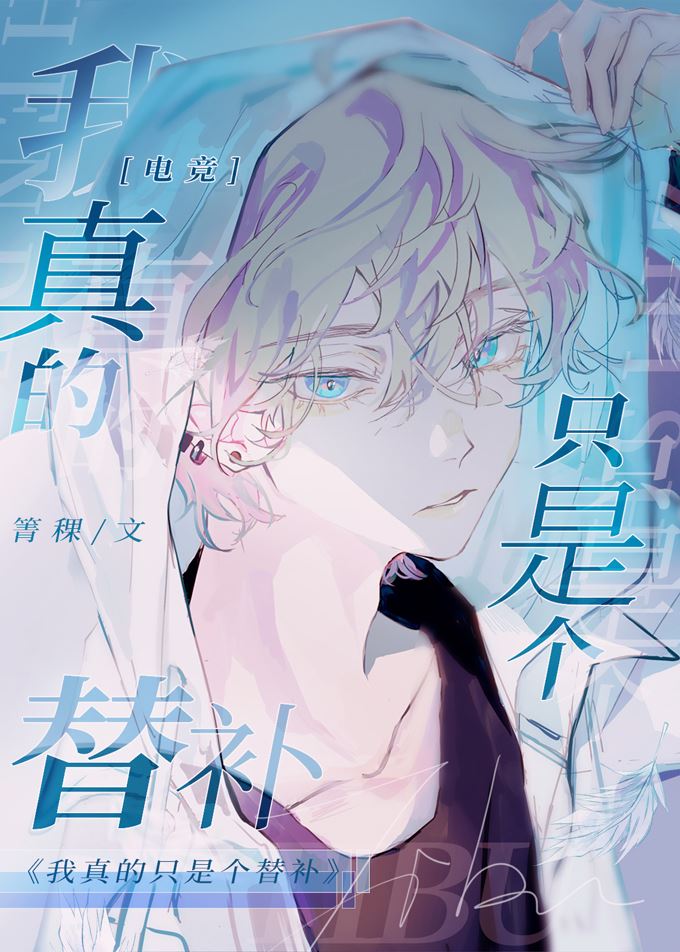
... Read More
Okay so here's the thing that genuinely surprised me about this chapter — the plot does this beautiful back-and-forth where Lin Lan is absolutely DOMINATING in one lane while everything else is falling apart. It's not just one-sided greatness, it's like the author deliberately set up this mirror effect. Lin Lan kills the Thresh support in like two seconds with five attacks, no vision, blind E1 — absolutely ruthless. Then right after, cut to Wu Tianqi getting solo-killed. That contrast IS the story here. It's not just "our guy is good," it's "our guy is carrying so hard it's painful, but look at everyone else." And the most interesting plot beat? When Lin Lan says "Captain, you go to the top lane; I'll be careful this time." That's a major turning point. He's not just some mechanical god — he's reading the macro, understanding the team needs him to play differently, to not be the babysitter. Meanwhile Wu Tianqi literally says "Captain, come counter-gank me" which is the first time in his history he's asked for help. That tells you EVERYTHING about DT's structure without any exposition dump. Then Xiao gets killed and tries to CONTINUE the pursuit anyway. That's the kind of plot decision that makes you wonder if he's a genius or if he's setting himself up for a bigger fall. Either way, the author is laying groundwork and I can't tell which direction it's going.

Leave a comment

You must be logged in to leave comments. or
