I Really Am Just A Substitute[E-Sports] - Reviews

I Really Am Just A Substitute[E-Sports]
+Add to Custom List
Sort
Add review
... Read More
The dialogue in this chapter is SO good and I need to talk about how perfectly each character sounds. Lin Lan's voice is just... unhinged energy. "Wasn't that quick?" after forcefully removing someone's contact lens in front of half the team like he just won a competition. The pure, unadulterated pride in that line. And then later: "I just saw a dense pile of words, felt sleepy, and went to bed. This hypnotic technique is indeed very effective." AFTER Jiang Jin spent an evening compiling 36 hand protection tips. He didn't even read them. He used them as a bedtime story. The man is a menace and I adore him. Xiao Shengjing's voice is the perfect foil—short, clipped, increasingly desperate. "Hmm." is basically his entire vocabulary for half this chapter. "Go sit at the back." "You can also rest your hands." Each line getting more flustered than the last. The fact that he can command an entire esports team but cannot handle one awkward conversation with Lin Lan is comedy gold. And Xie Zilu's entrance at the end? "Guess what I'm doing?" "You're jumping off a building." The absolute casual delivery of that exchange. These characters have distinct voices and it makes every scene come alive.
... Read More
Let me just say — the entire subplot about whether or not Lin Lan is getting a raise is a masterclass in dramatic irony and character establishment. On the surface, it's a simple comic misunderstanding. Lin Lan hears everyone got raises, assumes he didn't, and interprets every act of kindness as a pathetic consolation payment. But it's actually doing SO MUCH WORK narrative-wise. First, it establishes that Lin Lan genuinely doesn't believe he's valued. His internal monologue about how in the original timeline, everyone kept teasing him about becoming a shareholder year after year and nothing ever happened, so he learned not to hope — that's devastating backstory condensed into two sentences. This isn't just a comedy bit, it's the core wound of a person who's been promised recognition repeatedly and received nothing. Second, the reveal that the 'nutrition fees' are actually genuine care from Coach Zhang and Brother Mu flips the entire emotional architecture of the scene. Xiao Shengjing explains it simply: 'He cares about you because he considers you one of us. You're the backbone of DT.' The joke isn't just 'Lin Lan misinterpreted things.' The joke is 'Lin Lan has been so starved for acknowledgment that genuine care reads as condescension to him.' That's characterization through plot mechanics. Third, it sets up the upcoming match pressure perfectly. Lin Lan thinks he's being sidelined financially while the team is about to face WS — a mid-tier team stronger than their previous opponents. The narrative is threading the needle between 'the team might not value him enough' and 'actually they value him enormously but he can't see it yet.' The match loss at the end reinforces his worst fears momentarily before the story will presumably prove him wrong. Brilliant structural setup.
... Read More
What I love about how the author handles dialogue here is that every character has a distinct rhythm and you can tell who's speaking without seeing their name. Wu Tianqi's tantrums read like someone who's used to getting their way — short, demanding sentences, no filter. Brother Mu sounds like a weary manager who's seen this movie before. 'He kept dragging me and kept asking about shares' — that repetition mirrors how exhausting those conversations must be in real life. Then there's Xiao Shengjing, cold and measured: 'Wu Tianqi's heart is not with DT.' Not 'he doesn't care about the team' but something sharper, more existential. His lines are surgical. Jiang Jin's typed messages have this nervous energy — the all-caps excitement, the over-explanation, the 'I'm not a scammer' panic. It feels like how an actually obsessed gamer types. And Lin Lan's dialogue is famously minimal. 'Oh.' 'I don't want this one.' 'My mom is here.' Three words and you can feel the entire personality behind it. The author isn't just writing conversations; they're writing personalities. Even the author's note at the end — 'The mouse model is randomly written; please don't go and buy it. QAQ' — breaks the fourth wall in a way that feels genuinely warm, like the author is personally addressing readers with this quirky, self-aware humor.
... Read More
I want to talk about how this chapter shifts between two completely different atmospheres and somehow both feel equally vivid. The opening hits us with the cultural phenomenon of Lin Lan's gameplay going viral — broadcasters analyzing him frame by frame, support players trying AD and failing, Jiang Jin insisting 'Support players should know how to play AD' like a man possessed. The whole esports world feels Alive here, buzzing with energy, and you can practically hear the chat scrolling. Then we cut to the hair salon. Immediately the pace drops. The language gets quieter. We're in a space with expensive decor catering to wealthy clientele, thin-framed glasses, magazines, the soft lighting that makes Xiao Shengjing's eyelashes look like 'soft feathers.' The contrast is deliberate and it works. One world is noise and screens and public adoration; the other is silence and awkward small talk and the sound of a hairdryer. The most striking image in this whole chapter is probably the ending — Lin Lan half-asleep under the scorching sun, parched, and Xiao Shengjing half-kneeling in the sand pouring water on his forehead. The narrator says he was 'focused and tender' and the sentence literally cuts off mid-description, which is honestly the mostAgnes: I notice the thinking block wasn't closed properly. Let me generate the response now.. It leaves us hanging on that image, which is perfect because it mirrors how Lin Lan himself is caught between two realities — the dream and the salon, the past and the present. The detail about the hairstylist asking 'Which one of you is getting your hair washed?' and both saying 'Me' at the same time — that moment of synchronized awkwardness tells you everything about these two. They're never on the same wavelength consciously, but their bodies keep syncing up anyway.
... Read More
Oh my god, let me just say this first: Xiao Shengjing is the most interesting character in this entire story and I am OBSESSED. The way the author writes him—backlit, silhouette, unable to read his expression as he walks away—this is deliberate, this is craft. You spend the whole chapter wondering: did he abandon Lin Lan or not? And the answer the author gives you is this beautiful, layered truth: he didn't abandon him to die. He called for help. He guarded Lin Lan through the nightmare while he lay in a hospital bed as a vegetable. He stood by the window, motionless, in both worlds. That's not someone who abandoned anyone. That's someone who carried the weight silently. And Lin Lan? He starts this chapter unable to trust him. He literally says he's letting go of his guard against him because he realizes Xiao Shengjing saved him. But can he really let go? The scar on his back, the trauma, the original owner's feelings—they're all tangled up in this one person. Their relationship is this messy knot of gratitude, betrayal-perceived-but-not-real, and something that feels dangerously close to gratitude turning into something else. Then there's Ayu. "My eyelid twitched a lot today." "The right one." Lin Lan immediately goes to check superstitious meanings. And Ayu's desperation—"If Sister Song calls me, please answer for me, please." That repetition, that plea to the team leader. Something is happening with his family and he's terrified. The author doesn't spell it out. Good. The silence around Ayu's worry is louder than any dialogue could be.
... Read More
I need to talk about the way this whole arc with IB is seeding. Remember when Lin Lan thinks about how IB froze two talents—one in the top lane, one in the jungle? That's not just worldbuilding filler, that's actually foreshadowing the entire philosophy behind how organizations treat players. IB freezes talent, exploits it, and leaves careers ruined. And then we have Xu Shengwei, who walked away from IB on his own terms, got blacklisted, and is now grinding alone at Grandmaster. The irony is insane—he chose self-destruction over exploitation, and somehow that stubbornness is making him better than most. But the real plot move here is the training match itself. Coach Zhang sets up this mixed-team format where substitutes and trainees get thrown in with main team members, and suddenly Xu Shengwei—who's been this nervous, mute presence—gets picked by Lin Lan personally. Think about that beat. Lin Lan could've picked anyone for support, but he looked right at Xu Shengwei and waved him over. That's not an accident. That's Lin Lan seeing something in him that nobody else has noticed. And then Jiang Jin straight-up trolls him during the match, intentionally finishing Lin Lan off with Ignite and an emote. That's not just gameplay tension—that's character dynamics playing out in real time. Jiang Jin knows how much this means to Xu Shengwei, and he's deliberately making it hard. But here's the thing that got me: Xu Shengwei keeps learning. He misses the first control, he exposes Lin Lan, but he doesn't quit. By the second engagement, he's flashing to block a fatal blow. That's a complete character arc packed into one match. The plot doesn't need a hundred chapters when one game can do this much heavy lifting.
... Read More
Lu Shi is genuinely the funniest character in this entire series. "Haha, he makes it sound like you're his elder. You're just a year older than him, and he's using formal language." But what I love most is how every character has such a distinct voice. Lin Lan barely says anything — short answers, practical, always deflecting emotion with efficiency. Xie Zilu on the other hand is a waterworks of messages, every sighting, every feeling, dumped into text form like he can't contain himself. And then there's Xiao Shengjing, who somehow ends up being the most emotionally intelligent person in the room despite being called the silly dog. His gentle head touch and "don't bear it alone" line hit completely different than Lu Shi's loud laugh. Three different ways of caring, all in one chapter.
... Read More
I need to talk about the scene where Lin Lan stops mid-signature. This is the emotional peak of the entire chapter, maybe the arc. He's choking up. Something is caught in his chest. He asks, "If one day I'm not here, how would Brother Mu feel?" This isn't about shares anymore. This is about a man who has spent his whole life being temporary, drifting from place to place, never belonging anywhere. And suddenly, people are trying to build something permanent with him. Something that says: you matter. You're one of us. Xiao Shengjing's response — patting his head, telling him he's free to leave whenever — should be comforting, but it actually makes it worse, doesn't it? Because Lin Lan realizes how much he doesn't want to leave. How much he's grown to love DT. The line about this being something he pursued his whole life but never found hit me hard. "It was a form of security, a sense of safety." Not wealth. Not status. Safety. Belonging. And then his mood completely flips — Xiao Shengjing teases him about the raise, and suddenly Lin Lan is angry enough to sign just to shut him up. That transition from melancholy to exasperation is so human. So real. I laughed out loud, then immediately felt bad for laughing because the previous paragraph made me... well, you know.
... Read More
'A European player dominated the world with Lucian in the mid-lane, causing domestic teams to retreat one after another. He was hailed as the Lucian God. Now, unexpectedly, there's a player in the domestic scene who handles Lucian with such smoothness.' This comparison is EVERYTHING and I need to unpack it. The Lucian here isn't just a champion choice — it's a SYMBOL of dominance through precision. Twin guns, relentless pursuit, silver light cutting through everything. Lucian is a champion built on aggression, on constant pressure, on never letting the enemy breathe. And Lin Lan embodies that philosophy so completely that the very concept of the champion becomes an extension of his identity. But the deeper symbol is the BOT LANE itself. In League culture, the bot lane is where carries prove themselves. It's the most scrutinized position, the most pressure-cooked. And Lin Lan has been PLAYING SUPPORT — a position of service, of enabling others — when really he was a carry all along. The "genius AD, a genius AD delayed by playing support" line isn't just plot information, it's a statement about hidden potential, about systems that misidentify talent. The Infernal Dragon Soul is another layer. Six percent bonus attack damage. That might sound small, but combined with Lin Lan's existing power, it becomes the difference between "strong" and "unstoppable." It's the symbol of that final multiplier — the thing that transforms good into legendary. And the line that haunted me: "You wanted to play the early game, right? Sure, I'll play the early game with you." This is about meeting your opponent on THEIR terms and then exceeding them so completely that their own strategy becomes irrelevant. It's the ultimate form of respect through destruction. The author is telling us something about Lin Lan's nature through these symbols: he doesn't just win, he REWRITES the rules of what winning looks like.
... Read More
"resembling a drowning person clutching at a lifeline, the more desperate, the tighter the grip" I keep coming back to this line. It's not just describing how Lin Lan held onto Xiao Shengjing's shoulder in a taxi. It's describing EVERYTHING. The alcohol made him cry without knowing why, and then he just wouldn't let go. And Xiao Shengjing—he wanted to throw him out of the car. He literally thought about it. But the second Lin Lan started sobbing with his eyes closed, gasping for breath, he scooped him back up. Of COURSE he did. This is the emotional core of the whole chapter, and the author barely even hammers it home. It's just there, woven into the fabric of a supposedly comedic drunk-caring scene. Lin Lan, who is usually this sharp, competitive, driven person—the one who loses his shirt in games and takes himself seriously—melts into this helpless, weeping mess in Xiao Shengjing's arms. And Xiao Shengjing, who prides himself on emotional detachment, becomes this ridiculous softie, stroking hair, wiping tears, muttering threats while doing everything tenderly. "As long as I'm here, no one dares to bully you." Say it louder for the people in the back, Captain. That line came out of nowhere and absolutely wrecked me. It's so casual, so offhand, delivered while half-carrying a sleeping boy up a staircase. But it's also the truest thing either of them has probably ever said out loud. And the contrast with the second half of the chapter? Jiang Jin, millions of kilometers away emotionally, watching Lin Lan's gameplay and thinking about how brilliant he is. He sees the COMPETITOR, the STRATEGIST, the genius. Xiao Shengjing gets to see the CRACKS. The part that sobs into his collar and clings like his life depends on it. That's not just caring—that's intimacy. Raw, unguarded, alcohol-fueled intimacy that neither of them asked for but both clearly needed. I'm not crying, you're crying.
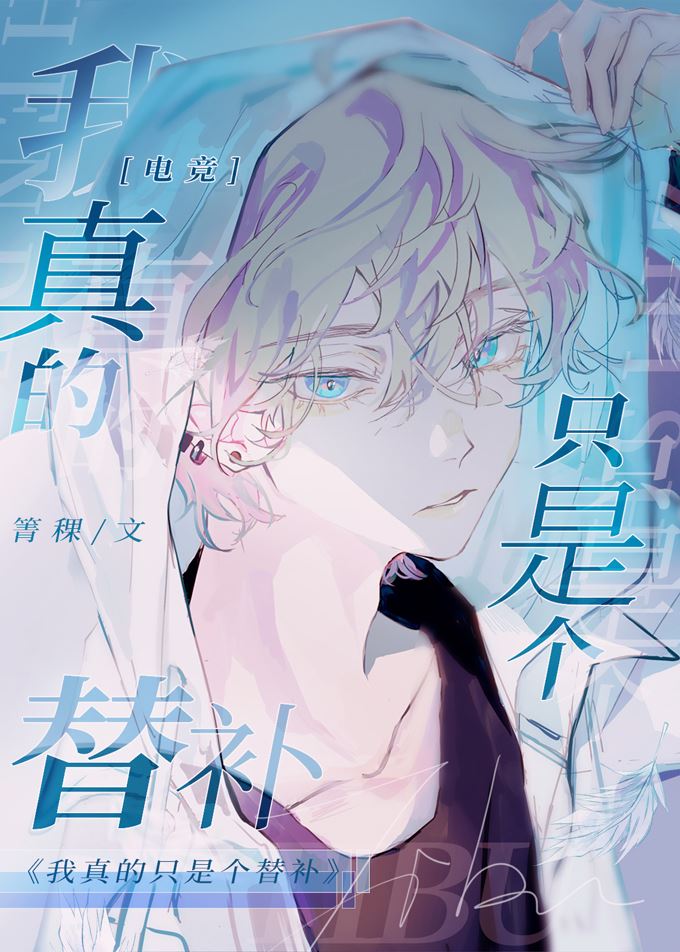
... Read More
The dialogue in this passage is deceptively simple but remarkably effective. Each character has a distinct voice, and the author achieves this primarily through rhythm and word choice rather than elaborate speech patterns. Lin Lan's voice is direct, tactical, occasionally self-deprecating. His lines are practical: 'Xiao Hai, I need your help. I need at least eight basic attacks to take him down.' No flourishes, no drama—just clear communication under pressure. When he asks Xiao Hai to prepare the skill, he doesn't beg; he states the requirement and trusts his teammate to rise. This is how confident people speak when they're genuinely confident. Xiao Hai's voice is different—hesitant, uncertain. 'Can I do it?' That's it. Three words that capture his entire emotional state. The author doesn't need to describe his fear; the question itself reveals everything. His voice matures through the passage as he learns to trust himself. The commentary team's voice provides comic relief and narrative context. Lines like 'So miserable, so miserable, the bottom lane is flourishing, but the top lane is in prison!' are snappy, observant, and grounded in gaming culture. They feel like actual esports commentators, not narrative devices. The on-screen chat (弹幕) is perhaps the most distinctive voice. '[Hahaha, what the heck?]' '[Is he seeing red? My goodness, too smooth.]' These fragmentary, colloquial expressions create an immediate sense of community and shared experience. They pull the reader into the moment, making us spectators rather than observers. What impresses me most is how the author uses silence strategically. Xiao Shengjing's near-silence throughout the passage is deafening. His lack of dialogue speaks volumes about his character—aloof, internal, unreadable. The contrast between his quietness and the noise around him creates dramatic tension without a single word from him.
... Read More
Let's talk about Xie Zilu for a moment because this guy is serving pure comic relief and I am HERE for it. On the surface he's your classic arrogant rich kid bully—sneering at Lin Lan during a solo game, telling him to kneel and call him daddy, surrounded by laughing classmates. Classic toxic peer energy. But there's something almost endearing about how thoroughly he gets outclassed here. Like, he's sitting there with his half health bar and his flashy Flash-Q combo, thinking he's the main character of this interaction, and Lin Lan is just... casually dismantling him like it's nothing. The contrast between these two characters is fascinating. Xie Zilu represents everything Lin Lan used to despise about the pre-pro scene—amateurs treating the game like a toy, boasting without substance, seeking status through mockery. And now Lin Lan, the actual Grand Slam champion, is stuck in a body and a timeline where people like Xie Zilu still have social power over him. But here's what keeps me from writing Xie Zilu off as purely a one-note antagonist: the text gives us this weird glimpse of Lin Lan's professional teammates. Xiao Shengjing, his captain, who was out there shielding him from reporters while everyone in the chat was tearing Lin Lan apart. There's a whole dynamic there that the story seems to be setting up—Lan and Xiao's relationship versus Lan and Xie Zilu's. One is built on loyalty and protection, the other on superiority and mockery. I also want to flag the girl who sided with Xie Zilu's classmates but then called Lin Lan a loser and ran away. She's not even committed to the bullying—she's just going along with the crowd, embarrassed by association. That's such a realistic character detail. People like her exist everywhere. The real question is whether any of these relationships will evolve beyond their current forms, or if Xie Zilu is destined to remain the tutorial-level antagonist Lin Lan sweeps aside on his way to the top.

Leave a comment

You must be logged in to leave comments. or
