Hero, Go To School! - Reviews

Hero, Go To School!
+Add to Custom List
Sort
Add review
... Read More
The pacing in these chapters is dangerously good and I want to dissect why. Chapter 27 starts mid-crisis — Ian coughing blood, Lillian orchestrating everything. There's no slow build, no exposition dump. We're dropped into the emergency and we swim forward with her. Then there's this brilliant narrative break where Lillian pauses the action to explain her methodology — the Rohan cavalry speech. It's a breather, sure, but it also reframes everything we just read. We thought this was a dramatic rescue; now we know it was a calculated performance. That's a structural pivot that rewards attentive readers without slowing things down. Next comes the tutoring montage, which functions as both worldbuilding and a false sense of stability. Everything is falling into place! The prestigious teachers are arriving! The plan is working! And then — BAM — breakfast. The tension doesn't decrease; it just changes shape. Instead of 'will Ian survive his illness' it becomes 'will Ian survive a meal without starting a war.' The final scene escalates from verbal hostility to physical destruction (the pitcher) to a full father-son confrontation about poisoning, and then ends on Ian's accusation while Josefina can barely form a word. That's three levels of escalation in one continuous scene, and it leaves us hanging on a literal cliffhanger. The author understands that tension isn't about big action — it's about making every interaction increasingly dangerous.
... Read More
Okay this chapter is a masterclass in tonal whiplash and I am HERE for it. We start with Ian confessing what sounds like a romantic declaration—'My body feels strange. I couldn't sleep at all last night because I kept thinking about you.' You're leaning in. You're thinking romance. And then he immediately follows it with 'It feels like poison, no… like a curse.' Tone pivot number one. Then the grape scene hits—wind blowing, sweet scent, wistful blue eyes—and you're thinking 'maybe they'll actually have a moment' and then THWACK he gets hit with a coat hanger. Tone pivot number two. Then Lady Marie gets screamed at by her own fear and flees. Tone pivot number three. Then Ian drops the 'they cut open my lower abdomen' line like it's just another item on his list of bad experiences. And suddenly the whole chapter has shifted from rom-com into something much darker. What's brilliant is that none of these pivots feel accidental. The author is using comedy as a pressure valve—letting us laugh, then immediately reminding us that this guy has survived literal torture. Each joke lands softer because we know the stakes are higher. Each serious moment hits harder because we just laughed five minutes ago. The chapter ends with her storming into his dressing room to pick out clothes and him shredding everything. Classic setup—where do they go from here? They're trapped in a room together, he's still naked-adjacent, and she's still the only person who hasn't fled. The pacing here is setting up something bigger.
... Read More
Okay so let me just talk about this reveal because my brain is still spinning. One second Jean is this totally unimpressed tutor who couldn't care less about teaching, and the NEXT second he drops ARES BALTHAZAR like it's nothing casual, and I swear my jaw hit the floor. Like—how?! He just… looked at Ian? From the neck down? That's it? No detective work, no careful observation, just boom: identity revealed. And Ian's reaction was honestly the funniest part. Remember how literally every other tutor just ran away screaming or treated him like a feral animal? And here comes Jean, who should've been the most intimidated person in the room, and instead of running, he EXPLODES with joy. 'It's an honor to meet someone like myself!' — bro, WHAT? The sheer whiplash of this character shift had me wheezing. One minute we're bracing for violence, the next minute we're watching a man lose his mind over meeting a living legend. The pacing here is also *chef's kiss*. The author lets the tension build — Ian storming off on the horse, Jean watching blankly, everyone expecting the worst — and then just POPS the balloon with pure absurdity. No dramatic confrontation, no bloodshed. Just a guy pulling out a battered book like it's Excalibur. But the real plot twist embedded in all this? Jean mentioning that the limited edition with the assassination details wasn't supposed to be public. That means Ian (Ares) personally wrote those records. Which means he's been documenting his own darkest moments and somehow they got out. I'm already theorizing about what exactly is in those pages and why it matters. This author really knows how to plant seeds.
... Read More
On the surface this is a comedy about dressing a knight who thinks clothing is bondage. But underneathtwo completely separate wars are being fought simultaneously and neither of them has anything to do with the actual war Ian experienced four centuries ago. The first war is internal: Ian's entire identity is built around being a weapon, a soldier, a man who survives on six years of battlefield conditioning where sleep is a luxury and vulnerability is death. The narrator trying to get him to wear clothes isn't really about clothes at all — it's about convincing him that he's allowed to exist in a world where he doesn't need to be armed twenty-four seven. Every time he resists putting on a shirt, he's really resisting the idea that he might be safe. The second war is the political one lurking underneath: who's the traitor at Luxus Academy, what does the contract really cost, and what happens when the narrator's own past catches up to them? The stakes keep escalating even in the quietest scenes. That moment when Ian reveals he's been staying awake all night guarding the narrator's room — "You don't need to worry about that. I've got it under control." — that's not just a sweet beat. That's the story telling us something terrible: this man who survived torture and war doesn't know how to receive care, only how to provide it through violence and vigilance. And the narrator, who has spent the entire series trying to survive Ian's unpredictability, is now the one being protected. The power dynamic has flipped and neither of them quite knows how to navigate it yet. The real tension isn't whether Ian will wear clothes. It's whether either of them will survive what comes next when the traitor is finally exposed.
... Read More
I need to talk about this one specific detail because it absolutely melted me. At some point during Jean's whole passionate monologue about Ares Balthazar, the narration just casually drops: "Especially whenever Jean, flushed with excitement, shouted things like 'Thanks to him, we now live in an age of peace,' Ian would look off into the distance." And then immediately follows up with: "If you looked closely, he seemed more like a housecat than a wildcat." HOUSECAT. Not a lion. Not a wolf. A HOUSECAT. Guarded, sensitive, with a stubborn streak. This single metaphor does SO MUCH emotional work. Up until now, Ian has been this terrifying, feral thing — stripping naked, screaming, nearly killing people, zero self-control. We've been reading him as pure danger. And suddenly the author is like: actually, he's just a scared little cat who got handed a sword and told to survive. And the way Ian reacts to Jean's adoration — sitting still for TEN DAYS straight, listening to stories about himself, actually FLUSHING when people praise the hero he used to be — it's devastating in the softest way. This man who can't handle a riding lesson also can't handle someone looking at him with pure devotion instead of fear. His hands literally can't stop fiddling with that miniature sword. He's touched by something he hasn't experienced in... god knows how long. The narrator, meanwhile, is just sitting there experiencing this whole thing secondhand, and her internal monologue about how she already knew this story from Sweet Everyday but now it HITS different because IT'S REAL — that's the emotional core of the entire chapter. She's watching someone she cares about confront his own myth, and she can't look away.
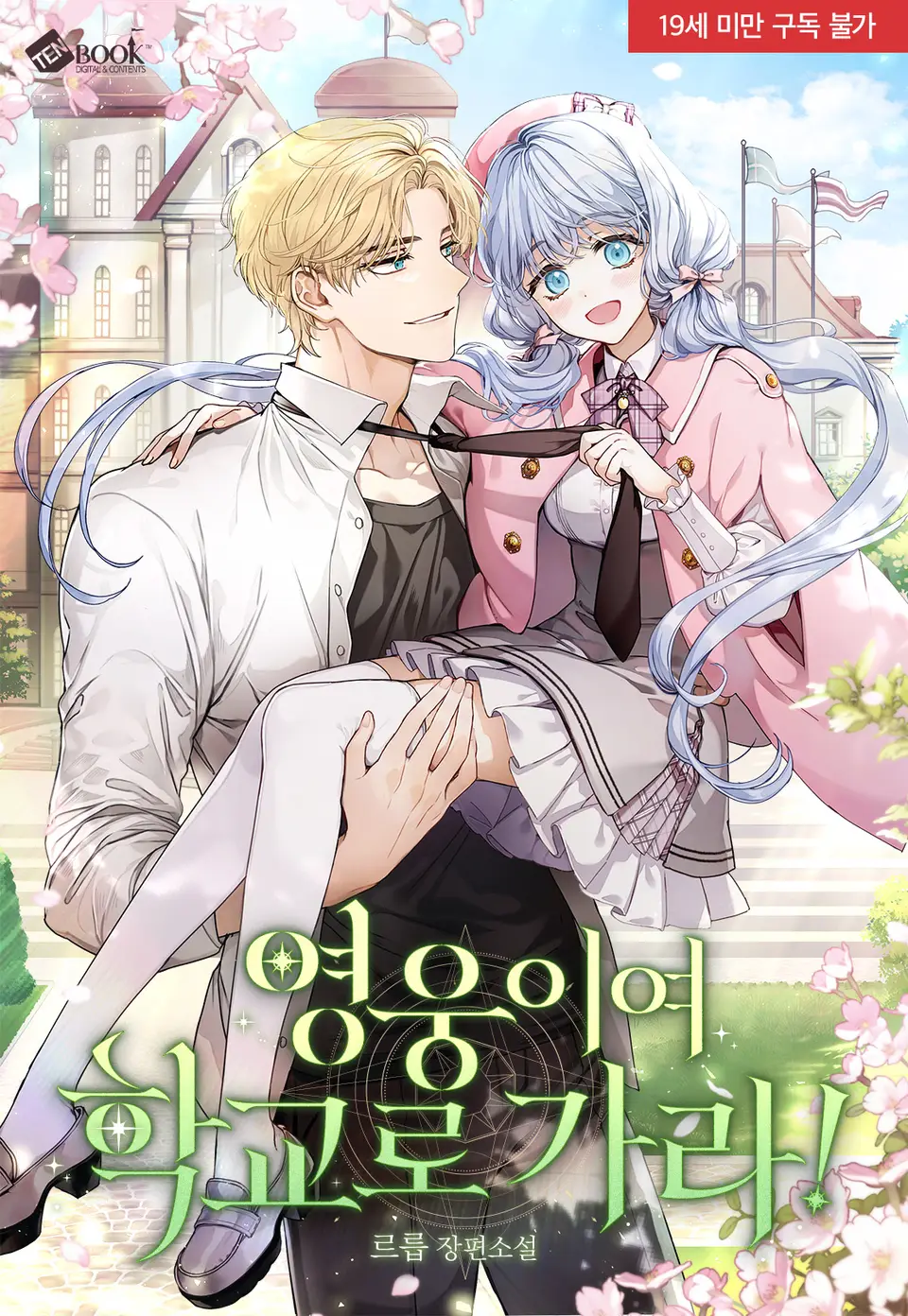
... Read More
I need to talk about Ian because this man is an absolute disaster and I cannot look away. First we see him charging through town completely naked, destroying a public monument like a toddler who spilled his juice box, then he saves our protagonist from falling off a statue, and immediately after that he's waking up in bed with her and throwing a blanket over her face demanding she reveal herself. The WHOLE person. And yet—there's this one moment where he catches her falling and his voice actually trembles when he asks if she's okay. Right after that he goes full "reveal yourself" warrior but the switch from protective to hostile in two seconds is kind of devastating? Like what did he go through? The text literally says he woke up looking like he'd had a nightmare. I know this is early but I already feel like Ian has some serious trauma behind that golden hair and smug attitude. And then there's Lilian—the protagonist realizing she's IN the body of the character who "controls" Ian completely. The power dynamic here is so interesting because on paper she should have all the leverage, but the moment she opens her eyes he's already armed with suspicion. Also minor point: the author takes a solid paragraph to describe Ian's naked physique like this is important narrative detail and not just the female gaze going wild, and honestly I respect it.
... Read More
Okay so let me just start by saying I read the scene where I press my chest against his breastbone and he basically short-circuits multiple times and still can't remember how it went. The text literally says he was flustered past words, staring with that wild gaze like his brain had just blue-screened. And then after everything, when we're leaving and he's walking beside me in actual clothes and the maid screams because apparently seeing him dressed is more shocking than any violence he's ever caused — I lost it. That ending beat? Perfect. All that struggle over four hundred chapters and he finally agrees to wear clothes after a negotiation that involved nipple pinching and chest smothering and me basically using my body as leverage like some kind of medieval hostage situation. The plot has been building toward this mundane victory for so long and the author just delivers it with this deadpan energy. One chapter ago we were dealing with contracts and betrayal and political assassination attempts, and now the biggest dramatic moment is Ian finally wearing a shirt without having an existential crisis. That contrast is delicious.
... Read More
Let me just say this upfront: the suspense in these chapters is suffocating in the best possible way. It starts with poison. Someone is trying to kill Ian, and the Duke and Duchess are so desperately concerned that they have every servant taste-test the entire meal. That's already high stakes—life or death in a noble household. But Ian's reaction is the problem. Instead of gratitude, he escalates. He smashes through a window naked and kidnaps Lillian to hide in a storage room. The conflict isn't just external (who's poisoning him?) anymore—it's internal (is he even capable of handling the threat rationally?). Then comes the hiding scene, and the tension shifts again. Are the servants going to find them? Will the poisoner strike while they're vulnerable? Ian's tactical whispering keeps you on edge—every footstep outside the door is a potential death sentence. But the real stakes are personal. Lillian is confronting something she's spent her whole life avoiding: physical intimacy. Her panic isn't just about being trapped; it's about her body reacting to warmth for the first time. The external danger and internal terror feed each other. The kiss scene is where the stakes become impossible to ignore. Two people who have never experienced genuine touch collide, and the aftermath reshapes everything. Ian can't look at her. He's stammering, blushing, completely undone. Lillian tries to compartmentalize—she mentions the poison, reminds him of their agreement, tries to return to business. But neither of them can. The moment has changed the temperature of their entire relationship. And then the next morning hits like a freight train. The garden is destroyed. Ian is a different person—covered in filth, radiating hostility, refusing to let anyone靠近 him. The conflict has internalized. It's no longer about a poisoner outside the walls; it's about the person sitting on the bed who can't bear to be near the one person he supposedly trusts. Lillian's response is where the stakes peak. She doesn't negotiate. She doesn't plead. She attacks. Literally punches him until he talks. The raw desperation in that scene—the fact that she'd physically assault someone she's supposed to be protecting just to get a response—is both hilarious and heartbreaking. And his silence while taking the blows? That's the highest stakes of all. He'd rather be hurt than explain himself. Every conflict in these chapters layers on top of the previous one. Poison + paranoia + accidental intimacy + emotional breakdown + physical destruction. The story doesn't let you catch your breath between problems. Itstacks them until you're desperately turning pages just to see what breaks next.
... Read More
I keep thinking about the nakedness. Not in a weird way, okay, hear me out. Ares Balthazar—the greatest hero of the Hyssus Empire, the man who built an empire, the living legend—arrives in this story completely naked. Not metaphorically naked. Actually, physically, shamelessly, grotesquely naked. And the humor comes from the dissonance between who he is (a revered war hero) and what he looks like (a man with absolutely no sense of decorum about his own body). But symbolically? It works on multiple levels. Ares has no clothes because he has no context. He just woke up in a body that isn't his, in a world that isn't his, surrounded by people who mourn someone he never knew. The nudity reflects his rootlessness. He's untethered, exposed, vulnerable despite being the most dangerous person in every room. There's also the recurring image of faces and recognition. Helith reads love in his son's face. Ares reads enemies. Josefina sees a dream. Lilian sees... honestly, I'm not sure what she sees yet. The face is the same, but everything behind it has changed. That's the core question of transmigration stories, isn't it? When the body stays but the soul changes, who do you owe loyalty to? Who do you love? The hornet itself is another symbol I can't shake. A giant hornet kills a noble boy, and no one seems to know why. It's small, insignificant-looking, and yet it unravels an entire political situation. There's a line—"the one who hears God's will most closely"—that hints at religious or institutional manipulation behind the murder. The hornet is just the weapon; the real poison is whatever network set it in motion. And the quest about the traitor? That suggests the hornet wasn't random. Something or someone wanted Ian Zenor dead, and now Ares has taken his place. The dead man's life becomes the stage for the living hero's survival—and Lilian is stuck in the middle of both.
... Read More
Okay I need to talk about Ian because WOW. This guy is so complicated and I am HERE for it. You've got this massive, muscular, literally dangerous person who CANNOT stop trying to kill the protagonist but every time he does he VOMITS BLOOD and passes out like some tragic rom-com lead. And then there's THIS SCENE where he grabs the Duke by the throat and I was actually screaming because obviously he couldn't hurt his dad either—it's like the universe itself is telling him NO and I found myself both dying of laughter and genuinely touched? Like the guy is so fiercely loyal to his parents even in his delusional rage state, and the Duke was just standing there getting strangled going "you're too kind-hearted" like bro your son is literally murdering me and you're giving him a CHARACTER REVIEW. But then the softer parts hit you right in the chest. The protagonist remembering Luongi, their cat, waiting at home. Wondering if they'd be happier as a stray. That guilt about not playing with them enough. And then getting electrocuted on the e-bike. I was NOT prepared for that emotional whiplash from fantasy violence to "I left my cat alone again." And Ian demanding clothes instead of just accepting whatever is handed to him—even torn, scratched-up noble clothes, somehow still maintaining his dignity in the most unhinged way possible. Who does that? Who is that for?? The way the protagonist sees through all of it though, calling him out on the absurdity but also understanding him... chef's kiss.
... Read More
"Even now, four hundred years later… people still…" — I need to sit with that sentence for a minute. Ian's breakdown over the stamp isn't really about the stamp. It's about the accumulated weight of existing in a world where everything you survived gets turned into merchandise. Four hundred years of betrayal, assassination, torture, and what does society give you back? Commemorative stamps with wrong details. What wrecked me most was watching Jean go from proud collector to whimpering mess in three seconds flat. This guy spent a YEAR'S SALARY on that stamp. He literally tracked it down for three years. And Ian just… rip. Gone. And Jean's reaction wasn't even about the money—it was the sound he made, like his entire world collapsed with that one tear. But Ian's own collapse at the end? That's the part I can't stop thinking about. He's standing there weaponizing wood, furious on behalf of someone who can't defend himself, and then his body just shuts down. Four centuries of carrying trauma, and even in a moment of righteous fury, his body says no more. That's not plot convenience—that's character truth. The emotional logic is aching. And the way Jean screams 'blasphemy!' when Ian calls it that? This kid genuinely cares about Ares in his own idiotic way. He's not malicious. He's just clueless. Which makes it worse, somehow.
... Read More
Okay, so Lillian absolutely engineered this whole situation and I cannot stop thinking about it. The way she goes from having Ian literally coughing blood in her arms to securing elite tutors for both of them at Luxus Academy? Masterclass. She didn't just ask — she created an emotional crescendo. The Rohan cavalry comparison in her head? That's not even subtle; that's her telling the reader exactly what she did and how she felt about it. The interview prep subplot is where things get interesting though. Everyone assumes it's a formality because of the Zenor name, but the real tension isn't whether Ian gets in — it's whether he can behave like a functioning human being during the process. And honestly? That's way funnier and more tense than a straightforward academic challenge. The story has this layered structure: surface-level it's about getting into an academy, but underneath it's about two traumatized people trying to navigate a world that wants them dead or broken. And then the breakfast scene completely derails everything. Ian accusing his own parents of poisoning him, throwing a water pitcher out the window, refusing to eat because he built up poison resistance as a CHILD SOLDIER. The plot just pivots from 'will they get into school' to 'is Ian fundamentally unhinged' and I am HERE FOR IT. The father-son confrontation at the end freezes the whole dining room — Josefina can't even finish her sentence. This author knows how to stack stakes and then yank the rug out.

Leave a comment

You must be logged in to leave comments. or
