Hero, Go To School! - Reviews

Hero, Go To School!
+Add to Custom List
Sort
Add review
... Read More
Okay so let me just process what happened in these chapters because holy shit. We open with this absolute clown show—Lilian gets dragged into a room with a naked man who keeps jiggling something that should not be jiggling—and then ten pages later we've got a dead Ian Zenor, apossessed body, grieving parents, and a quest about finding a traitor. The author just kept throwing things at the wall and none of it fell off. The plot twist with Ares Balthazar possessing Ian's body is genuinely good. Not the 'some guy died and now someone else is in his body' part—that's been done to death. What makes it work here is the execution. The fact that he immediately tried to attack Lilian, got hurt by the system rule, called her a sorcerer, and then proudly declared "I am the great Ares Balthazar" like this was a normal Tuesday? That's comedy gold. But the real plot machine here is the hornet. Josefina says it outright: "a giant hornet would find its way into Ian's room." Ian died of a heart attack from shock. Ares's soul filled the empty shell. Someone set this up. And now the quest drops: enter Luxus Academy together with Ares to find clues about the traitor. So the inciting incident isn't just random chaos—it's murder with a political edge, and the protagonist is now tethered to a legendary warrior who thinks she kidnapped him. Also side note: the parents treating him like he's dead while he's literally right there is both heartbreaking and the funniest thing I've ever read. "Our poor Ian..." Meanwhile Lilian is screaming under a half-naked war god. The tonal whiplash is remarkable.
... Read More
There's something deeply symbolic about the opening scene that I can't shake. Ian tearing down the statue of Ares Balthazar—the Empire's hero—while completely stripped bare. He's exposed, vulnerable, furious at something that looks like worship but he sees as mockery. And then the protagonist, who has arrived from another world and doesn't yet understand the social codes, tries to stop him and ends up tied up alongside him. The whole setup feels like a metaphor for how systems of power and hero worship can be destructive, and how the people closest to that power get caught in the rubble. But also—Ian's nakedness is striking. He's raw, unfiltered, refusing to play by the rules of propriety. Meanwhile the dream sequence with the blood trail and the severed head introduces this recurring image of violence beneath beauty, which mirrors the contrast between the game's peaceful daily life surface and whatever rot is underneath. The title Sweet Everyday sits alongside all of this in painful irony. What was once a cute pixel art dating sim is now a world where people get their heads torn off and protagonists wake up in prison cells with criminal records. The gap between expectation and reality feels like the whole point.
... Read More
The sensory details in this passage are doing so much heavy lifting without the author ever stopping to explain anything. Let me paint what I see: A canyon ambush—that's established backstory, but it lives in the room with us through Ian's tension. Every surface becomes potential violence. The bench. The stamp. Jean's skull. The floor. When Ian 'kicked the back of the bench and shattered it in one swift motion,' I could hear that crack. Physical objects in this world have weight, and they break. Jean's collection itself is worldbuilding. Commemorative stamps issued every year for Ares's birthday, a culture that memorializes warriors through paper and ink. Four hundred years have passed since Ares lived, and people still produce souvenirs. That tells us everything about how history gets sanitized into consumer goods. The mansion setting—a multi-room space with servants watching from afar, benches, floors to lie on, objects scattered around. It's not described in detail but it feels lived-in and dangerous, like every corner could produce a threat or a tragedy. The chaos at the end, with servants gathering around Ian's body, gives the space a communal, almost claustrophobic quality. Everyone's always watching. No privacy. No safety. The visual of Ian 'sprawled pathetically on the floor' while everyone rushes toward him—that image of a warrior reduced to unconscious sprawl is the kind of scene that stays with you.
... Read More
Okay so this whole sequence is just chaos wrapped in chaos and honestly I'm here for it. The chapter opens with the Duke and Duchess doing the obvious thing—having every servant taste the food first—which makes Ian's paranoia even more painfully obvious. He's already convinced someone poisoned him before anyone else even suspects a thing. That alone tells you everything about his mental state. Then comes the escape. The man literally throws himself through a glass window naked, grabs Lillian, and sprints across the garden like an action hero who watched one James Bond movie and decided he could do better. Meanwhile the servants are just standing around losing their minds. I died laughing at this part because the contrast between his complete delusion and everyone else's sheer terror is brutal. They hide in some rickety storage room and end up in this ridiculous situation where he's treating it like a military op—calling out hostiles in fifteen-second increments while pressing her against his chest. And then the accidental kiss happens. Like, the door slams open, the tension snaps, and—boom—lips. My jaw hit the floor. But here's what really got me: the next morning. Ian has completely trashed the garden. Not a little mess, not some minor tantrum—full-on wartime devastation. Craters, uprooted trees, servants collapsed everywhere. When she goes to confront him, he's covered in mud, sitting on a filthy bed, refusing to let anyone near him. And when she finally decides fists work better than words and starts punching his chest until it's bruised red—he just takes it. Doesn't fight back. Doesn't explain. The stakes are climbing so naturally too. First there's the poison mystery, then Ian's escalating instability, and now whatever's going on with him overnight that turned him from crazy-but-harmless into a full-blown defensive fortress. The author keeps feeding us questions faster than answers. Who's actually trying to poison him? What broke him last night? And why does he look at Lillian like she's both a threat and the only safe thing left? This isn't a story that stands still. Every chapter ends with something worse than what came before.
... Read More
"I've never been held like this, not even by my dad!" That line stopped me cold. Like, physically stopped scrolling. Lillian just drops this devastatingly honest observation in the middle of what's supposed to be a life-or-death hiding scene, and it hits so much harder than any dramatic confession could. Think about it. Her entire backstory is built around this one fact: she grew up loved but physically untouched. She asked her parents to sleep separately, declined kisses, grew up calling herself 'unaffectionate.' Not because she didn't love them—but because her body never learned what warmth felt like. And now, pressed against Ian's hard chest in some dusty storage room, her entire nervous system is short-circuiting. Goosebumps. Suffocation. A throat that feels crushed. She'd literally give up her deepest secret just to make it stop. And then the kiss happens. Not some smooth, cinematic moment—this is awkward. Throat sounds. A strand of saliva connecting their lips. And Ian? The guy who ran naked through a garden without a shred of shame turns absolutely crimson. His ears, his face, his chest—all of it blazing red. His pupils dilate, he stammers, he looks like he's about to cry. This human weapon who treats the world like a battlefield can't handle five seconds of accidental lip contact. The roles reverse so perfectly. Lillian becomes the calm one. She notices that he's more shaken than she is, and that tiny realization steadies her completely. She even has the presence of mind to wave down passing maids because—spoiler—there's a half-mast warlord sitting next to her and she needs help moving him. Her deadpan delivery of "Could you tell them that Ian and I are here?" while processing the most intimate moment of her life is absolutely chef's kiss. But the second half of the chapter flips everything again. Ian isn't just embarrassed—he's broken. The guy who was clingy and affectionate one night becomes a feral, mud-covered creature the next morning, recoiling from her touch like she's dangerous. And Lillian? She doesn't cry, she doesn't retreat. She rolls up her sleeves and punches his chest until he talks. The fact that he takes every hit without fighting back says more about their relationship than a thousand pages of dialogue ever could. He trusts her enough to let her hurt him. She fights for him even when he pushes her away. That's not a romance subplot—that's something real.
... Read More
The stakes in this section escalate from 'this is awkward' to 'my leg is going to rot off' to 'people are getting their skulls cracked' in approximately three paragraphs, and I have never been more invested. Let's break down the conflict layers because there are actually a lot of them operating simultaneously. First, the immediate physical conflict: Ares is trying to kill Lilian because he believes she kidnapped him, and the system won't let him succeed, which just makes him angrier. Second, the social conflict: the duke and duchess think he's dead and are preparing a funeral, which creates this absurd comedic layer where Lilian is screaming 'HE'S ALIVE' and they're like 'poor girl, grief has broken her mind.' Third, the political conflict: someone sent a giant hornet to murder a noble heir, and the quest hints there's a traitor involved. That's the big one—the one that matters beyond this chapter. What makes the stakes feel real is that Ares is genuinely dangerous. He breaks Teddy's skull without hesitation. He scans the room like a soldier assessing threats. His movements are 'precise and disciplined.' He could kill Lilian if the system allowed it. And the author makes sure we understand this every time he speaks—his voice is 'low, cold,' his eyes are 'sharp and savage like a wolf.' This isn't a lovable idiot in a funny situation. This is a war god who thinks everyone around him is the enemy. Meanwhile Lilian's stakes are equally high. She's trapped in a world she doesn't understand, bound to a man who wants her dead, and the quest tells her she needs him to find answers about a traitor who may have murdered her childhood friend. If she fails, what happens? The quest implies there's more at stake than just her survival. But the author doesn't spell it out—that ambiguity is what keeps me turning pages. The tension between all these conflicting goals—Ares wanting to fight, the parents wanting to mourn, Lilian wanting to survive and solve the mystery—is what makes these chapters impossible to put down. Everyone wants something different, and nothing is going to end well for anyone.
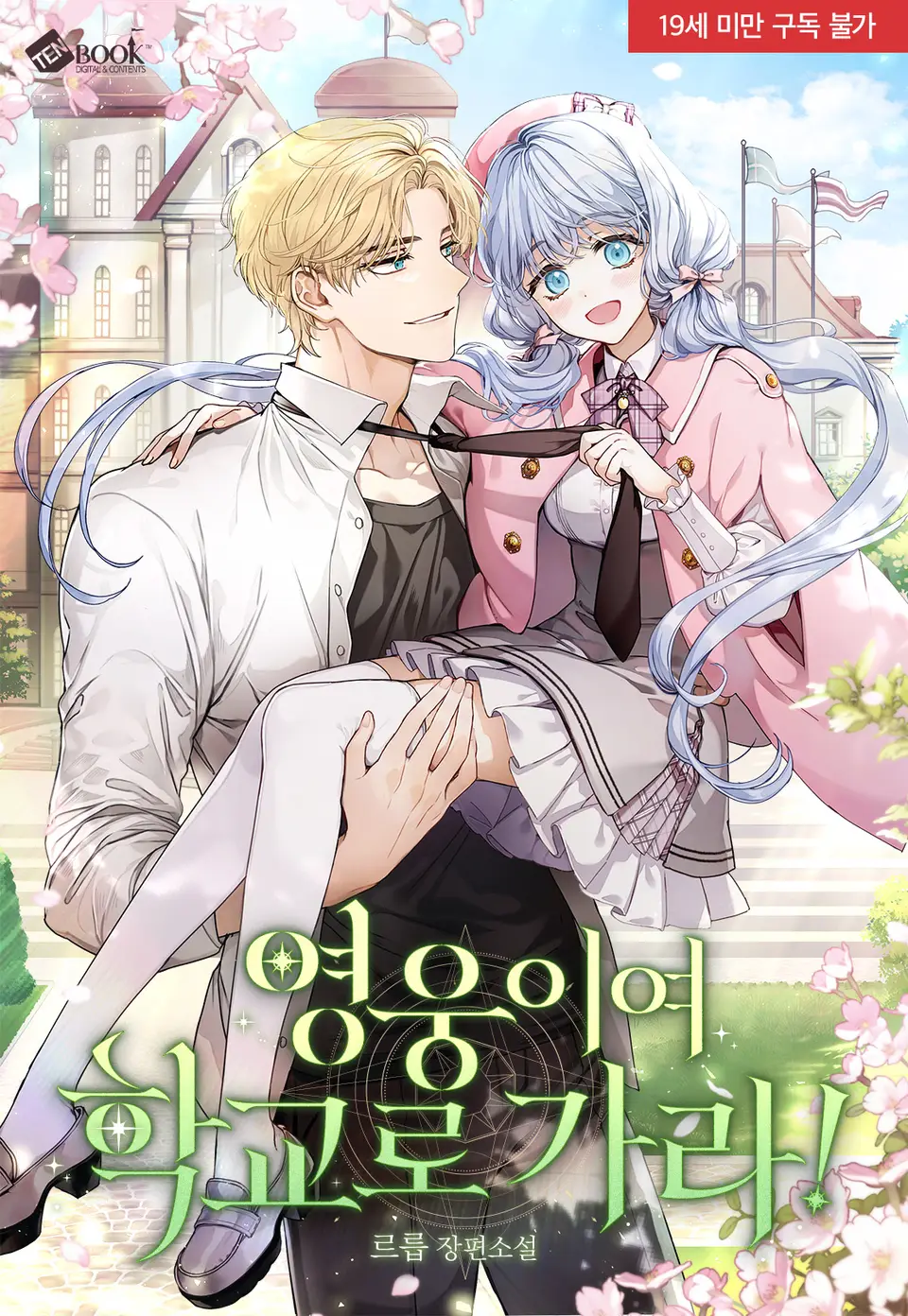
... Read More
I need to talk about Helith. Just one moment. He reaches out to touch his son's face, voice full of desperate pleading—"Ian, is it just a dream that you're breathing? Please, my son, open your eyes and say something—anything at all." And then Ian wakes up, looks at him with those cold wolf-like eyes, slaps his hand away, and says "Take your hand off me, you decrepit old donkey." That hit me like a truck. This father has been mourning his son, planning a funeral, probably rehearsing what he'll say at the gravesite—and his son is RIGHT THERE, alive, and doesn't even recognize him. Ares's soul doesn't know these people. He sees enemies. He counts exits. The cruelty of that moment isn't intentional; it's just what happens when love arrives and the person you love is inhabited by a stranger. And Josefina! She collapses to the floor when Ian mutters in his sleep. She can't handle the hope. The author makes you feel the father's prayer and then immediately takes it away—not with betrayal or malice, just with the tragic reality of possession. Meanwhile Lilian and Ares? There's something oddly tender underneath all the violence. She's pinned beneath him, he's been trying to kill her, and yet she's the one defending him to his own parents. "Enough already! Ian is alive, damn it!" She risks everything for a man who just called her a sorcerer. And the fact that his body is pressed against hers the entire time, both of them painfully aware of... everything... that's a whole other kind of tension. I'm not ready for the romance but I am prepared for it to absolutely destroy me.
... Read More
I need to address the sheer SIZE of this place because it's ridiculous. They walk from their quarters to the tutoring annex and it feels like 'a long time.' The narrator is literally counting steps in her head while Ian's doing tactical sweeps of the perimeter like they're invading Normandy. And the garden! 'A vine of grapes ripened at the far end of the lawn. Beads of water clung to the fruit, lush and staged like a scene deliberately arranged.' Staged. That word killed me. These nobles don't even grow food for eating—they grow it for LOOKING at it. The grapes aren't meant to be eaten, they're decoration. Typical. The tutoring room scene where Lady Marie sees Ian naked and absolutely loses her mind—'Her powdered face drained of color. Both hands began to tremble as she let out a sharp scream'—this is the third tutor who fled. Third. The servants have GOTTEN USED to him being naked. They don't even warn people anymore. They just let Marie walk in and deal with the consequences. The worldbuilding here is doing double duty: showing us this extremely wealthy, paranoid-aristocratic society while also making us laugh at the sheer absurdity of daily life in a mansion where the main threat isn't assassination attempts—it's your tutor quitting because you won't wear pants.
... Read More
Ian being perpetually naked is obviously not JUST a running gag. Think about it—he has no armor, no social pretense, no layers between himself and the world. He was tortured, captured, stripped of everything that made him human. The nakedness is almost a return to that state of vulnerability, except now he's weaponized it by refusing to care what anyone thinks. Meanwhile the grapes in the garden—'Beads of water clung to the fruit, lush and staged like a scene deliberately arranged'—are literally decoration. Not meant for consumption. The nobility here cultivates beauty but doesn't allow itself to benefit from it. Everything is performance. And Ian, in his nakedness, is the only one refusing to perform. Then there's the Ares/Ian duality. 'The feelings you have right now definitely aren't that of Ares, but that of Ian Zenor directed at me.' The narrator draws this line so cleanly, but Ian clearly struggles with it. He speaks in Ares's shadow—'If I had been born not as Ares, but in this body…' As if Ian himself isn't enough. The theme underneath all this comedy is identity. Who is Ian when no one's watching? Who is he when he's not comparison-shopping himself against a dead legend? And can someone who's been stripped of everything—his body, his reputation, his sense of safety—learn to trust again? She's the only one who hasn't run. That's the whole story right there.
... Read More
Let's talk about Jean Herald because this man is an absolute gem and I am obsessed with how he's written. His dialogue is instantly identifiable. Where other characters speak in measured tones or clipped warnings, Jean just BLEATS at people. "It's an honor to meet someone like myself!" — no filter, no social awareness, pure uncut enthusiasm. And yet it's NOT annoying. It's refreshing. After dozens of tutors who either cowered before Ian or treated him like a problem to be solved, Jean treats him like a FONT of information and memorabilia. The comedic timing in their exchanges is impeccable: "Would you be willing to give it to me?" "Whaaat?! I, that is…" That pause. That hesitation. The way Jean practically BITESS his lip before snapping out of it — the author writes comedy through action beats, not just dialogue. And then Jean immediately recovers by pivoting to show MORE stuff. The man is unconquerable. The narrator's voice is also doing a lot of heavy lifting here. Her observations are sharp and dry — "What is with this person? He actually carries all this stuff around?" — and they ground the whole scene. Without her as the straight man, Jean would tip into pure caricature. But she's watching him with genuine curiosity, and that makes him feel real. Even Ian's few lines carry weight precisely because he speaks so sparingly. "This horse is fiercely loyal to its master... There have been many cases of people dying from spinal fractures because of tricks like this." Cold. Factual. Almost helpful. The man warns the tutor about his own horse while simultaneously proving he can't properly ride one.
... Read More
The dialogue in this book is SO sharp it hurts. Like, "Don't you know what worship means?!" and Ian's response is basically "You want me to stand around watching that grotesque thing meant to insult me?" and the fact that he thinks the statue is insulting HIM and she's trying to explain the concept of reverence and they're both just absolutely unhinged at the same time—it's comedy gold. But what really made me choke was when she HEADBUTTS him to shut him up in front of the guards. That is not a thing you casually read about and just accept. She looked at the officer trying to negotiate their freedom, Ian opened his mouth to probably say something catastrophically wrong, and she just—smacked her forehead into his face. And then the narrator goes: "But the damage was done." I laughed so hard. The narrative voice itself is also doing a lot of heavy lifting here. It's got this frantic, overwhelmed quality that fits perfectly with someone who just got isekai'd and is desperately trying to process everything while also keeping her companion from getting them both killed. Lines like "What kind of dogshit possession life is this?!" are exactly the kind of internal monologue that makes you feel like you're reading a best friend's rambling voice message. The humor lands because it never feels performed.
... Read More
The breakfast scene is one of the most visually striking sequences I've read. Let me paint it for you: a long dining table, ultra-luxurious food — golden maple syrup, fresh quiche, crispy bacon — steam rising, the whole pastoral brunch aesthetic. And then there's Ian sitting at the head of the table completely naked, veins bulging on his fists, glaring at everyone like he's in a war zone. Meanwhile the Duke and Duchess are compressed into this 'small side table' in what Lillian internally describes as 'a spot where mold might grow.' The servants are flinching. The whole atmosphere is suffocating. This is a family that hasn't had a normal meal together in... however long. The luxury of the setting contrasts violently with the dysfunction in the room, and that contrast IS the point. I also love the sensory details layered throughout. The grape dropping onto the plate with that THUD sound. The water pitcher shattering outside the window. Ian's Adam's apple bobbing as he swallows. These small physical details ground the absurdity in reality. The author could have made this scene purely comedic with the naked paranoid aristocrat bit, but the visceral physical descriptions keep it feeling dangerous and real. The mansion itself feels alive — the maids anticipating Lillian's every need, the servants who seem to share unspoken knowledge about what's happening, the hallway that 'seemed longer than usual.' Every space in this house is charged with tension. It's not just a backdrop; the environment reflects the psychological state of everyone in it.

Leave a comment

You must be logged in to leave comments. or
