Hero, Go To School! - Reviews

Hero, Go To School!
+Add to Custom List
Sort
Add review
... Read More
This chapter does something really impressive with its structure. It opens with what I can only describe as a domestic war zone — the narrator has physically assaulted Ian (punched him, grabbed him by the… specific body parts, pressed their chest against his bare skin) and the central conflict of forty chapters of clothing resistance is resolving in real time. And then, almost casually, it pivots. One paragraph Ian is losing a battle over underwear, the next we're getting a Benjamin Franklin quote about wasted time and the narrator pulling an all-nighter studying for academic interviews. The tonal whiplash is intentional and it works because the emotional beats land in the right order. We get catharsis first — the clothing conflict resolves — and then the story immediately grounds us back in the larger plot stakes. The interview preparation sequence is surprisingly tense for something that's just a person reading textbooks. Bloodshot eyes, muffled screams outside the door that turn out to be Ian beating up servants who interrupted his watch rotation, the revelation that the narrator hasn't properly slept in days. These details accumulate into this quiet mounting pressure. And then the chapter ends not with a cliffhanger but with an assignment: equestrian lessons at the riding arena. Which sounds boring on paper but reads as genuinely anxiety-inducing because we know the narrator has never seen a horse before and making a mistake here could blow their cover. The author understands that tension doesn't always come from explosions and betrayals. Sometimes it comes from a person who doesn't know how to ride a horse standing in front of nobles who will notice if they fall off. That's more terrifying than any assassin.
... Read More
Okay so let me just... breathe for a second because WHAT IS HAPPENING. The protagonist wakes up in a completely different world and instead of panicking (which would be normal), she immediately starts connecting dots to a game called Sweet Everyday? That is some next-level adaptation speed. And then to find out her helper is the same guy she saw tearing apart a statue while naked?? The plot is moving so fast I can't even keep up. One moment she's dreaming about some murderous traitor in a bloody nightmare, and the next she's waking up in someone else's body with quest notifications floating in the air like she's literally inside a video game. I love how the author uses that system prompt device—those bracketed messages like and give it this weird meta-game feel that keeps you guessing about what rules actually govern this world. The whole premise is set up in what feels like two pages and I am already hooked. Also the fact that the "traitor" quest is connected to Ian somehow? That has to be the main plot thread, right? This book knows exactly what it's doing with pacing.
... Read More
The pacing in these chapters is absolutely feral and I respect it. Let me trace the arc: we open with comedy (naked Ares, the hornet situation, Lilian's internal screaming), then spiral into tragedy (parents arrive, funeral arrangements, the realization that Ian is dead), then explode into action (Ares wakes up and immediately starts breaking bones), and finally land on a quest hook that ties everything together. In roughly six thousand words. That's not even including all the system window exposition. What's impressive is that despite all this chaos, nothing feels rushed. The author knows exactly when to slow down—for example, the funeral planning scene with Teddy and the duke and duchess has a deliberate, almost ceremonial rhythm that contrasts sharply with the violence that follows. When Ares smacks Teddy's skull and the bone cracks, the impact works so much harder because we just spent five minutes in a somber, quiet conversation about sacred trees and rivers. The cliffhanger structure is also on point. Each mini-scene ends with a reveal or a turn: the hornet revelation, the system window flickering from Ian to Ares, the parents arriving, the funeral preparations, the awakening, the quest trigger. It's textbook web novel pacing—constant forward momentum with hooks at every beat. No chapter lingers. No moment breathes too long. You either laugh, cry, or watch someone get kicked in the face, and then immediately the next thing happens. If there's a criticism, it's that the sheer velocity sometimes leaves emotional moments without room to land fully. But honestly? I'd rather have this pace than a sluggish story that over-explains everything.
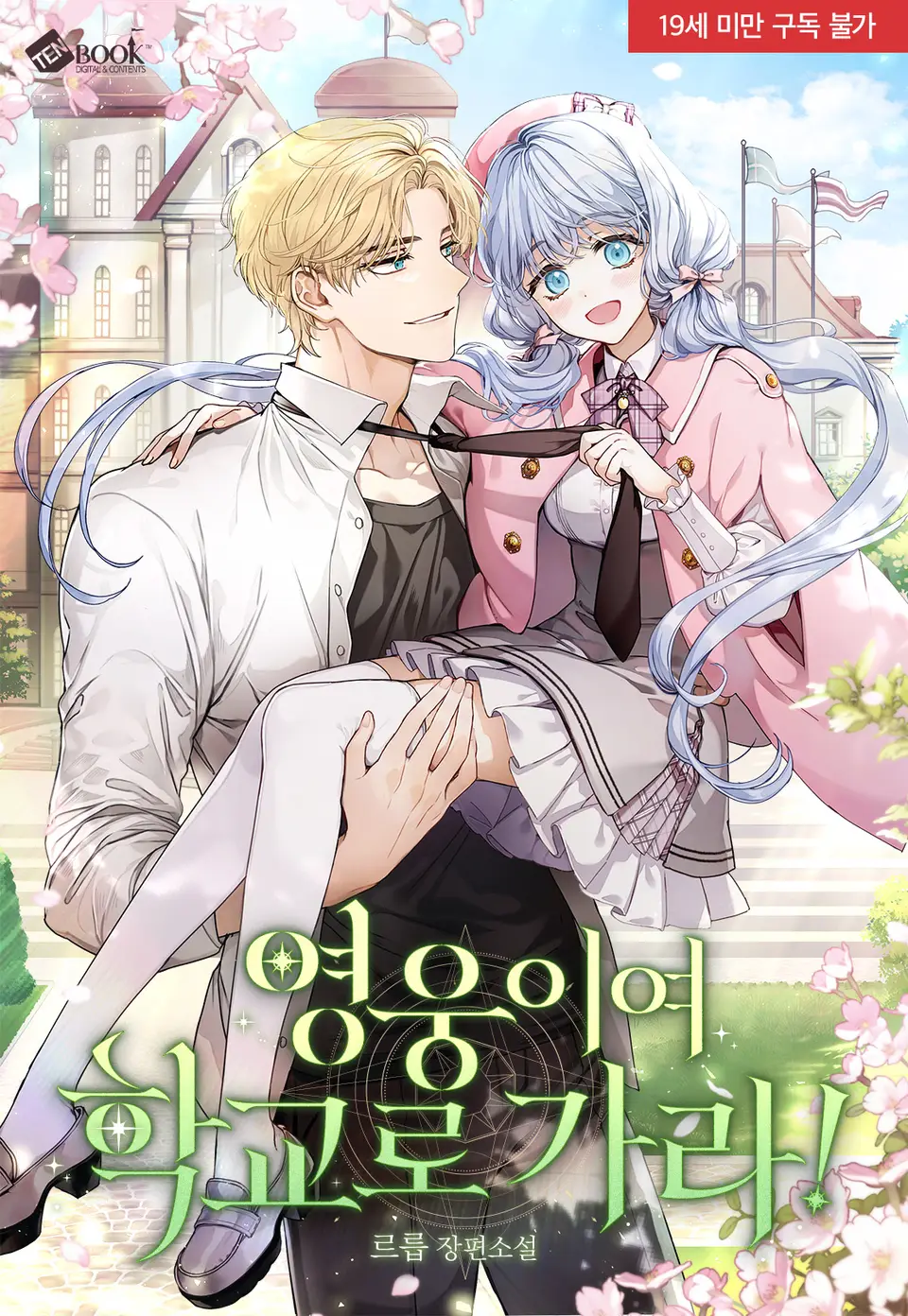
... Read More
"I get it, I get it, stop." / "What do you get?" / "..." / "Tell me straight. What do you get?" / "...I'll wear clothes." This conversation is honestly one of the funniest exchanges I've read in any novel and it's funny because of the pacing of the dialogue alone. The ellipses doing so much heavy lifting here. Ian is this incredibly proud, battle-hardened warrior who has faced down armies and torture and literally died and come back, and the moment he's backed into a corner where the only way out is admitting defeat verbally, he can't even do it cleanly. He mumbles it. Like a child being told to say please. And the narrator? The narrator's voice throughout is this perfect blend of exasperated affection and genuine strategic brilliance. They're constantly narrating their own internal reactions while maintaining this calm exterior — "I stared back at him, my expression neutral" right after literally fondling someone's nipples for tactical purposes. The narrative voice has this incredible deadpan quality that makes even the most absurd situations feel completely matter-of-fact. And then there's Ian's formal speech patterns mixed with his occasional raw, unfiltered responses. "Your unwavering vigilance, staying alert day and night in preparation for a surprise attack, is commendable" versus earlier when he was making noises I can't even describe because someone was squeezing his er— never mind. The contrast between his cold political language and his complete inability to handle basic physical intimacy is hilarious and kind of heartbreaking at the same time. Every line of dialogue feels like it belongs to a specific person, not just a vehicle for plot delivery.
... Read More
Let me just say: the whole 'is it a curse or does he just like her' setup paid off perfectly. When she calls him out and says 'Yeah, I'm pretty sure you like me,' and his face goes absolutely rigid—that was comedy gold. But then it immediately pivots into something heavier when he starts talking about Ares. The plot is doing something clever here. On the surface, this is a rom-com about a paranoid guy who might actually have feelings. But underneath, every time Ian opens his mouth about his past, the genre shifts. 'I've lived through captivity, endured every kind of torture. They cut open my lower abdomen and dragged out my organs.' That's not setup for a joke. That's setup for a trauma reveal that's going to recontextualize everything we thought we knew about this character. Also the tutoring subplot is legitimately funny but also functional—it's showing us how isolated Ian is. Every tutor flees. The servants are desensitized. Even the duke and duchess can't reach him. He's surrounded by people but completely alone. Which makes the narrator's persistence mean way more than she probably realizes. And honestly, the fact that she's the only one who hasn't quit yet? That's not nothing. That's the whole plot right there.
... Read More
Okay can we just talk about Ian for a sec? Like on the surface he's this hyper-vigilant paranoid mess who's checking every bird that flies overhead like it's out to get him. But then he drops that whole monologue about enduring torture—'They cut open my lower abdomen and dragged out my organs. I went nearly half a month without sleep.' Bro. Bro?! This guy survived literal organ extraction and somehow all we see is him freaking out about airborne assassins. And get this—the narrator calls him out right after: 'All this over a one-sided crush. He was out here doing the most.' I was absolutely howling while also being genuinely disturbed. The contrast is wild. But what really hit me was when he said: 'If we'd met as strangers, you wouldn't have given me the time of day.' That wasn't self-pity, that was just... statement of fact from someone who knows exactly where he stands in the world. Pale, graceful, smelling nice—these are Ares's qualities. Ian sees himself as nothing compared to that legacy. Meanwhile the narrator is over there thinking about whether she can pluck a grape and blame Ian if something happens. The dynamic between them is so messed up and I love it. He's traumasaurus rex and she's just trying to survive academy prep while dealing with a naked man who treats clothing like a personal insult.
... Read More
There's a symbolism running through these chapters that I can't stop thinking about, and it all starts with nudity. Ian spends most of this sequence completely naked. Not secretly naked, not accidentally naked—his default state of being. He storms through the garden bare-skinned, hides against plastic bags in his birthday suit, and wakes up the next morning still unclothed and caked in mud. But then the kiss happens and he transforms into the most embarrassed man alive. His body, which has never been a source of shame, becomes unbearable to exist in around another person. What changed? Nothing physical. But the introduction of touch—of Lillian's body pressed against his, of lips meeting lips—transforms his nakedness from a practical state into an emotional vulnerability. The body that was once just a vehicle for his chaos becomes a site of exposure in a completely different sense. He can run through glass windows without flinching, but five seconds of skin contact leaves him blushing like a schoolboy. Lillian's journey with touch mirrors this in reverse. She's spent her entire life building walls against physical affection, politely declining kisses, insisting on separate beds. Her body is a fortress. But Ian's arms around her in that storage room crack something open—not romantically at first, but existentially. For the first time, she feels warmth and it's terrifying because she has no framework for it. The realization that she's never been held, not even by her father, isn't presented as tragedy—it's presented as fact. And facts are harder to argue with than tragedies. The moonlit sky scene operates on the same symbolic level. The unfamiliar constellations represent everything she can't reconcile about this world. Beauty and terror coexisting. The more gorgeous the night sky, the more acutely she feels her displacement. It's a visual metaphor for the central tension of the entire narrative: this world offers wonder but demands everything she's ever known. And then there's the garden itself—destroyed, cratered, unrecognizable. A symbol of Ian's inner landscape made literal. Something once ordered and cultivated has been ripped apart by forces he can't control. The servants collapsed in the debris mirror Lillian's own emotional exhaustion. Even her parents, who arrive looking decades older, carry the physical weight of worry etched into their faces. Everything in these chapters is doubled. Bodies that are both weapon and vulnerability. Skies that are both beautiful and alien. Touch that's both suffocating and the only thing that makes sense. The story isn't just telling a romance—it's asking what it means to be truly seen by another person when you've spent your whole life building walls.
... Read More
The dialogue in these chapters is genuinely remarkable because it does something most authors struggle with—it lets characters communicate through what they DON'T say. Take the storage room scene. Ian is whispering tactical reports into Lillian's ear like they're in some espionage thriller. "Eleven o'clock, multiple hostiles closing in. Four, no, five unarmed adults." And then she responds by muffled protests—"hmphmd, hmardm!" Because obviously her hands are occupied wrestling with his arm. The humor here isn't forced; it comes from the absurdity of the situation colliding with Ian's genuine belief that this is a military operation. But then the kiss happens and the dialogue drops to almost nothing. Just breath. A swallow. "Ah." And that single syllable from Lillian carries more emotional weight than any monologue could. The silence between them becomes the real conversation. Later, when she confronts him the next morning, the dialogue pattern shifts again. Ian's responses shrink from complete sentences to grunts to outright refusal to speak. "Don't come any closer." "I said don't come near me!" Each repetition strips away another layer of his composure. He's not being difficult for dramatic effect—he's genuinely unable to articulate what's happening inside him. And Lillian? She stops asking questions entirely. When words fail, she switches to action. The transition from "What the hell did you do?" to rolling up her sleeves and mounting the bed like a wrestler is one of the funniest and most satisfying character beats I've read. Her internal narration is where the voice really shines though. Lines like "If you're going to do something crazy, do it alone! Why the hell are you dragging me into this?" and "This idiot, did he even hear what I said properly?" feel like actual thoughts, not authored prose. She sounds like a person who is simultaneously terrified, frustrated, and weirdly fond of the disaster standing in front of her. Even the parents' entrance has perfect dialogue economy. Thirty minutes apart and they look ten years older, yet their lines are simple: "Ian!" and "Are you okay, are you hurt?" No melodrama, no lengthy speeches. Just raw parental panic compressed into two words and a question. It works because we've already been shown how much they care through Helith's arm around Josefina's shoulder and their exhausted exchange of glances. The author trusts the reader to understand subtext. When Ian won't look at Lillian after his parents leave, we don't need him to explain why. The silence does the work.
... Read More
This chapter does something remarkable with the theme of myth versus reality, and I need to unpack it because it's layered in ways that hit differently the second time through. Jean carries around a Bible of Ares Balthazar — literally. The worn book, the sculpture, the postcards, the miniature sword gifted by Prince Gilbert. Every object is a relic in a religion where Ares is the deity and Jean is theacolyte. And Ian sits there, the actual god walking among his followers, wearing a face that isn't quite his own, listening to people worship a version of him that doesn't exist anymore. The most devastating symbol in the entire chapter is that miniature replica of Prince Gilbert's gifted sword. Ian's fingers move cautiously over it, the hilt, and Jean reads that hesitation as reverence — but we know better, don't we? That sword represents a bond with Gilbert, a father figure who taught him to feel, to see art, to understand beauty. Ian touching a copy of it is touching a memory of the last time someone loved him before he became... whatever he is now. And then there's the meta-layer: the narrator played Sweet Everyday, a game where Ares Balthazar is a fictional character. But in this world, he's REAL. His suffering was REAL. The rats he ate were REAL. The author is asking us to consider: what does it mean when the stories we consume as entertainment are someone's actual biography? When fantasy becomes flesh and blood sitting across from you at a riding academy? The chapter ends with the narrator closing a window against approaching rain. Protection. Withdrawal. The weight of knowing too much.
... Read More
The pacing in these chapters is absolutely razor-sharp and I need to commend the author because honestly? They don't waste a single beat. You open with immediate tension—the nose flick, the blood, the proof that these two literally cannot coexist as enemies. Instant hook. Then you CUT to the protagonist's mundane office life, complete与工作 fatigue and cat guilt, and for a second you think, wait, is this a different story? But then the electric shock hits and you're yanked into the new world. The transition is so smooth I almost didn't notice the pivot until I was already reading about a Duke's mansion. After that recovery period where the protagonist recalibrates, the pacing ramps UP again. The negotiation scene with the Duke and Duchess is masterfully constructed—you can feel the protagonist mentally running through their playbook, trying Plan A, switching to Plan B, building up that false emotional appeal about Ian longing for freedom. It's tense but also darkly funny because you're watching someone absolutely CONNING loving parents and I was cheering for them inside. And then Ian SMASHES THROUGH THE DOOR right when things were getting too civilized. The author basically held all this coiled tension and then RELEASED it at the perfect moment. No dragging, no filler. Every scene advances either the plot or the relationship dynamic. What more do you want from a web novel?
... Read More
I need to talk about this riding arena description because the author really did their homework here. Let me just quote the atmosphere: beneath the blue sky stretched an expansive track, surrounded by a neatly maintained fence. The ground, so clean that not a speck of dust stirred, made it clear this was no mere training field but a place to showcase noble dignity. Elegant horses stood in line, their postures upright. Each bridle and saddle was adorned with finely crafted decorations. The horses' coats gleamed, a testament to meticulous care. A luxurious canopy stood ready for rest at any time. This isn't worldbuilding through exposition dumps or info-dumping history lessons. This is worldbuilding through sensory immersion. You can feel the wealth in every detail. Every element communicates class and privilege without the narrator having to explain it. And the fact that the narrator — who comes from a completely different time period and social background — notices all of this tells us something important about their character without stating it directly. They're observant, they're aware of social cues, and they're already calculating how to use this environment rather than be judged by it. Then immediately after establishing this gorgeous scene, the narrative pivots to the narrator's internal panic about standing out too much. To find the traitor, we needed to avoid doing anything that would expose us, and instead quietly blend into our surroundings. The contrast between the opulent setting and the narrator's fear of drawing attention creates this wonderful dramatic irony — the very thing the nobility uses to display their status (the magnificent riding arena) is also a minefield for someone who can't afford to stand out. The world feels lived-in and specific, not generic fantasy backdrop.
... Read More
I'm not okay. I am genuinely not okay with the way the author wrote that falling scene. One second Lilian is chasing after Ian, the next she's twisting her ankle and free-falling and the narration just... it slows down. The skirt fluttering, the hair flying, the hands grasping at nothing—then THIS ARM wraps around her waist and slams her chest-first against someone's body and her breath gets knocked out and for a moment everything is panic and then his voice, trembling: "Are you okay?" And she immediately grabs his hair and screams at him for almost dying and he tries to explain about the statue insulting him and she yells back and they're just standing there on top of a monument wrestling like teenagers and I want to scream. This book just weaponized my feelings in three paragraphs. Then right after that peak—after all that adrenaline—the prose goes quiet and we get the nightmare vision: the blood, the severed head, the green eyes. The emotional whiplash from that chaotic, almost comedic chase scene to pure horror in the dream sequence was brutal. I sat here for a full minute just processing. The romantic tension is basically simmering under everything right now—she's furious at him, he saved her life, they're literally trapped in a prison wagon together tied up—and you can feel something building that has nothing to do with the plot and everything to do with how these two people bounce off each other.

Leave a comment

You must be logged in to leave comments. or
